Skip the research trap. Get your high-end nas enclosures in 60 seconds.
We scored 300+ high-end nas enclosures across 5 dimensions — answer 5 quick questions and we'll match you to YOUR best pick.

Powered by DecisionScore™
Each product is evaluated across 18 weighted criteria — covering performance, value, build quality, and real-world usability. Your quiz answers re-weight the criteria to match what matters most to you, so two people can get different #1 picks from the same data.
See the DecisionScore methodology →- Affordable four‑bay NAS with Intel N5105 CPU and 8 GB RAM
- Dual 2.5 GbE ports and two NVMe slots enable high throughput
- Supports TrueNAS Scale for open‑source ZFS storage
Find your perfect high-end nas enclosures
5 quick questions. No quiz-takes-10-minutes trap. A personalized match from 30 scored picks — with clear reasoning for every recommendation.
What is your preferred brand for a NAS enclosure?
Brand preference can significantly impact your satisfaction with a NAS enclosure. Different brands offer varying levels of customer support, warranty, and software ecosystems, which can affect your overall experience.
- Two-bay NAS are compact and affordable, but limit future expansion and RAID redundancy.
- Four-bay or larger enclosures allow for RAID 5/6 and more flexible upgrades as your storage needs grow.
- If you plan to store large media libraries or run VMs, consider at least a 4- or 6-bay NAS.
As an Amazon Associate and affiliate partner we earn from qualifying purchases. Links on this page may earn us a commission at no extra cost to you. Full disclosure
Not ready for the quiz? Here are our overall top picks
These are our top-rated picks overall. For a recommendation matched to YOUR specific needs,
AOOSTAR WTR MAX AMD R7 8845HS(up to 5.1 Ghs 6+5 Bays Desktop NAS(Barebone),2 *
Affordable four‑bay NAS with Intel N5105 CPU and 8 GB RAM
View Today's Price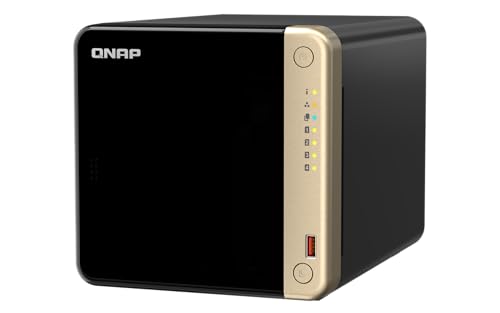
QNAP TS-464-8G-US 4 Bay High-Performance Desktop NAS with Intel Celeron
Intel Celeron N5095 processor and 8 GB RAM provide responsive performance
View Today's Price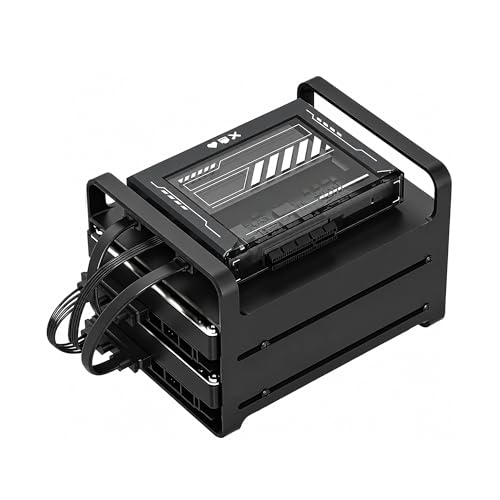
ZimaBlade 7700 x86 DIY NAS Kit – 2-Bay Mini Home Server, Intel Quad-Core, 16GB
DIY single‑board NAS kit with Celeron J4125 CPU
View Today's PriceHow to Choose the Right High-End NAS Enclosures
Choosing the right high-end NAS enclosure depends on drive bay count, network speed, memory, and software ecosystem—trade-offs that shift based on your storage needs, workload, and technical comfort. A feature that’s perfect for a media streamer may be a bottleneck for a virtualization pro, and vice versa. Our recommendation engine evaluates your specific needs across 12+ dimensions and matches you to the ideal NAS enclosure in under 60 seconds.
About this guide
High-End NAS Enclosures
Why High-End NAS Selection Is So Tricky
Picking the right high end nas enclosures in 2026 is far more complicated than most buyers expect. You’re not just choosing between two or four drive bays—today’s high end nas enclosures range from compact 2-bay units like the UGreen DH2300 (up to 64TB, ~$250) to 8-bay monsters like the QNAP TVS-H1688X ($2,000+). Specs like 1GbE, 2.5GbE, or 10GbE network ports make a real-world difference in file transfer speeds, yet many buyers still bottleneck themselves with slow LAN when selecting high end nas enclosures. The trade-off between all-in-one simplicity (think Synology DSM’s plug-and-play experience) and upgradability (PCIe slots for 10GbE or GPU, NVMe SSD cache) is real in high end nas enclosures. Most people underestimate the impact of RAM—4GB is fine for backups, but Plex streaming or VM hosting can choke without 8GB+ DDR5, as seen in TerraMaster’s F4 SSD, a standout among high end nas enclosures. Many focus on drive count, but ignore power draw, noise, and the software ecosystem, which can make or break daily use of high end nas enclosures. The biggest mistake? Overlooking backup and data protection features like snapshots and replication, which are now standard on most high end nas enclosures.
What Actually Separates the Best NAS Enclosures
The real differentiators in high end nas enclosures for 2026 are network speed, memory type, expansion flexibility, and software reliability—not just raw bay count. Skip any high end nas enclosures still stuck on 1GbE unless you’re strictly doing basic backups; 2.5GbE is the new baseline, and 10GbE is a significant upgrade for content creators or small businesses using high end nas enclosures. All-SSD high end nas enclosures like the TerraMaster F4 SSD (with four M.2 NVMe slots and Intel N95 CPU) deliver 2x the speed of HDD models, but require careful attention to cooling and power. DDR5 RAM (as in the F4 SSD’s 8GB) is a must for AI tasks and virtualization—don’t get distracted by high bay counts if you’ll never fill them in your high end nas enclosures. Synology’s DSM is unmatched for ease and app support, but QNAP’s QuTS hero and TerraMaster’s TOS offer ZFS, deduplication, and more for tinkerers seeking advanced high end nas enclosures. PCIe slots for 10GbE or GPU upgrades matter more than most realize, and firmware update cadence is critical—UGreen’s app ecosystem lags behind Synology or QNAP in the high end nas enclosures market. Prioritize real-world speed, upgradability, and the right OS for your workflow when evaluating high end nas enclosures.
How to Balance Specs, Budget, and Real Needs
Drive bay count, network speed, and memory interact in ways that shape your experience with high end nas enclosures—and your total cost. For example, a 4-bay SSD high end nas enclosure at $350-450 (like TerraMaster’s F4 SSD) hits the sweet spot for speed and value, while an 8-bay QNAP TVS-H1688X delivers raw power at a much higher price and power draw typical of high end nas enclosures. Your intended use—media streaming, backups, virtualization—should drive your choice of CPU, RAM, and network ports in high end nas enclosures. Don’t pay for 10GbE in high end nas enclosures if your network can’t support it, but don’t cheap out on RAM if you want to run Plex or VMs. The quiz evaluates your workload, upgrade appetite, and hands-on preferences in seconds, but you should also weigh noise, energy use, and firmware support when choosing high end nas enclosures. Always factor in the true cost: drives, SSD cache, and possible upgrades for high end nas enclosures. Overbuying on bay count or underestimating software limitations are the most common mistakes with high end nas enclosures. Balance future-proofing with what you’ll actually use, and don’t overlook data protection features like snapshots or cloud backup in high end nas enclosures.
Buyer's guide
How to choose
1Core Performance Criteria
- Prioritize NAS enclosures with at least 2.5GbE ports for fast file transfers—1GbE models are now a bottleneck for multi-user or media-heavy workloads.
- Look for DDR5 RAM (minimum 8GB for content creation or virtualization) as seen in TerraMaster’s F4 SSD; 4GB limits Plex streaming and VM hosting.
- All-SSD NAS with NVMe slots, like the F4 SSD, offer 2x speed gains over HDD models but require careful cooling and higher upfront cost.
- Intel x86 CPUs, such as the N95 or higher, provide better performance for AI tasks, Docker, and real-time transcoding compared to ARM-based alternatives.
- PCIe slots for 10GbE or GPU upgrades are critical if you plan to scale performance or use your NAS for creative workflows.
- Check for support of advanced file systems (ZFS, Btrfs) and snapshotting, which are essential for data protection and fast recovery in high-end use cases.
2Build Quality and Durability
- Metal chassis, as found in Asustor and QNAP, offer better heat dissipation and noise control than plastic-bodied entry-level models.
- Active cooling is essential for all-SSD NAS; TerraMaster F4 SSD can overheat during sustained 2.5GbE transfers if airflow is inadequate.
- Check for high-quality, low-noise fans—noisy units are a frequent complaint in multi-bay enclosures under heavy load, especially from QNAP and Asustor users.
- Power supply wattage matters: under 100W units may throttle or fail during high-load operations with multiple drives or expansion cards installed.
- Look for vibration damping and hot-swap bays, especially if you plan to run the NAS 24/7 or in a shared space.
- Firmware reliability and regular updates are crucial; Synology leads here, while UGreen and TerraMaster sometimes lag in app and security patch cadence.
3Value and Total Cost Analysis
- The current value sweet spot is a 4-bay SSD NAS at $350–$450, like TerraMaster’s F4 SSD, balancing speed, expandability, and price.
- Don’t forget the cost of drives—high-end NVMe SSDs can double your total investment compared to using traditional NAS HDDs.
- World Backup Day and Amazon Spring Deal Days often bring 20% discounts, making premium models like UGreen DH2300 or TerraMaster F4 SSD more accessible.
- 8-bay and up models, such as QNAP TVS-H1688X, command $2,000+ and higher electricity bills; only pay for this scale if you truly need it.
- Calculate long-term costs: power draw, cooling, and potential RAM or network card upgrades add up over years of 24/7 operation.
- Entry-level 2-bay models are tempting for price, but often lack the performance and future-proofing needed for demanding workflows or business use.
4Use-Case Fit and Workflow Optimization
- Home backup and media streaming are well-served by 2- or 4-bay NAS with 2.5GbE and 4–8GB RAM; UGreen DH2300 excels for beginners.
- Content creators should seek Intel x86 CPUs, 8GB+ DDR5 RAM, and SSD caching for smooth editing and fast file access.
- Virtualization or AI workloads demand 10GbE networking, PCIe expansion, and at least 16GB RAM—QNAP and Asustor offer robust options here.
- DIY homelab users benefit from flexible chassis with PCIe slots and ZFS support, as found in QNAP QuTS hero and TerraMaster TOS.
- If you need quiet operation, prioritize models with efficient cooling and fan controls—avoid noisy multi-bay units unless you have a dedicated server room.
- Snapshotting, replication, and optional cloud integration are must-haves for business continuity and disaster recovery in 2026.
5Common Buying Mistakes
- Many buyers overvalue bay count and ignore network speed, ending up with 8-bay NAS bottlenecked by slow 1GbE ports.
- Underestimating the importance of RAM: 4GB is often not enough for Plex, Docker, or VMs—always check for upgrade options.
- Ignoring total cost: SSD NAS require premium drives and cooling, which can double the price compared to HDD-based models.
- Neglecting firmware and software ecosystem—UGreen and TerraMaster lag behind Synology and QNAP in app support and update frequency.
- Assuming all NAS are quiet: multi-bay units can be surprisingly loud under load, especially in home office or bedroom setups.
- Failing to plan for backup and data protection—snapshotting and replication are not standard on all models, so verify before purchase.
6Maintenance and Longevity
- Choose NAS with tool-less drive bays and hot-swap support for easy maintenance and drive replacement without downtime.
- Regularly update firmware and apps; Synology and QNAP provide the most consistent long-term support and security patches in 2026.
- Monitor drive temperatures and fan health—overheating is a real risk in SSD-optimized NAS like the TerraMaster F4 SSD.
- Opt for models with modular power supplies and accessible fans, allowing for easy replacement and longer operational life.
- Schedule regular data scrubbing and SMART checks to catch early drive failures, especially in large RAID arrays.
- Plan for RAM upgrades and network card replacements; expandable models extend usable life and adapt to changing workloads.
FAQ
Frequently asked questions
Is paying extra for 10GbE networking worth it in a high-end NAS?
10GbE networking is only worth the premium if your local network and client devices can actually use that speed. For video editing, virtualization, or multi-user environments, 10GbE (as found in the QNAP TVS-H1688X) delivers major performance gains. However, if your switches and PCs are limited to 2.5GbE or below, you won’t see the benefit—save your money and invest in more RAM or SSD cache instead.
How does Synology DSM compare to TerraMaster TOS and QNAP QuTS hero?
Synology DSM is the gold standard for ease of use, app ecosystem, and regular updates, making it ideal for plug-and-play or less technical users. QNAP’s QuTS hero and TerraMaster TOS cater to power users, offering ZFS, deduplication, and more advanced virtualization features. However, QNAP and TerraMaster sometimes lag in firmware updates and can be noisier under load. Choose Synology for simplicity, QNAP or TerraMaster for maximum flexibility and raw power.
What specs do I need for smooth Plex streaming and 4K media transcoding?
For reliable Plex streaming and 4K transcoding, prioritize an Intel x86 CPU (N95 or better), at least 8GB DDR5 RAM, and SSD caching. Models like the TerraMaster F4 SSD excel here. Network speed matters too—2.5GbE is the minimum for multi-stream 4K playback. Avoid ARM-based or 4GB RAM models, as they often struggle with real-time transcoding and multiple users.
Are all-SSD NAS like the TerraMaster F4 SSD really worth the price premium?
All-SSD NAS enclosures such as the TerraMaster F4 SSD offer up to 2x faster file access and lower latency compared to traditional HDD-based units. They’re ideal for content creators, video editors, or anyone needing rapid I/O. However, you must factor in the higher cost of NVMe drives and the need for active cooling to avoid overheating. If you only need basic backups or media streaming, a hybrid or HDD NAS is more cost-effective.
How does the UGreen DH2300 compare to the Asustor Lockerstor 6 Gen2 for home office use?
The UGreen DH2300 is a beginner-friendly 2-bay NAS with up to 64TB capacity and a simple setup, making it great for home backups and light media streaming. The Asustor Lockerstor 6 Gen2 offers six bays, faster networking, and more expansion options, better suited for demanding workflows or larger families. If you don’t need high capacity or advanced features, UGreen is a solid value; for scalability and speed, Asustor is superior.
What’s the biggest mistake buyers make with high-end NAS enclosures?
The most common mistake is overvaluing drive bay count while ignoring network speed and upgradability. Many users buy 6- or 8-bay NAS with only 1GbE ports, resulting in slow file transfers that defeat the purpose of extra storage. Others underestimate RAM needs for Plex, Docker, or VM hosting. Always balance bay count, network speed, and memory based on your actual workload and future plans.
How important is firmware and software support for NAS longevity?
Firmware and software support are crucial for security, stability, and access to new features. Synology leads with frequent updates and a robust app ecosystem, while QNAP and TerraMaster are improving but can lag behind. UGreen’s updates are less frequent, which may limit long-term reliability. Always check the update history and user forums before committing to a brand, especially if you plan to use your NAS for five years or more.
Related reading
Best High-End NAS Enclosures By Category
Related Guides
3D Printers
Matched to your print size, detail needs, materials, and how much you want to tinker or automate.
All-in-One Laser Printers for Home Office
Matched to your print volume, color needs, workflow features, and budget—get the right laser all-in-one for your home office.
Sit-Stand Desk Converters
Matched to your desk size, equipment weight, ergonomics, and feature preferences—get the right converter for your workflow.
Budget and Mid‑Range Laptops
Matched to your main tasks, OS preference, portability, and display—find a laptop that fits your real workflow and budget.
Color Laser Printers
Matched to your print volume, connectivity, and cost priorities—find the color laser printer that fits your workflow and space.