Skip the research trap. Get your beginner electric guitars in 60 seconds.
We scored 350+ beginner electric guitars across 5 dimensions — answer 5 quick questions and we'll match you to YOUR best pick.
Powered by DecisionScore™
Each product is evaluated across 18 weighted criteria — covering performance, value, build quality, and real-world usability. Your quiz answers re-weight the criteria to match what matters most to you, so two people can get different #1 picks from the same data.
See the DecisionScore methodology →- HSS configuration with vintage single‑coils and humbucker pickups for high tones
- Basswood body with maple neck and purpleheart fingerboard
- Tremolo bridge for expressive vibrato effects
Find your perfect beginner electric guitars
5 quick questions. No quiz-takes-10-minutes trap. A personalized match from 33 scored picks — with clear reasoning for every recommendation.
Which musical style best matches your playing goals?
Different guitars excel in different genres. Pick the style you expect to play most often. If you're unsure, choose 'versatile' for a broad range of tones.
- If you love blues or classic rock, single-coil pickups and a Strat-style body will feel most familiar.
- Metal and shredding styles benefit from humbuckers and a slim, fast neck for quick solos.
- If you want to try everything, choose 'versatile'—HSS pickup guitars cover the widest range of tones.
As an Amazon Associate and affiliate partner we earn from qualifying purchases. Links on this page may earn us a commission at no extra cost to you. Full disclosure
Not ready for the quiz? Here are our overall top picks
These are our top-rated picks overall. For a recommendation matched to YOUR specific needs,
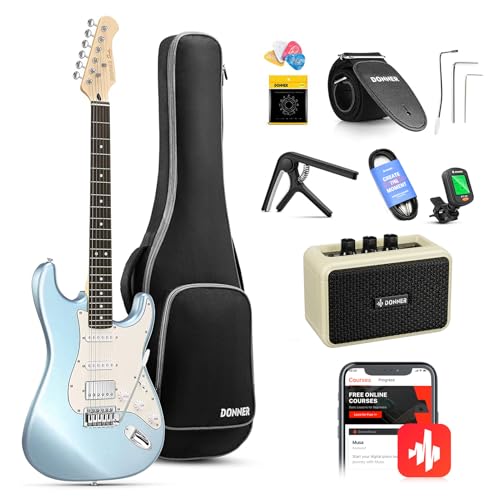
Donner DST-152R Electric Guitar, 39" Beginner Electric Guitar Kit, HSS Pickup
HSS configuration with vintage single‑coils and humbucker pickups for high tones
View Today's Price
Yamaha Pacifica Series PAC012 Electric Guitar; Black
HSS configuration with two single-coils and one humbucker pickups for medium tones
View Today's Price
Fender Squier Debut Series Stratocaster HT HSS Electric Guitar, Beginner Guitar,
HSS configuration with two single-coils and one humbucker pickups for medium tones
View Today's PriceHow to Choose the Right Beginner Electric Guitars
Choosing the right beginner electric guitar depends on neck comfort, pickup configuration, bridge type, and your genre ambitions—trade-offs that shift based on your hand size, style, and budget. A feature that’s perfect for metal can be wrong for blues, and a neck profile that suits kids may cramp adults. Our recommendation engine evaluates your specific needs across five dimensions and matches you to the right guitar in under 60 seconds.
About this guide
Beginner Electric Guitars
Why Picking Your First Guitar Is Trickier Than It Looks
Most beginners underestimate how much beginner electric guitars can shape their learning curve and enjoyment. The sheer variety of beginner electric guitars—Strat-style icons, modern shred machines, and everything between—means you’re not just choosing a look, but a set of trade-offs. For instance, a Squier Affinity Strat at $279 offers classic tones and a comfortable double-cut body, but its tremolo can introduce tuning headaches if you dive-bomb too much. Go cheaper with beginner electric guitars like a Cort X100 at $129, and you risk tuning instability and finish chipping, which can frustrate and discourage practice. Pickups matter on beginner electric guitars: single-coils (bright, crisp) versus humbuckers (warm, punchy), or mixed HSS setups for versatility. Price tiers are real—$200–$400 gets you reliable playability and tone in beginner electric guitars, while sub-$150 models often need costly fixes. Many buyers get tripped up by neck profile and fret size on beginner electric guitars, not realizing a thin Ibanez neck can cramp larger hands, or that medium-jumbo frets make bends easier for beginners. The biggest mistake with beginner electric guitars? Focusing on looks or “starter packs” instead of comfort, tuning stability, and genre fit.
What Actually Separates the Best Beginner Guitars
The real differentiators among beginner electric guitars aren’t just brand names or color options—they’re the specs and design choices that shape your daily experience. Yamaha’s Pacifica 112V, for example, stands out in 2026 among beginner electric guitars for its slim C-neck, alnico V pickups, and a bridge that holds tune better than most under $250. Squier’s Affinity Stratocaster is praised among beginner electric guitars for its improved tremolo, but you’ll want to upgrade the block for true stability. Skip ultra-budget beginner electric guitars unless you’re ready for high action and fret buzz—setup quality out-of-box is crucial, and Yamaha and Epiphone consistently score above 8.5 in expert tests for beginner electric guitars. HSS pickup configurations (like on the Pacifica) offer more tonal range than single-coil-only beginner electric guitars, making them smarter for genre-hopping. Don’t overvalue rolled fretboard edges or “student” branding on beginner electric guitars; medium-jumbo frets and a solid nut (bone or graphite, not plastic) matter more for playability and intonation. If you crave metal tones, Ibanez’s GRX70QA with a fast Wizard III neck and Floyd Rose-style tremolo is a standout among beginner electric guitars, but its thin neck isn’t for everyone. In short, prioritize neck feel, pickup versatility, and bridge stability in beginner electric guitars over flashy finishes or bundled accessories.
How to Weigh Your Needs: Comfort, Genre, and Budget
Finding the right beginner electric guitar is all about matching your physical comfort, musical ambitions, and what you can realistically spend. A lightweight body like the Yamaha Pacifica 012’s is perfect for small hands or long practice sessions, while a chunkier Epiphone Les Paul Special offers more sustain but can feel heavy after an hour—both are popular beginner electric guitars. Your preferred genre should drive pickup choice on beginner electric guitars—single-coils for clean blues, humbuckers for crunchy rock, or HSS for flexibility. Neck profile is make-or-break on beginner electric guitars: slim necks speed up fast licks but can tire big hands, while medium profiles balance comfort and control. Tremolo bridges add expressive options to beginner electric guitars but often sacrifice tuning stability, especially on cheaper models—think hard about whether you’ll actually use a whammy bar. Our quiz weighs your style, hand size, pickup preference, and bridge needs to recommend the best beginner electric guitars for you. Remember, your budget constrains features on beginner electric guitars: under $200 means fewer premium components and more potential setup issues, while $250–$300 unlocks beginner electric guitars like the Pacifica 112V that feel and sound pro. Always factor in setup costs and the need for a good case for beginner electric guitars—these are not optional if you want your guitar to last.
Buyer's guide
How to choose
1Core Performance Criteria: Playability and Tone
- Look for a comfortable neck profile—slim C-necks like on the Yamaha Pacifica 112V are easier for beginners than chunky vintage shapes.
- Medium-jumbo frets, such as those on the Ibanez GRX70QA, make string bends and chord changes smoother for inexperienced hands.
- HSS pickup configurations offer maximum versatility, letting you play everything from clean jazz to heavy rock without swapping guitars.
- Tremolo bridges are fun but can cause tuning instability on budget models; fixed bridges are more reliable for daily practice.
- Alder and poplar bodies are lightweight and reduce fatigue during long sessions, while mahogany provides warmth but adds noticeable weight.
- Setup quality out of the box matters—models like Squier Affinity Stratocaster often need a $50 pro setup to fix high action or fret buzz.
2Build Quality and Durability
- Solid wood bodies (like the Epiphone Les Paul Special’s mahogany) resist warping better than cheap laminates found in sub-$150 guitars.
- Plastic nuts are a weak point—prefer bone or graphite for better tuning and fewer string-binding issues, especially on Squier models.
- Output jacks on Epiphone Specials can fail after a year; check for tightness and consider a cable with a right-angle plug for longevity.
- Gloss finishes, especially on Pacifica 012, are prone to chipping from gig bag friction; a hardshell case is a smart $30 investment.
- Budget tremolo blocks often slip or corrode quickly; upgrading to a Graph Tech block on Affinity Strats greatly improves stability.
- Check fretwork quality—sharp fret ends are common on low-cost imports and can make practice uncomfortable or even painful.
3Value Analysis: What You Get for Your Money
- The $200–$300 range delivers 80–90% of pro-level playability—Yamaha Pacifica 112V at $229 rivals $600 guitars in blind tone tests.
- Sub-$150 guitars, like the Cort X100, often require immediate fixes or upgrades, negating any initial savings for most beginners.
- Starter packs may seem like a bargain, but the included gig bags and cables are usually low quality and don’t protect your investment.
- HSS pickup guitars under $250, such as the Pacifica 012, offer the best tonal flexibility for the price, supporting multiple genres.
- Avoid PRS SE and other premium models above $350 until you’re sure you’ll stick with playing—entry-level options now offer excellent value.
- Watch for Black Friday deals; $50 discounts are common, but don’t compromise on setup or core specs just to save a little upfront.
4Use-Case Fit: Matching Guitar to Player
- Small hands benefit from slim, lightweight models like the Yamaha Pacifica 012, which reduces fatigue and encourages longer practice.
- If you want to play metal or shred, the Ibanez GRX70QA’s fast neck and Floyd Rose-style tremolo are ideal, but not for everyone.
- Classic rock and blues players will feel at home with Squier Affinity Stratocaster’s double-cut body and bright single-coil tones.
- Jazz or vintage enthusiasts should consider semi-hollow or chunky-neck models for warmth and resonance, though they’re heavier.
- Dorm rooms or small apartments call for compact, lightweight guitars—avoid bulky Les Pauls unless you truly love the sustain.
- If you’re unsure about your style, HSS pickup configurations let you experiment across genres without needing a second instrument.
5Common Mistakes and How to Avoid Them
- Don’t buy based on looks alone—comfort and neck feel matter far more for daily practice and long-term progress.
- Ignoring nut material is a classic error; plastic nuts on Squier guitars cause tuning and intonation headaches most beginners don’t anticipate.
- Skipping a professional setup leads to high action or fret buzz, especially on budget guitars like the Squier Affinity series.
- Assuming all starter packs are a good deal—often, the included accessories are subpar and won’t last more than a few months.
- Neglecting to try different neck profiles in person results in hand cramps or fatigue, especially with thin Ibanez necks for larger hands.
- Transporting your guitar in a gig bag instead of a hardshell case is the top cause of finish damage and chipped edges.
6Maintenance and Longevity
- Regularly check and tighten output jacks, especially on Epiphone Les Paul Specials, to prevent signal loss and expensive repairs.
- Clean and oil the fretboard every few months to prevent drying and cracking, which is especially important for rosewood fingerboards.
- Replace cheap factory strings with quality brands like D’Addario or Ernie Ball for better tone and tuning stability from day one.
- Upgrade plastic nuts to bone or graphite within the first year to avoid persistent tuning and intonation issues, especially on Squier models.
- Store your guitar in a hard case, not a gig bag, to protect against humidity changes and accidental drops.
- Have a professional setup done annually, or after any major string gauge change, to keep action and intonation optimal for learning.
FAQ
Frequently asked questions
Is it worth paying extra for an HSS pickup configuration?
Yes, an HSS (humbucker-single-single) setup gives you much greater tonal versatility, letting you play clean, crisp tones and heavier rock or metal with one guitar. Models like the Yamaha Pacifica 112V (around $229) offer this flexibility and are highly rated by experts for beginners who want to explore multiple genres without buying a second instrument.
How does the Yamaha Pacifica compare to the Squier Affinity Stratocaster?
The Yamaha Pacifica 112V is praised for its slim C-neck and alnico V pickups, delivering a versatile sound and excellent playability for around $229. The Squier Affinity Stratocaster, at about $279, offers classic Strat tones but may require a setup for optimal action. Both are reliable, but the Pacifica is often considered more comfortable for small hands and better out-of-box.
What neck profile is best for adult beginners with larger hands?
Medium or chunky neck profiles are best for adults with larger hands. Thin necks, like those on Ibanez GRX models, can cause cramping during long sessions. Guitars with a medium C or even a thicker U profile, such as the Epiphone Les Paul Special, provide more support and comfort for bigger hands, especially during extended practice.
Are tremolo bridges a good idea for beginners?
Tremolo bridges add expressive options but often cause tuning instability on budget guitars. Unless you specifically want to play styles that require heavy whammy use, a fixed bridge is more reliable for daily practice. If you do choose a tremolo, consider upgrading the block or springs for better tuning stability, especially on Squier Affinity models.
How important is nut material on beginner electric guitars?
Nut material is more important than most first-timers realize. Plastic nuts, common on budget Squier models, can bind strings and cause tuning issues. Bone or graphite nuts provide smoother tuning and better intonation. If your guitar comes with a plastic nut, upgrading it within the first year is a smart move for long-term stability.
What’s the best beginner electric guitar for small hands or kids?
The Yamaha Pacifica 012 is ideal for small hands or young players due to its ultra-lightweight alder body and slim neck. It’s comfortable for long practice sessions and easy to fret chords. Avoid heavier models like the Epiphone Les Paul Special for kids, as the extra weight can discourage practice and cause fatigue.
How does the Ibanez GRX70QA compare to the Epiphone Les Paul Special for metal and rock?
The Ibanez GRX70QA excels for metal and shredding with its fast Wizard III neck and Floyd Rose-style tremolo, making rapid solos and dive bombs easier. The Epiphone Les Paul Special, with its mahogany body and humbuckers, is better suited for classic rock and blues, providing warm sustain but less speed and upper fret access.
Related reading
Best Beginner Electric Guitars By Category
Related Guides
Amp Simulator Pedals
Amp style, tech type, stereo needs, and budget—get matched to the perfect amp sim pedal for your rig and workflow.
Amp Simulator Pedals & Preamps
Matched to your tonal goals, gig setup, budget, and experience—find the amp sim pedal or preamp that actually fits your needs.
Electronic Drum Kits
Matched to your music style, pad feel, space, and training needs—find the right e-drum kit for your unique practice setup.
Digital Keyboards
Skill level, key action, space, and musical goals—get matched to the right digital keyboard or piano for your real needs.