Find Your Perfect Beginner Electric Drum Kit
We scored 350+ electronic drum kits across 5 dimensions — answer 5 quick questions and we'll match you to YOUR best pick.
Powered by DecisionScore™
Each product is evaluated across 18 weighted criteria — covering performance, value, build quality, and real-world usability. Your quiz answers re-weight the criteria to match what matters most to you, so two people can get different #1 picks from the same data.
See the DecisionScore methodology →- Triple-zone TP70S snare pad for expressive playing
- Over 400 sounds and customisable kits via DTX402 Touch app
- Built-in training functions and free learning app
Find your perfect electronic drum kits
5 quick questions. No quiz-takes-10-minutes trap. A personalized match from 31 scored picks — with clear reasoning for every recommendation.
What style of music will you mainly play?
Your musical style influences the sounds and dynamics you need. Rock/pop kits favour punchy drums and cymbals, electronic/hip‑hop kits lean on modern samples, acoustic/jazz kits prioritise nuanced dynamics, while versatile kits provide a broad library for multiple genres. If you're unsure, pick versatile.
- Rock and pop kits excel at punchy, energetic beats—choose these if you want classic drum sounds and driving rhythms.
- Electronic and hip-hop styles benefit from kits with modern samples and USB-MIDI for triggering custom beats and effects.
- If you play multiple genres, look for versatile kits with a broad sound library and adjustable pad sensitivity.
As an Amazon Associate and affiliate partner we earn from qualifying purchases. Links on this page may earn us a commission at no extra cost to you. Full disclosure
Not ready for the quiz? Here are our overall top picks
These are our top-rated picks overall. For a recommendation matched to YOUR specific needs,
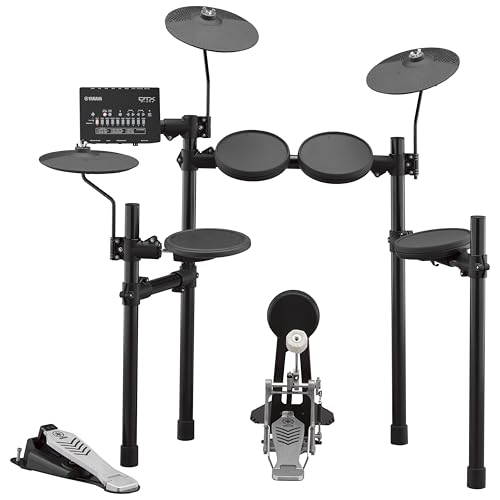
Yamaha DTX452K Electronic Drum Set with 400+ Premium Customizable Sounds, USB
Triple-zone TP70S snare pad for expressive playing
View Today's Price
Roland TD-07DMK Electronic V-Drums Kit
50 total kits (25 preset and 25 user) with 143 instruments
View Today's Price
Kat Percussion KTMP1 Electronic Drum and Percussion Pad Sound Module, Black
11" dual-zone mesh snare and three 9" toms
View Today's PriceHow to Choose the Right Electronic Drum Kits
Choosing the right beginner electronic drum kit depends on your musical style, pad feel preference, available space, and connectivity needs—trade-offs that shift based on your budget and practice environment. A feature that’s essential for one drummer, like mesh heads for quiet apartments, might be wasted on another who needs durability for heavy practice. Our recommendation engine analyzes your specific situation across five key dimensions and matches you to the right electronic drum kit in under 60 seconds.
About this guide
Electronic Drum Kits
Why Picking a Beginner E-Drum Kit Is Tricky
Choosing your first beginner electric drum kit in 2026 is more complicated than it looks. The market is packed with beginner electric drum kits that seem similar on paper—mesh heads versus rubber or silicone pads, 5-piece versus 8-piece setups, and modules boasting everything from 10 to 287 sounds. But these details create real trade-offs. For example, mesh heads (found on the Yamaha DTX402K or Alesis Nitro Mesh) feel more like acoustic drums and are quieter, but they drive up the price—expect $350–$550 for a solid mesh beginner electric drum kit, versus $200–$300 for rubber pads that can feel stiff and get noisy. Many buyers focus on pad count instead of pad quality, missing that a 3-zone snare on beginner electric drum kits is far more expressive than two extra single-zone toms. Rack stability is another overlooked factor: a double-braced rack on beginner electric drum kits prevents wobble and keeps timing tight, while folding racks may save space but can ruin your groove. Most beginners also underestimate how much space even a “compact” beginner electric drum kit needs, or overpay for coaching features they never use. Price tiers matter—a $200 beginner electric drum kit is rarely gig-ready, while $800+ gets you pro features most beginners won’t touch.
What Actually Sets Drum Kits Apart
Not all beginner electric drum kits are created equal, and the differences that matter aren’t always obvious. Mesh heads are a significant upgrade for feel and quiet practice—skip rubber pads on beginner electric drum kits unless you’re on a strict budget or need extreme durability. Sound modules on beginner electric drum kits vary wildly: Yamaha’s DTX452K offers 40 preset kits and deep editing, while value picks like the KAT Percussion KT-200 rely on app-based customization. Bluetooth and USB-MIDI are essential on beginner electric drum kits if you want to record or play along with music, but don’t pay extra for Bluetooth if you only need a headphone jack. Training tools like built-in metronomes and coaching modes (as seen on the DTX402K) are great for self-taught drummers, but if you already have lessons or apps, you can save money by skipping them on beginner electric drum kits. Brands matter: Yamaha and Roland lead in trigger accuracy and durability for beginner electric drum kits, while Alesis and Simmons offer better value for tight budgets. Don’t be fooled by “silent” marketing—pedal noise is real, and only the best beginner electric drum kits keep it under 50dB. If you want room to grow, prioritize beginner electric drum kits with expansion ports and multi-zone pads over sheer pad count.
How to Choose: Key Factors and Interactions
Selecting the right beginner electric drum kit means balancing your musical style, practice space, and long-term goals. Room size directly affects what rack and pad sizes you can accommodate—compact beginner electric drum kits like the Yamaha DTX402K fit apartments, while larger racks offer more stability but eat up floor space. Your budget sets hard limits: under $300 means rubber pads and basic modules on beginner electric drum kits, $400–$550 unlocks mesh heads and better sound libraries, and $700+ gets you pro-level features that most beginners don’t need. Pad feel interacts with noise: mesh on beginner electric drum kits is quieter and more realistic, but wears out faster if you play hard rock daily. Connectivity matters if you want to record, use apps, or expand your beginner electric drum kit later—USB and Bluetooth are must-haves for tech-savvy players. Training tools help if you’re self-taught, but aren’t worth the premium for everyone. Our quiz weighs these factors—style, training needs, pad feel, connectivity, and space—to match you with the right beginner electric drum kit. Don’t just chase features: think about how your needs and space interact, and what you’ll actually use six months from now with your beginner electric drum kit.
Buyer's guide
How to choose
1Core Performance Criteria
- Mesh heads, like those on the Yamaha DTX402K and Alesis Nitro Mesh, provide a more realistic feel and quieter response than rubber pads.
- Pad sensitivity is crucial—look for velocity layers of at least 8–16, as cheap kits may max out at 4, making dynamics feel flat.
- Sound module quality matters: Yamaha’s DTX452K offers 40 preset kits and deep editing, while budget modules may limit you to 10–15 kits.
- Multi-zone snare and tom pads add expressiveness; single-zone pads can feel lifeless after a few months of practice.
- Bluetooth and USB-MIDI connectivity allow for easy recording and play-along, but only pay for Bluetooth if you’ll actually use wireless features.
- Training tools like built-in metronomes and coaching modes are invaluable for self-taught drummers, but can be skipped if you already have lessons or apps.
2Build Quality and Durability
- Double-braced racks, such as those on Yamaha and Roland kits, resist wobble and last longer than folding or single-braced frames.
- Mesh heads generally last 1–2 years with heavy use; plan for replacement if you play daily or hit hard.
- Rubber pads are more durable but less comfortable for extended practice, and can become sticky or crack over time.
- Cable quality varies—look for shielded, detachable cables to avoid signal loss and easy replacement if damaged.
- Hi-hat controllers on entry-level kits often feel unrealistic; only mid-tier models like the DTX452K offer improved open/closed response.
- Pedal noise is a real issue—test for decibel levels under 50dB if practicing in apartments or late at night.
3Value Analysis and Price Tiers
- The $400–$550 range (Yamaha DTX402K, DTX452K) is the sweet spot for mesh heads, 8+ pads, and app integration without pro-level overkill.
- Entry kits under $300 (like KAT Percussion KT-200) sacrifice pad feel and module depth, but are fine for casual practice or kids.
- Avoid ultra-budget kits under $200—rubber pads wear out quickly and modules often lack sensitivity or upgrade paths.
- Mid-range kits ($700–$1,000) add more expansion and pro features, but most beginners won’t use these until year two or three.
- Look for bundles that include stands, sticks, and headphones—these can save 10–15% over buying accessories separately.
- Inflation has been minimal in 2026, so don’t overpay for last year’s models; watch for deals on Yamaha and Alesis bundles.
4Fit for Your Use Case
- Rock and pop players benefit from larger mesh pads and punchy sound modules, such as those found on the Alesis Nitro Mesh.
- Electronic and hip-hop drummers should prioritize kits with modern samples and USB-MIDI for triggering software instruments.
- Apartment dwellers or bedroom players need compact racks and quiet pedals—Yamaha DTX402K is a strong fit for small spaces.
- If you plan to gig or record, prioritize kits with expansion ports and robust connectivity like the DTX452K or Roland TD-1DMK.
- Self-taught beginners should look for built-in coaching features and play-along tracks to structure practice sessions.
- If you already have lessons or use external apps, you can save by skipping expensive modules with redundant training tools.
5Common Mistakes and Pitfalls
- Many buyers focus on pad count instead of pad quality—three expressive zones beat eight single-zone pads every time.
- Assuming all mesh heads are equal is a mistake; cheaper mesh can develop dead spots in under a year if played aggressively.
- Ignoring rack stability leads to frustration—wobbly racks ruin timing and make practice less enjoyable.
- Overestimating how quiet pedals are—test them in person or check decibel ratings before buying for apartment use.
- Paying extra for Bluetooth or app integration you’ll never use is a common waste of budget.
- Failing to measure your available space leads to returns—compact kits are not always as small as advertised.
6Maintenance and Longevity
- Mesh heads require periodic tightening and will need replacement after 1–2 years of regular use—budget $20–$40 per head.
- Rubber pads last longer but can become sticky or lose sensitivity; clean them with mild soap every few months.
- Cable connections should be checked regularly for wear, especially if you move the kit often or have pets.
- Keep your module firmware updated to access new sounds and fix bugs—Yamaha and Alesis offer free updates online.
- Store your kit in a dry, dust-free area to prevent corrosion of connectors and rack hardware.
- Replace hi-hat and kick pedals as needed; entry-level pedals often wear out before the pads themselves.
FAQ
Frequently asked questions
Is it worth paying extra for mesh heads on a beginner kit?
Absolutely—mesh heads, like those on the Yamaha DTX402K and Alesis Nitro Mesh, offer a more realistic rebound and are much quieter than rubber pads. They’re easier on your wrists during long practice sessions and reduce noise for apartment or late-night use. While mesh kits cost $100–$200 more, most drummers find the investment worthwhile for comfort and playability. If your budget is tight, rubber pads are fine for casual practice, but you’ll likely want to upgrade within a year.
How does the Yamaha DTX402K compare to the Alesis Nitro Mesh?
The Yamaha DTX402K stands out for its compact size, coaching features, and reliable mesh snare, making it ideal for beginners with limited space. The Alesis Nitro Mesh offers mesh heads on all pads and more preset kits, providing a slightly more realistic feel and greater sound variety. Both are excellent, but if you value compactness and training tools, Yamaha is your pick; for maximum mesh feel and sound options, Alesis wins.
What connectivity do I need for recording or playing along with music?
For recording, USB-MIDI is essential—it lets you trigger software instruments or record drum parts directly into a DAW. Bluetooth is helpful for wireless play-along with music apps, but can introduce latency. If you plan to use external sounds or apps, prioritize kits with both USB and aux inputs, like the Yamaha DTX452K. Minimal connections (just headphones and output) are fine for solo practice but limit future flexibility.
Do built-in training tools actually help beginners progress faster?
Yes, built-in training tools like metronomes, play-along songs, and coaching modes are proven to help beginners develop timing and consistency. Kits like the Yamaha DTX402K and DTX452K include structured lessons and feedback, which many self-taught drummers find invaluable. If you’re disciplined or already have a teacher, you might not need these, but most beginners benefit from at least a metronome and some guided practice routines.
How much should I budget for a beginner kit that won’t feel limiting within a year?
Plan to spend $400–$550 for a kit with mesh heads, a responsive module, and basic connectivity. Yamaha DTX402K, DTX452K, and Alesis Nitro Mesh all fit this range and offer enough features to keep you engaged for at least a year or two. Cheaper kits under $300 work for casual use, but most drummers outgrow them quickly due to limited pad feel and sound variety.
Are there any beginner kits that are truly quiet enough for apartment practice?
Kits like the Yamaha DTX402K and Alesis Nitro Mesh are among the quietest, thanks to mesh heads and beaterless pedals. However, no electronic kit is completely silent—pedal noise and rack vibration can still transmit through floors. For the lowest noise, use closed-back headphones and place the kit on a thick rug or isolation mat. Avoid cheap kits with loud, clicky pedals if you have noise-sensitive neighbors.
How long do mesh heads and pedals typically last before needing replacement?
Mesh heads on beginner kits usually last 1–2 years with regular use, though aggressive players may wear them out faster. Entry-level pedals are often the first components to fail, sometimes within a year if used daily. Budget $20–$40 per mesh head for replacements, and consider upgrading pedals as your technique improves. Yamaha and Alesis both offer affordable replacement parts.
Related reading
Best Electronic Drum Kits By Category
Related Guides
Amp Simulator Pedals
Amp style, tech type, stereo needs, and budget—get matched to the perfect amp sim pedal for your rig and workflow.
Amp Simulator Pedals & Preamps
Matched to your tonal goals, gig setup, budget, and experience—find the amp sim pedal or preamp that actually fits your needs.
Beginner Electric Guitars
Matched to your hand size, musical style, pickup preference, and budget—get your ideal beginner electric guitar in seconds.
Digital Keyboards
Skill level, key action, space, and musical goals—get matched to the right digital keyboard or piano for your real needs.