Skip the research trap. Get your sewing machines in 60 seconds.
We scored 300+ sewing machines across 5 dimensions — answer 5 quick questions and we'll match you to YOUR best pick.
Powered by DecisionScore™
Each product is evaluated across 18 weighted criteria — covering performance, value, build quality, and real-world usability. Your quiz answers re-weight the criteria to match what matters most to you, so two people can get different #1 picks from the same data.
See the DecisionScore methodology →Find your perfect sewing machines
5 quick questions. No quiz-takes-10-minutes trap. A personalized match from 26 scored picks — with clear reasoning for every recommendation.
What will you use the sewing machine for most often?
Choose the primary purpose: garments and crafts, quilting large projects, embroidery and monograms, heavy fabrics like denim, or a versatile mix. Your choice helps us recommend machines with appropriate stitch ranges, throat space, and motor strength.
- If you mostly sew clothes, look for machines with garment-friendly stitches and buttonhole options.
- Quilters should prioritize throat space and extension tables for managing large projects.
- Heavy fabric work demands a strong motor and metal frame—avoid lightweight travel models for upholstery.
As an Amazon Associate and affiliate partner we earn from qualifying purchases. Links on this page may earn us a commission at no extra cost to you. Full disclosure
Not ready for the quiz? Here are our overall top picks
These are our top-rated picks overall. For a recommendation matched to YOUR specific needs,
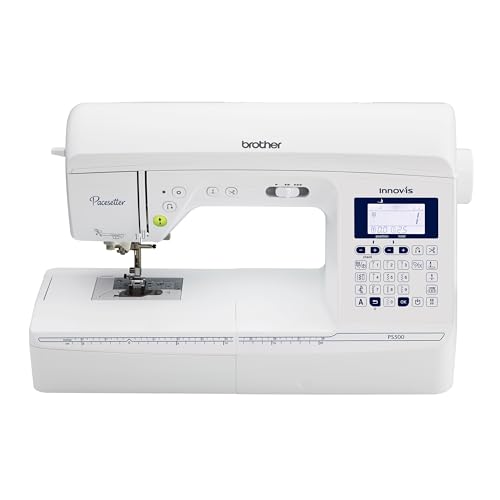
Brother PS500 Pacesetter Sewing Machine with 100 Built-In Stitches, 2.4" x 1.3"
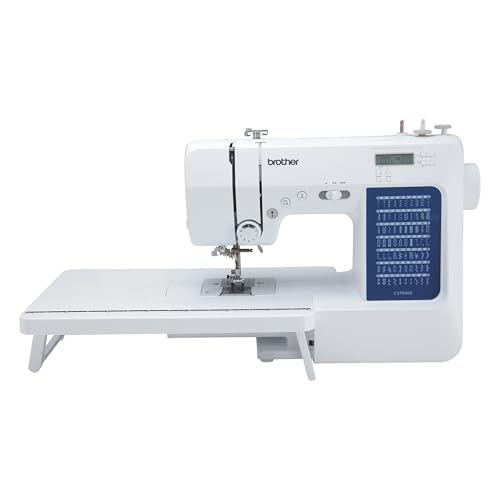
Brother CS7000X Computerized Sewing and Quilting Machine, 70 Built-in Stitches,

Janome 4120QDC-G Computerized Quilting and Sewing Machine with Bonus Quilt Kit
How to Choose the Right Sewing Machines
Choosing the right sewing machine depends on your main projects, experience level, workspace, and feature priorities—trade-offs that shift based on your real sewing habits. A feature that’s perfect for quilting may be useless for travel or basic repairs, so generic top-10 lists miss the nuance. Our recommendation engine evaluates your specific needs across five dimensions and matches you to the right sewing machine in under 60 seconds.
About this guide
Sewing Machines
Why Sewing Machine Shopping Is Trickier Than It Looks
Selecting sewing machines in 2026 means navigating a maze of machine types, feature sets, and price tiers that can overwhelm even experienced sewists. Mechanical sewing machines with a handful of stitches, like the Janome HD3000, tempt beginners with simplicity and lower prices—think $150 to $300—but often lack the versatility needed as skills grow. Computerized sewing machines, such as the Brother Innov-is A65 or Singer Quantum Stylist 9960, offer hundreds of stitches, automatic threaders, and LCD screens, but jump to $400–$600 and introduce more complexity. Specialty sewing machines—sergers for finishing seams, embroidery models for decorative work, and heavy-duty straight-stitchers for quilting—fill specific niches but add cost and learning curves. Most buyers get tripped up by overvaluing stitch count or buying the cheapest plastic sewing machines, only to regret poor tension or noisy operation. Key trade-offs with sewing machines include throat space for quilting, motor wattage (under 90W overheats on thick projects), and whether you need portability or power. The real challenge is matching sewing machines to your projects and experience, not just chasing features.
What Actually Sets Sewing Machines Apart
The differences that matter most in sewing machines aren’t always obvious from the box or spec sheet. All-metal frames, found in sewing machines like the Janome HD3000 and Singer 9960, provide vibration-free sewing and outlast plastic-heavy sewing machines under $200. Feed dog quality is a make-or-break factor—smooth feeding on denim or chiffon separates the Janome Sewist 725S from budget sewing machines that pucker or jam. Ignore the hype around 100+ stitch patterns; adjustable presser foot pressure and reliable automatic needle threaders have a bigger impact on daily use of sewing machines. Computerized sewing machines with drop-in bobbins and clear LCDs, such as the Brother Innov-is A65, streamline setup and troubleshooting, but aren’t essential unless you want decorative stitches or embroidery. Heavy-duty sewing machines with 100W+ motors are crucial for upholstery or quilting, while lightweight sewing machines like the Brother Smarter 160s excel for travel but struggle with thick fabrics. Skip sergers unless you’re committed to garment finishing with specialized sewing machines. In short: prioritize build quality, fabric handling, and convenience features over raw stitch count when choosing sewing machines.
How to Choose: Balancing Needs, Budget, and Features
Matching the right sewing machines to your needs means weighing how your primary projects, skill level, and workspace interact with your budget. Room for a large extension table or throat space is vital for quilters using sewing machines, but overkill for mending or crafts. If you sew denim or canvas, a heavy-duty sewing machine like the Janome Sewist 725S or Singer 4452 is worth the extra $100–$200 over entry-level sewing machines. For beginners, mechanical sewing machines with drop-in bobbins and auto-threaders reduce frustration, while advanced users may demand customizable stitch settings and connectivity for importing designs to their sewing machines. Portability often comes at the expense of power—if you travel to classes, a compact Brother Smarter 160s sewing machine is practical, but don’t expect it to handle thick layers. Our quiz weighs these factors—project type, experience, machine style, portability, and must-have features—to guide you to the best sewing machines for your needs. Ultimately, the smartest choice is one of the sewing machines that matches your real sewing habits, not just your wish list.
Buyer's guide
How to choose
1Core Performance Criteria
- Choose a machine with at least 20 built-in stitches for garment and craft versatility, but skip 100+ stitches unless you’ll use decorative options.
- Prioritize a motor rated at 90W or higher if you plan to sew denim, canvas, or thick quilts—lower wattage models overheat and stall.
- Look for adjustable presser foot pressure, which ensures even feeding on everything from chiffon to heavy upholstery fabrics.
- Test the feed dog mechanism on scrap denim in-store; smooth, consistent feeding is crucial for professional results and frustration-free sewing.
- A throat space of 6 inches or more is essential for quilting and large projects, but less critical for basic repairs or crafts.
- Machines with drop-in bobbins and automatic needle threaders, like the Brother Innov-is A65, dramatically reduce setup time and user error.
2Build Quality and Durability
- All-metal internal frames, found in models like the Janome HD3000 and Singer 9960, resist vibration and last years longer than plastic-heavy budget machines.
- Avoid machines under $200 with mostly plastic construction; these are prone to noisy operation, skipped stitches, and early failure.
- Check for robust feed dogs and solid presser feet—flimsy parts are a common failure point on low-cost models.
- A quality machine should run quietly and smoothly even at high speeds; excessive noise often signals cheap construction or poor alignment.
- Look for extended warranties covering the motor and bobbin system, as standard one-year plans often exclude common failures.
- Well-built machines can handle continuous use for 30–60 minutes without overheating, a must for quilting or heavy-duty projects.
3Value Analysis and Pricing
- The $300–$500 range is the sweet spot for machines with metal internals, 20+ stitches, and essential auto-features tested by experts.
- Expect to pay $400–$600 for advanced computerized models like the Brother Innov-is A65, which justify their price with reliability and ease of use.
- Mechanical basics at $100–$300 are tempting, but often lack durability or struggle with thick fabrics—investing more up front saves money long-term.
- Avoid sub-$200 machines unless you need a truly disposable or ultra-portable option; these often fail within a year of regular use.
- Consider the total cost, including accessories like extension tables, specialty presser feet, and replacement needles or bobbins.
- Price increases in 2026 mean chip shortages have pushed computerized models up 5–10%, so factor in value over time rather than chasing sales.
4Use-Case Fit and Project Matching
- If you mainly sew garments and crafts, a versatile computerized machine with 20–60 stitches is ideal—Brother Innov-is A65 is a top choice.
- Quilters should prioritize throat space, extension tables, and strong motors; the Janome Sewist 725S and Singer 9960 excel in these areas.
- For heavy fabrics or upholstery, only consider machines labeled heavy-duty with all-metal frames and 100W+ motors, such as Janome HD3000.
- Travelers or class attendees benefit from lightweight models like the Brother Smarter 160s, but must accept limited power and workspace.
- Embroidery and monogramming require specialty computerized machines with design import features—don’t expect standard models to handle these tasks.
- Kids and families should look for simple controls, safety features, and quiet operation, avoiding complex or high-speed models.
5Common Mistakes and Buyer Pitfalls
- Don’t be swayed by high stitch counts—most users stick to a handful of stitches, so focus on build quality and fabric handling instead.
- Buying the cheapest machine often leads to frustration from jamming, skipped stitches, and noisy operation, especially on lightweight fabrics.
- Neglecting to test the feed dogs and presser foot pressure can result in puckered seams or uneven feeding, especially on tricky materials.
- Forgetting about workspace needs—quilters frequently outgrow machines with small throat spaces or no extension table.
- Assuming all machines handle thick fabrics equally; only heavy-duty models with strong motors and metal frames can manage denim or canvas.
- Skipping warranty upgrades is risky; standard coverage rarely includes motor or threader failures, which are common on budget machines.
6Maintenance and Longevity
- Regularly clean lint from the bobbin area and feed dogs, especially after sewing with thick or fuzzy fabrics to prevent jams.
- Oil mechanical parts as recommended in the manual; computerized models may need less frequent lubrication but still benefit from periodic checks.
- Replace needles every 8–10 hours of sewing or when switching fabric types to maintain stitch quality and prevent skipped stitches.
- Store machines in a dust-free, dry environment—humidity and dust can corrode metal parts and degrade performance over time.
- Use only manufacturer-approved bobbins and presser feet to avoid damaging the hook or feed mechanism, especially on computerized models.
- Schedule professional servicing every 1–2 years for tension calibration and motor checks, particularly if you sew frequently or on heavy materials.
FAQ
Frequently asked questions
Is a computerized sewing machine worth the extra cost in 2026?
For most sewists, a computerized machine like the Brother Innov-is A65 or Singer 9960 is worth the $100–$300 premium if you want a wide stitch library, automatic needle threading, and easy troubleshooting. These models streamline setup and offer consistent tension, making them ideal for intermediate and advanced users. However, if you only sew basic projects or value simplicity, a well-built mechanical model is still a smart choice and saves money.
How does the Brother Innov-is A65 compare to the Janome Sewist 725S?
The Brother Innov-is A65 excels in convenience with 60 built-in stitches, an LCD screen, and an automatic thread cutter, making it ideal for versatile sewing. The Janome Sewist 725S, while offering fewer stitches (23), stands out for heavy-duty tasks and thick fabrics thanks to its robust motor and metal frame. Choose the Brother for stitch variety and ease of use, or the Janome for durability and power.
What features are essential for quilting on a sewing machine?
For quilting, prioritize a machine with at least 6 inches of throat space, a strong 100W+ motor, and an extension table for handling large projects. Adjustable presser foot pressure and smooth feed dogs are crucial for even stitching through multiple layers. Models like the Singer Quantum Stylist 9960 and Janome Sewist 725S are highly rated by experts for quilting in 2026.
Are budget sewing machines under $200 reliable for regular use?
Most sewing machines under $200 in 2026 use plastic-heavy construction and basic motors, which can result in noisy operation, skipped stitches, and early wear. They’re suitable for occasional repairs or travel, but not for frequent or heavy-duty projects. Investing $300–$500 in a model with a metal frame and stronger motor, like the Janome HD3000, offers far better longevity and performance.
What should I look for if I want a quiet sewing machine?
Quiet operation depends on build quality and internal materials. All-metal frames, like those in the Singer 9960 or Janome HD3000, dampen vibration and reduce noise. Avoid budget models under $200, which often rattle and hum loudly. Also, check for smooth-running motors and solid feed dogs, as these contribute significantly to a peaceful sewing experience.
How does the Singer Quantum Stylist 9960 stand out for advanced users?
The Singer Quantum Stylist 9960 offers 600 built-in stitches, customizable settings, and an all-metal frame, making it a favorite for advanced sewists and quilters. Its strong motor handles thick fabrics, while features like automatic thread cutting and an extension table streamline complex projects. It’s a top pick in 2026 for those who want both versatility and durability.
Do I need a serger or embroidery machine, or will a regular sewing machine suffice?
A standard sewing machine handles most garment, craft, and quilting needs. Sergers are specialized for finishing seams with a professional look, while embroidery machines allow for decorative stitching and monograms. Unless you’re committed to frequent garment finishing or custom embroidery, stick with a versatile sewing machine and add a specialty model only if your projects demand it.
Related reading
Best Sewing Machines By Category
Related Guides
Beginner CNC Routers
Project type, assembly comfort, upgrade needs, and support—get matched to the right CNC router for your skills and ambitions.
Beginner Telescopes
Skill level, observing targets, portability, and setup preferences—get matched to the right beginner telescope for your skywatching style.
Calipers
Matched to your measurement type, accuracy needs, shop environment, and workflow—find the caliper that truly fits your projects.
Desktop 3D Scanners
Matches you to the right scanner based on object size, precision, workflow, colour needs, and how you’ll actually use it.
3D Printer Filament
Matched to your project type, printer, experience, and budget—find the right filament for every print.