Skip the research trap. Get your beginner telescopes in 60 seconds.
We scored 400+ beginner telescopes across 5 dimensions — answer 5 quick questions and we'll match you to YOUR best pick.

Powered by DecisionScore™
Each product is evaluated across 18 weighted criteria — covering performance, value, build quality, and real-world usability. Your quiz answers re-weight the criteria to match what matters most to you, so two people can get different #1 picks from the same data.
See the DecisionScore methodology →- 6-inch f/8 Dobsonian reflector for balanced planetary and deep‑sky performance
- Simple altitude‑azimuth mount with smooth bearing surfaces
- Includes two eyepieces, 2-inch focuser and EZ Finder II
Find your perfect beginner telescopes
5 quick questions. No quiz-takes-10-minutes trap. A personalized match from 40 scored picks — with clear reasoning for every recommendation.
What objects are you most excited to observe through your first telescope?
Planets: crisp views of the moon, Jupiter and Saturn; Deep‑sky: faint galaxies and nebulae; A bit of everything: a balance of planets and nebulae; I want to take photos: focus on imaging. If unsure, pick a bit of everything.
- Planets and the Moon are bright and detailed in smaller scopes; deep-sky objects need more aperture for satisfying views.
- If you want to see galaxies and nebulae, prioritize reflectors or Dobsonians with at least 100mm aperture.
- Astrophotography requires stable mounts and camera adapters—consider this if imaging is your main goal.
As an Amazon Associate and affiliate partner we earn from qualifying purchases. Links on this page may earn us a commission at no extra cost to you. Full disclosure
Not ready for the quiz? Here are our overall top picks
These are our top-rated picks overall. For a recommendation matched to YOUR specific needs,
Sky-Watcher Heritage 150 Tabletop Dobsonian Telescope - Perfect for Beginners,
6-inch f/8 Dobsonian reflector for balanced planetary and deep‑sky performance
View Today's Price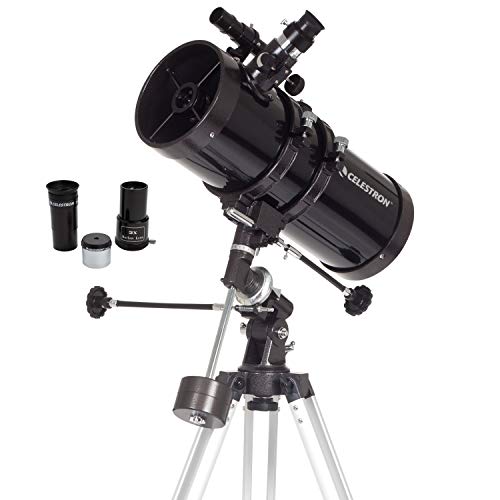
Celestron - PowerSeeker 127EQ Telescope - Manual German Equatorial Telescope for
Affordable 127mm Newtonian reflector on German equatorial mount
View Today's Price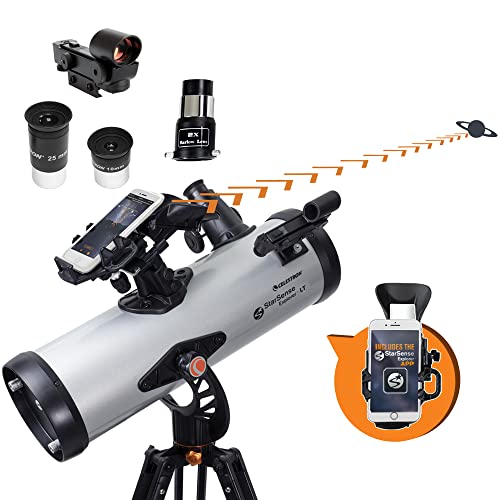
Celestron StarSense Explorer LT 114AZ App-Enabled Telescope – 114mm Newtonian
130mm f/5 tabletop reflector delivering wide, bright views
View Today's PriceHow to Choose the Right Beginner Telescopes
Choosing the right beginner telescope depends on aperture size, mount stability, portability, and your willingness to learn new skills—trade-offs that shift based on your observing interests, storage space, and patience for setup. A feature perfect for backyard planetary viewing could be frustratingly bulky for travel, while automation that helps one user may confuse another. Our recommendation engine evaluates your specific needs across five key dimensions and matches you to the right telescope in under 60 seconds.
About this guide
Beginner Telescopes
Why Choosing Your First Telescope Is Tricky
Picking beginner telescopes in 2026 is a balancing act between aperture, portability, and complexity. Go too small—like a 50-70mm “starter” scope—and you’ll be disappointed by dim, blurry views and quickly crave an upgrade. But jump to a bulky 10-inch Dobsonian, and you may never want to lug it outside. Most well-informed buyers searching for beginner telescopes land between $200 and $800, targeting 80-127mm apertures that reveal Saturn’s rings and the Orion Nebula affordably. The mount on beginner telescopes is just as critical: alt-azimuth mounts are fast and intuitive, but equatorial or GoTo mounts add tracking at the expense of setup time and weight. Many first-time buyers of beginner telescopes obsess over maximum magnification, but experts warn that clarity drops off fast above 40-60x on budget optics—aperture size matters far more for seeing detail. The biggest mistakes with beginner telescopes? Underestimating the hassle of wobbly tripods, overvaluing digital features, and picking a scope that’s either too basic or too unwieldy for your lifestyle.
What Actually Separates Beginner Telescopes
The real differences between beginner telescopes come down to optical design, mount stability, and how much hands-on learning you want. Refractor beginner telescopes like the Celestron Omni XLT 102 deliver crisp, low-maintenance views but get expensive fast above 100mm. Reflector beginner telescopes—especially Dobsonians such as the Apertura AD10—offer unbeatable light-gathering per dollar, but require occasional collimation and take up more space. Compound beginner telescopes (Maksutov and Schmidt–Cassegrains) fold the optics for portability, but cost more for the same aperture. Smart beginner telescopes, like those from DwarfLab, automate imaging and stacking but can’t match the tactile experience—or raw light power—of classic designs. Skip GoTo mounts on beginner telescopes unless you genuinely want push-button object finding; manual alt-azimuth or Dobsonian mounts are easier for most beginners and less frustrating to set up. Above all, prioritize a sturdy mount and at least 80mm aperture when shopping for beginner telescopes. Don’t get distracted by high advertised magnifications or bundled accessories with beginner telescopes—they rarely improve real-world performance.
How to Decide: Matching Scope to Your Life
Your observing goals, storage space, and willingness to tinker all interact to shape your best choice among beginner telescopes. If you dream of deep-sky galaxies, you’ll need a reflector or Dobsonian beginner telescope with a 100mm+ aperture, but be prepared for a scope that weighs over 20 lbs. Apartment dwellers or campers should look at compact refractor beginner telescopes or compound designs, sacrificing some light for portability. If you want plug-and-play simplicity, stick to refractor beginner telescopes or smart scopes—Dobsonians and reflectors demand more setup and maintenance. Budget is a hard constraint: under $200 means trade-offs in mount stability and aperture for beginner telescopes, while $350–$400 unlocks robust beginner telescopes like the Celestron PowerSeeker 127EQ or Omni XLT 102. Our quiz weighs your target objects, portability needs, learning curve, automation preference, and design taste to recommend the right shortlist of beginner telescopes. The key is to be honest about your patience for setup and how often you’ll actually carry beginner telescopes outside—those factors matter more than any spec sheet.
Buyer's guide
How to choose
1Core Performance Criteria: Aperture, Optics, and Mount
- Aperture size is king—aim for at least 80mm on refractors and 100mm+ on reflectors for meaningful planetary and nebula detail.
- Ignore high advertised magnification; clarity drops fast above 40-60x on budget optics, so focus on light-gathering instead.
- A sturdy mount matters more than you think—wobbly tripods ruin views even with good optics, especially below $200.
- Alt-azimuth mounts are fastest for beginners, while equatorial and GoTo mounts add tracking but require more setup and learning.
- Dobsonian bases offer rock-solid stability and easy manual tracking, making them the top pick for large reflectors under $500.
- Compound scopes (Maksutov/Schmidt) maximize aperture per inch of length, ideal for travel or small spaces but pricier per mm.
2Build Quality and Durability
- Metal tube construction and quality focuser mechanisms, as found on Celestron Omni or Apertura models, last years with minimal maintenance.
- Plastic mounts and accessories on sub-$150 scopes often break or slip, leading to frustration and poor alignment over time.
- Look for smooth, backlash-free slow-motion controls on mounts—these make fine adjustments much easier for tracking planets and stars.
- Reflectors and Dobsonians require occasional mirror collimation; choose models with easy-access collimation screws for stress-free alignment.
- Refractors are nearly maintenance-free but check for lens coatings and dust seals to prevent fogging or scratches in humid climates.
- Compound designs have sealed tubes, protecting optics from dust and dew, but can be expensive to repair if dropped or knocked.
3Value Analysis: What You Get for Your Money
- The $200–$350 range gets you a 100mm+ aperture and a sturdy mount—anything less often sacrifices stability or light-gathering.
- Celestron PowerSeeker and Omni XLT lines deliver solid optics for the price, but avoid bundled kits with flimsy tripods under $150.
- Apertura AD10 Dobsonian offers unmatched aperture-per-dollar for deep-sky viewing, but requires more storage and is less portable.
- Smart telescopes cost more for automation but rarely outperform classic designs for visual observing in this price bracket.
- Premium coatings and extra eyepieces add cost but have diminishing returns for beginners—prioritize core specs over accessory bundles.
- Expect to spend $30–$50 on a padded case or collimation tool if you plan to transport or maintain your scope regularly.
4Use-Case Fit: Matching Scope to Your Lifestyle
- Backyard astronomers with space can handle heavier Dobsonians, unlocking brighter deep-sky views without worrying about portability.
- Balcony or apartment users should stick to compact refractors or compound scopes for easy storage and quick setup.
- Campers and travelers need scopes under 10 lbs and under 24 inches long—refractors like the Celestron Ultima 80 excel here.
- If you want to dabble in astrophotography, prioritize scopes with T-adapter compatibility and stable mounts for camera use.
- Those seeking push-button simplicity should consider smart telescopes or GoTo mounts, accepting higher cost and some learning curve.
- Families or kids will appreciate intuitive alt-azimuth mounts and robust construction that survives bumps and impatient hands.
5Common Mistakes and How to Avoid Them
- Don’t chase maximum magnification—aperture size and stable mounts matter far more for crisp, satisfying views.
- Avoid “toy” telescopes under $100 with tiny objectives and shaky tripods; they frustrate more than inspire.
- Overestimating portability leads to unused scopes—honestly assess where and how often you’ll set up before choosing size.
- Neglecting collimation needs on reflectors causes blurry images; learn the basics or choose a refractor if you want zero fuss.
- Assuming all GoTo or smart features are intuitive—many require setup, calibration, and patience to master.
- Ignoring included eyepiece quality; cheap kits often ship with poor optics, so budget for a decent 20-40x eyepiece upgrade.
6Maintenance and Longevity
- Refractors require the least maintenance—just occasional cleaning of the objective lens with proper tools.
- Reflectors and Dobsonians need periodic collimation; invest in a simple cap or Cheshire tool for best results.
- Keep optics capped and store in padded cases to prevent dust, dew, and accidental knocks that degrade performance.
- Compound scopes are robust but expensive to repair if dropped; always transport in a fitted, padded case.
- Replace or upgrade eyepieces and focusers over time for improved performance as your skills grow.
- Check for warranty coverage—Celestron and Apertura offer multi-year support, which is valuable if you encounter defects or alignment issues.
FAQ
Frequently asked questions
Is a larger aperture always better for a beginner telescope?
Aperture size is crucial for gathering light, but bigger isn’t always better for beginners. Scopes above 127mm (5 inches) can be heavy and bulky, making them hard to transport and set up. Most experts suggest starting with an 80-127mm aperture, such as the Celestron PowerSeeker 127EQ or Omni XLT 102, which balances light-gathering with manageable size. Prioritize a scope you’ll actually use frequently, rather than the largest model you can afford.
How does Celestron compare to Sky-Watcher and Apertura for beginners?
Celestron is known for user-friendly refractors and reflectors with solid build quality, like the PowerSeeker and Omni XLT lines. Sky-Watcher offers similar performance but often includes better accessories and slightly smoother mounts in the $250–$400 range. Apertura stands out for Dobsonian reflectors like the AD10, delivering exceptional aperture-per-dollar, though they’re bulkier. All three brands are safe bets, but your choice should match your preferred design and portability needs.
What mount type is best for a beginner: alt-azimuth, equatorial, or GoTo?
For most beginners, an alt-azimuth mount is the easiest to use—just point and observe, with minimal setup. Equatorial mounts like those on the Celestron PowerSeeker 127EQ allow for tracking celestial objects, but require polar alignment and a learning curve. GoTo mounts automate finding objects, but add cost and complexity. Unless you specifically want auto-tracking, start with a sturdy alt-azimuth or Dobsonian mount for a frustration-free experience.
Is a smart telescope worth paying extra for in 2026?
Smart telescopes like DwarfLab models offer automated object finding and image stacking, appealing for astrophotography and tech enthusiasts. However, in the $200–$400 range, traditional refractors and reflectors from Celestron or Apertura provide better visual performance and hands-on learning. Pay extra for a smart scope only if you’re focused on imaging or want app-based control; otherwise, classic optics deliver more value for visual stargazing.
What specs should I look for if I want to see both planets and deep-sky objects?
To enjoy both planetary and deep-sky views, target a scope with at least a 100mm aperture and a focal length of 700–1000mm. Models like the Celestron Omni XLT 102 or PowerSeeker 127EQ fit this bill, offering enough light-gathering for nebulae and enough resolution for Saturn’s rings. Avoid models under 80mm aperture, as they struggle with faint objects. A stable mount is also essential for tracking and clarity.
How portable are Dobsonian telescopes compared to refractors?
Dobsonian telescopes like the Apertura AD10 offer massive aperture for the price but are bulky, often weighing 20–30 lbs and requiring significant storage space. Refractors such as the Celestron Ultima 80 or Omni XLT 102 are lighter (typically under 10 lbs) and more compact, making them a better fit for travel, balconies, or quick backyard sessions. Choose Dobsonians for stationary use and refractors for portability.
What are the most common beginner mistakes when buying a telescope?
The most frequent mistakes include prioritizing magnification over aperture, buying underpowered scopes with shaky mounts (especially under $100), and underestimating the importance of portability. Many also overlook maintenance needs—reflectors require collimation, while refractors are nearly maintenance-free. Finally, buyers often expect smart or GoTo features to be plug-and-play, but these can involve setup and calibration. Matching your scope to your real-world habits is key to long-term enjoyment.
Best Beginner Telescopes By Category
Related Guides
Beginner CNC Routers
Project type, assembly comfort, upgrade needs, and support—get matched to the right CNC router for your skills and ambitions.
Calipers
Matched to your measurement type, accuracy needs, shop environment, and workflow—find the caliper that truly fits your projects.
Desktop 3D Scanners
Matches you to the right scanner based on object size, precision, workflow, colour needs, and how you’ll actually use it.
3D Printer Filament
Matched to your project type, printer, experience, and budget—find the right filament for every print.