Skip the research trap. Get your ergonomic chairs in 60 seconds.
We scored 250+ ergonomic chairs across 5 dimensions — answer 5 quick questions and we'll match you to YOUR best pick.
Powered by DecisionScore™
Each product is evaluated across 18 weighted criteria — covering performance, value, build quality, and real-world usability. Your quiz answers re-weight the criteria to match what matters most to you, so two people can get different #1 picks from the same data.
See the DecisionScore methodology →- S-shaped backrest conforms to spine
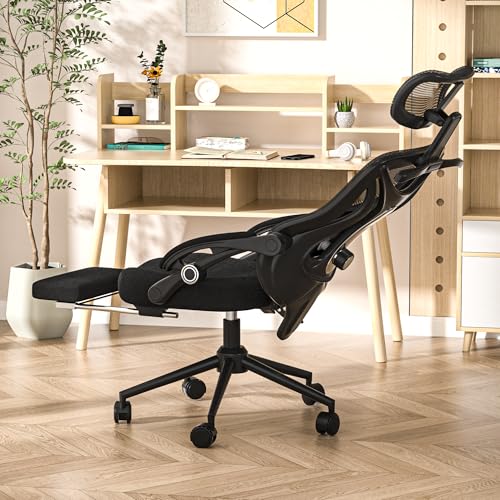
- 2D adjustable lumbar support (up/down, fore/aft)
- Retractable footrest for relaxation breaks
Find your perfect ergonomic chairs
5 quick questions. No quiz-takes-10-minutes trap. A personalized match from 25 scored picks — with clear reasoning for every recommendation.
What type of armrests do you prefer?
Armrests can significantly impact your comfort and posture. Adjustable armrests allow you to customize the chair to your body, reducing strain on your shoulders and arms. Consider if you need 2D, 3D, or 4D adjustability based on your work habits.
- Office work benefits from lumbar and seat depth adjustability for posture.
- Gaming chairs often add recline or footrests, but may lack true lumbar support.
- Mixed-use setups need a balance of adjustability, mesh airflow, and recline.
As an Amazon Associate and affiliate partner we earn from qualifying purchases. Links on this page may earn us a commission at no extra cost to you. Full disclosure
Not ready for the quiz? Here are our overall top picks
These are our top-rated picks overall. For a recommendation matched to YOUR specific needs,
Ergonomic Office Chair - Adjustable Lumbar & Headrest, 90-160° Reclining with
S-shaped backrest conforms to spine
View Today's Price
FLEXISPOT OC3 Cloud Ergonomic Office Chair with Footrest, High Back Computer
High-back mesh swivel chair with foam cushion seat
View Today's Price
Hbada X7 Smart Ergonomic Chair, Office Chair, with Fully Automated Lumbar
Fully automated AI lumbar tracking system
View Today's PriceHow to Choose the Right Ergonomic Chairs
Choosing the right ergonomic chair depends on your body size, daily sitting hours, lumbar support needs, and workspace setup—trade-offs that shift based on your unique situation. A chair perfect for a petite user or a gamer is often wrong for a tall office worker or someone with chronic back pain. Our recommendation engine evaluates your specific needs across five key dimensions and matches you to the right ergonomic chair in under 60 seconds.
About this guide
Ergonomic Chairs
Why Ergonomic Chair Shopping Is Trickier Than It Looks
Choosing ergonomic chairs in 2026 is more complicated than picking what looks comfortable or fits your budget. The $100–$400 price tier is packed with mesh ergonomic chairs, executive models, and gaming-inspired ergonomic chairs, but the differences go far beyond style. For instance, a $150 mesh ergonomic chair might look similar to a $350 SIHOO or NOUHAUS ergonomic chair, but the cheaper ergonomic chairs often skimp on lumbar adjustability, seat depth sliders, or frame durability—features that are make-or-break for all-day comfort. Many buyers fixate on headrests or color, but overlook critical specs like dynamic lumbar support (which can relieve back pain) or weight capacity (standard is 275–300 lbs, but big & tall ergonomic chairs go up to 400 lbs). Most people get tripped up by not matching the ergonomic chair’s adjustability to their daily sitting hours or body type, leading to discomfort or premature wear. The reality: you can’t just buy ergonomic chairs by looks or price alone—every feature has real ergonomic consequences.
What Actually Sets the Best Ergonomic Chairs Apart
The real differentiators in ergonomic chairs under $400 are adjustability, lumbar support sophistication, and build quality—not just brand name. SIHOO, GABRYLLY, Ticova, Hbada, NOUHAUS, and FlexiSpot have all pushed ergonomic chairs with features like 3D or 4D armrests, height and depth-adjustable lumbar, and mesh that won’t sag after a year. Skip fixed-lumbar ergonomic chairs unless you only sit a few hours daily; dynamic lumbar systems, like those in NOUHAUS Ergo3D or SIHOO M18 ergonomic chairs, adapt as you move and offer far better support for long sessions. Mesh ergonomic chairs are king for breathability, but only if the mesh is tensioned and reinforced—cheap mesh sags fast. Don’t pay extra for a footrest unless you recline to relax or game in your ergonomic chair. BIFMA and SGS certifications matter more than many realize: they signal the ergonomic chair has passed rigorous safety and durability tests. In short, prioritize multi-point adjustability and proven build in ergonomic chairs over flashy extras or brand hype.
How to Choose the Right Ergonomic Chair for You
Your workspace, body size, and daily habits all interact to determine which ergonomic chair will actually keep you comfortable and healthy. For example, a 5'2" user needs ergonomic chairs with a lower seat height and a shallower seat pan, while someone over 6'2" or 275 lbs should look for big & tall ergonomic chairs with reinforced frames and wider seats. If you sit 8+ hours a day, you need ergonomic chairs with multi-point adjustability—seat depth, lumbar height/depth, 2D or 4D arms—plus a mesh back for airflow. Budget also constrains which ergonomic chair features are realistic: under $200, you’ll likely sacrifice 4D arms or dynamic lumbar, but can still get solid mesh ergonomic chairs and basic adjustability from brands like Hbada. Our quiz evaluates your ergonomic chair use case, material preference, lumbar needs, daily sitting hours, and body size to match you with the best-fit ergonomic chair. The key is to balance your real needs with the ergonomic chair features that truly affect comfort and long-term health.
Buyer's guide
How to choose
1Core Performance Criteria
- Prioritize chairs with adjustable lumbar support, ideally height and depth adjustable, for proper spine alignment during long sessions.
- Look for seat depth sliders to accommodate different leg lengths and prevent circulation issues, especially if you’re under 5'5" or over 6'2".
- Choose mesh-backed chairs for superior airflow—brands like SIHOO and NOUHAUS use high-tension mesh that resists sagging over years of use.
- Multi-point adjustability—seat height, armrest position (2D to 4D), and headrest angle—directly impacts comfort for all-day workers.
- Weight capacity should match your build; standard chairs support up to 275–300 lbs, while big & tall models handle 350–400 lbs easily.
- Dynamic lumbar systems, found in premium models like NOUHAUS Ergo3D, adapt as you move and are worth the extra cost for chronic back pain.
2Build Quality and Durability
- Look for BIFMA or SGS certification—these indicate the chair has passed rigorous durability and safety tests, not just basic factory checks.
- Frames made from reinforced steel or heavy-duty nylon last longer than basic plastic, especially for users over 250 lbs or daily heavy use.
- High-tension mesh resists stretching and sagging; avoid bargain chairs where the mesh feels loose or thin right out of the box.
- Check for at least a 2-year warranty—brands like FlexiSpot and SIHOO offer 3-year coverage, signaling confidence in their build quality.
- PU caster wheels glide smoothly and won’t scratch hardwood, but cheap casters on sub-$150 chairs may jam or break after a few months.
- Quality gas lifts (Class 3 or higher) ensure seat height stays stable over years, which is crucial for maintaining ergonomic posture.
3Value Analysis
- Chairs in the $150–$250 range offer most core ergonomic features, but may lack advanced lumbar or 4D armrests found in $300+ models.
- SIHOO and GABRYLLY consistently deliver premium adjustability and mesh quality at under $350, outperforming many $500+ office chairs.
- Don’t overpay for a headrest if you rarely recline; that money is better spent on adjustable lumbar or seat depth features.
- Warranty length is a hidden value factor—longer coverage reduces your total cost of ownership if parts fail or wear prematurely.
- Executive-style ergonomic chairs often cost more for looks, but mesh task chairs usually offer better airflow and adjustability for the price.
- Watch for bundled footrests or accessories—these can inflate the price without adding real ergonomic benefit unless you specifically need them.
4Use-Case Fit
- Office workers sitting 8+ hours daily need multi-point adjustability and dynamic lumbar—skip basic models designed for short-term use.
- Gamers may benefit from recline and footrest features, but should still prioritize lumbar and seat adjustability to avoid back strain.
- Petite users (under 5'3") need chairs with lower minimum seat heights and shallower seat pans—check specs before buying.
- Big & tall users (over 6'2" or 275 lbs) require reinforced frames and wider seats; standard chairs will feel cramped and wear out faster.
- If you switch between work and gaming, look for models like NOUHAUS or GABRYLLY that balance recline, adjustability, and mesh airflow.
- Shared or hot-desk environments demand easy-to-adjust chairs so multiple users can quickly dial in their comfort settings.
5Common Mistakes
- Focusing only on aesthetics or color and ignoring lumbar adjustability leads to discomfort after just a few hours of sitting.
- Assuming all mesh chairs are equally breathable—cheap mesh sags and loses support, while high-tension mesh maintains airflow and comfort.
- Buying a chair with fixed armrests or lumbar if you have back pain or sit 6+ hours daily is a recipe for long-term issues.
- Ignoring weight capacity—standard models top out at 275–300 lbs, so big & tall users need chairs rated for 350 lbs or more.
- Skipping certifications like BIFMA or SGS increases the risk of early failure or safety issues, especially for daily heavy use.
- Neglecting to check seat depth and height ranges means the chair may not fit your body, causing leg or back strain.
6Maintenance and Longevity
- Vacuum mesh regularly to prevent dust buildup, which can degrade elasticity and airflow over time, especially in high-use environments.
- Tighten screws and bolts every few months—loose hardware leads to squeaks and can shorten the chair’s lifespan.
- Lubricate caster wheels and tilt mechanisms annually to keep movement smooth and prevent premature wear, especially on carpeted floors.
- Replace worn-out armrest pads or seat cushions as needed; most brands sell affordable replacement parts for extended use.
- Check mesh tension periodically—if sagging develops, some brands like SIHOO offer replacement mesh panels instead of full chair replacements.
- Store your chair away from direct sunlight to prevent mesh or fabric fading and plastic brittleness, which can reduce longevity.
FAQ
Frequently asked questions
Is it worth paying extra for 4D armrests on ergonomic chairs?
If you spend more than six hours a day at your desk, 4D armrests—adjustable in height, width, depth, and angle—are absolutely worth the premium. They allow you to fine-tune support for typing, gaming, or relaxing, reducing shoulder and wrist strain. Brands like NOUHAUS and Ticova include 4D arms in models under $400, a feature once reserved for $1,000+ chairs. For occasional use, 2D or 3D arms are sufficient, but for daily, multi-tasking comfort, 4D adjustability is a real upgrade.
How does SIHOO compare to GABRYLLY for all-day office use?
SIHOO and GABRYLLY both offer excellent mesh ergonomic chairs under $400, but SIHOO models like the M18 typically provide more adjustability, including dynamic lumbar and a wider seat depth range. GABRYLLY excels at build quality and smooth recline, making it a favorite for taller users. Both brands offer BIFMA certification and 3-year warranties. For all-day office use, SIHOO’s lumbar and seat depth adjustability give it a slight edge, but GABRYLLY is a top pick for those prioritizing recline and frame durability.
What seat material is best for hot climates or long sitting sessions?
Breathable mesh is the best choice for hot climates or extended sitting. High-tension mesh, as found in NOUHAUS and SIHOO chairs, allows airflow and prevents heat buildup, keeping you cooler during long workdays. Foam or leather seats provide more cushioning but tend to trap heat and may become uncomfortable after several hours. If you’re prone to sweating or your office lacks strong air conditioning, always choose a mesh seat and back for optimal comfort and hygiene.
Do I need a headrest on my ergonomic chair?
A headrest is only essential if you recline frequently or suffer from neck fatigue. Adjustable headrests, like those on Ticova and SIHOO models, provide extra support during breaks or long gaming sessions. However, if you mostly sit upright for typing or focused work, a headrest may go unused. Instead, prioritize lumbar and seat adjustability. For multi-use setups, a removable or 2D headrest adds flexibility without driving up the price unnecessarily.
What weight capacity should I look for in a big & tall ergonomic chair?
For big & tall users—over 6'2" or 275 lbs—seek chairs rated for at least 350 lbs. The best big & tall ergonomic chairs, like those from FlexiSpot and SIHOO, offer reinforced steel frames, wider seats, and larger gas lifts to ensure stability and longevity. Standard office chairs max out at 275–300 lbs and may feel cramped or wear out quickly under heavier loads. Always check the manufacturer’s specs before buying to avoid premature failure.
How does NOUHAUS Ergo3D’s dynamic lumbar compare to static lumbar systems?
NOUHAUS Ergo3D’s dynamic lumbar system automatically adapts to your posture as you move, providing continuous lower back support without manual adjustment. Static lumbar pads, common in budget models, require you to reposition them and may not maintain contact as you shift. For users with chronic back pain or who sit 8+ hours daily, dynamic lumbar is a significant upgrade, reducing fatigue and promoting healthier posture throughout the day.
Can I get a quality ergonomic chair for under $200?
Yes, but expect to compromise on advanced adjustability and premium mesh. Brands like Hbada offer solid mesh task chairs with basic lumbar and seat height adjustment in the $120–$180 range. However, you’ll likely miss out on features like seat depth sliders, 3D/4D armrests, or dynamic lumbar systems. For moderate use (under 6 hours daily), these budget models are a strong value. For all-day work or chronic pain, it’s worth stretching your budget to $250+.
Related reading
Best Ergonomic Chairs By Category
Related Guides
3D Printers
Matched to your print size, detail needs, materials, and how much you want to tinker or automate.
All-in-One Laser Printers for Home Office
Matched to your print volume, color needs, workflow features, and budget—get the right laser all-in-one for your home office.
Sit-Stand Desk Converters
Matched to your desk size, equipment weight, ergonomics, and feature preferences—get the right converter for your workflow.
Budget and Mid‑Range Laptops
Matched to your main tasks, OS preference, portability, and display—find a laptop that fits your real workflow and budget.
Color Laser Printers
Matched to your print volume, connectivity, and cost priorities—find the color laser printer that fits your workflow and space.