Skip the research trap. Get your portable travel monitors in 60 seconds.
We scored 350+ portable travel monitors across 5 dimensions — answer 5 quick questions and we'll match you to YOUR best pick.
Powered by DecisionScore™
Each product is evaluated across 18 weighted criteria — covering performance, value, build quality, and real-world usability. Your quiz answers re-weight the criteria to match what matters most to you, so two people can get different #1 picks from the same data.
See the DecisionScore methodology →Find your perfect portable travel monitors
5 quick questions. No quiz-takes-10-minutes trap. A personalized match from 35 scored picks — with clear reasoning for every recommendation.
What is your preferred screen size for a portable monitor?
Screen size affects both portability and viewing experience. Larger screens offer more viewing area but can be less portable, while smaller screens are easier to carry but may offer less visual space.
- 13–14 inch monitors are easiest to pack and ideal for ultralight travel setups.
- 15–16 inch screens give you more workspace and feel like a true desktop second monitor.
- Larger screens can be harder to fit in compact bags or under airline seat storage.
As an Amazon Associate and affiliate partner we earn from qualifying purchases. Links on this page may earn us a commission at no extra cost to you. Full disclosure
Not ready for the quiz? Here are our overall top picks
These are our top-rated picks overall. For a recommendation matched to YOUR specific needs,
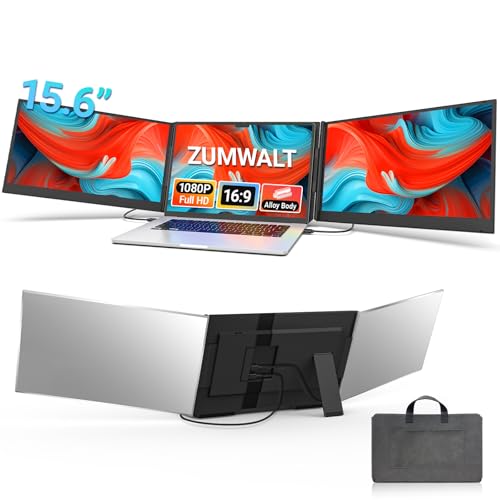
15.6" Laptop Screen Extender, 1080P FHD Triple Portable Monitor for Laptops,

ARZOPA 16.1'' 144Hz Portable Gaming Monitor, 106% sRGB 1080P FHD Kickstand
16.1-inch 144Hz FHD IPS with free sleeve bag
View Today's Price
FLYTOCCA Portable Monitor, 16 Inch FHD 1200P, Horizontal/Vertical Monitor, Plug
How to Choose the Right Portable Travel Monitors
Choosing the right portable travel monitor depends on screen size, resolution, connectivity, and your budget—trade-offs that shift based on your primary use case and travel habits. A feature that’s perfect for a creative professional might be wasted on a casual traveler, and bulky monitors can ruin portability. Our recommendation engine evaluates your specific setup and priorities across five key dimensions, matching you to the best monitor for your needs in under 60 seconds.
About this guide
Portable Travel Monitors
Why Choosing the Right Portable Travel Monitor Is Tricky
On paper, portable travel monitors all promise slim profiles, USB-C simplicity, and crisp visuals, but the real challenge is balancing specs and trade-offs that actually impact your workflow. When comparing portable travel monitors, screen size is the first hurdle: 13–14 inch models are ultra-light and slip into any bag, but 15–16 inch portable travel monitors give you the working space most laptop users crave. Resolution is another trap—1080p is fine for emails and spreadsheets, but if you do any coding, design, or content work, stepping up to 2K or 2.5K QHD portable travel monitors makes a visible difference. Price tiers are real: under $150 gets you solid 1080p IPS portable travel monitors from brands like KYY or cocopar, but you’ll sacrifice color accuracy and brightness. The $150–$200 range unlocks better build quality, 100% sRGB panels, and smarter stands in portable travel monitors, while $220–$300 buys you QHD or even OLED portable travel monitors from ASUS or Lenovo. Most buyers underestimate the importance of true single-cable USB-C (with DisplayPort Alt Mode) in portable travel monitors and end up juggling adapters—don’t make that mistake. Every spec matters with portable travel monitors, and it’s easy to overpay for features you’ll never use.
What Actually Sets Portable Monitors Apart in 2026
Not all portable travel monitors are created equal—brands like ASUS, Lenovo, and ViewSonic lead with real innovations, while budget portable travel monitors from KYY or cocopar offer surprising value if you pick carefully. The most important differentiators among portable travel monitors are panel type (IPS vs OLED), color coverage (aim for 100% sRGB if you care about color), and connectivity. Skip any portable travel monitor that lacks USB-C with DisplayPort Alt Mode unless you only plan to use HDMI with consoles. Touchscreen portable travel monitors are tempting, but unless you specifically need interactive input, they add bulk and drain battery faster. Brightness is more than a number: 300 nits is the minimum for working in bright hotel rooms or cafés, but many budget portable travel monitors fall short. Build quality matters—premium portable travel monitors like the Lenovo ThinkVision M14 weigh just 1.26 lbs and include a sturdy, adjustable stand, while cheaper portable travel monitors often rely on flimsy folding covers that slide around. Don’t get distracted by built-in speakers in portable travel monitors; they’re universally weak. Prioritize a rock-solid stand, 2+ USB-C ports, and a matte anti-glare finish when choosing portable travel monitors. OLED portable travel monitors are only worth it if you crave deep blacks and top-tier contrast for creative work.
How to Choose: Key Decision Factors for Your Setup
Screen size, resolution, connectivity, and budget all interact when selecting portable travel monitors—pick the wrong combination and you’ll either lug extra weight or miss out on features you need. For example, a 16-inch QHD portable travel monitor is fantastic for multitasking but may not fit in a compact backpack or meet airline carry-on limits. If you travel with a MacBook, make sure your portable travel monitor supports true USB-C single-cable operation; otherwise, you’ll be stuck with dongles. Budget is a hard constraint: under $150 means you’ll likely get 1080p portable travel monitors and basic stands, while $200+ opens up QHD, better color, and lighter builds in portable travel monitors. Our quiz evaluates your preferred screen size, resolution, connectivity needs, primary use case, and budget to match you to the right portable travel monitor. Don’t ignore weight—anything over 2 lbs gets old fast on long trips with portable travel monitors. If you game on the go, look for 120Hz refresh rates in portable travel monitors, but for most, 60Hz IPS with solid color is perfect. Always check real user reviews for durability, as hinges and stands are common failure points in portable travel monitors. The best portable travel monitor is the one that fits your workflow, bag, and travel style—not just the spec sheet.
Buyer's guide
How to choose
1Core Performance Criteria
- Aim for a 15.6-inch IPS panel with at least 1080p resolution for the best balance of portability and usable screen space on the road.
- 100% sRGB color coverage is essential for creative work or photo editing, but less critical for basic productivity or spreadsheet tasks.
- A minimum brightness of 300 nits ensures visibility in bright environments like airport lounges or sunlit cafés—many budget models fall short here.
- USB-C with DisplayPort Alt Mode is a must for true single-cable setups with modern laptops; HDMI is only necessary for gaming consoles or older devices.
- Look for a refresh rate of 60Hz for productivity, but step up to 120Hz if you plan to game or need ultra-smooth scrolling.
- Integrated stands or sturdy smart covers are non-negotiable—flimsy cases make the monitor frustrating to use on uneven surfaces.
2Build Quality and Durability
- Premium models like the Lenovo ThinkVision M14 use magnesium alloy or aluminum chassis, making them lighter and more resilient than plastic-bodied competitors.
- Check for robust hinge mechanisms or adjustable stands—these are the most common failure points in travel monitors after a few months of use.
- A matte anti-glare coating is crucial for reducing reflections, especially if you’ll be working under harsh lighting or outdoors.
- Weight matters: anything over 2 lbs becomes a burden in your bag, while sub-1.5 lb models feel effortless to carry all day.
- Look for reinforced USB-C ports and cables—cheap connectors are prone to bending or breaking after repeated travel and packing.
- Models with VESA mounting support offer more flexibility for semi-permanent setups, though this is less critical for pure travel use.
3Value Analysis by Price Tier
- Under $150 gets you reliable 1080p IPS panels from brands like KYY and cocopar, but expect compromises in color accuracy and stand quality.
- $150–$200 is the sweet spot for most buyers, unlocking 100% sRGB coverage, better build quality, and dual USB-C ports for maximum flexibility.
- Premium models ($220–$300) offer QHD or OLED panels, ultra-light builds, and best-in-class stands—ideal for professionals or frequent travelers.
- Don’t pay extra for built-in speakers; audio quality is universally poor and adds little value for most users.
- If you need touch input, expect to pay a premium and accept a slight increase in weight and thickness compared to non-touch models.
- Always compare warranty terms—some brands offer 2- or 3-year coverage, which is worth a slight price premium for frequent travelers.
4Use-Case Fit and Compatibility
- For remote work and spreadsheets, prioritize a 15.6-inch 1080p IPS panel with USB-C for plug-and-play simplicity and minimal setup time.
- Creative professionals should seek 2K or 2.5K QHD displays with 100% sRGB or better, and consider OLED only if true color accuracy is mission-critical.
- Gamers benefit from 120Hz refresh rates and HDMI input—look for models that support both USB-C and HDMI for maximum compatibility.
- MacBook users must confirm DisplayPort Alt Mode support on both the monitor and their laptop for true single-cable operation.
- If you plan to use the monitor with consoles like Nintendo Switch or PS5, HDMI is required—USB-C alone won’t work for these devices.
- Touchscreen models are best for presentations or interactive tasks, but add weight and reduce battery life, so only choose if you truly need touch.
5Common Mistakes and Pitfalls
- Many buyers assume all USB-C ports are equal—without DisplayPort Alt Mode, you’ll need extra adapters and lose the single-cable advantage.
- Ignoring brightness specs leads to frustration in bright environments; always check for at least 300 nits, especially on budget models.
- Flimsy folding cases seem fine at first but quickly become unstable—invest in a model with a real stand or robust smart cover.
- Overpaying for built-in speakers is a waste; even the best models sound tinny compared to laptop speakers or earbuds.
- Choosing a 16-inch model without checking your bag size or airline carry-on limits can result in an awkward fit or extra hassle.
- Neglecting warranty coverage is risky—travel monitors are prone to wear, so prioritize brands with strong support and easy replacements.
6Maintenance and Longevity
- Always store your monitor in a padded sleeve or with its smart cover to prevent scratches and minimize impact damage during travel.
- Avoid wrapping cables tightly around the monitor—this stresses USB-C and HDMI ports, leading to premature failure or loose connections.
- Clean the screen with a microfiber cloth and avoid harsh cleaners, especially on matte or anti-glare coatings, to preserve clarity.
- Check for firmware updates from major brands like ASUS or Lenovo, as these can improve compatibility and fix minor bugs over time.
- Inspect hinges and stands regularly—tighten screws if needed and avoid forcing stands beyond their designed range of motion.
- If you notice flickering or color shifts, test with a different cable or device first; many issues are cable-related rather than panel defects.
FAQ
Frequently asked questions
Is it worth paying extra for a QHD or OLED portable monitor in 2026?
If you do creative work, code, or value sharp text and accurate color, paying extra for a QHD (2K/2.5K) or OLED portable monitor is absolutely worth it. QHD panels deliver noticeably crisper visuals for spreadsheets and design, while OLED offers true blacks and vibrant color for photo or video editing. For basic productivity or streaming, 1080p is sufficient and keeps costs lower. Only step up to OLED if you need best-in-class color and contrast—otherwise, a high-quality IPS QHD model hits the sweet spot for most travelers.
How does ASUS ZenScreen compare to Lenovo ThinkVision M14?
The ASUS ZenScreen MB16AC and Lenovo ThinkVision M14 are both top-tier portable monitors, but they differ in key ways. The Lenovo is lighter (1.26 lbs vs 1.7 lbs), uses a magnesium alloy chassis for better durability, and features dual USB-C ports for ambidextrous setups. The ASUS offers a hybrid-signal USB-C that works with both USB-A and USB-C laptops, which is handy for older devices. Both offer 1080p IPS panels and 300+ nits brightness, but Lenovo’s stand is more adjustable and stable. For pure portability and build, Lenovo wins; for legacy compatibility, ASUS is better.
What resolution do I need for productivity versus creative work?
For general productivity—emails, spreadsheets, browsing—a 1080p (Full HD) portable monitor is sharp enough and keeps costs and power draw low. If you work with code, design, or detailed documents, a 2K or 2.5K QHD display offers much crisper text and more screen real estate, reducing eye strain. Creative professionals editing photos or video should prioritize QHD or even OLED panels with 100% sRGB or better color coverage. In 2026, 1080p is the budget standard, while QHD is the professional’s choice for clarity and accuracy.
Do I need both USB-C and HDMI ports on a travel monitor?
You only need both USB-C and HDMI if you plan to use your portable monitor with a mix of modern laptops (USB-C) and gaming consoles or older devices (HDMI). USB-C with DisplayPort Alt Mode allows single-cable power and video for most laptops, including MacBooks. HDMI is essential for Nintendo Switch, PS5, or legacy laptops. If your use is strictly with a modern laptop, USB-C alone is simpler and lighter. For maximum flexibility, models like the KYY Portable Monitor offer both ports at a reasonable price.
How important is brightness for portable travel monitors?
Brightness is critical—aim for at least 300 nits to ensure your screen remains visible in bright hotel rooms, airports, or outdoor cafés. Many budget monitors advertise 250 nits or less, which can be frustrating in well-lit spaces. Premium models from ASUS, Lenovo, and ViewSonic consistently hit or exceed 300 nits, making them much more versatile for travel. If you work in dim environments, lower brightness is fine, but for all-around use, don’t compromise here. Always check real-world reviews, as advertised specs can be optimistic.
Are built-in speakers on portable monitors worth considering?
Built-in speakers on portable travel monitors are almost always underwhelming—sound is thin, quiet, and lacks bass. They’re fine for occasional video calls or alerts, but not for movies or music. If audio quality matters, use your laptop’s speakers or bring compact earbuds. Don’t pay extra for monitors advertising ‘premium’ speakers; even top brands like ASUS and ViewSonic can’t overcome the limitations of ultra-thin designs. Focus your budget on display quality and build, not audio features.
Which brands offer the best reliability and support in 2026?
In 2026, ASUS, Lenovo, and ViewSonic lead for reliability, build quality, and customer support. Lenovo’s ThinkVision series is praised for its robust chassis and dual USB-C ports, while ASUS ZenScreen models offer hybrid-signal compatibility and strong warranties. Budget brands like KYY and cocopar deliver good value, but their support and long-term durability can be inconsistent. Always check for at least a 1-year warranty—premium models sometimes offer 2 or 3 years, which is worthwhile for frequent travelers.
Related reading
Best Portable Travel Monitors By Category
Related Guides
3D Printers
Matched to your print size, detail needs, materials, and how much you want to tinker or automate.
All-in-One Laser Printers for Home Office
Matched to your print volume, color needs, workflow features, and budget—get the right laser all-in-one for your home office.
Sit-Stand Desk Converters
Matched to your desk size, equipment weight, ergonomics, and feature preferences—get the right converter for your workflow.
Budget and Mid‑Range Laptops
Matched to your main tasks, OS preference, portability, and display—find a laptop that fits your real workflow and budget.
Color Laser Printers
Matched to your print volume, connectivity, and cost priorities—find the color laser printer that fits your workflow and space.