Skip the research trap. Get your journals in 60 seconds.
We scored 400+ journals across 5 dimensions — answer 5 quick questions and we'll match you to YOUR best pick.

Powered by DecisionScore™
Each product is evaluated across 18 weighted criteria — covering performance, value, build quality, and real-world usability. Your quiz answers re-weight the criteria to match what matters most to you, so two people can get different #1 picks from the same data.
See the DecisionScore methodology →- 256 lined pages of premium 100gsm paper
- PU leather hardcover with buckle clasp closure
- A5 size (5.9" x 8.59") — generous writing space
Find your perfect journals
5 quick questions. No quiz-takes-10-minutes trap. A personalized match from 39 scored picks — with clear reasoning for every recommendation.
What type of cover do you prefer for your journal?
The cover type of a journal affects its durability, flexibility, and portability. Hardcovers provide more protection and are ideal for writing on the go, while softcovers are lighter and more flexible, making them easier to carry around.
- If you want to organize tasks or track habits, bullet journaling is ideal.
- For creative writing or daily reflection, choose 'everyday writing & reflection' as your use case.
- Sketching or visual notes? Select 'sketching & drawing' for the best paper and layout match.
As an Amazon Associate and affiliate partner we earn from qualifying purchases. Links on this page may earn us a commission at no extra cost to you. Full disclosure
Not ready for the quiz? Here are our overall top picks
These are our top-rated picks overall. For a recommendation matched to YOUR specific needs,
CAGIE Lined Journal for Women, 100GSM Leather Journals for Writing with Buckle
256 lined pages of premium 100gsm paper
View Today's Price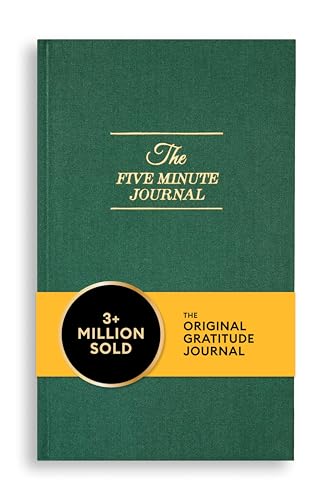
Intelligent Change The Five Minute Journal, Original Daily Gratitude 2025,
Scientifically-backed morning and evening guided prompts
View Today's Price
Intelligent Change The Five Minute Journal, Original Daily Gratitude Journal
Bundle of Five Minute Journal + Productivity Planner
View Today's PriceHow to Choose the Right Journals
Choosing the right journal depends on your writing habits, layout preferences, budget, and daily portability needs — trade-offs that shift based on your workflow and goals. A feature that’s perfect for bullet journaling may be a deal-breaker for sketchers or gratitude journaling. Our recommendation engine evaluates your unique situation across five key dimensions and matches you to the ideal journal in under 60 seconds.
About this guide
Journals
Why Picking the Right Journal Is Trickier Than It Looks
Choosing journals in 2026 is far more nuanced than grabbing the first notebook you see. The explosion of options — from Leuchtturm1917’s iconic dot-grid bullet journals to budget-friendly PAPERAGE and CAGIE faux-leather models — means buyers face real trade-offs. Paper quality is make-or-break: 70gsm acid-free paper, common in Moleskine and Leuchtturm1917 journals, resists bleed-through but feels different than the heavier, toothier sheets in sketchbooks. Binding style matters too; thread-bound hardcovers that lie flat at 180° are a must for bullet journaling, but spiral-bound formats are better for sketchers and left-handers. Price tiers are clear: under $12 gets you decent paper and basic covers, $12–$20 unlocks better binding and premium touches, while $20–$30 brings specialty paper, vegan leather, or guided content. Most buyers get tripped up by focusing on aesthetics or page count, overlooking how layout and binding affect daily usability in journals. Don’t assume a pretty cover means a journal you’ll actually use — the wrong format can gather dust fast.
What Actually Sets Journals Apart in 2026
The real differentiators in journals this year aren’t just about looks or brand hype. Paper quality and layout are critical: Moleskine’s 70gsm ivory paper is smooth but can ghost with wet inks, while Leuchtturm1917’s numbered dot-grid pages are a bullet journaler’s dream for organization. If you love fountain pens, skip anything under 80gsm — bleed-through will drive you crazy, especially in journals you use daily. Thread-bound hardcovers from Leuchtturm1917 and Moleskine lie flat, making these journals ideal for structured planning, but spiral-bound options from CAGIE are unbeatable for sketching or left-handed writers. Skip guided journals unless you want daily prompts; they’re fantastic for gratitude or goal-setting, but too rigid for freeform writing. Elastic closures and ribbon bookmarks sound minor, but they’re the difference between a journal that stays tidy and one that falls apart in your bag. Don’t pay extra for a brand name unless you want archival quality or specific features — PAPERAGE delivers surprising value for under $12, while Leuchtturm1917 justifies its premium for serious planners who rely on their journals.
How to Decide: Matching Journal Features to Your Real Needs
Your journaling purpose, layout preference, size, and budget all interact in ways most buyers overlook. For example, if you want to bullet journal and carry it daily, an A5 hardcover dot-grid from Leuchtturm1917 is ideal — but if you sketch, a large spiral-bound blank journal is better. Budget under $12? Prioritize PAPERAGE or CAGIE journals for solid basics, but accept that you’ll sacrifice archival paper and premium binding. Guided journals are perfect if you need structured prompts for gratitude or productivity, but they’re too restrictive for creative writing. Our quiz evaluates your use case, preferred layout, size, budget, and binding style to pinpoint the best journals for your needs. Think about how you’ll actually use the journal: portability vs. writing space, freedom vs. structure, and whether you need features like elastic closures or expandable pockets. Don’t let price alone dictate your choice — a $20 Leuchtturm1917 may outlast three $8 journals if you write daily. The right fit is about honest self-assessment, not just specs.
Buyer's guide
How to choose
1Core Performance Criteria
- Paper thickness matters: 70gsm is standard for Moleskine and Leuchtturm1917, but heavier paper is better for fountain pens and sketching.
- Dot grid layouts are ideal for bullet journaling and flexible planning, while lined pages suit traditional writing and guided journals.
- Thread-bound hardcovers lie flat at 180°, making them perfect for structured layouts and daily use, unlike cheaper glued bindings.
- Ribbon bookmarks and elastic closures keep your place and protect pages, especially if you carry your journal everywhere.
- Numbered pages and built-in indexes, found in Leuchtturm1917, make organization and rapid logging much easier for planners.
- Acid-free, FSC-certified paper ensures your writing won’t fade or deteriorate over time, which is crucial for archival journaling.
2Build Quality and Durability
- Thread-bound journals like Leuchtturm1917 and Moleskine withstand daily use and open flat, while glued spines often fall apart quickly.
- Hardcovers offer the best protection for your notes, but softcovers are lighter and more portable if you’re always on the move.
- Spiral-bound journals are excellent for sketching and left-handers, but the wire can bend or snag in bags over time.
- Elastic closures and expandable pockets help keep loose notes secure and prevent dog-eared pages during travel.
- Vegan leather covers, as seen in PAPERAGE, are water-resistant and more durable than basic cardboard or fabric covers.
- Look for journals with reinforced corners or rounded edges to prevent fraying and damage from daily handling.
3Value Analysis: Price vs. Features
- Budget journals under $12 like PAPERAGE deliver solid basics, but expect thinner paper and less robust binding than premium brands.
- Mid-range picks ($12–$20) often include better paper, ribbon bookmarks, and elastic closures, striking a balance between quality and price.
- Premium journals ($20–$30) such as Leuchtturm1917 justify their price with archival paper, built-in indexes, and superior binding.
- Don’t pay extra for a brand name unless you need specific features like numbered pages or archival quality for long-term projects.
- Guided journals usually cost more due to included prompts, but are worth it only if you’ll use the structure daily.
- Buying multipacks can save money for daily writers, but check that each journal meets your quality standards before committing.
4Use-Case Fit: Matching Journal to Purpose
- Bullet journaling demands dot grid layouts, numbered pages, and flat-laying binding — Leuchtturm1917 is the gold standard here.
- Gratitude and guided journals are best for those who want daily prompts and structure, but can frustrate freeform writers.
- Sketchers should choose large, spiral-bound, blank-page journals with heavier paper to prevent bleed-through and allow mixed media.
- Everyday writers benefit from lined, medium-sized hardcovers with elastic closures for portability and protection.
- Goal-setters should look for journals with built-in trackers, habit logs, or dedicated productivity layouts for accountability.
- If you plan to carry your journal everywhere, prioritize compact size and a durable cover over maximum page count.
5Common Mistakes and How to Avoid Them
- Don’t assume a beautiful cover means quality paper — always check GSM and user reviews for bleed and ghosting issues.
- Avoid journals with glued spines if you write daily; they rarely hold up to frequent opening and closing.
- Buying the wrong layout (e.g., lined for sketching) leads to frustration and a journal that sits unused on your shelf.
- Ignoring binding style can result in a journal that won’t lie flat, making planning or sketching awkward and less enjoyable.
- Overpaying for features you won’t use, like built-in indexes or multiple bookmarks, wastes money if you just need a basic notebook.
- Choosing the largest size for more space can backfire — oversized journals are heavy and less likely to be carried daily.
6Maintenance and Longevity
- Store journals in a dry, cool place to prevent warping or mold, especially for premium paper like Leuchtturm1917’s.
- Elastic closures help prevent page curling and keep your journal looking new even after months in a backpack.
- Avoid overstuffing expandable pockets, as this can stress the binding and cause early wear on the spine.
- Use archival pens or acid-free ink to ensure your writing remains legible and doesn’t bleed through over time.
- Clean vegan leather or faux-leather covers with a damp cloth to maintain appearance and water resistance.
- Rotate between journals if you write heavily, as this reduces wear and extends the life of each notebook.
FAQ
Frequently asked questions
Is it worth paying extra for a Leuchtturm1917 journal over a Moleskine?
If you value numbered pages, built-in indexes, and a true 180° flat-laying binding, Leuchtturm1917 justifies its premium price. Its paper is slightly thicker and more resistant to bleed-through compared to Moleskine, making it better for fountain pens and heavy note-taking. However, if you mainly use ballpoint pens and prefer a softer, smoother paper feel, Moleskine is a solid choice. For bullet journaling or organization-heavy use, Leuchtturm1917’s features are genuinely worth the extra $5–$10.
How does PAPERAGE compare to more expensive brands like Moleskine and Leuchtturm1917?
PAPERAGE journals offer impressive value under $12, delivering solid paper quality and vegan leather covers. However, their paper is usually thinner (around 80gsm or less), which may not handle fountain pens as well as Leuchtturm1917 or Moleskine. The binding is sturdy but doesn’t always lie perfectly flat. For everyday writing or students, PAPERAGE is a great budget pick, but for archival projects or heavy-duty planning, the premium brands still have the edge in durability and features.
What page layout is best for bullet journaling?
Dot grid layouts are the gold standard for bullet journaling, providing structure for lists, trackers, and custom spreads without the rigidity of lined pages. Look for journals with numbered pages and built-in indexes, like Leuchtturm1917’s official Bullet Journal edition. Avoid blank or guided layouts unless you want maximum freedom or daily prompts, as they can make structured planning more difficult. A5 size is the most popular for portability and writing space.
Do I need a hardcover journal, or is softcover good enough?
Hardcover journals offer better protection and durability, especially if you carry your notebook in a bag or use it daily. They also lie flatter on a desk, making them ideal for structured planning or bullet journaling. Softcover journals are lighter and more flexible, which some users prefer for travel or casual note-taking. If longevity and page protection matter, invest in a hardcover; otherwise, softcover is fine for light use.
What’s the best journal size for portability and daily use?
Medium (A5, around 5–6×8 inches) is the sweet spot for most people, balancing portability with enough writing space for daily entries or planning. Pocket-sized journals (up to 4×6 inches) are ultra-portable but can feel cramped for longer writing sessions. Large journals (7×9 inches and up) are great for sketching or extensive note-taking but are less convenient to carry everywhere. For most, A5 offers the best compromise.
Are guided journals with prompts worth the higher price?
Guided journals are worth the extra cost if you struggle to maintain a regular writing habit or want structured prompts for gratitude, productivity, or reflection. They’re especially helpful for beginners or those focusing on mental wellness. However, if you prefer total freedom or already have a journaling routine, a blank or dot grid notebook is more versatile and cost-effective. Only pay for prompts if you’ll actually use them.
What features should I prioritize if I use fountain pens?
Prioritize journals with thicker, high-quality paper (at least 80gsm) to prevent bleed-through and feathering. Leuchtturm1917 and some premium Moleskine editions handle fountain pen ink well, but many budget journals like PAPERAGE may struggle. Look for acid-free, smooth paper and avoid glossy finishes, which can smear. Test a small section before committing, and consider thread-bound hardcovers for durability if you write daily with fountain pens.
Related reading
Best Journals By Category
Related Guides
3D Printers
Matched to your print size, detail needs, materials, and how much you want to tinker or automate.
All-in-One Laser Printers for Home Office
Matched to your print volume, color needs, workflow features, and budget—get the right laser all-in-one for your home office.
Sit-Stand Desk Converters
Matched to your desk size, equipment weight, ergonomics, and feature preferences—get the right converter for your workflow.
Budget and Mid‑Range Laptops
Matched to your main tasks, OS preference, portability, and display—find a laptop that fits your real workflow and budget.
Color Laser Printers
Matched to your print volume, connectivity, and cost priorities—find the color laser printer that fits your workflow and space.