Skip the research trap. Get your beginner mirrorless photography cameras in 60 seconds.
We scored 250+ beginner mirrorless photography cameras across 5 dimensions — answer 5 quick questions and we'll match you to YOUR best pick.

Powered by DecisionScore™
Each product is evaluated across 18 weighted criteria — covering performance, value, build quality, and real-world usability. Your quiz answers re-weight the criteria to match what matters most to you, so two people can get different #1 picks from the same data.
See the DecisionScore methodology →- 24MP APS‑C sensor with uncropped 4K video and 15fps bursts
- Fully articulating touchscreen ideal for vlogging and selfies
- Canon’s Dual Pixel AF provides fast subject tracking
Find your perfect beginner mirrorless photography cameras
5 quick questions. No quiz-takes-10-minutes trap. A personalized match from 25 scored picks — with clear reasoning for every recommendation.
What is your preferred sensor size?
Sensor size significantly impacts image quality, depth of field, and low-light performance. Larger sensors generally provide better image quality and more control over depth of field, which is crucial for professional-looking photos.
- If you mainly shoot family, travel, or everyday moments, a stills-focused camera with good autofocus is ideal.
- Vloggers and video creators should look for flip screens, microphone inputs, and strong video autofocus.
- If you want to do both equally, hybrid models balance stills and video features without major compromises.
As an Amazon Associate and affiliate partner we earn from qualifying purchases. Links on this page may earn us a commission at no extra cost to you. Full disclosure
Not ready for the quiz? Here are our overall top picks
These are our top-rated picks overall. For a recommendation matched to YOUR specific needs,
Canon EOS R50 Mirrorless Camera Kit – APS-C RF Camera with 18-45mm Lens, 4K
24MP APS‑C sensor with uncropped 4K video and 15fps bursts
View Today's Price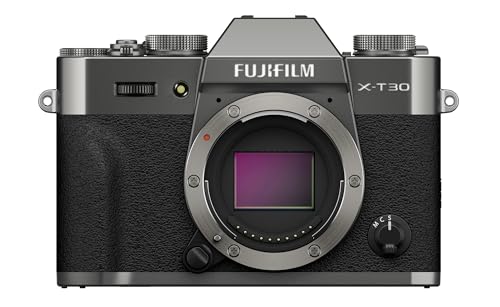
FUJIFILM X-T30 III Mirrorless Camera Body, Charcoal Silver
26MP APS‑C sensor with X‑Trans color filter
View Today's Price
OM SYSTEM OM-5 Mark II Body Silver Compact Light Weight Weather Sealed 4K Video
20MP sensor with 6.5‑stop IBIS and weather sealing
View Today's PriceHow to Choose the Right Beginner Mirrorless Photography Cameras
Choosing the right beginner mirrorless camera depends on sensor format, autofocus performance, body design, and feature trade-offs—all of which shift based on your shooting style, budget, and lens plans. A feature that’s perfect for vlogging can be useless for stills, while pro features may add cost without real benefit for new photographers. Our recommendation engine analyzes your specific needs across five key dimensions and matches you to the ideal camera system in under 60 seconds.
About this guide
Beginner Mirrorless Photography Cameras
Why Choosing a Beginner Mirrorless Camera Is Tricky
Stepping up from a smartphone to beginner mirrorless photography cameras in 2026 means sorting through a maze of sensor formats, feature sets, and price bands. APS‑C, Micro Four Thirds, and full‑frame sensors each impact image quality, lens size, and cost in concrete ways—APS‑C offers a sweet spot for most beginner mirrorless photography cameras, but Micro Four Thirds wins for ultra-compactness, while full‑frame delivers the best low-light performance and shallow depth of field at a much higher price. Entry-level beginner mirrorless photography cameras can start around $500, but adding features like in‑body image stabilization (IBIS) or a flip screen for vlogging can push you into the $900–$1,500 range. Many buyers get tripped up by underestimating the importance of lens ecosystems—choosing beginner mirrorless photography cameras is only half the battle if your chosen brand (Canon, Nikon, Sony, Fujifilm, Panasonic, OM System) lacks affordable, quality lenses. Others overpay for pro features they’ll never use, or pick beginner mirrorless photography cameras based on megapixels alone, missing out on crucial usability factors like autofocus tracking or battery life. The real challenge is balancing these trade-offs for your actual shooting style and budget when selecting beginner mirrorless photography cameras.
What Actually Sets These Cameras Apart
The differences between beginner mirrorless photography cameras go far beyond just brand names or sensor size. In 2026, autofocus systems are a true make-or-break factor—Canon’s Dual Pixel AF and Sony’s Real-time Tracking outperform others for fast-moving subjects, while some entry-level OM System and Panasonic beginner mirrorless photography cameras lag behind for action or low-light. IBIS is a significant upgrade for handheld shooting, especially in beginner mirrorless photography cameras like the Fujifilm X-S10 and OM-D E-M10 Mark IV, but it’s not universal—skip it if you always shoot on a tripod or only use stabilized lenses. Flip screens are essential for vlogging and self-portraits with beginner mirrorless photography cameras, but add bulk and cost; if you never shoot video, prioritize tactile dials and classic ergonomics like on the Nikon Z fc or Fujifilm X-T30 II. Creative modes such as Fujifilm’s Film Simulations or Panasonic’s 4K Photo Mode offer unique ways to experiment with beginner mirrorless photography cameras without editing. Don’t get lured by high megapixel counts—sensor size and lens quality matter more for real-world results with beginner mirrorless photography cameras. And unless you’re planning to build a large lens collection, don’t obsess over future-proofing—choose beginner mirrorless photography cameras that fit your needs now, not five years from now.
How to Weigh Your Options and Make the Right Choice
Your ideal beginner mirrorless photography cameras in 2026 depend on how your priorities interact—sensor format, body design, stabilization, and feature set all shift what’s realistic at your price point. For example, if you want to shoot video and need a flip screen, you’ll likely sacrifice some compactness or tactile controls in beginner mirrorless photography cameras. If you’re drawn to retro styling and tactile dials, expect to pay a premium or lose out on the latest autofocus tech in beginner mirrorless photography cameras. Room in your budget for extra lenses or accessories? That opens up more flexible beginner mirrorless photography cameras, like Fujifilm or Sony, with deep lens lineups. Our quiz evaluates your shooting goals, stabilization needs, sensor preference, body style, and must-have features to narrow the field of beginner mirrorless photography cameras. But beyond the quiz, be honest about what you’ll actually use—don’t pay for dual card slots or weather sealing in beginner mirrorless photography cameras if you’re not shooting in extreme conditions. Think about how you’ll carry beginner mirrorless photography cameras, what you’ll actually shoot, and how much you want to experiment with creative modes. The right beginner mirrorless photography cameras are the ones that feel intuitive in your hands and inspire you to keep shooting.
Buyer's guide
How to choose
1Core Performance Criteria
- Prioritize autofocus speed and reliability—Canon’s Dual Pixel AF and Sony’s Real-time Tracking are best for moving subjects and low-light shooting.
- Look for at least 20MP resolution for general use, but don’t chase megapixels at the expense of sensor size or lens quality.
- In-body image stabilization (IBIS) is crucial for handheld video or low-light stills—Fujifilm X-S10 and OM-D E-M10 Mark IV stand out here.
- Check video specs: true 4K recording with no crop and a microphone input are essential for vlogging, found on Canon EOS RP and Nikon Z6 II.
- Battery life varies widely—Sony and Nikon often last longer per charge than Panasonic or OM System models in real-world use.
- Continuous burst rates matter for action—look for at least 5fps if you want to shoot sports or wildlife, but don’t overpay if you only shoot stills.
2Build Quality and Durability
- Magnesium alloy bodies, like on the Canon EOS RP and Nikon Z6 II, offer more durability than plastic shells found on entry-level models.
- Weather sealing is rare below $1,000, but Nikon Z fc and some Fujifilm bodies provide partial protection for outdoor use.
- Retro-styled models often have better tactile dials and controls, but may sacrifice some modern features or compactness.
- Lens mount robustness matters—Sony E-mount and Canon RF-mount have proven long-term reliability with frequent lens changes.
- Entry-level cameras may have less robust shutter mechanisms—expect around 100,000 actuations versus 200,000+ on mid-tier models.
- Grip design and button layout affect comfort for long shoots—DSLR-like bodies such as the Nikon Z6 II are best for larger hands.
3Value Analysis
- APS-C models like the Fujifilm X-S10 and Canon EOS R50 deliver the best balance of price, image quality, and lens affordability in 2026.
- Micro Four Thirds cameras are typically the most affordable and compact, but may limit shallow depth-of-field and high ISO performance.
- Full-frame entry models like the Canon EOS RP offer premium image quality but require pricier lenses and accessories.
- Watch for kit lens bundles—sometimes the included lens is poor quality, making a body-only purchase plus a better starter lens a smarter buy.
- Don’t overpay for pro features like dual card slots unless you truly need them for backup or high-volume shooting.
- Factor in ongoing costs: extra batteries, SD cards, and a basic prime lens can add $200–$400 to your initial investment.
4Use-Case Fit
- Vloggers should prioritize flip screens, microphone inputs, and reliable video autofocus—Canon EOS RP and Sony ZV-E10 excel here.
- Travelers and hikers will appreciate Micro Four Thirds models for their lightweight bodies and compact lens options.
- Stills photographers who love hands-on control should seek retro-styled bodies like the Nikon Z fc or Fujifilm X-T30 II.
- If you plan to shoot sports or wildlife, look for cameras with fast burst rates and advanced autofocus tracking, such as Sony a6100.
- Low-light shooters benefit from full-frame sensors, but must accept larger, heavier, and more expensive gear.
- Hybrid shooters (photo and video) need a camera with both strong stills performance and robust video features—APS-C models often offer the best compromise.
5Common Mistakes to Avoid
- Don’t choose a camera solely on megapixel count—sensor size and lens quality have a bigger impact on real-world image results.
- Avoid over-investing in pro features like dual card slots or weather sealing unless you truly need them for your shooting style.
- Neglecting the lens ecosystem can leave you stuck—ensure your chosen brand offers affordable, quality lenses for your needs.
- Many buyers underestimate the importance of ergonomics—test grip and button layout before committing, especially if you have large hands.
- Skipping IBIS to save money can backfire if you shoot handheld in low light or want smooth video.
- Buying the cheapest kit bundle often means settling for a mediocre lens—consider a body-only purchase with a high-quality prime instead.
6Maintenance and Longevity
- Mirrorless cameras are more sensitive to dust on the sensor—carry a blower and cleaning kit for regular upkeep.
- Battery life degrades over time; invest in a spare official battery for uninterrupted shooting sessions.
- Firmware updates from brands like Fujifilm and Sony add features and improve performance—register your camera and check for updates regularly.
- Lens contacts should be kept clean to avoid autofocus or aperture errors—wipe gently with a microfiber cloth.
- Store your camera in a padded bag and avoid extreme temperatures to prolong both body and lens life.
- Shutter mechanisms on entry-level models may wear out after 100,000 actuations—track your shot count if you shoot heavily.
FAQ
Frequently asked questions
Is in-body image stabilization (IBIS) worth paying extra for in a beginner camera?
IBIS is a significant upgrade for handheld shooting, especially in low light or when using non-stabilized lenses. Models like the Fujifilm X-S10 and OM-D E-M10 Mark IV offer excellent 5-axis stabilization, making it easier for beginners to get sharp results without a tripod. If you plan to shoot video, IBIS also smooths out handheld footage. However, if you always use stabilized lenses or mostly shoot on a tripod, you can save money by skipping IBIS. For most new photographers, IBIS is well worth the premium.
How does Canon compare to Sony for beginner mirrorless cameras in 2026?
Canon and Sony both offer strong beginner mirrorless options, but they differ in key areas. Canon’s Dual Pixel AF is exceptionally easy to use and excels at video autofocus, making models like the EOS RP ideal for hybrid shooters. Sony’s Real-time Tracking autofocus is faster for action and sports, and their E-mount lens lineup is broader, especially for affordable primes. Sony bodies often have better battery life, while Canon’s ergonomics and touchscreen interfaces are more intuitive for newcomers. Both are excellent, but your choice should depend on your shooting priorities.
What sensor format should I choose for travel and everyday photography?
For travel and everyday photography, APS-C and Micro Four Thirds are the best choices. APS-C sensors, found in cameras like the Fujifilm X-S10 and Canon EOS R50, offer a great balance of image quality, size, and price. Micro Four Thirds models, such as the OM-D E-M10 Mark IV, are even more compact and lightweight, making them ideal for travel, though they sacrifice some low-light performance and depth-of-field control. Full-frame is overkill for most travelers due to size and cost. APS-C is the sweet spot for most beginners.
Do I need a flip screen if I only shoot photos and not video?
A flip or vari-angle screen is most valuable for video, vlogging, and selfies, but it can also help with creative stills from unusual angles. If you only shoot traditional photos at eye level, you can skip this feature and opt for a model with a fixed or tilting screen, which may be lighter and less expensive. However, if you ever want to experiment with low or overhead shots, a tilting or flip screen adds flexibility. It’s not essential for everyone, but it’s a nice-to-have for creative exploration.
How important is the lens ecosystem for a beginner?
The lens ecosystem is more important than most beginners realize. Brands like Sony and Fujifilm offer many affordable, high-quality lenses, making it easy to expand your kit as your skills grow. Canon’s RF-mount and Nikon’s Z-mount are catching up, but some entry-level lenses are still pricey or limited. If you plan to stick with one or two lenses, this matters less, but if you want to experiment with portraits, macro, or wide-angle photography, ensure your chosen brand has accessible lens options. Always check lens availability before buying a camera body.
What are the trade-offs between retro-styled and modern minimalist camera bodies?
Retro-styled bodies, like the Nikon Z fc and Fujifilm X-T30 II, offer tactile dials and classic aesthetics, making manual control more intuitive for some users. However, they may sacrifice features like deep grips or advanced video capabilities. Modern minimalist bodies are often sleeker, lighter, and more focused on touchscreen controls, which some beginners find easier. The choice comes down to ergonomics and shooting style—if you love hands-on control, retro is great; if you want simplicity and portability, go modern. Try both in person if possible.
Which beginner mirrorless camera is best for vlogging in 2026?
For vlogging in 2026, prioritize a camera with a flip screen, reliable video autofocus, and a microphone input. The Canon EOS RP and Sony ZV-E10 both stand out, offering easy-to-use interfaces, strong autofocus, and good audio options. The OM System OM-D E-M10 Mark IV is also compact and stabilized, though its autofocus is less advanced for video. Consider battery life and lens options for your preferred shooting style. Ultimately, the best vlogging camera is one that feels comfortable in your hand and fits your budget.
Best Beginner Mirrorless Photography Cameras By Category
Compare Beginner Mirrorless Photography Cameras
Related Guides
Action Cameras Buying Guide
Matched to your adventure style, budget, portability needs, and the features you’ll actually use—no more guessing.
Camera Drones
Matched to your footage style, portability, camera quality, and how long you want to fly per charge.
Advanced DSLR Cameras
Matched to your shooting style, sensor format, portability, video needs, and autofocus speed—get the right camera for your real workflow.
Beginner Drones
Matched to your flying style, risk tolerance, budget, and camera needs—get the right beginner drone for how you’ll actually fly.