Skip the research trap. Get your compact treadmills for small spaces in 60 seconds.
We scored 250+ compact treadmills for small spaces across 5 dimensions — answer 5 quick questions and we'll match you to YOUR best pick.

Powered by DecisionScore™
Each product is evaluated across 18 weighted criteria — covering performance, value, build quality, and real-world usability. Your quiz answers re-weight the criteria to match what matters most to you, so two people can get different #1 picks from the same data.
See the DecisionScore methodology →Find your perfect compact treadmills for small spaces
5 quick questions. No quiz-takes-10-minutes trap. A personalized match from 25 scored picks — with clear reasoning for every recommendation.
What type of workouts will you primarily use your treadmill for?
Under‑desk models suit slow walking while working. Walk/jog treadmills handle daily walking and light jogging with modest speeds and motors. Running treadmills support 10–12 mph speeds and stronger motors for interval or distance training.
- Under-desk treadmills are optimized for slow walking and quiet operation, not running or jogging.
- If you plan to jog or run, choose a treadmill with a longer belt and higher weight capacity.
- Consider how often you’ll use the treadmill for intense workouts versus casual walking—this affects motor power and durability needs.
As an Amazon Associate and affiliate partner we earn from qualifying purchases. Links on this page may earn us a commission at no extra cost to you. Full disclosure
Not ready for the quiz? Here are our overall top picks
These are our top-rated picks overall. For a recommendation matched to YOUR specific needs,
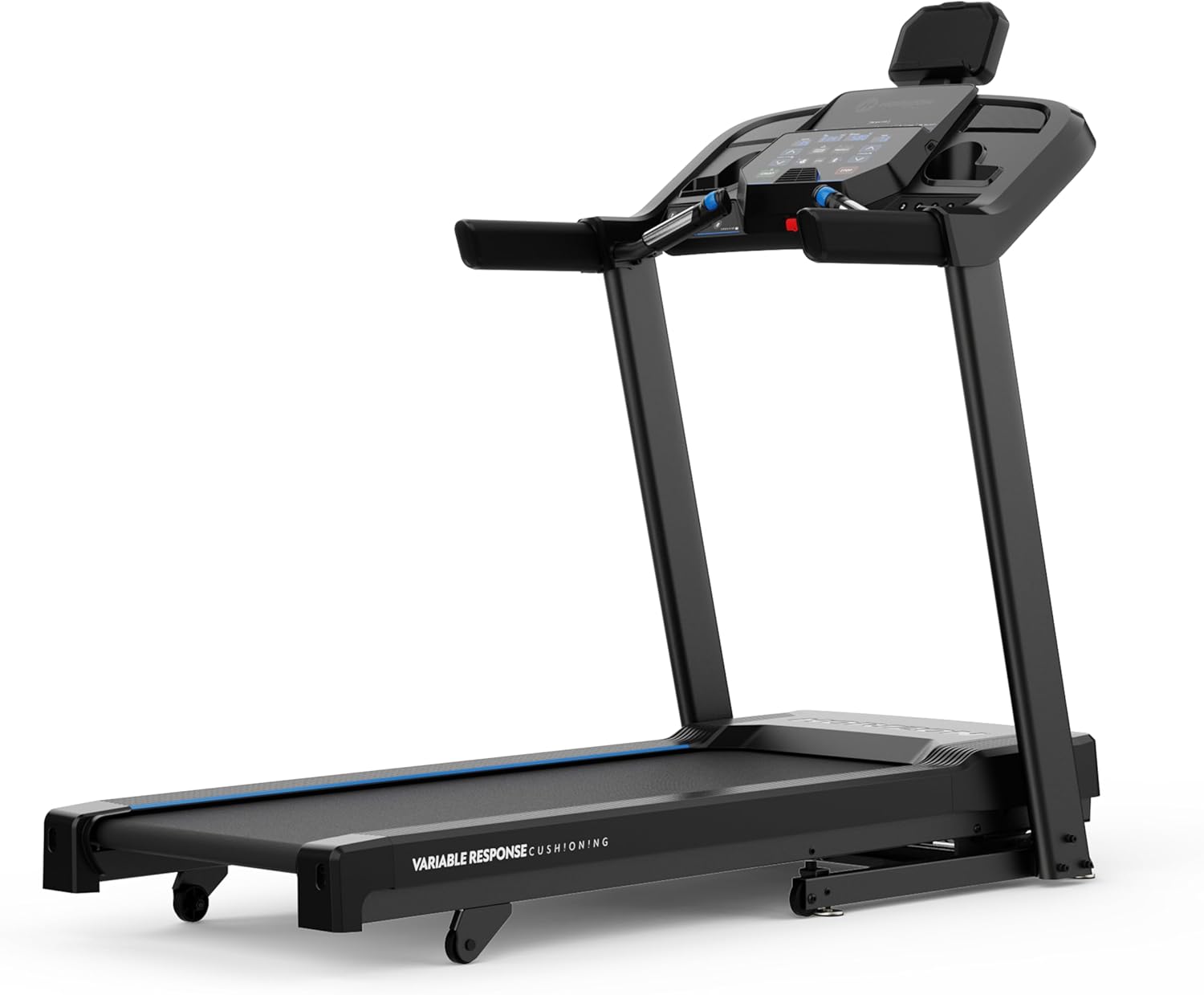

How to Choose the Right Compact Treadmills for Small Spaces
Choosing the right compact treadmill depends on how you’ll use it, your available space, desired tech features, and running surface length—trade-offs that shift based on your stride, storage needs, and workout intensity. Generic top-10 lists fail here because a treadmill perfect for under-desk walking is completely wrong for interval running or tall users. Our recommendation engine evaluates your specific needs across five dimensions and matches you to the right treadmill in under 60 seconds.
About this guide
Compact Treadmills for Small Spaces
The Real Buying Challenge: Footprint, Performance, and Price Tiers
Choosing a compact treadmill in 2026 is more complicated than most buyers expect. The biggest challenge is balancing the machine’s physical footprint with performance features and your budget. Ultra-flat walking pads like the WalkingPad Z1 slide under a desk and fold to just 5.2 inches high, but cap out at 4 mph and offer no incline—great for gentle movement but useless for running. Mid-range folding treadmills such as the JTX Slimline or Horizon 5.0AT add longer decks, Bluetooth, and preset workouts, but take up more storage space and cost $750–$900. Premium models like the Horizon 7.4 AT or Echelon Stride-6s-10 reach 12 mph speeds, 15% inclines, and interactive training apps, yet still fold vertically to reclaim floor space. Most buyers get tripped up by assuming any folding treadmill can handle running—when in reality, many compact models wobble above 10 km/h or lack the deck length for a full stride. Price tiers matter: under $700 means no incline and lighter motors, while over $1,200 often adds features you’ll never use in a small space.
What Actually Separates Compact Treadmills: Specs and Real-World Differences
Not all compact treadmills are created equal—specific technologies and specs make a real difference. Motor power is make-or-break: 1.5–2.5 CHP is fine for walking or light jogging, but if you want to run, look for 2.5+ CHP and a belt over 50 inches. Skip under-desk models like the WalkingPad Z1 unless you only need slow walking and ultra portability. For interval training or taller users, prioritize models like the Horizon 5.0AT or Echelon Stride-6s-10, which offer longer decks and automatic incline. Bluetooth and app integration are nice, but don’t overpay for built-in screens—most users prefer pairing their own device. Noise is another key differentiator: expert tests show models like the Horizon 7.4 AT and JTX Slimline run under 60dB, which is essential for apartments. Weight capacity is often overlooked; always allow a 20–30% buffer above your weight for stability. In short, don’t chase max speed or screen size—focus on deck length, motor strength, and folding design that matches your real workouts.
Decision Factors: How to Match Specs to Your Space and Goals
Every factor in compact treadmill shopping interacts with the others. Room size limits deck length and folding style—an ultra-compact model fits under a sofa but won’t support running, while a vertical fold treadmill like the Horizon 5.0AT needs closet space but allows interval workouts. Your workout type dictates motor and belt requirements: walking needs less power and a shorter deck, but running or HIIT demands at least 2.5 CHP and a 50-inch belt. Budget constrains which features are realistic—automatic incline and smart app integration push prices above $800, while basic walkers stay under $400. Weight capacity and noise level are critical for shared spaces. Our quiz evaluates your workout style, incline preference, tech needs, storage requirements, and running surface length to pinpoint the right fit. The key is to measure your space, be honest about your training intensity, and avoid overpaying for features you’ll never use. Think about how all these factors combine, not just one spec at a time.
Buyer's guide
How to choose
1Core Performance Criteria
- Check the maximum speed: most compact treadmills top out at 8–10 mph, which is fine for walking and jogging but not for sprint training.
- Motor power matters—look for at least 2.0 HP for daily walking or jogging; under-desk models like the WalkingPad Z1 use lighter motors for quiet operation.
- Running surface length is crucial: short decks under 45 inches suit walking, while longer decks (50+ inches) are needed for running or taller users.
- Preset workout programs add variety; models like the JTX Slimline offer 36 routines, but ultra-budget treadmills often skip these entirely.
- Incline capability is rare in ultra-compact treadmills; only mid- to premium models like the Horizon 5.0AT offer automatic incline for hill training.
- Weight capacity typically ranges from 220 to 265 lbs—heavier users should check specs, as exceeding limits leads to wobble and premature wear.
2Build Quality and Durability
- Look for sturdy frames and stable platforms—Horizon and JTX models are praised for comfort and stability even in small footprints.
- Avoid ultra-light models under 23kg for running; these are best suited for walking and may wobble at higher speeds.
- Check the warranty: reputable brands offer 2–5 years on frame and motor, while budget models often provide only 12 months or less.
- Wheeled bases make storage easy, but ensure the wheels are robust enough for frequent moving on your floor type.
- Assembly can be tricky on some models; read user reviews for reports of unclear instructions or missing hardware.
- Noisy treadmills are a dealbreaker in apartments—seek models rated under 60dB for quiet operation, especially if you live with others.
3Value Analysis and Pricing
- Expect to pay $300–$400 for basic under-desk walkers like the WalkingPad Z1, but these lack incline and have shorter decks.
- The best value for most buyers is in the $500–$800 range, where you get quiet motors, folding design, and stability without paying for oversized screens.
- Premium models over $1,000 often add app subscriptions or advanced incline, but may be overkill if you just want daily steps in a small space.
- Beware of deals under $300; these treadmills often have poor durability, weak motors, and minimal warranty coverage.
- Factor in the cost of accessories like mats or lubricants, which can extend the lifespan of your treadmill and reduce noise.
- Check for recurring costs: some smart treadmills require paid app subscriptions for full workout access, which adds up over time.
4Matching to Your Use Case
- Under-desk treadmills like the WalkingPad Z1 are perfect for slow walking while working, but their short belts and low speeds limit versatility.
- Walk/jog models such as the JTX Slimline or Horizon 5.0AT handle daily walking and light jogging, offering more stability and comfort.
- If you plan to run or do intervals, prioritize models with longer decks (over 50 inches) and higher weight limits for safety.
- Apartment dwellers should look for ultra-compact or flat-folding designs that can slide under a bed or sofa when not in use.
- Vertical-fold treadmills reclaim floor space but may still require closet or wall space for storage—measure carefully before buying.
- Tech-savvy users who want guided workouts should prioritize Bluetooth or app-connected models, but basic users can save money with simpler consoles.
5Common Mistakes and Pitfalls
- Many buyers forget to measure their available space—including the treadmill’s full unfolded length, which is often longer than expected.
- Assuming all folding treadmills are suitable for running is a mistake; most compact models are optimized for walking or light jogging only.
- Ignoring weight capacity leads to instability and excessive wear—always check the manufacturer’s stated limit before purchase.
- Overpaying for smart features or built-in screens is common, but these are rarely used in small-space setups and drive up the price.
- Neglecting noise levels can be a dealbreaker in shared spaces—models rated above 60dB may disturb neighbors or roommates.
- Skipping warranty details is risky; budget models often lack long-term support, making future repairs expensive or impossible.
6Maintenance and Longevity
- Regular belt lubrication is essential—use a silicone treadmill lubricant every 3–6 months to prevent friction and motor strain.
- Vacuum under and around your treadmill weekly to prevent dust buildup, which can damage the motor and electronics over time.
- Check the belt alignment monthly; misalignment causes uneven wear and can shorten the lifespan of both the belt and deck.
- Inspect the power cord and connections periodically, especially if you move the treadmill often or use it in a multi-purpose space.
- Use a treadmill mat to protect floors and reduce vibration noise, especially on hardwood or laminate surfaces.
- Store ultra-compact models in a dry area; moisture or humidity can corrode electronics and shorten the treadmill’s usable life.
FAQ
Frequently asked questions
Is it worth paying extra for automatic incline on a compact treadmill?
Automatic incline is a premium feature found on models like the Horizon 5.0AT, and it’s worth the investment if you want varied workouts or simulate hill training. Most ultra-compact treadmills under $500 skip incline entirely, so if you’re primarily walking or doing steady-state cardio, you can save money by choosing a flat-deck model. However, runners and those seeking interval training will appreciate the added challenge and calorie burn from an adjustable incline.
How does the WalkingPad Z1 compare to the JTX Slimline for small apartments?
The WalkingPad Z1 is an ultra-flat under-desk treadmill that folds to just 5.2 inches high, making it ideal for sliding under a bed or sofa. It’s lightweight (23kg) and quiet, but its short belt limits running and is best for walking. The JTX Slimline, while still compact, offers a longer deck and 36 preset workouts, making it better for light jogging. However, it lacks incline and is bulkier to store. Choose the Z1 for portability, or the JTX for more workout variety.
What running surface length do I need for jogging versus running?
For walking and light jogging, a belt length of 45–50 inches is usually sufficient. Taller users or those who plan to run at higher speeds should look for decks over 50 inches to accommodate a full stride. Under-desk models like the WalkingPad Z1 have belts under 45 inches, which can feel cramped for anything beyond slow walking. Always match the belt length to your height and intended workout intensity.
Are Bluetooth and app connectivity features actually useful on compact treadmills?
Bluetooth and app integration can be genuinely helpful if you want to track workouts, sync with fitness apps, or follow guided routines. Models like the Horizon 5.0AT and Echelon Stride-6s-10 offer these features, but beware of required subscriptions for full access. If you’re content with basic metrics, you can save $200–$300 by skipping smart features and choosing a simpler treadmill with a basic LCD display.
How much should I expect to spend for a stable, quiet compact treadmill?
The sweet spot for most buyers is between $500 and $800. In this range, you’ll find treadmills like the JTX Slimline and Horizon 5.0AT, which offer sturdy builds, quiet motors, and reliable folding mechanisms. Cheaper models under $300 often sacrifice durability and noise control, while premium treadmills over $1,000 may add features that aren’t necessary for small spaces. Always check for deals, as discounts are common in this category.
What’s the difference between vertical fold and flat fold designs?
Vertical fold treadmills, like the Horizon 5.0AT, lift the running deck up toward the console for standing storage—ideal if you have closet or wall space. Flat fold models, such as the WalkingPad Z1, collapse nearly flat and can slide under furniture. Flat fold designs are best for ultra-tight spaces, but often have shorter decks and fewer features. Vertical fold treadmills offer more robust performance but require more vertical clearance.
How does the Horizon 5.0AT compare to the Echelon Stride-6s-10?
The Horizon 5.0AT is praised for its sturdy build, quick speed/incline dials, and Bluetooth speakers, making it a strong all-around choice for small spaces. The Echelon Stride-6s-10 stands out for its auto-folding feature and app-based guided workouts, but requires a subscription for full access. Both are quiet and compact, but the Horizon offers better value if you want solid performance without ongoing fees.
Related reading
Best Compact Treadmills for Small Spaces By Category
Related Guides
Adjustable Dumbbells
Weight range, adjustment speed, handle style, and space—get matched to adjustable dumbbells that fit your real training needs.
Bike Mats
Matched to your bike type, floor surface, noise needs, material preference, and budget for the perfect indoor cycling mat.
Bike Trainers
Matched to your riding style, noise tolerance, tech needs, and space—get a bike trainer that fits your real routine.
Cold Plunge Tubs
Insulation, chilling method, space, and budget—get matched to the cold plunge tub that fits your recovery style and setup.
Compact Home Gyms
Matched to your space, resistance needs, tech comfort, and how you actually want to train—no more guessing or wasted space.