Skip the research trap. Get your compact sofas for small spaces in 60 seconds.
We scored 200+ compact sofas for small spaces across 5 dimensions — answer 5 quick questions and we'll match you to YOUR best pick.
Powered by DecisionScore™
Each product is evaluated across 18 weighted criteria — covering performance, value, build quality, and real-world usability. Your quiz answers re-weight the criteria to match what matters most to you, so two people can get different #1 picks from the same data.
See the DecisionScore methodology →Find your perfect compact sofas for small spaces
5 quick questions. No quiz-takes-10-minutes trap. A personalized match from 20 scored picks — with clear reasoning for every recommendation.
How do you plan to use your compact sofa most of the time?
Compact sofas come in several formats. A standard sofa is great for everyday seating. Futon or convertible models fold flat for napping. Pull‑out sleepers have hidden beds for overnight guests. Modular sectionals let you rearrange pieces easily. If you're unsure, pick sitting only.
- Think about whether you’ll need your sofa for sleeping guests or just daily sitting.
- Modular sofas are best if you like to rearrange your space often.
- Pull-out sleepers are more comfortable for overnight guests than basic futons.
As an Amazon Associate and affiliate partner we earn from qualifying purchases. Links on this page may earn us a commission at no extra cost to you. Full disclosure
Not ready for the quiz? Here are our overall top picks
These are our top-rated picks overall. For a recommendation matched to YOUR specific needs,
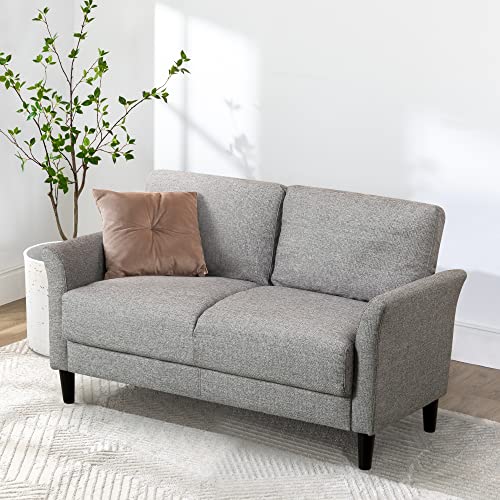
Zinus Jackie Loveseat Sofa/Easy, Tool-Free Assembly, Soft Grey
Check today’s price →View Today's Price
POLY & BARK Napa 104.5" Right-Facing Sectional Sofa – Cognac Tan Full-Grain

Vesgantti Loveseat Sofa with Solid Wood Legs, 48" Small Couches for Small
How to Choose the Right Compact Sofas for Small Spaces
Choosing the right compact sofa depends on how you use your space, your preferred style, upholstery needs, and the seating feel you enjoy—trade-offs that shift based on your room size, guest habits, and budget. Generic top-10 lists fail here because a sofa ideal for lounging may be terrible for overnight guests, and assembly or upholstery can make-or-break your experience. Our recommendation engine evaluates your specific needs across five dimensions and matches you to the right compact sofa in under 60 seconds.
About this guide
Compact Sofas for Small Spaces
Compact Sofas: Essential for Small Spaces
Choosing a compact sofa in 2026 means navigating a market where size, comfort, and durability are make-or-break factors for apartments and tight living rooms. The right small-space couch must balance comfortable seating and sturdy construction while fitting within strict dimensional limits—think 55-72 inches wide for loveseats or modular sectionals. Many buyers are drawn to convertible futons or sleeper sofas for guest flexibility, but these often sacrifice comfort or feel flimsy when used daily. Others get seduced by stylish photos, only to discover the assembly is a headache or the upholstery stains at the first spill. The price range is vast: you’ll find $200 futons for first apartments and $1,200+ leather sectionals with hidden storage for upscale condos. Use cases vary from solo lounging to family movie nights or accommodating overnight guests. Picking the right compact sofa isn’t just about what looks good—it’s about finding a piece that truly fits your space, lifestyle, and budget for years to come.
What’s Changed in the 2026 Sofa Market
The compact sofa landscape in 2026 is more crowded and confusing than ever, with thousands of lookalike couches at every price point. Recent trends include a surge in modular sectionals you can rearrange, tool-free assembly kits from brands like ZINUS and HONBAY, and a wave of tactile upholstery options—corduroy, teddy fleece, and stain-resistant microfibers are everywhere. Many buyers still get tripped up by misleading claims: a $350 convertible futon might look plush online, but reviewers warn it’s often too shallow or sags within a year. Conversely, premium brands like Modway and Lifestyle Solutions now offer better support and easier assembly, but at a price. The biggest mistake in 2026? Ignoring real-world comfort and durability in favor of Instagram-ready looks. Features like hidden storage or reversible chaises sound great, but if the sofa’s frame is particleboard or the cushions flatten in weeks, you’ll regret the purchase. Smart buyers focus on build quality, upholstery resilience, and seat depth—details that matter more than most realize.
How Our Quiz Delivers the Right Match
Our compact sofa decision tool goes far beyond generic top-10 lists or influencer roundups. Instead of recycling the same three bestsellers, our quiz evaluates your specific needs: how you’ll use the sofa (lounging, sleeping, modular flexibility), your preferred style and upholstery, must-have features like hidden storage or easy assembly, and the seating feel you actually enjoy. We’ve analyzed expert reviews, real owner feedback, and manufacturer specs to identify which models truly deliver on comfort, durability, and value at every price tier—from sub-$300 futons to $1,000+ modular sectionals. Unlike static rankings, our tool adapts to your answers, surfacing sofas that fit your exact space, lifestyle, and budget. You’ll walk away with a shortlist of compact couches that aren’t just highly rated—they’re right for your room, your taste, and your day-to-day life. No more guesswork, wasted weekends, or buyer’s remorse—just a sofa that fits.
Buyer's guide
How to choose
1Core Performance Criteria
- Seat depth and cushion support are crucial—look for at least 20 inches of depth and high-density foam to avoid a cramped or saggy feel.
- Frame material matters more than you think; solid wood or kiln-dried hardwood lasts far longer than particleboard or plastic frames.
- Check weight limits and real-world reviews—many budget sofas under $300 struggle with two adults or daily use, leading to creaks or frame warping.
- Convertible futons and sleeper sofas need robust mechanisms; cheap models often jam or feel uneven after a few months of use.
- For modular sectionals, ensure connectors are sturdy and easy to reconfigure—wobbly joints make rearranging a frustrating chore.
- Prioritize seat height (16-18 inches) for comfortable sitting and easy standing, especially if you or guests have mobility concerns.
2Build Quality and Durability
- Inspect upholstery seams and stitching—double-stitched or piped edges resist fraying far better than single-thread construction.
- Look for sofas with reinforced corner blocks or metal brackets in the frame, which dramatically extend lifespan over simple glued joints.
- Removable cushion covers are a lifesaver for spills and stains, especially in homes with kids or pets; avoid glued-on or non-removable fabrics.
- Test cushion resilience—high-resilience foam or pocketed coil cushions maintain shape longer than basic polyester fill.
- Legs should be solid wood or metal and securely attached; screw-in legs on cheaper models can loosen or break with frequent moves.
- Beware of sofas under $250 with lightweight frames—these often use thin plywood or MDF, which warps or cracks under normal use.
3Value and Price Analysis
- Expect to pay $200-$350 for basic futons or entry-level loveseats; comfort and longevity at this tier are usually limited to occasional use.
- The $400-$700 range unlocks better frames, denser foam, and features like hidden storage or reversible chaises—ideal for daily seating.
- Premium models above $800, such as genuine leather sectionals, offer upscale looks and durability but may be overkill for short-term rentals.
- Factor in delivery and assembly costs—some budget brands save money by requiring extensive DIY assembly, which can be frustrating.
- Don’t overpay for brand names alone; compare specs and owner reviews, as some lesser-known brands deliver better value for the price.
- Sales and seasonal discounts can drop prices by 20-30%, so timing your purchase around major holidays can yield significant savings.
4Matching to Your Use Case
- Sofas for daily lounging should prioritize deep seats and plush cushions, while guest-focused sleepers need a sturdy, comfortable pull-out mechanism.
- Modular sectionals work best for flexible spaces or frequent rearranging, but require more floor space than fixed loveseats or futons.
- If you host overnight guests, a convertible futon is fine for occasional use, but a true pull-out sleeper offers better comfort for regular stays.
- Pet owners and families should choose stain-resistant microfiber or faux leather upholstery for easy cleaning and durability.
- Tight entryways or staircases may require tool-free assembly or split-back designs, as many solid-frame sofas won’t fit through narrow doors.
- If you work from your sofa, look for models with supportive backrests and arm height that matches your preferred posture.
5Common Mistakes and Pitfalls
- Don’t trust online photos alone—always check real-world seat dimensions and owner photos to avoid a sofa that looks tiny in your space.
- Ignoring assembly requirements can backfire; some models take hours and require two people, while others snap together in minutes.
- Overlooking upholstery type is a classic error—faux leather can peel quickly in sunny rooms, while light fabrics stain easily without protection.
- Buying the cheapest model often leads to regret; sub-$250 sofas frequently sag, creak, or unravel within a year of moderate use.
- Failing to measure doorways and elevators can mean your new sofa won’t fit into your apartment, forcing costly returns or exchanges.
- Assuming all compact sofas are comfortable for napping—many futons and small sectionals are too shallow or firm for overnight sleep.
6Maintenance and Longevity
- Regularly rotate and fluff cushions to prevent uneven wear, especially on sofas with reversible or loose cushions.
- Vacuum upholstery weekly to remove dust, crumbs, and pet hair—this extends fabric life and keeps colors looking fresh.
- Use a water-resistant sofa cover for added protection against spills, especially if you have kids or entertain frequently.
- Spot clean stains promptly using upholstery-safe cleaners; avoid harsh chemicals that can fade or damage fabric and faux leather.
- Check and retighten leg screws and frame bolts every few months to prevent wobbling or structural issues over time.
- Store assembly instructions and extra hardware in a safe place—modular and DIY sofas may require reassembly after moves or deep cleaning.
FAQ
Frequently asked questions
Is it worth paying extra for a modular compact sofa?
If you value flexibility and plan to rearrange your space frequently, paying more for a modular compact sofa makes sense. Modular sectionals, like those from HONBAY or Lifestyle Solutions, allow you to reconfigure seating layouts as your needs change. While they often cost $600 or more, the ability to adapt your sofa for guests, movie nights, or small gatherings can be well worth the investment—especially in multi-use living rooms or shared apartments.
How does ZINUS compare to Modway for small-space sofas?
ZINUS is known for tool-free assembly and budget-friendly prices, making it a favorite for renters and first-time buyers. Modway, on the other hand, typically offers more upscale designs and sturdier frames, but at a higher price point. If you want quick setup and easy moving, ZINUS is a solid choice. For better long-term durability and style, Modway is worth the premium, especially if you plan to keep your sofa for several years.
What size compact sofa fits best in a 10x12 foot room?
For a 10x12 foot room, a sofa between 55 and 72 inches wide is ideal. Loveseats and small modular sectionals fit well without overwhelming the space. Avoid full-size couches or sectionals over 80 inches, as they’ll dominate the room and limit flow. Measure your doorways and wall space before buying, and leave at least 18 inches of clearance around the sofa for comfortable movement and easy cleaning.
Are sleeper sofas comfortable enough for nightly use?
Most compact sleeper sofas are designed for occasional guests, not nightly sleeping. Pull-out models with memory foam or innerspring mattresses offer better comfort than basic futons, but even the best options can feel firm or develop lumps over time. If you need a sofa for regular sleeping, invest in a premium sleeper with a thick mattress or consider a daybed with a quality twin mattress for better support.
What’s the most durable upholstery for a compact sofa?
Microfiber and high-performance polyester fabrics are the most durable choices for compact sofas in 2026. These materials resist stains, fading, and pet claws far better than cotton or linen. Faux leather is easy to clean but can peel over time, while genuine leather offers luxury and longevity if you’re willing to pay a premium. For families and pet owners, stick with stain-resistant microfiber or performance fabric for the best results.
How long should a compact sofa last with daily use?
A well-made compact sofa with a solid wood frame and high-density foam cushions should last 5-8 years with daily use. Cheaper models under $300 may show sagging, creaks, or fabric wear within 1-2 years, especially if used heavily. Regular maintenance—like rotating cushions and tightening bolts—can extend lifespan. Investing in a mid-range or premium sofa pays off if you want comfort and durability for the long haul.
Do compact sofas require special care or cleaning?
Compact sofas don’t require special care, but regular maintenance is key to longevity. Vacuum upholstery weekly, spot clean spills immediately, and use a water-resistant cover if you have pets or kids. Removable cushion covers are a plus for easy washing. Avoid harsh chemicals on faux leather or specialty fabrics. Following the manufacturer’s care instructions will help your sofa stay fresh and comfortable for years.
Related reading
Best Compact Sofas for Small Spaces By Category
Related Guides
Alarm Clocks
Matched to your sleep style, wake-up difficulty, power source, and must-have features—get the alarm clock that actually works for you.
Bar Carts
Style, storage, material, and budget—get matched to the bar cart that fits your space and entertaining style perfectly.
Bidet Toilet Seats
Comfort, hygiene, controls, and installation—get matched to the bidet seat that fits your home, habits, and budget.
Blackout Blinds
Room use, blackout level, window size, color, and budget—get matched to the right blackout blind for your space.
Blackout Curtains
Window size, blackout level, hanging style, and color—matched to your sleep, decor, and energy-saving goals.