Skip the research trap. Get your color laser printers in 60 seconds.
We scored 300+ color laser printers across 5 dimensions — answer 5 quick questions and we'll match you to YOUR best pick.
Powered by DecisionScore™
Each product is evaluated across 18 weighted criteria — covering performance, value, build quality, and real-world usability. Your quiz answers re-weight the criteria to match what matters most to you, so two people can get different #1 picks from the same data.
See the DecisionScore methodology →- 26 ppm color print speed
- All-in-one: print, scan, copy
- Automatic duplex printing
Find your perfect color laser printers
5 quick questions. No quiz-takes-10-minutes trap. A personalized match from 27 scored picks — with clear reasoning for every recommendation.
What type of color laser printer do you need?
All-in-one (MFP) models are best if you scan or copy regularly. Single-function is ideal if you only need to print and want a smaller footprint.
- Single-function printers are smaller and cheaper but can’t scan or copy.
- All-in-one models add scanning and copying—essential for digitizing paperwork.
- Fax features are rarely needed in 2026 unless you deal with legacy paperwork.
As an Amazon Associate and affiliate partner we earn from qualifying purchases. Links on this page may earn us a commission at no extra cost to you. Full disclosure
Not ready for the quiz? Here are our overall top picks
These are our top-rated picks overall. For a recommendation matched to YOUR specific needs,
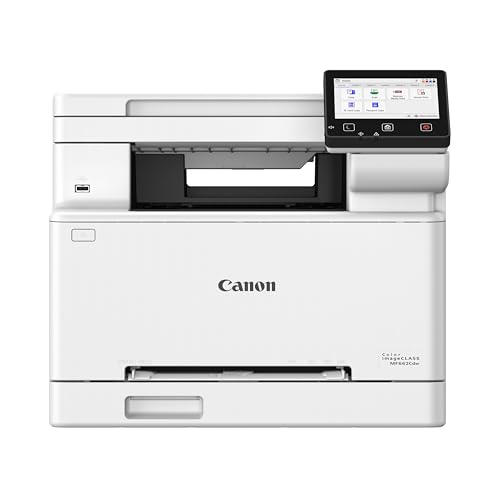
Canon Color imageCLASS MF662Cdw - Wireless Duplex Laser Printer with Copier,
26 ppm color print speed
View Today's Price
Brother MFC-L3720CDW Wireless Color Laser Printer with Scanner, Copier and Fax |
19 ppm color print speed
View Today's Price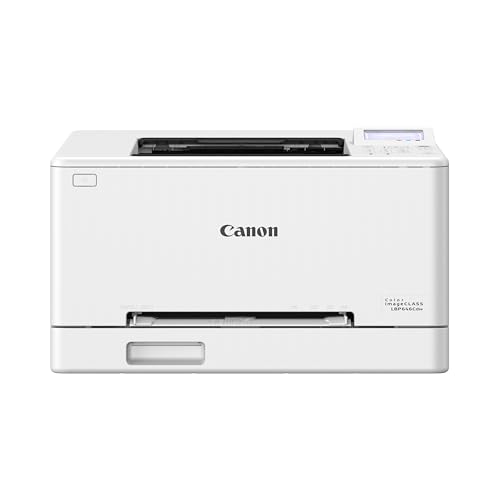
Canon Color imageCLASS LBP646Cdw Wireless Laser Single-Function Printer for
26 ppm color print speed
View Today's PriceHow to Choose the Right Color Laser Printers
Choosing the right color laser printer depends on how your print volume, connectivity needs, budget, and available space interact—trade-offs that shift based on your home or office setup. A feature that’s perfect for a busy team is overkill for a casual home user, and toner costs can outweigh a low upfront price. Our recommendation engine evaluates your specific needs across five key dimensions and matches you to the right printer in under 60 seconds.
About this guide
Color Laser Printers
Why Picking the Right Color Laser Printer is Tricky
Choosing color laser printers in 2026 is more involved than most people realize. The main challenge with color laser printers is balancing print speed, toner yield, and upfront cost—especially since a $200 color laser printer and a $600 color laser printer can look nearly identical on paper, but deliver wildly different long-term value. Print speed (measured in pages per minute) matters if you print large documents or share color laser printers with others, but higher speeds usually mean a bigger footprint and higher price. Toner yield and cost per page are make-or-break: some budget color laser printers lure you in with a low sticker price, but saddle you with tiny starter cartridges and expensive replacements, driving up your real cost over two years. Many buyers also overlook monthly duty cycle, which determines how much printing a color laser printer can reliably handle—essential if you print 500+ pages per month. Most shoppers get tripped up by ignoring connectivity (Wi-Fi vs. Ethernet), assuming all color laser printers are equally easy to set up, or chasing the lowest price without factoring in ongoing toner costs. Brands like HP, Brother, and Canon dominate the color laser printers market for a reason, but even within those lineups, trade-offs abound.
What Actually Sets Models Apart: Real Differentiators
Not all color laser printers are created equal—real-world performance hinges on a handful of specs and features. Canon’s MF665Cdw and MF753Cdw color laser printers stand out for their high-yield toner options and best-in-class print quality, while HP’s Color LaserJet Pro MFP M283fdw is praised among color laser printers for seamless mobile printing and easy wireless setup. Skip entry-level color laser printers under $400 if you print more than 200 pages a month—their starter toners run out fast, and replacement costs add up. Automatic duplex printing is a must for anyone who prints double-sided documents regularly; manual duplexing on color laser printers is a hassle you’ll regret. Ethernet connectivity is more reliable than Wi-Fi for busy offices using color laser printers, but most home users will be fine with dual-band wireless. Don’t be swayed by fax features unless you genuinely need them—multifunction color laser printers without fax are usually cheaper and more compact. Paper tray size and duty cycle matter more for color laser printers than flashy touchscreen controls or “eco” marketing. If you print mostly black-and-white, focus on black toner yield; for heavy color use, compare the cost per color page carefully—some Canon color laser printers can hit 58¢ per color page, which adds up fast.
How to Decide: Interactions and Decision Factors
Finding the right color laser printer is all about how your needs interact. Room size and available desk space dictate whether a compact single-function color laser printer or a bulkier all-in-one color laser printer fits your setup. Your monthly print volume affects which duty cycle and toner yield are realistic—printing 500+ pages a month? You’ll need a color laser printer like the Canon MF753Cdw with high-yield cartridges and a robust duty cycle. Budget is more than just the sticker price; total cost of ownership (including 4-6 toner sets over two years) often makes a midrange $450–$550 color laser printer the smarter buy versus a $200 budget color laser printer with expensive consumables. Connectivity requirements (Wi-Fi, Ethernet, or both) interact with your home or office network reliability and can influence which color laser printers are best for your environment. The quiz evaluates your print type, monthly volume, connectivity, budget, and usage environment to match you with the right color laser printer. Beyond that, think about whether you’ll scan or copy often (all-in-one color laser printer), if you need auto-duplexing, and whether you’re willing to trade a larger footprint for lower per-page costs on color laser printers. Don’t underestimate the importance of compatibility—Windows 11 and macOS support is not universal on older color laser printers.
Buyer's guide
How to choose
1Core Performance Criteria
- Prioritize print speed—look for at least 22 pages per minute if you print multi-page documents or share the printer in a busy space.
- Check monthly duty cycle ratings; 30,000+ pages per month is ideal for small business, while 10,000+ is sufficient for home offices.
- Toner yield is crucial—models like the Canon MF753Cdw offer high-yield cartridges that dramatically lower your long-term cost per page.
- Automatic duplex printing saves time and paper; avoid manual duplex models if you print double-sided documents regularly.
- Paper tray capacity matters—250 sheets is the sweet spot for most users, but heavy users should look for 500-sheet options.
- Color accuracy and text sharpness are best on Canon’s MF665Cdw and MF663Cdw, which outperform most HP and Xerox models for graphics.
2Build Quality and Durability
- Canon’s MF series and HP’s Color LaserJet Pro models consistently earn high marks for sturdy build and reliable mechanics in long-term tests.
- Avoid ultra-budget models under $200—they often use flimsier plastics and have weaker hinges that wear out with frequent scanning or copying.
- Look for printers with robust paper feed mechanisms; misfeeds and jams are less common on Canon and HP than on off-brand models.
- All-in-one models with heavy lids and reinforced hinges, like the MF665Cdw, last longer in environments where scanning is frequent.
- Check for a minimum one-year warranty; Canon and HP both offer solid service coverage and easy access to replacement parts.
- Touchscreen controls should feel responsive and solid—cheap, laggy screens are a red flag for overall build quality.
3Value Analysis and Total Cost
- Calculate total cost of ownership over two years, including at least four full toner sets—this can double the real price of a budget printer.
- High-yield toner options, like those on the Canon MF753Cdw, can cut your per-page cost by 30–50% compared to standard cartridges.
- Avoid models with starter toners only yielding 500–700 pages—replacement costs will quickly outpace any upfront savings.
- Premium models above $600 add only marginal speed or features; the $450–$550 range is the true value sweet spot for most users.
- HP’s Instant Ink or toner subscription services can help manage costs, but only if your print volume is consistent month to month.
- Don’t ignore the cost of color pages—some models hit 58¢ per color page, which adds up fast for graphics-heavy use.
4Use-Case Fit and Features
- Single-function models are best for pure printing needs and tight spaces—skip multifunction if you never scan or copy.
- All-in-one printers with auto-duplex scanning are essential for digitizing multi-page documents in home offices and small businesses.
- Wireless connectivity is a must for households with multiple devices; dual-band Wi-Fi is more stable in crowded environments.
- Ethernet connectivity is preferred for shared office networks, reducing dropouts and setup hassles compared to Wi-Fi alone.
- A 250-sheet tray is sufficient for home use, but small businesses should consider models with larger or expandable trays.
- Skip fax features unless required—these add bulk and cost, and most users never need them in 2026.
5Common Mistakes and Pitfalls
- Ignoring toner yield leads to sticker shock—always check high-yield cartridge options before buying, especially for Canon and HP models.
- Underestimating printer size can cause headaches; even 'compact' models like the MF665Cdw are bulkier than most inkjets.
- Assuming all printers support Windows 11 or macOS—verify compatibility, as older models often lack updated drivers.
- Relying solely on Wi-Fi in busy offices can cause dropouts; use Ethernet for maximum reliability if possible.
- Choosing the cheapest model often results in higher long-term costs due to expensive toner and limited features.
- Expecting photo-quality prints from a color laser is a mistake—inkjets or tank-based models are better for glossy photos.
6Maintenance and Longevity
- Canon and HP models typically require less frequent maintenance than off-brand lasers, thanks to better-engineered drums and fusers.
- High-yield toner cartridges not only save money but also reduce the hassle of frequent replacements, especially for heavy users.
- Keep firmware updated for security and compatibility—Canon and HP provide regular updates for their 2026 models.
- Clean paper feed rollers every few months to prevent jams and extend the printer’s lifespan, especially in dusty environments.
- Replace drums and fusers as recommended—ignoring these can lead to streaks, faded prints, and costly repairs.
- Store toner cartridges in a cool, dry place to maximize shelf life and prevent clumping or waste.
FAQ
Frequently asked questions
Is it worth paying extra for high-yield toner models?
Absolutely—high-yield toner cartridges, like those available on the Canon MF753Cdw, can cut your cost per page by up to 50% compared to standard cartridges. While the upfront cost is higher, you’ll replace toner far less often, saving both time and money over the printer’s lifespan. For anyone printing more than 300 pages a month, high-yield options pay for themselves within the first year. Always check the yield numbers before buying, as some budget models only offer low-capacity cartridges.
How does Canon compare to HP for color laser printers in 2026?
Canon dominates expert reviews for reliability, print quality, and overall value in 2026, especially with models like the MF665Cdw and MF753Cdw. HP’s Color LaserJet Pro MFP M283fdw is still a solid pick for wireless convenience and easy mobile printing, but Canon’s high-yield toner options and sharper graphics give it the edge for most users. Both brands offer robust build quality and good support, but Canon’s cost per page is typically lower for high-volume users.
What print speed do I need for a small business office?
For small business environments, look for a color laser printer with at least 25 pages per minute (ppm) print speed. Models like the Canon MF753Cdw and HP Color LaserJet Pro MFP 4301fdw meet or exceed this threshold, ensuring fast turnaround for multi-page reports and team use. Slower models can bottleneck productivity, especially when several people share the printer. Also, prioritize a duty cycle of 30,000+ pages per month for long-term reliability.
Are multifunction color laser printers worth it for home use?
If you scan, copy, or occasionally fax documents, a multifunction color laser printer is absolutely worth it. All-in-one models like the Canon MF665Cdw or HP M283fdw let you digitize paperwork and make copies without needing a separate device. For pure printing needs, a single-function model is more compact and often cheaper, but most home offices benefit from the added flexibility of a multifunction unit—especially as scanning and copying become more common for remote work.
How much should I budget for toner over two years?
Expect to spend $300–$600 on toner for a typical color laser printer over two years, assuming moderate use (about 500 pages per month). High-yield cartridges can lower this cost, while frequent color printing (charts, graphics) pushes it higher—Canon’s MF663Cdw, for instance, can hit 58¢ per color page. Always calculate your expected volume and check cartridge prices before buying, as toner costs often exceed the printer’s initial price within a couple of years.
Can I use a color laser printer for photo printing?
Color laser printers are not ideal for photo printing. While they excel at sharp text and vibrant graphics on plain paper, their output on glossy photo paper is noticeably inferior to inkjet or ink tank models. If you need to print high-quality photos, consider a Canon MegaTank or Epson EcoTank inkjet instead. Lasers are best for documents, presentations, and everyday color graphics—not for producing photo lab-quality prints.
What’s the best connectivity option for reliable printing?
For most home users, dual-band Wi-Fi is convenient and supports mobile printing from phones and tablets. In shared office settings, Ethernet is more reliable and less prone to dropouts, especially if several people print at once. Many top models, like the Canon MF665Cdw and HP M283fdw, offer both wireless and wired options. If you experience frequent Wi-Fi issues, always opt for a model with Ethernet support for consistent performance.
Best Color Laser Printers By Category
Related Guides
3D Printers
Matched to your print size, detail needs, materials, and how much you want to tinker or automate.
All-in-One Laser Printers for Home Office
Matched to your print volume, color needs, workflow features, and budget—get the right laser all-in-one for your home office.
Sit-Stand Desk Converters
Matched to your desk size, equipment weight, ergonomics, and feature preferences—get the right converter for your workflow.
Budget and Mid‑Range Laptops
Matched to your main tasks, OS preference, portability, and display—find a laptop that fits your real workflow and budget.