Skip the research trap. Get your camera lenses in 60 seconds.
We scored 350+ camera lenses across 5 dimensions — answer 5 quick questions and we'll match you to YOUR best pick.

Powered by DecisionScore™
Each product is evaluated across 18 weighted criteria — covering performance, value, build quality, and real-world usability. Your quiz answers re-weight the criteria to match what matters most to you, so two people can get different #1 picks from the same data.
See the DecisionScore methodology →- Wide 24mm f/1.8 aperture prime with macro capability (0.5x)
- Optical Image Stabilization for handheld shooting
- STM autofocus for smooth, near-silent video AF
Find your perfect camera lenses
5 quick questions. No quiz-takes-10-minutes trap. A personalized match from 33 scored picks — with clear reasoning for every recommendation.
What type of lens or filter are you looking for?
The type of lens or filter determines its primary use. Prime lenses are fixed focal length lenses, often offering better image quality and larger apertures. Zoom lenses provide versatility with variable focal lengths. Filters, such as ND or polarizing, modify light entering the lens for creative effects.
- Prime lenses are lighter and sharper, great for portraits and low light.
- Zoom lenses cover more focal lengths, making them versatile for travel or events.
- Filters like ND or polarizers help control light and reflections for creative effects.
As an Amazon Associate and affiliate partner we earn from qualifying purchases. Links on this page may earn us a commission at no extra cost to you. Full disclosure
Not ready for the quiz? Here are our overall top picks
These are our top-rated picks overall. For a recommendation matched to YOUR specific needs,
Canon RF24mm F1.8 Macro is STM Lens, Wide-Angle, Fixed Focal Length Prime Lens,
Wide 24mm f/1.8 aperture prime with macro capability (0.5x)
View Today's Price
Canon RF28mm F2.8 STM Lens, RF Mount, Wide-Angle, for Full-Frame Cameras
Ultra-slim pancake design, lightest and smallest RF prime lens
View Today's Price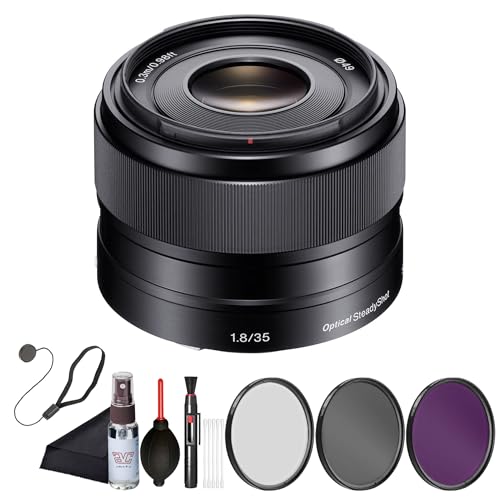
Sony E 35mm F1.8 OSS Standard Prime Lens (SEL35F18) – APS-C E-Mount | Bright
Compact APS-C 35mm (52.5mm equivalent) prime at f/1.8
View Today's PriceHow to Choose the Right Camera Lenses
Choosing the right camera lens depends on mount compatibility, focal length, aperture, and how you actually shoot—trade-offs that shift with your subjects, budget, and gear. A lens perfect for portraits may be a poor fit for travel or wildlife, and price alone doesn’t guarantee the right balance of features. Our recommendation engine evaluates your specific setup across five key dimensions and matches you to the best lens in under 60 seconds.
About this guide
Camera Lenses
Why Camera Lens Decisions Are So Tricky in 2026
Picking camera lenses in 2026 is a balancing act that most buyers underestimate. A sharp 50mm f/1.8 prime camera lens for portraits and low light can be had for around $200, but step up to a fast f/1.4 camera lens and you’ll pay double for a stop more light. Wide-angle zoom camera lenses, like the popular 16-35mm range, cost $400–$600 and are essential for landscapes and travel, but add bulk and weight compared to prime camera lenses. Macro camera lenses start at $300, but true 1:1 magnification and fast autofocus are rarely found below $500. Telephoto camera lenses range from $250 for compact 70-300mm designs to $800 for pro-grade wildlife zooms with image stabilization. The real challenge is matching your camera lenses’ focal length, aperture, and mount to your shooting style and budget. Too many buyers focus on specs or price alone, overlooking how camera lens weight, size, and compatibility will affect real-world use. Buying the wrong camera lens mount or chasing the lowest price can leave you with camera lenses that sit unused or don’t deliver the results you want.
What Actually Separates Camera Lenses: Specs, Brands, and Real-World Impact
Mount compatibility is the first make-or-break factor—Canon RF, Nikon Z, Sony E, and Fujifilm X camera lenses are not interchangeable, so you must match your camera lenses to your camera body. Aperture speed is the next big divider: f/1.4 prime camera lenses deliver creamy background blur and low-light power, but cost twice as much as f/2.8 or f/1.8 camera lenses. Image stabilization, which adds $100–$200, is a lifesaver for handheld shots in dim conditions, especially on telephoto camera lenses. Third-party brands like Sigma and Tamron now rival Canon and Nikon camera lenses for sharpness and autofocus, but at 30–40% lower prices—making these camera lenses a smart pick unless you need weather sealing or absolute compatibility. Weather sealing and robust build quality push most camera lenses over $500, but are essential for outdoor or travel shooters. Don’t underestimate weight: a 2-pound telephoto camera lens will tire you out faster than a 10-ounce prime camera lens, and size matters for street or travel photography. Skip expensive features on camera lenses like control rings or fluorine coatings unless you shoot in rough conditions or need pro-level customization.
How to Choose: Interacting Factors and Smart Trade-Offs
Your camera lens decision is shaped by how your mount, budget, and shooting priorities interact. For example, portrait shooters need fast prime camera lenses (35–85mm, f/1.4–f/1.8), while landscape photographers benefit more from wide-angle zoom camera lenses (14–35mm, f/2.8–f/4). Wildlife and sports demand 200mm+ telephoto camera lenses, where image stabilization is almost non-negotiable. Budget directly limits your access to fast apertures, weather sealing, and branded camera lenses—$200 prime camera lenses are unbeatable for value, but $800 pro zoom camera lenses offer features that matter for demanding use. The quiz weighs your main subjects, preferred focal lengths, aperture needs, mount compatibility, and special features to help you navigate these camera lens trade-offs. Don’t just chase the lowest price or biggest aperture; think about how camera lens weight, autofocus speed, and build will affect your shooting. Remember, a camera lens that’s perfect for portraits might be a poor fit for travel or wildlife. Always check camera lens compatibility and consider whether third-party camera lenses can deliver what you need for less.
Buyer's guide
How to choose
1Core Performance Criteria
- Match focal length to your main subjects: 35–85mm primes for portraits, 14–35mm wide zooms for landscapes, and 200mm+ for wildlife or sports.
- Aperture speed is crucial for low-light and background blur—f/1.4 delivers more than f/2.8, but expect to pay at least twice as much.
- Image stabilization is a must for telephoto zooms and handheld shooting, adding $100–$200 but saving countless blurry shots in real use.
- Autofocus speed and accuracy matter more for action or wildlife than for portraits or macro work; third-party lenses like Tamron and Sigma now rival major brands.
- Sharpness is often similar between $400 Sigma/Tamron zooms and $600–$800 Canon or Nikon options, but pro lenses offer better edge performance and less distortion.
- Consider minimum focusing distance for macro or close-up work—true macro lenses start at $300 but deliver 1:1 magnification and crisp detail.
2Build Quality and Durability
- Weather sealing is found mostly on lenses over $500 and is essential if you shoot outdoors, in rain, or dusty environments.
- Metal mounts and robust barrels last longer than plastic, especially on telephoto zooms that see heavy use or frequent lens changes.
- Third-party lenses from Sigma and Tamron have closed the gap on durability, but Canon and Nikon still lead for ruggedness in their pro lines.
- Look for fluorine coatings and gasketed mounts if you expect to shoot in harsh conditions—these features resist moisture and dust.
- Weight matters: a 2-pound telephoto zoom can fatigue your arm during long shoots, while a 10-ounce prime is ideal for travel and street photography.
- Check for smooth, reliable zoom and focus rings—cheap designs can develop play or stiffness after a year of regular use.
3Value and Price Analysis
- Prime lenses at f/1.8 offer the best value around $200, delivering sharpness and low-light ability that rivals pricier glass for most uses.
- Wide-angle zooms in the $400–$600 range hit the sweet spot for travel and landscape shooters, balancing quality, weight, and price.
- Macro lenses under $300 rarely offer true 1:1 magnification or fast autofocus—expect to pay $400+ for serious close-up performance.
- Telephoto zooms start at $250 for basic models, but pro-grade versions with stabilization and weather sealing reach $800 or more.
- Third-party brands like Sigma and Tamron are typically 30–40% less expensive than Canon or Nikon, with only minor trade-offs in weather sealing or autofocus.
- Paying extra for features like control rings or advanced coatings only makes sense if you regularly shoot in challenging environments.
4Use-Case Fit and Compatibility
- Portrait shooters should focus on fast primes (35–85mm, f/1.4–f/1.8) for flattering perspective and creamy bokeh.
- Landscape and travel photographers benefit most from wide-angle zooms (14–35mm), where compactness and edge sharpness matter.
- Wildlife and sports demand telephoto reach—200mm or longer, with image stabilization and fast autofocus for tracking moving subjects.
- Macro enthusiasts need lenses with 1:1 magnification and short minimum focusing distances; expect to spend at least $300 for quality results.
- Always match lens mount to your camera body—Canon RF, Nikon Z, Sony E, and Fujifilm X are not interchangeable without adapters.
- Consider third-party options if you want to expand your kit affordably, but double-check autofocus and compatibility on your camera model.
5Common Mistakes and Pitfalls
- Many buyers overlook mount compatibility, ending up with lenses that don’t fit their camera or require clunky adapters.
- Chasing the fastest aperture (like f/1.4) often leads to overspending when f/1.8 delivers similar results for half the price.
- Ignoring lens weight and size can make travel or street shooting a chore—bulky zooms are rarely carried everywhere.
- Assuming all third-party lenses are lower quality is outdated—Sigma and Tamron now match major brands for sharpness and autofocus.
- Skipping image stabilization on telephoto zooms is a recipe for blurry shots, especially in low light or at long focal lengths.
- Neglecting weather sealing if you shoot outdoors can result in expensive repairs or ruined gear after just one unexpected rainstorm.
6Maintenance and Longevity
- Regularly clean front and rear elements with a blower and microfiber cloth to prevent scratches and maintain image quality.
- Store lenses with caps on and in a dry, padded case to avoid dust, fungus, and accidental drops.
- Weather-sealed lenses last longer in tough conditions but still require periodic gasket checks and cleaning after rain or dust exposure.
- Avoid changing lenses in sandy or humid environments to protect internal mechanisms and coatings from damage.
- Manual focus and zoom rings should operate smoothly—if you notice stiffness or grinding, have the lens serviced before it worsens.
- Firmware updates for autofocus and stabilization are increasingly common on modern lenses—check your brand’s support site annually.
FAQ
Frequently asked questions
Is it worth paying extra for a lens with f/1.4 aperture?
An f/1.4 lens offers superior low-light performance and creamier background blur compared to f/1.8 or f/2.8, but costs roughly twice as much. For portrait and night shooters, the extra stop can be invaluable, but most casual users will find f/1.8 delivers nearly as much creative flexibility at half the price. Unless you regularly shoot in very dim conditions or crave the shallowest depth of field, f/1.8 is usually the better value.
How do Sigma and Tamron lenses compare to Canon or Nikon in 2026?
Sigma and Tamron have closed the gap with Canon and Nikon, offering lenses at 30–40% lower prices while matching sharpness and autofocus in most cases. Weather sealing and build quality are still slightly better on Canon and Nikon’s pro lines, but for most users, third-party options deliver excellent performance and reliability. Always check for firmware updates and compatibility with your specific camera model before buying.
What focal length do I need for wildlife photography?
For wildlife, a lens with at least 200mm focal length is recommended, with 300mm or more preferred for distant or small subjects. Look for telephoto zooms like 70-300mm or 100-400mm, and prioritize image stabilization to reduce blur from hand shake. Expect to spend $400–$800 for a lens that delivers the reach, autofocus speed, and sharpness needed for wildlife and sports.
Are variable ND filters worth it for landscape photography?
Variable ND filters, such as the Tiffen 77mm Variable ND, are a great tool for landscape photographers who want to control exposure in bright conditions. They allow for longer shutter speeds to create motion blur in water or clouds. Quality variable NDs cost $70–$150 and can introduce color shifts if you buy cheap models, so stick to reputable brands for best results.
How important is weather sealing on a lens?
Weather sealing is crucial if you shoot outdoors, travel frequently, or work in dusty or wet environments. It protects internal elements from moisture and dust, reducing the risk of damage and extending lens life. Most weather-sealed lenses cost over $500, but the investment pays off for anyone who can’t avoid the elements. For indoor or studio work, it’s less critical.
Can I use a Canon RF lens on a Nikon Z camera?
No, Canon RF and Nikon Z mounts are not cross-compatible. Each system uses proprietary mounts, and adapters between them are rare and usually unreliable. Always buy lenses designed for your camera’s mount—Canon RF for Canon mirrorless, Nikon Z for Nikon mirrorless, Sony E for Sony, and so on. Using the wrong mount can lead to autofocus failures and image quality issues.
What’s the best lens under $300 for portraits?
The best value for portraits under $300 is usually a 50mm f/1.8 prime lens, such as the Canon EF 50mm f/1.8 STM or similar models from Nikon and Sony. These lenses deliver sharp images, pleasing background blur, and fast autofocus, making them a staple for portrait shooters on a budget. They’re lightweight, compact, and compatible with most entry-level and enthusiast camera bodies.
Related reading
Best Camera Lenses By Category
Related Guides
Action Cameras Buying Guide
Matched to your adventure style, budget, portability needs, and the features you’ll actually use—no more guessing.
Camera Drones
Matched to your footage style, portability, camera quality, and how long you want to fly per charge.
Advanced DSLR Cameras
Matched to your shooting style, sensor format, portability, video needs, and autofocus speed—get the right camera for your real workflow.
Beginner Drones
Matched to your flying style, risk tolerance, budget, and camera needs—get the right beginner drone for how you’ll actually fly.
Beginner Mirrorless Photography Cameras
Sensor size, stabilization, body style, and creative features—matched to your budget and how you actually want to shoot.