Skip the research trap. Get your calipers in 60 seconds.
We scored 300+ calipers across 5 dimensions — answer 5 quick questions and we'll match you to YOUR best pick.

Powered by DecisionScore™
Each product is evaluated across 18 weighted criteria — covering performance, value, build quality, and real-world usability. Your quiz answers re-weight the criteria to match what matters most to you, so two people can get different #1 picks from the same data.
See the DecisionScore methodology →- 0.0005 in / 0.01 mm resolution
- 4-mode measurement: outside, inside, depth, step
- Large LCD display
Find your perfect calipers
5 quick questions. No quiz-takes-10-minutes trap. A personalized match from 28 scored picks — with clear reasoning for every recommendation.
What type of caliper are you looking for?
Calipers come in different types such as digital, dial, and vernier. Digital calipers offer easy reading with an LCD screen, dial calipers provide a mechanical dial for reading, and vernier calipers require manual reading. Your choice depends on the precision and ease of use you require.
- Digital calipers are easiest to read and best for quick measurements.
- Dial calipers never need batteries but are slower to use.
- Vernier calipers are durable and precise but require more skill to read accurately.
As an Amazon Associate and affiliate partner we earn from qualifying purchases. Links on this page may earn us a commission at no extra cost to you. Full disclosure
Not ready for the quiz? Here are our overall top picks
These are our top-rated picks overall. For a recommendation matched to YOUR specific needs,
6" Digital Caliper,Metric/Imperial/Fraction
0.0005 in / 0.01 mm resolution
View Today's Price
Digital Caliper 6 inch, Stainless Steel Vernier Micrometer
Stainless steel precision measuring jaws
View Today's Price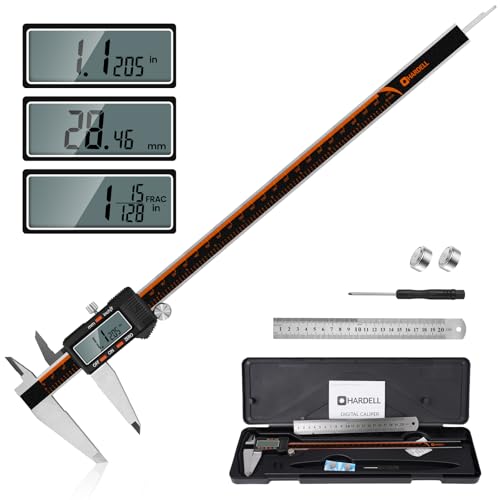
HARDELL 12 Inch Stainless Caliper with Large LCD – for Bigger Projects
Extended 12-inch (300mm) range
View Today's PriceHow to Choose the Right Calipers
Choosing the right caliper depends on measurement type, accuracy needs, environment, and how often you use it—factors that interact in surprising ways. A feature like IP54 protection is essential in a dusty shop but irrelevant for occasional home use, and the right range or data output can make or break your workflow. Generic top-10 lists can’t capture these trade-offs. Our recommendation engine evaluates your specific needs across five dimensions and matches you to the right caliper in under 60 seconds.
About this guide
Calipers
Why Caliper Buying Is Trickier Than It Looks
Most people assume picking calipers is straightforward—just grab a digital model and you’re set. In reality, the trade-offs are more nuanced in 2026. You’re choosing between digital calipers (easy-to-read LCDs, $12 Neiko plastic up to $150 Mitutoyo absolute-encoder), dial calipers (reliable analog, $25–$60), and vernier calipers (manual, $15–$40, nearly indestructible but harder to read). Here’s what trips up most buyers: cheap digital calipers under $20 seem like a deal but drift out of calibration and have jaws that won’t close flat, causing errors up to 0.005". Stainless steel calipers are a must for durability—plastic flexes and cracks, especially on 8"+ models. The 6-inch range covers 90% of tasks, but machinists and serious woodworkers sometimes need 8 or 12 inch calipers. IP54 water/dust protection is non-negotiable if you work in a busy shop, yet many overlook it when buying calipers. Fractional readouts sound useful but add cost without improving precision. Most buyers focus on resolution, not jaw flatness or beam rigidity, which actually cause the worst headaches with calipers.
What Actually Separates the Best Calipers
The real differentiators aren’t just digital vs. dial—they’re about accuracy, build, and features that matter in daily use. Stainless steel beams (like those on the iGaging ABSOLUTE ORIGIN or Mitutoyo 500-196-30) resist wear and flex, while painted aluminum or plastic calipers fail under pressure. Absolute origin encoding (found in iGaging and Mitutoyo, not $20 generics) means you won’t need to re-zero after battery changes—a huge timesaver for digital calipers. IP54-rated calipers stand up to dust and coolant, essential for shop environments. Data output (SPC/USB) is a must for engineers logging measurements, but overkill for hobbyists. Skip fractional conversion unless you’re deep into woodworking; it’s irrelevant for machinists or 3D printing. Beam rigidity matters more than most realize—8" and 12" calipers from no-name brands flex, causing real-world errors. For most, the sweet spot is a 6" digital caliper with IP54, ±0.001" accuracy, and absolute origin—think iGaging at $40–$55. Don’t pay Mitutoyo prices unless you truly need sub-0.001" repeatability from your calipers.
How to Balance Specs, Budget, and Your Workflow
Choosing the right calipers is all about how your requirements interact: the size of parts you measure, your environment, and how often you use the tool. If you’re a machinist or engineer, 0.001" accuracy and a rigid, stainless steel beam are non-negotiable for calipers. For woodworking or DIY, a mid-range digital caliper like the iGaging covers almost everything, but skip data output unless you need digital records. If you work in a dusty or wet shop, IP54 calipers are essential—otherwise, electronics will fail early. Dial calipers are perfect for daily use if you hate changing batteries, but they’re slower to read and less ideal for metric work. Fractional readouts only matter for carpenters using calipers. Our quiz weighs these factors—type, range, IP rating, data output, and fractional conversion—to match you with the right caliper. The best choice is never just about price or brand; it’s about how these calipers fit your workflow, environment, and tolerance for hassle.
Buyer's guide
How to choose
1Core Performance Criteria
- Always check for ±0.001" accuracy, especially if you’re machining or 3D printing—less precise calipers can ruin tight-tolerance parts.
- Stainless steel construction is essential for rigidity and long-term accuracy; plastic models flex and lose calibration quickly.
- IP54 water and dust protection is a must in any workshop with sawdust, metal shavings, or coolant—otherwise, expect drifting readings.
- Absolute origin encoding (found on iGaging and Mitutoyo) prevents re-zeroing after battery changes, saving time and reducing errors.
- Jaw flatness and parallelism matter more than resolution—use feeler gauges to check for less than 0.001" deviation out of the box.
- Beam rigidity is critical on 8" and 12" models; test for flex under thumb pressure to avoid errors on larger measurements.
2Build Quality and Durability
- Look for stainless steel beams, ideally 316-grade, which resist corrosion and wear better than painted aluminum or plastic.
- Plastic-bodied calipers under $20 are prone to cracking after drops and will not survive daily shop use for more than a year.
- Check that the jaws close flat and have no visible gap—poor machining leads to measurement errors and frustration.
- IP54-rated models are much more resilient to dust and coolant, extending lifespan in demanding environments by several years.
- Dial calipers from brands like Accusize and Starrett are renowned for mechanical reliability and decades-long service life.
- Avoid bargain imports with loose sliders or sticky thumbwheels, as these feel cheap and quickly develop play in the mechanism.
3Value Analysis and Pricing
- The true value sweet spot in 2026 is $40–$55: iGaging 6" digital calipers deliver pro-level features without Mitutoyo pricing.
- Budget digital calipers under $20 work for occasional hobby use but drift over time and often have poor jaw alignment.
- Premium models like Mitutoyo and Starrett cost $100–$150, but only pay for these if you need sub-0.001" repeatability.
- Dial calipers in the $25–$60 range offer battery-free reliability and are a solid investment for daily shop use.
- Vernier calipers at $15–$40 last decades but require more skill to read—best for those who value longevity over speed.
- Watch for bulk deals on Amazon, where mid-range models sometimes dip to $38, but verify authenticity and warranty coverage.
4Use-Case Fit and Application
- Machinists and engineers should prioritize 0.001" accuracy, absolute origin, and data output for logging and repeat measurements.
- Woodworkers benefit from fractional conversion, but should avoid paying extra for features like USB output they’ll never use.
- 3D printing hobbyists need reliable digital calipers with IP54 protection to handle filament dust and ensure consistent part sizing.
- Jewelry makers and precision instrument techs often require 6" or even 4" calipers for small, high-precision work.
- If you measure daily, a dial caliper saves battery headaches and is less likely to fail in cold or dirty shops.
- Occasional DIYers can get by with a $15–$20 digital, but must accept more frequent recalibration and shorter lifespan.
5Common Mistakes and Pitfalls
- Many buyers focus on resolution but ignore jaw flatness, leading to errors of 0.002" or more on thin parts.
- Plastic calipers seem appealing for price, but flex and crack—especially on 8"+ models—causing inaccurate readings and wasted materials.
- Skipping IP54 protection in a dusty shop means electronics will fail quickly, resulting in drifting measurements and early replacement.
- Fractional readouts add cost but are rarely needed outside woodworking; machinists and engineers should stick to decimal modes.
- Buying 12" calipers for occasional use is overkill—longer beams flex and are harder to store, with little added benefit.
- Ignoring beam rigidity on larger models results in flex-induced errors, especially when measuring across the full span.
6Maintenance and Longevity
- Wipe jaws and beams after each use to prevent dust buildup, which can cause sticking and wear on the sliding mechanism.
- Replace batteries every 6–12 months in digital calipers, and always keep a spare on hand for uninterrupted work.
- Store calipers in a fitted case to protect against drops and environmental damage, especially for precision dial or digital models.
- Check jaw alignment and zero calibration monthly; even stainless steel models can drift if dropped or exposed to heavy vibration.
- Avoid using calipers as general-purpose shop tools—prying or scribing will ruin accuracy and void most warranties.
- Apply a light oil to the beam and moving parts every few months to maintain smooth action and prevent corrosion.
FAQ
Frequently asked questions
Is IP54 protection worth paying extra for in a caliper?
Yes, IP54 protection is absolutely worth it if you work in a shop with dust, metal shavings, or coolant. Calipers without this rating are prone to drifting readings and early electronic failure. IP54 models, like the iGaging ABSOLUTE ORIGIN series, are sealed against dust ingress and water splashes, extending lifespan by years. For occasional home use, you might skip it, but in any professional or messy environment, it’s a must-have feature in 2026.
How does iGaging compare to Mitutoyo for digital calipers?
iGaging digital calipers, especially the ABSOLUTE ORIGIN series, offer 0.001" accuracy, IP54 protection, and absolute origin encoding for $40–$55. Mitutoyo models, like the 500-196-30, are the professional benchmark with 0.0005" resolution and unmatched build quality, but cost $150 or more. For most users, iGaging delivers 95% of the performance at a third of the price. Only choose Mitutoyo if you need sub-0.001" repeatability or daily industrial use.
What measurement range do I need for woodworking projects?
For woodworking, a 6-inch caliper covers nearly all joinery, hardware, and thickness measurements. Only opt for an 8-inch or 12-inch model if you regularly measure wide boards or large assemblies. Longer calipers are bulkier and more prone to flex, which can reduce accuracy. The majority of woodworkers in 2026 find a 6-inch digital caliper with fractional conversion ideal for both precision and ease of use.
Do I really need data output (USB/SPC) on my caliper?
Data output is only necessary if you log measurements digitally for quality control, CAD, or professional reporting. Models like the iGaging ABSOLUTE ORIGIN include USB/SPC output, which is valuable for engineers and machinists. For hobbyists, woodworkers, or DIYers, this feature adds cost without real benefit. Unless you’re required to document measurements, skip data output and invest in better build quality or IP54 protection instead.
Are fractional readouts useful for machinists?
Fractional readouts are mostly unnecessary for machinists, who work in decimal inches or millimeters for precision. Fractional modes are helpful for woodworking or construction, where plans use fractions, but they add cost and complexity. If your work is strictly metal or engineering-focused, choose a caliper with clear decimal readouts and skip the fractional feature entirely in 2026.
How do dial calipers compare to digital calipers for reliability?
Dial calipers, like those from Accusize or Starrett, are battery-free and can last decades with proper care. They’re less prone to electronic failure and work reliably in cold or dirty environments. However, they’re slower to read and harder to use for metric measurements. Digital calipers are faster and easier to read but require regular battery changes and are more vulnerable to dust and moisture. Choose dial for daily shop use if you value reliability over speed.
What’s the main drawback of budget calipers under $20?
Budget calipers under $20 often have poor jaw flatness, loose sliders, and plastic components that flex or crack. These issues lead to measurement errors of 0.002"–0.005", which can ruin precision work. They’re fine for rough DIY use or quick checks, but expect to recalibrate frequently and replace them within a year or two. For any serious or repeat use, invest in a mid-range stainless steel model for much better accuracy and durability.
Related reading
Best Calipers By Category
Compare Calipers
Related Guides
Beginner CNC Routers
Project type, assembly comfort, upgrade needs, and support—get matched to the right CNC router for your skills and ambitions.
Beginner Telescopes
Skill level, observing targets, portability, and setup preferences—get matched to the right beginner telescope for your skywatching style.
Desktop 3D Scanners
Matches you to the right scanner based on object size, precision, workflow, colour needs, and how you’ll actually use it.
3D Printer Filament
Matched to your project type, printer, experience, and budget—find the right filament for every print.