Skip the research trap. Get your wireless earbuds in 60 seconds.
We scored 400+ wireless earbuds across 5 dimensions — answer 5 quick questions and we'll match you to YOUR best pick.

Powered by DecisionScore™
Each product is evaluated across 18 weighted criteria — covering performance, value, build quality, and real-world usability. Your quiz answers re-weight the criteria to match what matters most to you, so two people can get different #1 picks from the same data.
See the DecisionScore methodology →Find your perfect wireless earbuds
5 quick questions. No quiz-takes-10-minutes trap. A personalized match from 39 scored picks — with clear reasoning for every recommendation.
What will you primarily use your earbuds for?
General listening and travel earbuds are versatile for music and podcasts. Sports and fitness models are sweat-resistant and secure. Commuting or office calls require good microphones and noise isolation. Gaming and movies benefit from low latency and immersive sound. Audiophile listening focuses on top-notch sound quality. If unsure, choose general listening.
- Think about where you'll use the earbuds most—commuting, gym, office, or at home.
- If you want all-in-one versatility, look for models with multipoint and balanced ANC.
- Consider if you need strong noise isolation for travel or calls, or a secure fit for workouts.
As an Amazon Associate and affiliate partner we earn from qualifying purchases. Links on this page may earn us a commission at no extra cost to you. Full disclosure
Not ready for the quiz? Here are our overall top picks
These are our top-rated picks overall. For a recommendation matched to YOUR specific needs,
OnePlus Buds 4, Bluetooth Wireless Earbuds, Storm Gray, E513A, in-Ear Headphones
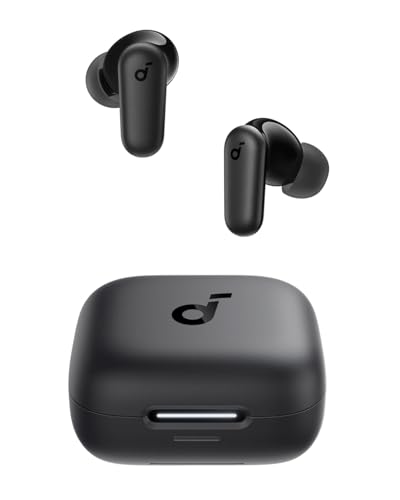
Soundcore P30i by Anker Noise Cancelling Earbuds, Strong and Smart Noise
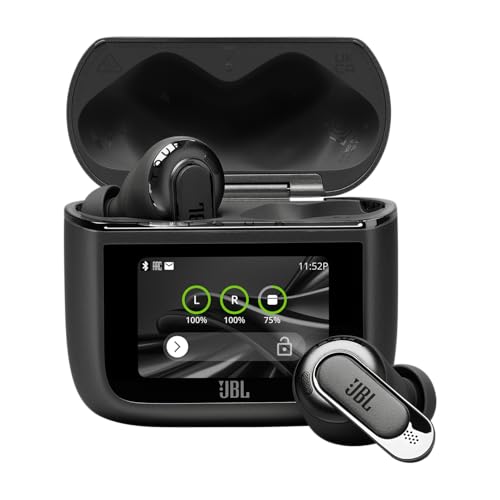
JBL Tour Pro 3 - True Wireless Noise Cancelling Earbuds with Smart Charging
How to Choose the Right Wireless Earbuds
Choosing the right wireless earbuds depends on nuanced trade-offs between sound quality, fit, ANC performance, battery life, and device compatibility—factors that interact based on your usage and environment. Generic top-10 lists fall short because a feature perfect for commuting might be a dealbreaker for workouts or audiophile listening. Our recommendation engine evaluates your specific needs across five dimensions and matches you to the right earbuds in under 60 seconds.
About this guide
Wireless Earbuds
Wireless Earbuds: The Modern Audio Essential
Wireless earbuds have become the go-to audio solution for everyone from commuters to audiophiles, thanks to their blend of portability, advanced features, and comfort. Forget the days of tangled cords—today’s models are engineered for every scenario, whether you need robust ANC for blocking out subway noise, a secure fit for high-intensity workouts, or open designs that keep you aware of your surroundings on a run. The range is staggering: budget picks like the Anker Soundcore Space A40 deliver adaptive ANC and 8-hour battery life for under $80, while premium flagships such as the Technics EAH-AZ100 push the envelope with 12+ hour battery life, triple-device multipoint, and LDAC support at $200–$250. Choosing the right pair isn’t just about price—it’s about matching features like codec compatibility, water resistance, and smart controls to your actual needs. A poor fit or mismatched feature set can turn daily listening into a constant annoyance. Making a thoughtful choice is the difference between earbuds that disappear into your routine and ones that drive you crazy.
2026 Earbud Trends and Buyer Pitfalls
The wireless earbuds market in 2026 is defined by rapid innovation and clear performance tiers. ANC and battery life are now make-or-break factors, with Technics EAH-AZ100 and Bose QuietComfort Ultra Earbuds (Gen 2) setting new standards for noise isolation and comfort. Budget models like the CMF Buds Pro 2 have closed the feature gap, offering LDAC support and customizable EQ under $80—a price point that was unthinkable for these features just two years ago. However, buyers still get tripped up by issues like fit instability during workouts (even on $200+ models), misleading battery specs (Bose’s 6.5-hour continuous playback is a real-world limit), and codec confusion—LDAC only benefits Android flagships, not iPhones. Many shoppers wrongly assume all ANC is equal or that premium pricing guarantees comfort, but expert reviews show that even top brands have trade-offs. The smart money is on testing fit, checking real battery performance, and verifying device compatibility before buying.
Why Our Earbud Quiz Delivers Real Answers
Our guide goes far beyond generic top-10 lists by using a targeted quiz to map your preferences to the features that matter most—no filler, just actionable results. We analyze hands-on expert reviews, long-term user feedback, and real-world testing across every price tier, from the $40 Anker Soundcore Space A40 to the $300 Sony WF-1000XM6. The quiz evaluates five core dimensions: your primary use case, fit preference, ANC needs, desired extra features, and device ecosystem. Unlike static rankings, our approach adapts to your priorities—whether you need triple-device multipoint for work, audiophile-grade sound for critical listening, or a secure fit for marathon training. You’ll walk away with a shortlist of models that actually fit your lifestyle, not just the latest hype. The result: a confident, regret-free purchase that matches your real-world needs, not someone else’s idea of “best.”
Buyer's guide
How to choose
1Core Performance Criteria
- Prioritize earbuds with at least 8 hours of continuous playback, especially if you rely on ANC, as real-world battery life often falls short of marketing claims.
- Look for models with customizable EQ, like the Sony WF-1000XM6, to tailor sound to your personal taste and music genres.
- If you need strong noise blocking, choose earbuds with a noise isolation score above 9.0, such as the Technics EAH-AZ100 or Bose QuietComfort Ultra.
- Check for Bluetooth 5.2 or higher for stable connections and support for multipoint pairing if you switch devices frequently.
- Low latency is critical for gaming or video streaming; models like Sony and Technics minimize audio lag for a smooth experience.
- Codec support matters: LDAC and aptX are must-haves for Android audiophiles, while AAC is best for iPhone users.
2Build Quality and Durability
- Seek an IPX4 or higher water resistance rating—essential for workouts or rainy commutes; IP57 is ideal for heavy sweat or outdoor use.
- Choose earbuds with robust charging cases; Technics and Sony cases are compact yet sturdy, while Bose models tend to be bulkier but protective.
- Aluminum or reinforced plastic builds, as seen in Cambridge Audio Melomania A100, withstand drops better than generic plastic shells.
- Replaceable or multiple ear tip sizes are vital for both comfort and maintaining a proper seal, which directly impacts sound and ANC.
- Check for reinforced hinges and magnets in the charging case to prevent accidental opening and extend the case’s lifespan.
- Brands like Bose and Sony consistently score high for long-term durability, but always inspect for weak points in the case or bud design.
3Value Analysis
- Premium models like Technics EAH-AZ100 and Bose QuietComfort Ultra Earbuds command $300, but only justify the price if you need world-class ANC or triple multipoint pairing.
- Sony WF-1000XM6 often drops to $250 during sales, offering nearly all the features of pricier models, making it the best value for most users.
- Mid-range options like Cambridge Audio Melomania A100 deliver 85% of premium sound quality and battery life at $150–$180, ideal for budget-conscious audiophiles.
- Anker Soundcore Space A40 punches above its $80 price with adaptive ANC and decent battery, but sacrifices some mic clarity and codec support.
- Avoid models in the $200–$250 range unless they offer unique features, as they often underperform compared to both cheaper and pricier competitors.
- Factor in long-term costs like replacement tips and cases, which can add $20–$40 over a couple of years, especially for daily users.
4Use-Case Fit
- For sports and running, prioritize ear-hook or wing-tip designs that stay put; Beats Fit Pro and some Sony models excel in active stability.
- Commuters and office users should focus on strong ANC and clear call quality—Bose and Technics consistently outperform rivals for noise isolation and voice pickup.
- Audiophiles should seek hi-res audio support (LDAC, aptX) and customizable EQ; Technics EAH-AZ100 and Cambridge Melomania A100 are standout choices.
- Travelers benefit from long battery life (10+ hours with ANC off) and compact cases for easy pocketing—Sony and Technics lead here.
- Multi-device users need reliable multipoint pairing; Technics’ triple-point Bluetooth is unmatched for seamless switching between phone, laptop, and tablet.
- If you want all-day comfort, look for lightweight buds with multiple tip sizes and ergonomic shapes—Bose and Sony both offer excellent fit options.
5Common Mistakes
- Skipping ear tip fitting is the number one mistake; a poor seal can reduce ANC effectiveness by up to 40% and ruin bass response.
- Overlooking codec compatibility leads to subpar audio—AAC is best for Apple, LDAC or aptX for Android; don’t assume all earbuds support your preferred format.
- Ignoring IP ratings can result in water or sweat damage; even premium models like Bose lack IP57, so always check before buying for workouts.
- Relying on brand reputation without checking the latest reviews can backfire, as some older models lag behind in ANC or battery improvements.
- Neglecting to test comfort for extended wear can lead to ear fatigue—try multiple tip sizes and pay attention to weight and shape.
- Focusing only on total battery life is misleading; always check ANC-on runtime, as it’s often 30% less than headline numbers.
6Maintenance and Longevity
- Clean earbuds and tips weekly using a soft, dry cloth and gentle brush to prevent earwax buildup and preserve sound quality.
- Always store earbuds in their charging case when not in use to protect them from dust, drops, and accidental water exposure.
- Avoid exposing your earbuds or charging case to extreme heat or cold, as temperature swings can degrade battery life and charging efficiency.
- Replace ear tips every few months, especially if you use them daily, to maintain hygiene and ensure a secure, comfortable fit.
- Update firmware regularly via the companion app to benefit from bug fixes, sound improvements, and new features released by brands like Sony and Technics.
- If battery life drops noticeably after a year, check for warranty coverage or consider professional battery replacement rather than buying a new pair immediately.
FAQ
Frequently asked questions
Is Active Noise Cancellation (ANC) worth it in wireless earbuds?
Active Noise Cancellation (ANC) is absolutely worth it if you spend time in noisy environments, such as public transit or open-plan offices. Models like the Bose QuietComfort Ultra Earbuds (Gen 2) lead the market with world-class ANC, making a dramatic difference in focus and comfort. However, ANC can reduce battery life by up to 30% compared to passive listening, so check real-world runtime. For budget buyers, the Anker Soundcore Space A40 offers surprisingly effective adaptive ANC at a much lower price point.
How does the Sony WF-1000XM6 compare to the Technics EAH-AZ100?
The Sony WF-1000XM6 and Technics EAH-AZ100 are both premium contenders, but they excel in different areas. Technics offers superior battery life—12+ hours versus Sony’s 8—and triple-device multipoint, which is a significant upgrade for multitaskers. Sony counters with a more customizable EQ and slightly more refined soundstage. Both deliver excellent ANC, but Technics is warmer and less fatiguing over long sessions. Choose Technics for battery and device juggling; Sony for audiophile tuning and app control.
What battery life should I expect with ANC on?
With ANC enabled, most premium earbuds deliver 6–8 hours of continuous playback, but real-world numbers often fall short of marketing claims. The Technics EAH-AZ100 is a standout, offering up to 12 hours, while Bose QuietComfort Ultra Earbuds typically last 6.5 hours per charge. Budget models like Anker Soundcore Space A40 average around 8 hours. Always check the ANC-on rating, not just the total battery spec, as heavy ANC use drains batteries much faster.
Is LDAC or aptX support important for wireless earbuds?
LDAC and aptX codecs are crucial if you want high-resolution audio and use a compatible Android device. Technics EAH-AZ100 and CMF Buds Pro 2 both support LDAC, but only newer Android phones—like the Samsung Galaxy S24+—can take advantage. iPhone users won’t benefit from these codecs and should prioritize AAC support instead. For audiophiles, LDAC and aptX can noticeably improve clarity and detail, but only if your device supports them.
Are budget earbuds under $80 good enough for daily use?
Yes, the $60–$80 range now includes feature-rich options like the CMF Buds Pro 2 and Anker Soundcore Space A40, both offering adaptive ANC, customizable EQ, and decent battery life. While you may sacrifice some build quality and advanced features like triple-device multipoint, these models deliver 80–90% of the performance of $200+ flagships. For most users, especially casual listeners or commuters, these budget picks are more than sufficient for daily needs.
How does fit impact sound and ANC performance?
Fit is a make-or-break factor for both comfort and performance. A poor seal can reduce ANC effectiveness by up to 40% and dramatically weaken bass response. Brands like Bose and Sony include multiple ear tip sizes, but only personal testing reveals true comfort. For active users, ear-hook or wing-tip designs—like those on Beats Fit Pro—offer extra stability. Don’t rely solely on reviews; always try different tips and shapes to find your ideal fit.
What’s the real difference between mid-range and premium earbuds?
Mid-range earbuds ($100–$150) like Cambridge Audio Melomania A100 now deliver 85% of premium sound and battery life, but usually lack top-tier ANC and advanced features like triple multipoint. Premium models such as Technics EAH-AZ100 and Bose QuietComfort Ultra justify their $200–$300 price with industry-leading ANC, longer battery, and superior build. If you need maximum noise isolation, multipoint, or audiophile sound, premium is worth it—otherwise, mid-range covers most needs at a lower cost.
Best Wireless Earbuds By Category
Related Guides
Advanced Portable Field Recorders
Matched to your workflow, input needs, portability, and feature priorities—get a recorder that fits your real-world recording style.
Bookshelf Speakers
Room size, amp setup, sound signature, and features—get bookshelf speakers tailored to your space and listening style.
Digital Audio Mixers
Channel count, recording style, control preferences, and experience—get matched to the perfect digital mixer for your workflow.
Gaming Headsets
Matched to your device, sound style, connection, mic needs, and must-have extras—get a headset that actually fits your gaming life.
Noise Cancelling Headphones
We match you to headphones based on comfort, ANC strength, battery life, sound profile, and your real-world listening needs.