Skip the research trap. Get your wine fridges in 60 seconds.
We scored 350+ wine fridges across 5 dimensions — answer 5 quick questions and we'll match you to YOUR best pick.
Powered by DecisionScore™
Each product is evaluated across 18 weighted criteria — covering performance, value, build quality, and real-world usability. Your quiz answers re-weight the criteria to match what matters most to you, so two people can get different #1 picks from the same data.
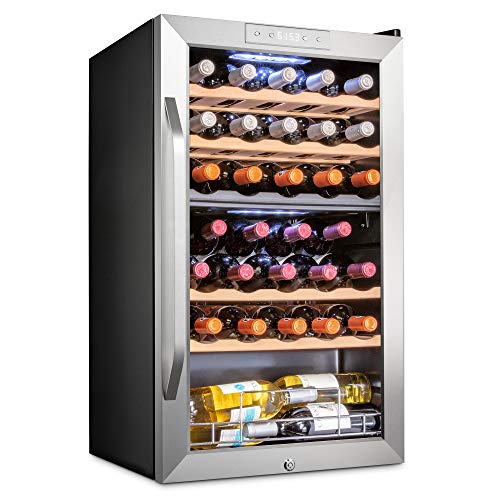
See the DecisionScore methodology →- 33-bottle dual-zone freestanding wine cooler with lock
- Compressor technology unaffected by ambient heat
- UV-resistant double-paned thermopane glass door
Find your perfect wine fridges
5 quick questions. No quiz-takes-10-minutes trap. A personalized match from 33 scored picks — with clear reasoning for every recommendation.
How serious is your wine collecting?
Casual drinkers typically want a small, affordable cooler for everyday bottles. Enthusiasts need more capacity and dual-zone control. Collectors want precise temperatures and maximum bottle storage.
- Casual drinkers can get by with a compact, affordable fridge.
- Enthusiasts should plan for collection growth and entertaining needs.
- Collectors require precise temperature control and higher capacity for aging wines.
As an Amazon Associate and affiliate partner we earn from qualifying purchases. Links on this page may earn us a commission at no extra cost to you. Full disclosure
Not ready for the quiz? Here are our overall top picks
These are our top-rated picks overall. For a recommendation matched to YOUR specific needs,
Ivation 33 Bottle Dual Zone Wine Cooler Refrigerator w/Lock | Large Freestanding
33-bottle dual-zone freestanding wine cooler with lock
View Today's Price
Phiestina 16 Inch fridge,Built-in/Freestanding Undercounter Beer Fridge Cooler
33-bottle capacity in a slim 16-inch width
View Today's Price
Wine Enthusiast 32-Bottle Dual Zone MAX Compressor Wine Cooler – Freestanding
33-bottle dual-zone compressor wine cooler
View Today's PriceHow to Choose the Right Wine Fridges
Choosing the right wine fridge depends on how your collection size, wine preferences, installation plans, and budget all interact—trade-offs that shift based on your space and future growth. A feature that’s perfect for a casual drinker in a small apartment could be a dealbreaker for a serious collector or entertainer. That’s why generic top-10 lists fail: what works for one wine lover is wrong for another. Our recommendation engine evaluates your specific needs across five key dimensions and matches you to the ideal wine fridge in under 60 seconds.
About this guide
Wine Fridges
Why Buying the Right Wine Fridge Is Tricky
Choosing the perfect wine fridge in 2026 is more complicated than it appears. Most buyers underestimate how much bottle capacity their wine fridges will actually need—experts recommend sizing up by 20–30% to allow for collection growth, but many end up cramming bottles or running out of space within a year. There’s a real trade-off between compact 12-bottle countertop wine fridges (great for apartments but limited for entertaining) and 24-inch under-counter wine fridges that hold 46 or more bottles but require a dedicated kitchen cutout and higher investment. Price tiers matter: entry-level wine fridges ($150–$250) often use thermoelectric cooling—quiet but less reliable in warm rooms—while mid-range ($250–$400) and premium ($400–$600) wine fridges offer compressor cooling, better temperature stability, and dual-zone control. Many shoppers focus on flashy features like LED lighting or stainless-steel finishes, but overlook essentials like UV-protected tempered glass, vibration reduction, and proper humidity—key factors that set the best wine fridges apart. The most common mistake? Assuming any fridge will do—standard kitchen fridges run too cold and dry, risking cork shrinkage and flavor loss. Getting these details wrong with wine fridges can ruin a prized bottle.
What Separates the Best Wine Fridges in 2026
Not all wine fridges are created equal, and the differences that matter aren’t always obvious. Dual-zone temperature control is the standout feature in 2026, letting you store reds at 50–66°F and whites at 40–50°F—crucial if you enjoy both and want your wine fridges to accommodate a range of varietals. Skip single-zone wine fridges unless you only drink one type of wine. Compressor-based wine fridges, found in models like the Whynter BWR-281DZ or NewAir AWR-460DB, deliver more reliable performance in warm rooms and larger capacities, while thermoelectric wine fridges excel in quietness but struggle above 75°F ambient. UV-protected double-pane tempered glass doors are a must for light-sensitive bottles, yet many sub-$400 wine fridges cut corners here—don’t be fooled by “UV protection” stickers on single-pane glass. Adjustable beechwood shelves cradle bottles gently and fit odd shapes better than wire racks, making these wine fridges more versatile. Features like carbon air filters, reversible doors, and digital temperature memory add real-world convenience to wine fridges. Brand reputation counts: Whynter and NewAir consistently outlast budget wine fridges, and their mid-range models hit the sweet spot for reliability and features. Don’t overpay for luxury finishes—focus on cooling uniformity and vibration control in your wine fridges.
How to Choose: Decision Factors and Interactions
Your ideal wine fridge depends on how your needs, space, and budget interact. Room size and installation type are linked: freestanding wine fridges offer flexibility but need rear clearance, while built-in/under-counter wine fridges like the NewAir AWR-460DB require precise 24–25" cutouts and front-venting. If you entertain or collect, capacity quickly becomes a limiting factor—28-bottle wine fridges fill up fast, especially with larger Champagne or Pinot Noir bottles, which reduce stated capacity by up to 20%. Dual-zone wine fridges are only worthwhile if you regularly store both reds and whites; otherwise, you’re paying for a feature you won’t use. Budget constrains features: under $250, expect single-zone, thermoelectric wine fridges and basic shelving; $400–$600 gets you compressor cooling, dual zones, and better build quality in wine fridges. The quiz weighs your collection habits, bottle count, wine preferences, installation plan, and budget to match you with the best wine fridges. Beyond that, think about future-proofing—will your collection grow, or do you need a compact wine fridge footprint? Don’t forget about energy use and maintenance for wine fridges, which can add up over time. The right choice balances all these variables in wine fridges, not just one spec.
Buyer's guide
How to choose
1Core Performance Criteria
- Dual-zone temperature control is essential if you store both reds and whites—aim for 41–50°F upper and 50–66°F lower compartments for true versatility.
- Compressor-based cooling delivers reliable temperature stability in warm rooms, while thermoelectric units are quieter but perform poorly above 75°F ambient temperature.
- Look for digital touchscreens with temperature memory, which restore settings after power outages—a must-have for serious collectors.
- Vibration reduction is critical: models like Whynter and NewAir use dampened compressors to prevent sediment disturbance and preserve wine quality.
- UV-protected double-pane tempered glass doors shield bottles from light damage—single-pane glass, even with a UV sticker, often fails in lab tests.
- Shelving matters: beechwood or wooden shelves cradle bottles gently and fit larger Champagne or Pinot Noir bottles better than wire racks.
2Build Quality and Durability
- Mid-range ($400–$600) models like Whynter BWR-401DZ use stainless-steel finishes and reinforced interiors for longer-lasting performance.
- Avoid ultra-budget fridges under $200—thin insulation and plastic shelving lead to rapid wear and inconsistent cooling within two years.
- Check for robust door hinges and handles; premature failures are common in entry-level units, especially with frequent use.
- Look for carbon air filters and tight door seals to prevent odors and maintain freshness, features often missing in cheaper models.
- Beechwood shelves are not just attractive—they flex less under weight and resist warping better than plastic or wire alternatives.
- Brands like NewAir and Whynter have better track records for compressor longevity and part availability than generic or unbranded competitors.
3Value Analysis and Price Tiers
- The sweet spot for value is $500–$700, where you get dual-zone, compressor cooling, and 28–46 bottle capacity without luxury markups.
- Entry-level ($150–$250) fridges offer basic single-zone cooling, but often sacrifice temperature stability and shelf quality.
- Mid-range ($250–$400) units add dual-zone capability and better shelving, but may lack premium features like carbon filters or digital memory.
- Premium ($400–$600) models justify their price with build quality, precise cooling, and features like reversible doors and touchscreen controls.
- Avoid paying extra for luxury finishes or oversized handles—these rarely improve performance and can inflate prices by $200 or more.
- Extended warranties are rarely worth it on small fridges under 20 bottles; invest in quality up front instead.
4Use-Case Fit and Collection Size
- Casual drinkers storing under 30 bottles can use compact countertop models, but should still allow 20–30% extra capacity for growth.
- Enthusiasts entertaining regularly or aging wine need 30–50 bottle fridges with dual zones and compressor cooling for flexibility.
- Collectors should focus on 46+ bottle built-in models with advanced features, as these support long-term aging and larger bottles.
- If you drink only one type of wine, a single-zone fridge saves money and energy—dual-zone is unnecessary unless you mix reds and whites.
- Measure your space precisely: 24-inch built-ins like NewAir AWR-460DB need a 25-inch cutout and proper front ventilation.
- For garage or RV use, prioritize compressor models rated for wide ambient temperature swings, as thermoelectric units often fail outside climate-controlled rooms.
5Common Mistakes and Pitfalls
- Underestimating capacity needs—most buyers outgrow their fridge within a year, especially if they entertain or collect.
- Installing a freestanding fridge in a cabinet—this blocks ventilation and leads to overheating or compressor failure.
- Trusting UV protection claims without verifying double-pane tempered glass—single-pane doors are ineffective against sunlight.
- Ignoring vibration: standard fridges disturb sediment, so always choose a wine-specific model with dampened compressors.
- Assuming stated bottle capacity fits all types—large Champagne or Pinot bottles reduce capacity by up to 20%.
- Skipping the manual: improper leveling or door seal installation can cause cooling problems and void warranties.
6Maintenance and Longevity
- Clean carbon air filters every 6–12 months to prevent odors and keep your collection fresh—neglecting this can taint wine over time.
- Wipe down shelves and interior surfaces regularly to prevent mold, especially in humid climates or after spills.
- Check door seals quarterly; a loose or cracked seal allows warm air in and forces the compressor to work overtime.
- Defrost thermoelectric units periodically, as ice buildup can block airflow and reduce cooling efficiency.
- Compressor-based fridges benefit from annual dusting of rear coils—clogged coils shorten lifespan and increase energy use.
- If a digital control panel malfunctions, consult the manual for reset procedures before calling for service—many issues are user-fixable.
FAQ
Frequently asked questions
Is dual-zone temperature control worth paying extra for in a wine fridge?
Dual-zone temperature control is absolutely worth it if you store both reds and whites. It allows you to keep whites at 40–50°F and reds at 50–66°F simultaneously, preserving each wine’s character. For mixed collections or entertaining, this feature is a significant upgrade and justifies the $100–$200 premium over single-zone models. However, if you only drink one type, a single-zone fridge is more energy efficient and cost-effective. Always check that the dual-zone ranges don’t overlap excessively, as some budget models have limited independent control.
How does Whynter compare to NewAir for wine fridges in 2026?
Whynter and NewAir are the two leading brands in the $400–$800 wine fridge segment. Whynter models like the BWR-281DZ are praised for reliable compressor cooling and quiet operation, while NewAir’s AWR-460DB stands out for its 46-bottle capacity and precise dual-zone controls. Both brands offer UV-protected glass, beechwood shelves, and digital touchscreens. Whynter tends to run quieter, making it ideal for living spaces, while NewAir’s build quality and part availability are slightly better for long-term use. You can’t go wrong with either, but choose based on your space and capacity needs.
What bottle capacity should I buy if my collection is growing?
Experts recommend buying a wine fridge with 20–30% more capacity than your current collection. For example, if you store 20 bottles now, aim for a 28-bottle model like the Whynter BWR-281DZ. If you’re an enthusiast or collector, a 40–46 bottle fridge offers more room for growth and avoids the hassle of upgrading within a year. Remember, large Champagne or Pinot bottles reduce stated capacity by up to 20%, so always size up if you plan to diversify your collection.
Are thermoelectric wine fridges reliable for garage or RV use?
Thermoelectric wine fridges are best for climate-controlled indoor spaces, as they struggle to maintain temperature in environments above 75°F or with wide temperature swings. For garages or RVs, compressor-based models are far more reliable, offering stable cooling even in fluctuating conditions. Brands like Whynter and NewAir have compressor units specifically rated for these uses. If you need a fridge for a non-climate-controlled space, avoid thermoelectric units and invest in a compressor model to protect your wine investment.
Do I really need UV-protected double-pane glass on my wine fridge?
Yes, UV-protected double-pane tempered glass is essential for any wine fridge exposed to sunlight or strong indoor lighting. UV rays can prematurely age wine and degrade flavors. Many budget fridges claim “UV protection” but only use single-pane glass, which fails in lab tests. Only double-pane, tempered glass doors provide real protection. If your fridge will be in a dark room, this feature is less critical, but for kitchens or living spaces, it’s a must-have for long-term wine quality.
Why do some wine fridges cost $600+ when others are under $200?
The price difference comes down to cooling technology, capacity, build quality, and features. Fridges under $200 usually offer single-zone, thermoelectric cooling, basic wire racks, and minimal insulation. Models in the $400–$600 range, like the Whynter BWR-401DZ, feature compressor cooling, dual zones, beechwood shelves, UV-protected glass, and digital controls. These upgrades deliver better temperature stability, quieter operation, and longer lifespan. You’re paying for performance and reliability—essential for anyone serious about wine storage.
What features matter most for built-in or under-counter wine fridges?
For built-in or under-counter installation, front-venting is non-negotiable—never use a rear-venting model in a cabinet. Measure your cutout precisely; 24-inch models like the NewAir AWR-460DB often need a 25-inch space. Look for adjustable feet, reversible doors, and digital temperature memory for easy integration and daily use. Compressor cooling is a must for stable temperatures in enclosed spaces. Skipping these details can lead to overheating, poor performance, or costly installation mistakes.
Related reading
Related Guides
Air Fryers
Matched to your kitchen space, batch size, cooking style, and must-have features—get an air fryer that truly fits your needs.
Bar Tools
Skill level, tool type, finish, budget, and how you’ll use your bar tools—get matched to the right set for your home bar.
Beginner Espresso Machines
Skill level, hands-on control, milk frothing, and kitchen space—get matched to the perfect beginner espresso machine for your daily ritual.
Best Bread Machines for Home Bakers
Loaf size, bread style, add-ins, and control—get matched to the bread machine that fits your kitchen and baking goals.
Breakfast Cookware
Matches your breakfast routine, kitchen setup, budget, and health priorities to the perfect pan, griddle, or appliance.