Skip the research trap. Get your window air conditioners buying guide in 60 seconds.
We scored 350+ window air conditioners buying guide across 5 dimensions — answer 5 quick questions and we'll match you to YOUR best pick.

Powered by DecisionScore™
Each product is evaluated across 18 weighted criteria — covering performance, value, build quality, and real-world usability. Your quiz answers re-weight the criteria to match what matters most to you, so two people can get different #1 picks from the same data.
See the DecisionScore methodology →Find your perfect window air conditioners buying guide
5 quick questions. No quiz-takes-10-minutes trap. A personalized match from 32 scored picks — with clear reasoning for every recommendation.
Where will you install the air conditioner?
A unit sized for a small bedroom will differ from one meant for a living room or open space. Choose the option that best describes your space; the quiz will match BTU and coverage accordingly.
- Measure your room’s square footage accurately—guessing leads to under- or over-cooling.
- Small bedrooms need far less cooling power than open-plan living spaces.
- If your space has high ceilings or lots of sun, consider sizing up slightly.
As an Amazon Associate and affiliate partner we earn from qualifying purchases. Links on this page may earn us a commission at no extra cost to you. Full disclosure
Not ready for the quiz? Here are our overall top picks
These are our top-rated picks overall. For a recommendation matched to YOUR specific needs,
Frigidaire 8,000 BTU Smart Inverter Window Air Conditioner with Wi-Fi and Energy
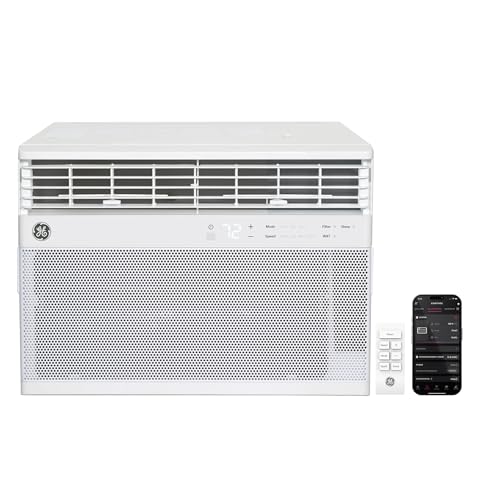
GE 10,000 BTU Smart Window Air Conditioner, Powerful Cooling for Rooms up to 450
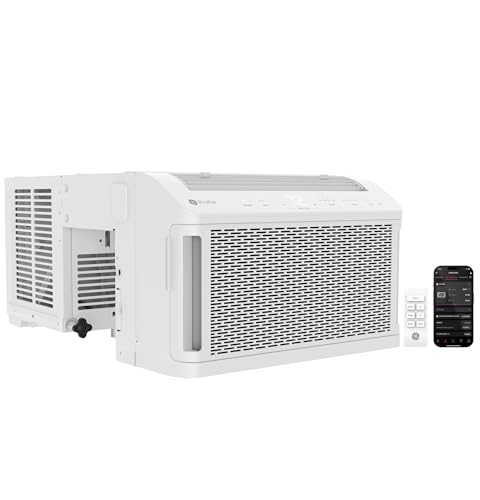
GE Profile ClearView Window Air Conditioner 6,100 BTU, WiFi Enabled, Ultra Quiet
How to Choose the Right Window Air Conditioners Buying Guide
Choosing the right window air conditioner depends on room size, installation style, energy efficiency, and control preferences—trade-offs that shift based on your living space, climate, and daily habits. Generic top-10 lists fail here because a feature like smart controls or U-shaped design may be perfect for one user but unnecessary or incompatible for another. Our recommendation engine evaluates your specific setup across five key dimensions and matches you to the ideal window AC in under 60 seconds.
About this guide
Window Air Conditioners Buying Guide
Window Air Conditioners: What Matters Most in 2026
Window air conditioners remain the go-to solution for cooling bedrooms, offices, and living rooms without the cost or complexity of central air. These units, typically ranging from 6,000 to 14,000 BTU, are designed for spaces from compact nurseries to open-plan apartments. Brands like LG, Frigidaire, and Midea dominate the market, offering models from $200 for small rooms to $500+ for large, high-capacity units. Choosing the right window AC isn’t just about cooling power—room size, energy efficiency, noise levels, and installation style all play a role. For renters, easy installation and portability matter; for families, quiet operation and air filtration can be dealbreakers. With energy costs rising, the difference between a basic model and an Energy Star Most Efficient unit can mean $50 or more in annual savings. U-shaped designs, like those from Midea, now allow window access and quieter operation, while through-the-wall models offer a built-in look for homeowners. The right choice balances comfort, cost, and convenience for your specific living situation.
What’s New: Trends, Tech, and Buyer Mistakes
The window AC market has shifted rapidly since 2022, with U-shaped and inverted U-shaped designs from Midea and LG setting new standards for quietness and efficiency. Energy Star Most Efficient labels are now the gold standard, delivering 10–20% better energy savings over basic certified units. Many buyers still get tripped up by sizing—undersized units under $200 simply can’t cool spaces larger than 250 square feet, while oversized models cycle inefficiently and leave rooms clammy. Smart features like Wi-Fi and app control are everywhere, but often add $50+ without improving cooling. Installation has become easier with lightweight frames and support brackets, but large units remain heavy and awkward—Consumer Reports recommends two-person installs for anything over 8,000 BTU. Reliability varies: GE and LG score high for long-term performance, but older models lag as standards tighten. The biggest mistake? Ignoring window measurements and ending up with a unit that doesn’t fit or drains poorly. Today’s best picks blend efficiency, quiet operation, and user-friendly controls—if you know what to look for.
How Our Quiz Delivers a Smarter Match
Our recommendation engine goes beyond generic top-10 lists by evaluating your unique setup: room size, installation style, control preferences, and must-have features. Instead of just ranking the most popular models, our quiz factors in BTU requirements, noise sensitivity, smart integration, and even window dimensions—variables that can make or break your experience. We reference real-world testing from Consumer Reports and reliability data from over 6,000 surveyed owners, ensuring you see only models proven to perform in spaces like yours. Whether you’re cooling a nursery, seeking ultra-quiet operation for a home office, or want to maximize energy savings with an Energy Star Most Efficient unit, you’ll get a shortlist tailored to your needs—not a generic list of whatever’s trending. You’ll walk away with clear, actionable picks and know exactly why each model is matched to your situation, saving you hours of research and hundreds in potential mistakes.
Buyer's guide
How to choose
1Core Performance Criteria: Cooling Power and Efficiency
- Always match the BTU rating to your room size—6,000 BTU for 100–250 sq ft, 8,000–10,000 BTU for 250–400 sq ft, and 12,000+ for large spaces.
- Energy Star Most Efficient models, like those from Midea and LG, can cut annual energy use by 10–20% over standard units, saving $50 or more every year.
- U-shaped designs are 20–30% quieter than standard box units, making them ideal for bedrooms or offices where noise is a concern.
- Look for inverter technology or high CEER ratings, as these features deliver more consistent cooling and reduce energy waste during part-load operation.
- Avoid undersized units under $200 for rooms larger than 250 sq ft—they simply cannot maintain comfortable temperatures in midsized or large spaces.
- Check for multi-directional airflow and sleep modes, which help maintain even cooling throughout the room and improve nighttime comfort.
2Build Quality and Durability
- Top brands like LG, Frigidaire, and GE consistently score higher for reliability and longevity in Consumer Reports’ owner surveys.
- Heavy-duty support brackets are essential for large units (over 8,000 BTU), as improper installation can cause sagging or window damage over time.
- U-shaped and inverted U-shaped models tend to have sturdier frames and better weather-sealing than many budget box units.
- Older models (pre-2022) often lack the improved drainage and corrosion resistance found in newer designs, leading to leaks or rust in humid climates.
- Check warranty terms—premium models often include 2–3 years on parts and labor, while budget units may offer just one year of coverage.
- Always inspect the side panels and seals; flimsy panels let in hot air and insects, undermining both comfort and efficiency.
3Value Analysis: Price vs. Features
- The sweet spot for value is $300–$400, where you’ll find Energy Star Most Efficient models with quiet operation and smart controls.
- Spending less than $200 usually means sacrificing cooling power, noise control, or long-term reliability—especially for rooms over 150 sq ft.
- Premium features like app control and voice integration add $50–$100, but don’t improve core cooling performance for most users.
- Avoid paying extra for built-in air purification unless you have specific allergy needs; standard washable filters suffice for most households.
- Installation kits and support brackets are often sold separately, adding $20–$40 to your total cost—factor this in when comparing prices.
- Large units ($500+) are only worth it for open-plan spaces or multi-room cooling; otherwise, they’re overkill and harder to install.
4Use-Case Fit: Matching Features to Your Situation
- For nurseries and bedrooms, prioritize quiet U-shaped models from Midea or LG, which offer noise levels as low as 42 dB on low settings.
- Home offices benefit from remote or app control, allowing you to adjust settings without interrupting video calls or meetings.
- Renters should look for easy-install kits and lightweight units under 60 lbs, as these are easier to remove seasonally and less likely to damage window frames.
- If you live in a humid climate, choose a model with a dedicated dry mode or dehumidifier function for improved comfort and mold prevention.
- Through-the-wall units provide a built-in look and free up window space, but require a wall sleeve and professional installation—best for homeowners.
- If energy savings are your top priority, filter for Energy Star Most Efficient units and inverter-driven compressors, which outperform basic models year-round.
5Common Mistakes and How to Avoid Them
- Buying an undersized unit to save money leads to poor cooling and higher bills, as the AC runs nonstop without reaching the set temperature.
- Ignoring window measurements is a top cause of returns—always measure the frame, not just the glass, to ensure a proper fit.
- Assuming all Energy Star units are equal—Most Efficient models save significantly more over time, especially as standards tighten.
- Overpaying for smart features you won’t use; a basic remote is sufficient for most, and app control rarely improves comfort.
- Skipping installation support brackets for large units risks window damage or even injury; always budget for proper mounting hardware.
- Neglecting to check drainage—improper leveling causes leaks and water buildup, especially in humid regions or older homes.
6Maintenance and Longevity Tips
- Clean or replace the air filter monthly during heavy use to maintain airflow and prevent dust buildup, which can strain the compressor.
- Inspect and reseal side panels each season to block drafts, pests, and moisture from entering around the unit.
- Check the drainage channel regularly; clogged drains can cause water to back up and leak into your room or window frame.
- Store the unit indoors during the off-season if possible—prolonged outdoor exposure accelerates corrosion and shortens lifespan.
- Schedule a deep clean of the coils and fan every 1–2 years, especially if you live in a dusty or humid environment.
- Monitor for unusual noises or vibrations; these often signal loose parts or early wear, and addressing them early can extend the unit’s life.
FAQ
Frequently asked questions
Is it worth paying extra for a U-shaped window air conditioner?
Yes, U-shaped window air conditioners like the Midea MAW06R1YWT-S are 20–30% quieter than standard box units and allow you to close the window for better insulation. This design is ideal for bedrooms or offices where noise and comfort are priorities. While they cost $50–$100 more than basic models, the quieter operation and improved window access justify the premium for most buyers, especially if you value sleep quality or need to open the window occasionally.
How does LG compare to Frigidaire and Midea for reliability and performance?
LG, Frigidaire, and Midea are all top performers in Consumer Reports’ 2026 ratings, but each has strengths. LG models like the LW8016ER excel at temperature consistency and remote control features, while Frigidaire units are praised for energy efficiency and reliability in small to midsized rooms. Midea leads in quiet U-shaped designs. For long-term reliability, LG and GE score highest in owner surveys, but Frigidaire and Midea are close behind, making all three safe bets depending on your specific needs.
What BTU rating do I need for my room size?
For rooms up to 250 sq ft (small bedrooms or nurseries), a 6,000 BTU unit is ideal. Midsized spaces (250–400 sq ft) require 8,000–10,000 BTU, while large living rooms or open-plan areas (350–550 sq ft) need 12,000 BTU or more. Oversizing wastes energy and can leave rooms clammy, while undersizing leads to poor cooling. Always match BTU to your actual measured space for best results—don’t just guess based on general room labels.
Are smart features like Wi-Fi and app control worth the extra cost?
Smart features add convenience but rarely improve core cooling performance. App control and voice integration typically cost $50–$100 more. For most users, a reliable remote is sufficient, and smart features are best for those who want to automate schedules or integrate with existing smart home systems. If you’re not planning to use these advanced controls regularly, it’s better to invest in a quieter or more efficient model instead.
What installation challenges should I expect with large window AC units?
Large units (over 8,000 BTU) are heavy—often 60 lbs or more—and awkward to maneuver. Consumer Reports recommends two-person installation for safety. Support brackets are essential to prevent sagging or window damage. U-shaped models are easier to install and provide better weather sealing, but all large units require careful leveling to avoid drainage issues. Always measure your window frame, not just the glass, and budget for installation accessories like brackets and foam panels.
How do I maintain my window air conditioner for maximum longevity?
Clean or replace the air filter monthly during peak use to maintain airflow and efficiency. Inspect side panels and seals each season to block drafts and pests. Clear the drainage channel regularly to prevent leaks. Store the unit indoors during the off-season if possible. Deep clean the coils and fan every 1–2 years, and address any unusual noises or vibrations promptly. These steps can add years to your unit’s lifespan and keep it running efficiently.
Are Energy Star Most Efficient models really better than standard Energy Star units?
Yes, Energy Star Most Efficient models exceed basic certification by 10–20%, translating to $50 or more in annual savings for midsized units. As energy standards tighten, these models are more future-proof and often feature inverter technology for quieter, more consistent cooling. While they cost slightly more upfront, the long-term savings and improved performance make them a smarter investment, especially for those running their AC daily during hot months.
Related reading
Best Window Air Conditioners Buying Guide By Category
Related Guides
AC Units
Room size, installation, noise, budget, and smart features—get matched to the AC unit that fits your space and lifestyle.
Best Ceiling Fans
Room size, ceiling height, style, and lighting—get matched to the perfect ceiling fan for your space and comfort.
Compact Air Purifier Fans
Room size, filtration, climate control, and smart features—get matched to the compact air purifier fan that truly fits your lifestyle.
Dehumidifiers
Room size, drainage, noise, and convenience—get matched to the dehumidifier that actually fits your space and lifestyle.
Door Sweeps
Door location, installation method, seal type, and budget—all matched to your needs for the perfect draft and pest barrier.