Skip the research trap. Get your compact under-sink water filters in 60 seconds.
We scored 300+ compact under-sink water filters across 5 dimensions — answer 5 quick questions and we'll match you to YOUR best pick.
Powered by DecisionScore™
Each product is evaluated across 18 weighted criteria — covering performance, value, build quality, and real-world usability. Your quiz answers re-weight the criteria to match what matters most to you, so two people can get different #1 picks from the same data.
See the DecisionScore methodology →- 6-stage RO with alkaline mineral pH+ remineralization stage
- WQA certified; removes 99%+ of over 1,000 contaminants
- Restores healthy calcium and magnesium minerals post-RO
Find your perfect compact under-sink water filters
5 quick questions. No quiz-takes-10-minutes trap. A personalized match from 29 scored picks — with clear reasoning for every recommendation.
What type of filtration system do you prefer?
The type of filtration system determines the range of contaminants it can remove. Reverse osmosis systems are highly effective for a wide range of impurities, while carbon block filters are excellent for chlorine and taste improvement.
- City water is treated but often contains chlorine, chloramines, and PFAS—carbon or RO filters are both effective here.
- Well water can have iron, manganese, bacteria, and nitrates—RO or multi-stage systems are best for broad contaminant removal.
- If you’re unsure, check your water utility’s annual report or get a home water test kit for peace of mind.
As an Amazon Associate and affiliate partner we earn from qualifying purchases. Links on this page may earn us a commission at no extra cost to you. Full disclosure
Not ready for the quiz? Here are our overall top picks
These are our top-rated picks overall. For a recommendation matched to YOUR specific needs,
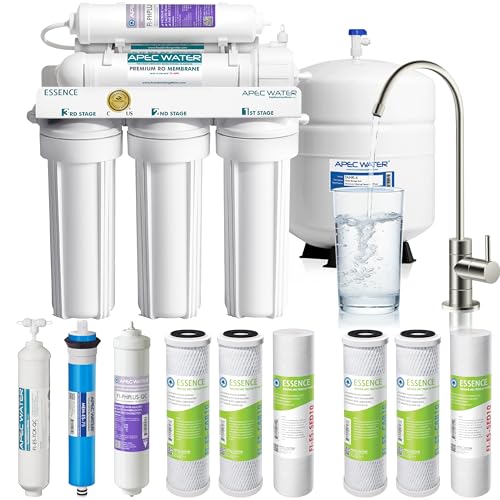
APEC Water ROES-PH75X 6-Stage Alkaline Under Sink Reverse Osmosis Water Filter
6-stage RO with alkaline mineral pH+ remineralization stage
View Today's Price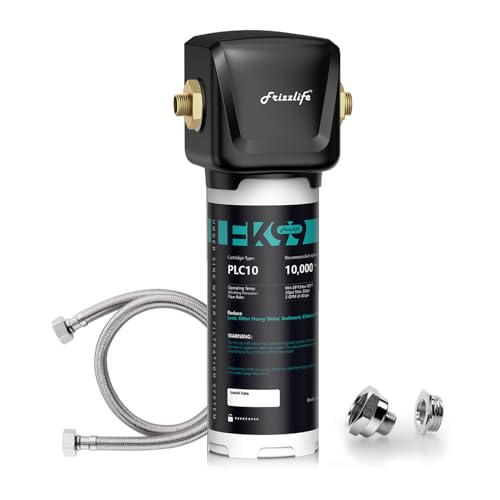
Frizzlife FK99 Under Sink Water Filter System, NSF/ANSI 53&42 Certified, Remove
NSF/ANSI 42 & 53 certified for chlorine and lead reduction
View Today's Price
iSpring RCC7AK-BLK, NSF/ANSI 58 Certified, Alkaline 6-Stage Reverse Osmosis
NSF/ANSI 58 certified; full 6-stage RO system with alkaline remineralization
View Today's PriceHow to Choose the Right Compact Under-Sink Water Filters
Choosing the right compact under-sink water filter depends on your water source, contaminant priorities, household size, and available cabinet space—trade-offs that shift based on your kitchen layout and budget. A feature ideal for city water may be wrong for well water, and a high-flow system for families is overkill for singles. Generic top-10 lists can’t account for these nuanced interactions. Our recommendation engine evaluates your specific needs across five key dimensions and matches you to the right filter in under 60 seconds.
About this guide
Compact Under-Sink Water Filters
Why Choosing the Right Under-Sink Filter Is Tricky
Picking compact under sink water filters in 2026 is more complicated than most shoppers expect. The main challenge is balancing contaminant removal, installation complexity, and ongoing costs—all while fitting a cramped cabinet space. Compact under sink water filters like reverse osmosis (RO) systems deliver the broadest contaminant removal (95–99% of dissolved solids, PFAS, fluoride, and lead), but traditional tank-based models can hog valuable storage and require up to 45 minutes to install. Tankless RO compact under sink water filters save space but often cost $200–$300, while basic carbon block compact under sink water filters start around $67 but may miss out on heavy metal or PFAS removal. Many buyers overestimate the difference between 2-stage and 8-stage carbon compact under sink water filters, when NSF/ANSI certifications (42, 53, 58, 401) actually matter more for real-world safety. Annual filter replacement costs ($50–$120) for compact under sink water filters can sneak up on you, and some brands lock you into pricey proprietary cartridges. Most buyers also overlook flow rate—a slow compact under sink water filter can drive you crazy if you fill pots frequently. The real trade-offs with compact under sink water filters come down to which contaminants you need to target, how much space you can spare, and what you're willing to spend for convenience and peace of mind.
What Actually Sets Filters Apart in 2026
The real differentiators among compact under sink water filters are technology type, contaminant coverage, and certification—not just brand or price. Reverse osmosis (RO) compact under sink water filters like those from APEC, iSpring, and Waterdrop are unmatched for removing fluoride, arsenic, and PFAS, but demand more space and maintenance. Tankless RO compact under sink water filters are a significant upgrade for small kitchens, but only if you need that level of purification. Multi-stage carbon compact under sink water filters from brands like Aquasana, Frizzlife, and Culligan excel at chlorine, taste, and VOCs, with faster flow and easier filter swaps. Inline/direct-connect compact under sink water filters (think CuZn, A.O. Smith) are ideal for renters or anyone who can’t drill a faucet hole—installation is under five minutes, but you’ll sacrifice some contaminant removal. Skip tank-based RO compact under sink water filters unless you have both the space and a need for comprehensive purification. NSF/ANSI certifications (especially 42, 53, 58, and 401) are non-negotiable if you care about verified contaminant reduction from compact under sink water filters. Don’t get distracted by the number of filter stages—what matters is what’s actually removed and at what flow rate. Annual replacement costs and filter lifespan for compact under sink water filters are more important than most realize, especially for families.
How to Decide: Matching Filter to Your Life
The best compact under sink water filter for you depends on your water source (city or well), your top contaminant concern (chlorine, lead, PFAS, or everything), household size, preferred filtration type, and budget. For example, well water often demands a robust RO compact under sink water filter, while city water users may be fine with a high-quality carbon compact under sink water filter. If you have a family of four or more, prioritize high-flow compact under sink water filters (400–800 GPD for RO, or carbon filters rated for 10,000+ gallons) to avoid slowdowns and constant maintenance. Your available cabinet space can rule out traditional RO tanks, making tankless or inline compact under sink water filters more appealing. Budget is a real constraint—under $100 means sticking to basic carbon or inline compact under sink water filters, while $200–$300 opens up tankless RO or smart features. Our quiz evaluates all these variables—water source, contaminants, household size, filter type, and budget—to pinpoint the best compact under sink water filter match. The real key is to balance contaminant removal with convenience, cost, and the realities of your kitchen layout. Don’t pay for RO compact under sink water filters if you only need chlorine removal, and don’t skimp on certifications just to save a few dollars.
Buyer's guide
How to choose
1Core Performance Criteria
- Always check for NSF/ANSI certifications—standards 42, 53, 58, and 401 guarantee real contaminant reduction, not just marketing claims.
- Reverse osmosis (RO) systems remove up to 99% of lead, fluoride, arsenic, and PFAS, but require more space and maintenance than carbon filters.
- Multi-stage carbon filters (2–8 stages) excel at chlorine, taste, and VOCs, but only some models reduce lead or PFAS—check the fine print.
- Flow rate is critical—look for at least 0.75 GPM for carbon filters or 400+ GPD for tankless RO if you have a family or cook often.
- Inline/direct-connect filters install in minutes and work with your existing faucet, but typically have lower contaminant coverage than RO or multi-stage carbon.
- Filter lifespan varies widely—some last 6 months, others up to 5 years (like the CuZn UC-200), so factor replacement frequency into your decision.
2Build Quality and Durability
- Look for reinforced plastic or stainless steel housings—cheap ABS units are prone to leaks after a year or two, especially under high pressure.
- Brands like APEC, iSpring, and Aquasana consistently deliver robust fittings and solid build quality, reducing the risk of cracked housings or failed O-rings.
- Tankless RO systems have fewer moving parts and less risk of tank failure, but require high-quality internal pumps for reliable long-term use.
- Dedicated faucets with metal construction (brushed nickel or chrome) outlast plastic ones and resist corrosion from filtered water over time.
- Quick-connect fittings make filter swaps tool-free and reduce the risk of cross-threading or overtightening—prioritize these for hassle-free maintenance.
- Check for included mounting brackets and clear installation guides—missing hardware is a common headache with budget models under $100.
3Value Analysis
- Entry-level carbon block filters start around $67, but may lack advanced certifications or comprehensive contaminant removal—good for basic taste and odor issues.
- Mid-range systems ($100–$200) like Frizzlife or Culligan add certified lead and PFAS reduction, balancing cost with real-world performance.
- Premium tankless RO systems ($200–$300) deliver maximum purification and space savings, but replacement filters can cost $80–$120 per year.
- Calculate total cost of ownership by adding annual filter replacements—some brands lock you into proprietary cartridges that double long-term costs.
- DIY installation saves $100–$200 versus hiring a plumber, especially for inline or quick-connect systems that take under 10 minutes to install.
- Don’t pay extra for eight-stage filters unless you need every feature—certification and contaminant coverage matter more than sheer stage count.
4Use-Case Fit
- City water users often get the best value from certified carbon filters targeting chlorine, taste, and VOCs—RO is overkill unless you want fluoride removal.
- Well water households should prioritize RO systems with NSF/ANSI 58 certification, as these address heavy metals, bacteria, and dissolved solids more effectively.
- Renters or those unable to drill a faucet hole should consider direct-connect inline filters like the CuZn UC-200 for tool-free, reversible installation.
- Families of four or more need high-flow systems—tankless RO (400–800 GPD) or carbon filters rated for 10,000+ gallons to avoid slowdowns and frequent changes.
- If kitchen cabinet space is limited, skip traditional tank-based RO and opt for tankless or compact multi-stage carbon units instead.
- Choose a system with a dedicated faucet if you want filtered water on demand, but stick to inline models if you prefer simplicity and minimal installation.
5Common Mistakes to Avoid
- Don’t assume more filter stages always mean better performance—focus on NSF/ANSI certifications and actual contaminant removal claims.
- Ignoring annual filter replacement costs can lead to sticker shock—some premium systems cost $100+ per year just for cartridges.
- Overlooking flow rate leads to frustration—slow filters can make filling pots or pitchers a chore, especially in busy kitchens.
- Failing to measure cabinet space before buying often results in a system that simply doesn’t fit, especially for tank-based RO models.
- Buying an RO system for city water when a carbon filter suffices wastes money and space—match the filter type to your actual water quality needs.
- Skipping installation instructions or using the wrong fittings can cause leaks—follow the guide and use included hardware for a secure fit.
6Maintenance and Longevity
- Replace filters on schedule—carbon cartridges typically last 6–12 months, while some inline systems like CuZn claim up to 5 years or 50,000 gallons.
- RO membranes last 2–3 years, but pre- and post-filters need annual changes to maintain performance and prevent bacterial growth.
- Look for systems with LED filter change indicators or clear date labels to avoid accidental lapses in maintenance.
- Flush new filters thoroughly before use to clear carbon dust and ensure optimal flow and taste from the start.
- Keep installation manuals and spare O-rings handy—these are the most common parts to fail or get lost during filter changes.
- If you notice a drop in flow rate or taste quality, check for clogged filters or leaks—address issues promptly to extend system lifespan.
FAQ
Frequently asked questions
Is it worth paying extra for a tankless reverse osmosis system in 2026?
If you have limited cabinet space or want the broadest contaminant removal—including PFAS, fluoride, and lead—a tankless RO system is worth the $200–$300 investment. These models from Waterdrop and APEC deliver 95–99% reduction of dissolved solids and fit where traditional tanks can't. However, if your main concern is chlorine or taste, a certified multi-stage carbon filter will save you money and space. Only pay for tankless RO if you truly need maximum purification and compactness.
How does Waterdrop compare to APEC and iSpring for under-sink filters?
Waterdrop excels in tankless RO technology, offering compact systems with high flow rates and easy filter changes. APEC is known for robust, WQA-certified tank-based RO systems with proven reliability. iSpring stands out for its alkaline remineralization options and NSF/ANSI 58 certification. All three brands have strong lab credentials, but Waterdrop is best for space-saving, APEC for durability, and iSpring for mineral-rich taste. Choose based on your space, contaminant needs, and budget.
What NSF/ANSI certifications should I look for in 2026?
Prioritize NSF/ANSI 42 for chlorine, taste, and odor; 53 for lead, cysts, and VOCs; 58 for reverse osmosis systems; and 401 for pharmaceuticals and emerging contaminants like PFAS. These certifications guarantee the filter’s claims are independently verified. Brands like Culligan, Aquasana, and Frizzlife clearly display these certifications. If a filter lacks these standards, skip it—marketing claims alone don’t ensure real protection.
How much space do I need for a compact under-sink RO system?
Traditional tank-based RO systems from APEC or iSpring require about 15–18 inches of width and 18–20 inches of height, including the tank. Tankless RO models from Waterdrop or Frizzlife are much slimmer, often fitting in cabinets as narrow as 5 inches wide and 13 inches tall. Always measure your available space before buying, and remember that extra hoses and fittings need clearance. If space is extremely tight, consider a direct-connect inline filter instead.
Are inline/direct-connect filters like CuZn or A.O. Smith good for renters?
Yes, inline or direct-connect filters are ideal for renters or anyone who can’t drill a dedicated faucet hole. Models like the CuZn UC-200 install in under five minutes, connect directly to your cold water line, and can be removed without leaving holes or damage. They’re less comprehensive than RO systems but provide excellent chlorine, lead, and PFAS reduction for city water. Just check filter lifespan—some last up to five years, making them very low-maintenance.
How often will I need to replace filters, and what’s the real cost?
Most multi-stage carbon filters require cartridge changes every 6–12 months, costing $40–$80 per year. RO membranes last 2–3 years, but pre- and post-filters need annual replacement. Tankless RO systems often use proprietary cartridges costing $80–$120 per year. Inline filters like CuZn can last up to 5 years, but always check the gallon rating. Calculate total cost of ownership before buying—some budget systems become expensive over time due to high cartridge prices.
Which filter type is best for well water in 2026?
For well water, a certified reverse osmosis system (NSF/ANSI 58) is usually the best choice. Brands like iSpring and APEC offer RO units that remove heavy metals, bacteria, nitrates, and dissolved solids common in well supplies. Multi-stage carbon filters may not address all well water contaminants. Always test your well water first, then match the filter to your specific needs. For iron or bacteria, consider adding a pre-filter or UV stage as well.
Related reading
Best Compact Under-Sink Water Filters By Category
Related Guides
Air Fryers
Matched to your kitchen space, batch size, cooking style, and must-have features—get an air fryer that truly fits your needs.
Bar Tools
Skill level, tool type, finish, budget, and how you’ll use your bar tools—get matched to the right set for your home bar.
Beginner Espresso Machines
Skill level, hands-on control, milk frothing, and kitchen space—get matched to the perfect beginner espresso machine for your daily ritual.
Best Bread Machines for Home Bakers
Loaf size, bread style, add-ins, and control—get matched to the bread machine that fits your kitchen and baking goals.
Breakfast Cookware
Matches your breakfast routine, kitchen setup, budget, and health priorities to the perfect pan, griddle, or appliance.