Skip the research trap. Get your smart treadmills in 60 seconds.
We scored 500+ smart treadmills across 5 dimensions — answer 5 quick questions and we'll match you to YOUR best pick.
Powered by DecisionScore™
Each product is evaluated across 18 weighted criteria — covering performance, value, build quality, and real-world usability. Your quiz answers re-weight the criteria to match what matters most to you, so two people can get different #1 picks from the same data.
See the DecisionScore methodology →- 5" LCD display + device shelf for app-controlled workouts
- SelectFlex cushioning: adjustable soft-to-firm
- 0–10 MPH speed, 0–10% incline
Find your perfect smart treadmills
5 quick questions. No quiz-takes-10-minutes trap. A personalized match from 46 scored picks — with clear reasoning for every recommendation.
What is your primary use for the treadmill?
Walkers need less motor power; runners need 3.0+ CHP and a 60-inch deck.
- Walkers can use lighter-duty treadmills with smaller decks and motors, saving money and space.
- Runners and HIIT users need a 3.0+ CHP motor and a 60-inch deck for safety and comfort.
- If multiple people will use the treadmill, consider everyone’s primary activity to ensure the specs fit all users.
As an Amazon Associate and affiliate partner we earn from qualifying purchases. Links on this page may earn us a commission at no extra cost to you. Full disclosure
Not ready for the quiz? Here are our overall top picks
These are our top-rated picks overall. For a recommendation matched to YOUR specific needs,
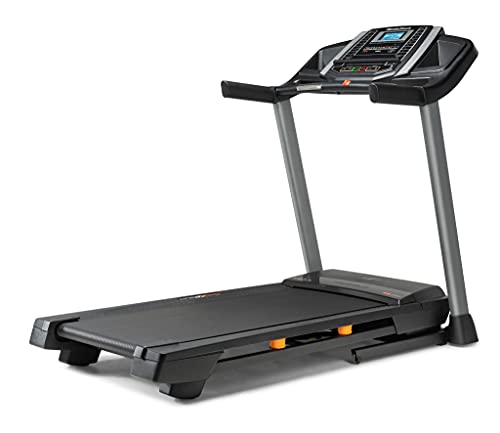
NordicTrack T Series 6.5 S Treadmill
5" LCD display + device shelf for app-controlled workouts
View Today's Price
Sunny Health & Fitness Treadmill with Auto Incline & Flex Shock Suspension
20" wide running deck for comfortable stride
View Today's Price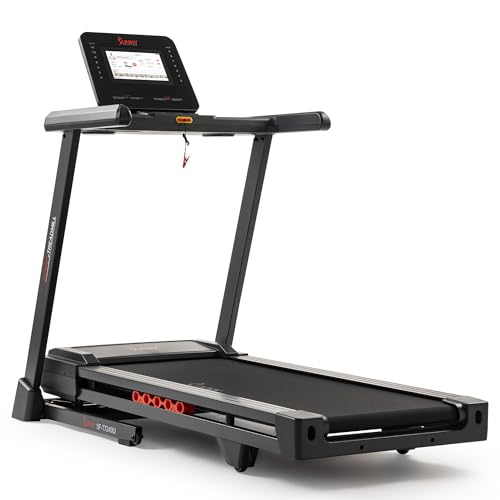
Sunny Health & Fitness Wi-Fi Treadmill 10" Touchscreen & 12% Auto Incline
20" wide running deck for comfortable stride
View Today's PriceHow to Choose the Right Smart Treadmills
Choosing the right smart treadmill depends on your workout intensity, available space, smart feature preferences, budget, and usage frequency—trade-offs that shift based on your unique fitness goals and living situation. A feature that’s perfect for a daily runner could be overkill or a waste of money for a casual walker, and subscription requirements can turn a bargain into a long-term expense. Our recommendation engine evaluates your specific needs across five key dimensions and matches you to the right treadmill in under 60 seconds.
About this guide
Smart Treadmills
Why Smart Treadmill Shopping Is Trickier Than It Looks
Choosing the right smart treadmill in 2026 is all about navigating trade-offs that most buyers overlook. It’s not just a question of motor power or screen size—deck length, app compatibility, subscription costs, and folding mechanisms all interact in ways that can make or break your experience with smart treadmills. For example, a $300 folding smart treadmill might look tempting, but with a 2.0 CHP motor and a 48-inch deck, it’ll frustrate anyone who wants to run, not just walk. Meanwhile, a $1,200 NordicTrack or ProForm smart treadmill with a 16-inch HD touchscreen and iFIT integration delivers immersive training, but you’re locked into a $39/month subscription if you want full features. Many buyers get tripped up by underestimating how much space smart treadmills actually take up, or assuming all Bluetooth connectivity means the same thing—when in reality, Sole and Horizon smart treadmills offer free, open-platform syncing, while Echelon and iFIT tie you to their apps. Even the difference between a 20×55-inch and a 20×60-inch deck is huge for taller runners using smart treadmills. The real challenge is matching smart treadmill specs and features to your actual needs, not just chasing the highest price or fanciest display.
What Actually Sets Smart Treadmills Apart in 2026
The smart treadmill market is flooded with lookalike options, but a few critical differences separate the winners from the also-rans. First, motor power: 2.5–3.0 CHP is fine for walking and light jogging on smart treadmills, but serious runners should skip anything below 3.0 CHP and demand a 20×60-inch deck for full stride comfort. Skip built-in touchscreens on smart treadmills unless you’re committed to iFIT, JRNY, or Echelon’s app ecosystems—otherwise, you’re paying for a feature you might not use. Horizon and Sole smart treadmills stand out for offering Bluetooth connectivity without mandatory subscriptions, while NordicTrack and ProForm lean into their proprietary platforms. Automatic trainer control (where the app adjusts speed and incline in real time) is a significant upgrade for motivation on smart treadmills, but only if you use guided classes. Adjustable cushioning (like SelectFlex on NordicTrack smart treadmills) matters more than most buyers realize, especially if you have joint concerns. Don’t get distracted by huge incline numbers on smart treadmills unless you’re training for hills—0–12% is plenty for most. And beware of folding mechanisms that feel flimsy; a sturdy hydraulic fold (as seen on the Sole F63 smart treadmill) is far safer and easier to use than bargain models that require heavy lifting.
How to Choose: Decision Factors and Interactions
Selecting the right smart treadmill in 2026 is all about how your priorities interact. If you’re tight on space, a folding smart treadmill like the Echelon Stride or Sunny Health & Fitness models lets you reclaim up to 50% of your floor area, but you may sacrifice deck length or stability compared to other smart treadmills. If you want immersive coaching, built-in screens and automatic incline control on smart treadmills are worth the premium—just budget for ongoing app fees. Your primary use (walking, jogging, running) dictates which smart treadmill motor and deck size you need: walkers can get by with 2.5 CHP and a 20×55-inch deck, but daily runners need 3.0+ CHP and 20×60 inches. Budget is the ultimate constraint: under $500 means basic smart treadmill features and smaller decks, while $700–$900 unlocks better cushioning, open app connectivity, and heavier-duty frames on smart treadmills. Our quiz evaluates your intended use, space needs, smart treadmill features, budget, and usage frequency in one go. Beyond that, think about how often you’ll use smart treadmills, whether you want to avoid subscription lock-in, and how much room you really have for a smart treadmill. Don’t underestimate the importance of warranty—lifetime frame and motor coverage is standard on Sole and Horizon smart treadmills, but rare below $600.
Buyer's guide
How to choose
1Core Performance Criteria
- A 3.0–3.5 CHP motor is essential for daily runners, while walkers and light joggers can settle for 2.5–3.0 CHP without sacrificing longevity.
- Deck size matters: a 20×60-inch running surface is ideal for full running stride, while 20×55 inches works for most walkers and joggers.
- Look for speed ranges up to 10 or 12 MPH if you plan on interval training or sprint work, as many budget models top out at 8 MPH.
- Incline capability of 0–12% is sufficient for most users—higher numbers are only necessary for dedicated hill training or simulation workouts.
- Check for responsive cushioning systems like SelectFlex on NordicTrack, which can reduce joint impact and make longer sessions more comfortable.
- Bluetooth heart rate monitoring and automatic trainer control are key for interactive workouts and real-time feedback, especially with iFIT or JRNY apps.
2Build Quality and Durability
- Prioritize steel frames and solid construction from brands like Sole, Horizon, and NordicTrack for long-term reliability, especially with daily use.
- Hydraulic folding mechanisms are safer and easier to operate than manual fold systems, which can be awkward or even dangerous for some users.
- Look for lifetime warranties on frame and motor—Sole and Horizon typically offer this, while budget brands may only provide 1–3 years.
- Check user weight ratings: 300 lbs is standard for quality treadmills, but some budget models dip to 220 lbs, limiting who can use them safely.
- Noise levels vary—direct-drive motors and well-cushioned decks (like on ProForm and NordicTrack) run quieter, which is crucial for shared spaces.
- Plastic components on handrails and consoles are more common in sub-$500 models and can wear out or crack faster with frequent use.
3Value and Price Analysis
- Expect to pay $300–$500 for basic folding models with smaller decks and limited smart features, ideal for light walking or occasional use.
- The $600–$900 range is the sweet spot for real smart features: app connectivity, automatic incline, better cushioning, and sturdier frames.
- Spending $1,000–$1,200 gets you immersive touchscreens, advanced training features, and heavier-duty construction, but ongoing app fees can add up quickly.
- Subscription costs for iFIT, JRNY, or Echelon Fit range from $15 to $39 per month—factor this into your long-term budget.
- Brands like Horizon and Sole offer free app compatibility, saving you hundreds per year compared to locked-in subscription platforms.
- Don’t pay extra for features you won’t use—built-in screens are only worth it if you’ll actually use guided classes or interactive workouts.
4Use-Case Fit and Customization
- Walkers and light joggers can use compact, folding treadmills with 2.5 CHP motors and 20×55-inch decks without sacrificing comfort or safety.
- Serious runners and HIIT users need 3.0+ CHP motors, 20×60-inch decks, and robust frames to handle daily pounding and high speeds.
- If you want to avoid subscriptions, choose models from Horizon or Sole that offer open Bluetooth connectivity and built-in workout programs.
- For immersive training, built-in touchscreens (like on NordicTrack or ProForm) and automatic trainer control are worth the extra investment.
- Space-limited users should prioritize folding models with hydraulic assist, but be aware that ultra-compact treadmills may feel less stable at higher speeds.
- If multiple people will use the treadmill, check for user profile support and higher weight capacity to ensure everyone’s needs are met.
5Common Mistakes and Pitfalls
- Underestimating how much room a treadmill requires—always measure your available space and check the full unfolded dimensions before buying.
- Assuming all Bluetooth connectivity is equal—some brands require paid apps, while others allow free syncing with your favorite fitness platforms.
- Ignoring warranty terms—budget models often skimp on coverage, which can leave you with expensive repairs if the motor or electronics fail.
- Choosing a deck that’s too short for running—20×55 inches is fine for walking, but runners will feel cramped without a 60-inch deck.
- Overpaying for features you won’t use, like built-in screens or advanced incline, if you prefer to use your own device or only walk.
- Forgetting to factor in ongoing subscription costs, which can add hundreds per year and sometimes lock you into a single app ecosystem.
6Maintenance and Longevity
- Regularly lubricate the belt every three months—most brands specify silicone-based lubricant, and skipping this step can void your warranty.
- Vacuum under and around the treadmill weekly to prevent dust buildup, which can damage the motor and electronics over time.
- Check and tighten bolts on the frame and deck every month, especially if you fold and unfold the treadmill frequently.
- Monitor belt alignment and tension—misalignment can cause excessive wear or even damage the motor, especially on budget models.
- Replace the belt and deck every 3–5 years with moderate use; daily runners may need replacements sooner for smooth, quiet operation.
- Keep firmware updated on smart treadmills with Wi-Fi or Bluetooth connectivity to ensure compatibility with the latest app features and bug fixes.
FAQ
Frequently asked questions
Is a built-in touchscreen worth the extra cost on smart treadmills?
A built-in touchscreen is only worth the premium if you plan to use immersive fitness apps like iFIT, JRNY, or Echelon Fit for guided classes and interactive workouts. If you prefer to use your own device or want to avoid ongoing subscription fees, models from Horizon or Sole with Bluetooth connectivity and device shelves offer better value. Touchscreens are impressive, but they lock you into a specific app ecosystem and can add $200–$500 to the price, plus monthly fees.
How does NordicTrack compare to Sole for smart treadmill features in 2026?
NordicTrack excels with immersive HD touchscreens, iFIT integration, and automatic trainer control—ideal for users who want guided, interactive workouts. Sole, on the other hand, offers free app connectivity, a simpler LCD interface, and robust build quality without locking you into a subscription. If you want the latest smart features and don’t mind paying for iFIT, NordicTrack is a top pick. For value and open-platform flexibility, Sole is hard to beat.
What motor size and deck length do I need for running versus walking?
For running, choose a treadmill with at least a 3.0 CHP motor and a 20×60-inch deck to ensure smooth, safe performance and accommodate a full stride. Walkers and light joggers can use 2.5–3.0 CHP motors and 20×55-inch decks comfortably. Using a smaller motor or shorter deck for running can lead to premature wear and a cramped, uncomfortable experience. Always match motor size and deck length to your intended intensity.
Are folding treadmills less durable than non-folding models?
Folding treadmills have improved dramatically in 2026, with hydraulic assist and reinforced frames now standard on quality models from Sole, Horizon, and Echelon. While ultra-budget folding treadmills may still sacrifice some stability, mid-range and premium folding models are nearly as durable as non-folding units. If you need to save space, a hydraulic folding mechanism is both safe and convenient, but always check weight ratings and warranty coverage for peace of mind.
How much should I budget for a quality smart treadmill with real app features?
Expect to spend at least $600–$900 for a smart treadmill with robust app connectivity, automatic incline, and a sturdy frame. Entry-level models under $500 are best for walking and light jogging, but often lack advanced features or long-term durability. Premium models with built-in touchscreens and immersive training can reach $1,200, but remember to factor in $15–$39 monthly app subscriptions if you want the full experience.
Which brands offer free app connectivity without monthly subscriptions?
Horizon and Sole are the leading brands for free app connectivity in 2026. Their treadmills use open Bluetooth protocols, allowing you to sync with popular fitness apps like Zwift or Kinomap without being locked into a paid platform. This flexibility saves you hundreds per year compared to brands like NordicTrack or Echelon, which require ongoing subscriptions for full smart features and guided classes.
What maintenance is required to keep a smart treadmill running smoothly?
Routine maintenance is crucial for treadmill longevity. Lubricate the belt every three months, vacuum around the machine weekly, and check for loose bolts monthly. Keep the belt aligned and tensioned, and update firmware regularly if your treadmill has Wi-Fi or Bluetooth. Replace the belt and deck every 3–5 years with moderate use. Following these steps ensures quiet operation, prevents motor damage, and keeps your smart features running without glitches.
Related reading
Best Smart Treadmills By Category
Related Guides
Adjustable Dumbbells
Weight range, adjustment speed, handle style, and space—get matched to adjustable dumbbells that fit your real training needs.
Bike Mats
Matched to your bike type, floor surface, noise needs, material preference, and budget for the perfect indoor cycling mat.
Bike Trainers
Matched to your riding style, noise tolerance, tech needs, and space—get a bike trainer that fits your real routine.
Cold Plunge Tubs
Insulation, chilling method, space, and budget—get matched to the cold plunge tub that fits your recovery style and setup.
Compact Home Gyms
Matched to your space, resistance needs, tech comfort, and how you actually want to train—no more guessing or wasted space.