Skip the research trap. Get your treadmills in 60 seconds.
We scored 350+ treadmills across 5 dimensions — answer 5 quick questions and we'll match you to YOUR best pick.

Powered by DecisionScore™
Each product is evaluated across 18 weighted criteria — covering performance, value, build quality, and real-world usability. Your quiz answers re-weight the criteria to match what matters most to you, so two people can get different #1 picks from the same data.
See the DecisionScore methodology →Find your perfect treadmills
5 quick questions. No quiz-takes-10-minutes trap. A personalized match from 35 scored picks — with clear reasoning for every recommendation.
What pace do you actually train at most of the time?
Walking speeds are up to 4 mph, suitable for casual exercise. Jogging covers up to 7 mph, ideal for moderate workouts. Regular running requires up to 10 mph, fitting for consistent runners. For high-intensity training, choose a treadmill with 12 mph capability. If unsure, select based on your most frequent activity.
- Think about your longest or fastest regular workout, not just occasional walks or sprints.
- If you plan to progress to running, choose a treadmill that supports higher speeds from the start.
- Walking-only models are quieter and more compact, but limit your options if your goals change.
As an Amazon Associate and affiliate partner we earn from qualifying purchases. Links on this page may earn us a commission at no extra cost to you. Full disclosure
Not ready for the quiz? Here are our overall top picks
These are our top-rated picks overall. For a recommendation matched to YOUR specific needs,
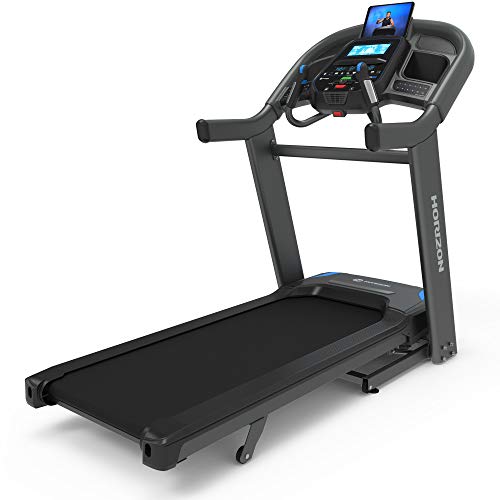

How to Choose the Right Treadmills
Choosing the right treadmill depends on your training style, space constraints, and budget—trade-offs that shift based on your specific needs and workout habits. Generic top-10 lists fail because they don't account for personal preferences like speed requirements, incline features, or cushioning preferences. Our recommendation engine evaluates your unique situation across five key dimensions and matches you to the right treadmill in under 60 seconds.
About this guide
Treadmills
Why Treadmill Choice Matters More Than You Think
Buying a treadmill for your home gym is deceptively complex—two models with similar specs can deliver wildly different experiences once you start running. For walkers, a compact treadmill like the Sunny Health Fitness Motorized model (around $300) may suffice, but runners quickly find that a 2.0 HP motor or a 50-inch deck simply can’t keep up. If your stride feels cramped or the belt stutters at speed, it’s not just annoying—it can derail your entire workout routine. Cushioning is another make-or-break factor: some decks feel soft and forgiving (think Sole or Horizon), while others mimic the firmness of pavement, which can be a dealbreaker for those with joint pain. Incline and decline features aren’t just marketing fluff; they’re essential if you train for hills or want to reduce impact. And don’t underestimate the impact of frame weight and roller size—a heavier, more robust chassis (like the Sole F85) delivers stability and longevity, especially at higher speeds. With prices ranging from a few hundred to several thousand dollars, it’s all too easy to overpay for a flashy touchscreen or underbuy and end up with a machine that feels like a toy. Knowing what really matters for your pace, stride, and training style is the difference between a regretful purchase and a treadmill you’ll actually use.
2026 Treadmill Trends: What’s Actually Changed?
The treadmill market in 2026 is unrecognizable compared to just a few years ago. Compact, foldable designs like the Echelon Stride-6s-10 dominate for urban dwellers, while brushless motors—now standard on models like the Horizon 7.4 AT—deliver quieter, more durable performance. Yet, many buyers still get tripped up by old habits: they chase giant screens (NordicTrack’s 16-inch touchscreens are impressive but come with $39/month iFIT fees) and ignore the basics like deck size and motor power. Subscription fatigue is real—users are pushing back against models that lock key features behind paywalls. Meanwhile, reviewers from Consumer Reports and Good Housekeeping highlight a new sweet spot: treadmills in the $1,500–$2,000 range now offer robust motors, 10–15% incline, Bluetooth, and long warranties without the premium for unnecessary extras. Another overlooked trend? The rise of quick-access controls and hydraulic folding mechanisms, which make daily use less of a hassle. Still, the most common mistakes persist: underestimating the importance of a 55-inch deck for runners, skipping over warranty coverage, and assuming all folding treadmills are truly compact. The market’s changed, but the fundamentals—motor, deck, incline, and durability—still matter most.
How Our Quiz Delivers Smarter Treadmill Matches
This guide isn’t just another generic top-10 list. Instead, we’ve built a five-question quiz that cuts through the marketing noise and matches you to treadmills that actually fit your real-world needs. Our system evaluates your pace (walking, jogging, running, or sprinting), your need for incline or decline, your preferred underfoot feel, your appetite for tech features or subscription classes, and how heavy-duty your treadmill needs to be for your household. Unlike static rankings, our recommendations reflect the trade-offs that matter: whether you’re better off with a Bluetooth-enabled Horizon for quiet operation, or a NordicTrack for immersive, guided workouts. We factor in durability signals like weight capacity and warranty, so you don’t get stuck with a machine that wears out in two years. By the end, you’ll know exactly why motor horsepower, deck length, and warranty terms matter for your situation. You’ll also understand the hidden costs of subscriptions and the real value of features like auto-folding or quick-access controls. The result? A treadmill recommendation that’s tailored to your lifestyle, space, and training ambitions—so you buy once and run happy.
Buyer's guide
How to choose
1Core Performance Criteria
- Choose a treadmill with at least a 2.5–3.0 CHP continuous-duty motor for running; weaker motors overheat and struggle above 10 kmph during longer sessions.
- Ensure the speed range matches your needs—serious interval runners should demand 12 mph capability, while walkers can save with 8–10 mph max models.
- Deck size matters more than most realize: aim for at least a 55-inch length and 20-inch width for safe, comfortable running, especially if you’re over 6 feet tall.
- Look for incline ranges of 10–15% for hill training; decline features (like -3% on NordicTrack 1750) add variety and simulate outdoor routes.
- Cushioning systems vary widely—Sole and Horizon offer softer decks, while some NordicTrack models feel firmer and more road-like for honest pacing.
- Check for quick-access controls and heart rate monitoring—these features, praised in expert reviews, make interval training and safety much easier.
2Build Quality and Durability
- Prioritize treadmills with a frame warranty of at least 10 years—Horizon and Sole both deliver here, while electronics often have shorter coverage.
- Heavier machines (200 lbs+) with steel frames, like the JTX Sprint-8 Pro, feel more stable at speed and stand up to daily use better than lighter, plastic-heavy models.
- Check user weight capacity—300 lbs or more is essential for multi-user households or heavier runners; lighter-duty decks wear out quickly under strain.
- Look for larger rollers (2.5-inch+) and high-quality deck materials; these reduce belt wear and noise, extending lifespan and minimizing maintenance.
- Folding mechanisms should be hydraulic-assisted for safety and ease—manual folding on cheap models can fail after a year or two of use.
- Inspect build details: welded joints, deck thickness, and reliable electronics all signal a treadmill built to last through years of training.
3Value Analysis
- Don’t overpay for giant touchscreens if you prefer using your own tablet—Horizon’s 7.0 LC and 7.4 AT offer Bluetooth at lower prices than NordicTrack’s 16-inch screens.
- Subscription fees add up fast: iFit or Echelon memberships can cost $300–$480 per year, so factor this into your total cost of ownership.
- The $1,000–$1,800 range is the current value sweet spot, offering robust motors, quiet operation, and good warranties without the premium for flashy extras.
- Sales matter—Consumer Reports notes Horizon models often drop 20–30% during promotions, making them best buys for non-subscription reliability.
- Budget models under $500 sacrifice durability and deck size; they’re fine for walking but not for running or heavier users.
- Check what’s included: heart rate straps, mats, and delivery/assembly fees can swing the real-world value by hundreds of dollars.
4Use-Case Fit
- Match treadmill specs to your primary activity—walkers can save on motor power, but runners need at least 3.0 CHP and a 60-inch deck.
- If you’re tight on space, prioritize folding designs like the Echelon Stride-6s-10 or XTERRA TR150, but test the fold/unfold ease in person if possible.
- Multi-user households should seek high weight capacity and easy adjustability—Horizon’s 7.4 AT shines here with quick dials and Bluetooth profile syncing.
- Serious hill trainers or marathoners should demand models with both incline and decline, such as the NordicTrack 1750’s -3% to 12% range.
- If you want guided classes, invest in models with built-in screens and app integration, but beware of required subscriptions after the trial period.
- For quiet environments or home offices, look for brushless motors and low-noise ratings—Horizon and Sole models consistently score well in expert tests.
5Common Mistakes
- Don’t let a flashy screen or app ecosystem distract you from weak motors—many regret buying underpowered treadmills that can’t handle sustained running.
- Ignoring deck size is a classic blunder; tall users especially find 50-inch decks cramped and unsafe at higher speeds.
- Assuming all folding treadmills are compact—many still have a large footprint even when folded, so measure your space before buying.
- Skipping warranty details can be costly; electronics are often only covered for a year, even on $2,000 treadmills.
- Overlooking subscription costs means sticker shock later—NordicTrack and Echelon lock key features behind expensive memberships.
- Neglecting regular maintenance like belt lubrication or bolt tightening leads to noisy operation and shortens the treadmill’s lifespan.
6Maintenance and Longevity
- Lubricate the belt every 3–6 months, as recommended by most brands, to prevent motor strain and keep the deck running smoothly.
- Check and tighten all bolts monthly—vibration from running can loosen hardware, leading to squeaks or even safety hazards over time.
- Vacuum under and around the treadmill regularly to prevent dust buildup, which can clog motors and degrade electronics.
- Follow the manufacturer’s maintenance schedule—skipping routine checks voids warranties and leads to expensive repairs, especially for electronics.
- Replace the belt and deck as needed; heavy users may need this every 2–3 years, while light walkers can go 5+ years.
- Store the treadmill in a dry, climate-controlled area to prevent corrosion and electronic failures—garages and damp basements are risky for longevity.
FAQ
Frequently asked questions
Is auto-folding worth it for home treadmills?
Auto-folding is a valuable feature for home treadmills, especially if space is limited or you plan to store the machine frequently. Models like the Echelon Stride-6s-10 offer convenient auto-folding, allowing you to store the treadmill quickly without tools or heavy lifting. This feature is particularly beneficial for apartment dwellers or anyone who needs to maximize living space. While it adds to the upfront cost, the time and effort saved make it a worthwhile investment for ease of use and daily practicality.
How does the Sole F85 compare to the NordicTrack Commercial 1750?
The Sole F85 and NordicTrack Commercial 1750 are both top-tier treadmills, but they cater to slightly different needs. The Sole F85 is praised for its robust steel frame, quiet operation, and straightforward controls—ideal for intense, no-nonsense workouts. In contrast, the NordicTrack 1750 offers advanced interactive features, including a 16-inch touchscreen and iFit integration, making it great for users seeking immersive, guided workouts. Both models provide excellent performance, but choose Sole for durability and NordicTrack for smart features and variety.
Are compact treadmills like the XTERRA Fitness TR150 effective?
Compact treadmills such as the XTERRA Fitness TR150 are effective for users with limited space and moderate workout needs. The TR150 offers a 2.25 HP motor and a 50-inch deck, which is suitable for walking and light jogging but not ideal for sustained running or taller users. Its foldable design and affordability make it a practical choice for beginners or those prioritizing portability. However, for intense running or multi-user households, larger models with more powerful motors and longer decks are recommended.
How does the Sunny Health Fitness Treadmill Motorized perform?
The Sunny Health Fitness Treadmill Motorized is a budget-friendly option suitable for light to moderate exercise routines. It features a 2.20 HP motor and a compact, foldable design, making it ideal for small spaces or occasional use. While it may not match the durability or stability of higher-end models, it offers good value for casual users. Manual incline adjustments and a basic console are sufficient for those who prioritize affordability over advanced features, but not recommended for serious runners.
Is investing in a treadmill with Bluetooth and app integration beneficial?
Investing in a treadmill with Bluetooth and app integration can significantly enhance your workout experience. Models like the Sole F80 and Horizon 7.4 AT offer Bluetooth connectivity, allowing you to sync with fitness apps, track progress, and access virtual classes. This feature is particularly beneficial for users who enjoy interactive training and progress monitoring. It provides motivation and variety, making workouts more engaging and effective, especially if you prefer guided sessions or structured training programs.
What are the advantages of a treadmill with a wide deck?
A treadmill with a wide deck, such as the Echelon Stride-6s-10 or NordicTrack Commercial 1750, offers several advantages. It provides ample space for comfortable running, reducing the risk of stepping off the sides or feeling cramped. A wider deck is especially important for taller users or those with a longer stride, enhancing both stability and safety during workouts. This feature is crucial for serious runners or multi-user households, where comfort and usability for all body types matter.
How does the Sole F63 compare to the ProForm Carbon T10?
The Sole F63 and ProForm Carbon T10 are both excellent mid-range treadmills, each with unique strengths. The Sole F63 is known for its durable construction, straightforward design, and reliable performance, making it ideal for users focused on longevity and simplicity. The ProForm Carbon T10, on the other hand, offers a more interactive experience with a 10-inch touchscreen and iFit compatibility. Choose the Sole F63 for durability and ease of use, or the ProForm T10 for engaging workout features and guided classes.
Related reading
Best Treadmills By Category
Related Guides
Adjustable Dumbbells
Weight range, adjustment speed, handle style, and space—get matched to adjustable dumbbells that fit your real training needs.
Bike Mats
Matched to your bike type, floor surface, noise needs, material preference, and budget for the perfect indoor cycling mat.
Bike Trainers
Matched to your riding style, noise tolerance, tech needs, and space—get a bike trainer that fits your real routine.
Cold Plunge Tubs
Insulation, chilling method, space, and budget—get matched to the cold plunge tub that fits your recovery style and setup.
Compact Home Gyms
Matched to your space, resistance needs, tech comfort, and how you actually want to train—no more guessing or wasted space.