Best Tankless Water Heaters of 2026
We scored 300+ tankless water heaters across 5 dimensions — answer 5 quick questions and we'll match you to YOUR best pick.

Powered by DecisionScore™
Each product is evaluated across 18 weighted criteria — covering performance, value, build quality, and real-world usability. Your quiz answers re-weight the criteria to match what matters most to you, so two people can get different #1 picks from the same data.
See the DecisionScore methodology →- 19.2kW at 240V; Advanced Flow Control
- Up to 1–2 showers in warm climates
- Self-modulating technology; 99% efficiency
Find your perfect tankless water heaters
5 quick questions. No quiz-takes-10-minutes trap. A personalized match from 30 scored picks — with clear reasoning for every recommendation.
What fuel type do you prefer?
Electric tankless heaters require no venting and suit homes without gas lines. Gas models (natural gas or propane) deliver higher GPM and suit larger households, but require venting and gas infrastructure.
- Electric units are easier to install and perfect for homes without gas service.
- Gas models offer higher flow rates, ideal for large families or cold climates.
- Propane is best for off-grid, RVs, or homes without natural gas lines.
As an Amazon Associate and affiliate partner we earn from qualifying purchases. Links on this page may earn us a commission at no extra cost to you. Full disclosure
Not ready for the quiz? Here are our overall top picks
These are our top-rated picks overall. For a recommendation matched to YOUR specific needs,
Stiebel Eltron Tankless Water Heater - Tempra 20 Trend – Electric, 19.2kW, On
19.2kW at 240V; Advanced Flow Control
View Today's Price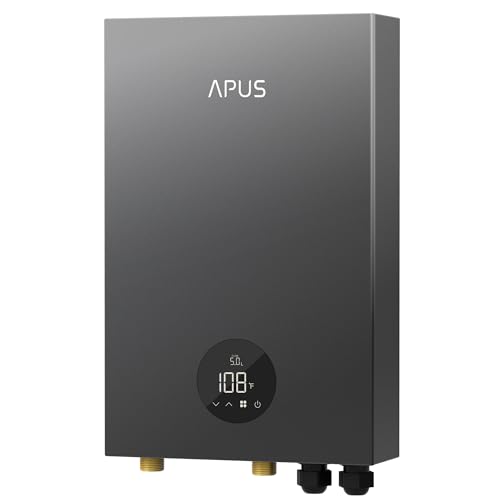
27kW Tankless Water Heater Electric, APUS 240V On Demand Instant Hot Water with
27kW at 240V; up to 5.3 GPM at 35°F rise
View Today's Price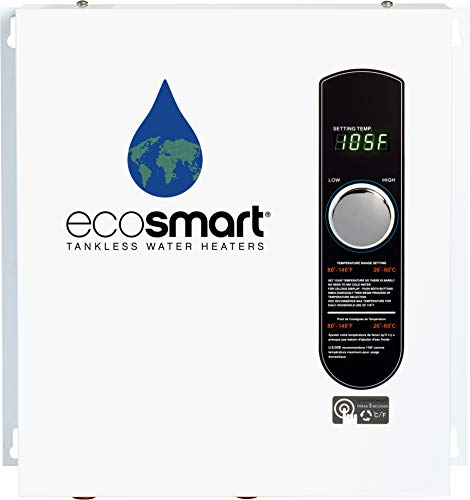
EcoSmart ECO 27 Electric Tankless Water Heater, 27 KW at 240 Volts, 112.5 Amps
27kW at 240V; up to 6.5 GPM in warm climates
View Today's PriceHow to Choose the Right Tankless Water Heaters
Choosing the right tankless water heater depends on fuel type, household size, climate, installation location, and budget—trade-offs that shift based on your unique situation. A feature that’s perfect for a small apartment can be a disaster in a large, cold-climate home. Generic top-10 lists miss these crucial interactions. Our recommendation engine evaluates your specific needs across five dimensions and matches you to the right tankless water heater in under 60 seconds.
About this guide
Tankless Water Heaters
Why Tankless Water Heater Shopping Is Tricky
Choosing the right tankless water heater in 2026 is a balancing act between energy savings, installation complexity, and matching capacity to your household’s real needs. The promise of 24–34% energy savings and endless hot water is real, but only if you select tankless water heaters sized for your climate and usage. Many buyers underestimate the importance of flow rate (GPM) and overestimate what a $250 electric tankless water heater can handle—these are great for a single shower, but not for a family of four. Gas tankless water heaters, often $500–$800, deliver higher GPM and faster recovery, but require venting and gas lines, adding $500–$1,500 to install costs. Electric tankless water heaters like EcoSmart ECO 27 or Stiebel Eltron are simpler to install and ideal for apartments, but struggle in cold climates or large homes. Point-of-use tankless water heaters are tempting for quick fixes, yet can’t replace a whole-house system. The most common mistake? Focusing on price or brand alone, without matching fuel type, GPM, and efficiency to your specific tankless water heater setup.
What Actually Sets Tankless Heaters Apart
Not all tankless water heaters are created equal—real differences go far beyond electric vs. gas. Self-modulating electric tankless water heaters from Stiebel Eltron and Rheem adjust power draw to demand, making them far more efficient than basic on/off tankless water heaters. Gas tankless water heaters like those from Rinnai, Navien, and Noritz offer condensing technology, capturing exhaust heat for 95%+ efficiency—worth the premium if you want lower long-term bills. Skip non-condensing gas tankless water heaters unless upfront cost is your top concern. For small homes or condos, electric tankless water heaters like EcoSmart ECO 11 or Titan N-160 are compact and require no venting, but don’t expect these tankless water heaters to keep up with simultaneous showers in cold climates. Outdoor tankless water heaters from Camplux and Girard eliminate venting headaches, but need freeze protection in the North. Don’t be fooled by high kW or BTU numbers—lab-tested Uniform Energy Factor (UEF) ratings over 0.93 matter more for real savings with tankless water heaters. In short: prioritize flow rate and efficiency over marketing claims, and don’t pay extra for tankless water heater features you won’t use.
How to Decide: Key Factors and Interactions
Your household size, climate, installation location, and budget all interact to determine the right tankless water heater. For example, a 3-person family in a cold climate needs a gas tankless water heater with at least 5 GPM, while a solo apartment dweller in Florida can thrive with a 13kW electric point-of-use tankless water heater. Budget under $300? You’re looking at single-fixture or portable tankless water heaters—don’t expect whole-house performance. Tight on space or lacking a gas line? Electric tankless water heaters win, but check your panel’s amperage first. The quiz weighs your fuel preference, household size, climate, install location, and budget to match you to the right tankless water heaters. Beyond that, consider installation costs (often $500–$1,500 extra), water hardness (a softener is a must in hard water zones for tankless water heaters), and warranty length—premium tankless water heater brands like Rheem and Navien offer 10+ years on heat exchangers. Don’t underestimate how GPM, temperature rise, and electrical requirements all compound with tankless water heaters—get these wrong, and you’ll end up with cold showers or blown breakers.
Buyer's guide
How to choose
1Core Performance Criteria
- Always match the unit’s maximum flow rate (GPM) to your peak household demand—2–4 GPM for 2–3 baths, 5+ GPM for large families.
- Check Uniform Energy Factor (UEF) ratings—aim for UEF above 0.93, especially for electric models like EcoSmart ECO 27 or Stiebel Eltron.
- Consider temperature rise: colder incoming water (below 50°F) dramatically reduces GPM output, especially for electric units under 18kW.
- Self-modulating technology, found in premium brands like Rheem and Stiebel Eltron, ensures consistent water temperature and maximizes efficiency.
- Point-of-use models are best for single fixtures, while whole-house units are required for simultaneous multi-shower use.
- Gas models deliver higher flow and faster recovery than electric, but require venting and professional installation, adding to total cost.
2Build Quality and Durability
- Look for stainless steel or copper heat exchangers—these resist corrosion better than aluminum and last longer in hard water conditions.
- Brands like Rinnai, Navien, and Noritz are known for robust build and 10+ year heat exchanger warranties, justifying their higher prices.
- Avoid ultra-budget units under $200 for whole-house use; these often use lower-grade components and have much shorter lifespans.
- Check for integrated scale detection or anti-limescale features, especially if your water hardness exceeds 7 grains per gallon.
- Outdoor models must be rated for freeze protection if installed in climates with winter temperatures below 40°F.
- A well-built tankless heater should last 10–15 years with proper maintenance, outlasting most traditional tank systems.
3Value and Cost Analysis
- Electric tankless units in the $400–$550 range, like EcoSmart ECO 27, offer the best balance of flow, efficiency, and warranty for 2–3 person homes.
- Gas models cost more up front ($1,000+), but deliver higher flow and efficiency, especially in cold climates or large households.
- Factor in installation costs—professional install can add $500–$1,500, especially for gas units or electrical upgrades.
- Don’t chase high BTU or kW numbers; real-world savings come from high UEF ratings and right-sizing to your needs.
- Efficiency rebates and local incentives can shave 5–10% off electric unit prices in 2026—check before you buy.
- Avoid sub-13kW electric models for whole-house use, even if they’re under $300—they’ll disappoint in multi-fixture scenarios.
4Use-Case Fit and Application
- Point-of-use units, like EcoSmart ECO 11, are ideal for under-sink or single-shower installs—don’t expect them to serve an entire home.
- Apartments and condos without gas lines benefit most from electric models, which require no venting and minimal space.
- Large households (5+ people) or homes in cold climates need gas units with at least 6 GPM and condensing technology for efficiency.
- Outdoor models, such as Camplux, simplify installation but require freeze protection kits in northern regions.
- RVs and campers should use compact, low-flow propane models specifically designed for mobile use, like Girard 2GWHAM.
- If you want instant hot water at distant fixtures, consider point-of-use units rather than oversizing a central whole-house heater.
5Common Mistakes and Pitfalls
- Underestimating your home’s electrical panel capacity—most 27kW electric units need a 200A service upgrade, which can add $500+.
- Ignoring water hardness—hard water without a softener can halve your heater’s lifespan due to rapid scale buildup.
- Assuming all tankless units deliver endless hot water at any flow—output drops sharply with multiple fixtures or cold groundwater.
- DIY installation often voids warranties and can cause safety issues; always get a licensed plumber or electrician for whole-house units.
- Focusing on price or brand alone, rather than matching GPM and temperature rise to your actual usage patterns.
- Skipping maintenance—annual descaling is critical, especially in areas with hard water, to avoid expensive repairs or early failure.
6Maintenance and Longevity
- Annual descaling is essential for electric and gas units, especially in hard water regions, to maintain efficiency and prevent failure.
- Install a water softener upstream if your hardness exceeds 7 grains per gallon to double your unit’s lifespan.
- Check for easy-access service panels and replaceable filters; brands like Rheem and Navien design for straightforward maintenance.
- Monitor for error codes or temperature fluctuations—these often signal scale buildup or sensor issues that need prompt attention.
- Expect 10–15 years of service from premium brands with proper care, but only 3–7 years from ultra-budget models.
- Keep warranty documentation and register your unit—most brands require this for heat exchanger coverage and service claims.
FAQ
Frequently asked questions
Is it worth paying extra for a condensing gas tankless water heater?
Condensing gas tankless heaters, like those from Rinnai and Navien, achieve over 95% efficiency by capturing exhaust heat. While they cost more upfront (typically $800–$1,500), the long-term savings on gas bills and reduced emissions make them a smart investment for large homes or high-usage households. If your hot water demand is high or you want the lowest possible operating costs, paying extra for condensing technology is absolutely worth it in 2026.
How does EcoSmart compare to Stiebel Eltron for electric tankless heaters?
EcoSmart and Stiebel Eltron are both top choices for electric tankless water heaters in 2026. EcoSmart models, like the ECO 27, are budget-friendly and offer reliable self-modulation, making them ideal for small to medium households. Stiebel Eltron units, while pricier, feature superior build quality, quieter operation, and more precise temperature control. If you want maximum longevity and don’t mind spending extra, Stiebel Eltron is the premium pick; EcoSmart excels on value.
What flow rate (GPM) do I need for a family of four?
A family of four typically needs a tankless water heater with at least 4–5 GPM output at your local groundwater temperature. In cold climates, you may need a gas model or a high-powered electric unit (27kW or above) to maintain this flow. Undersizing leads to cold showers if multiple fixtures run at once. Always size for your peak simultaneous usage, not just the number of bathrooms.
Do I need a water softener with my tankless water heater?
If your water hardness exceeds 7 grains per gallon, a water softener is strongly recommended. Hard water rapidly causes scale buildup in tankless units, halving their lifespan and voiding most warranties. Brands like Rheem specifically note softener benefits in their documentation. Installing a softener upstream can double the life of your heater and maintain peak efficiency, especially in regions with mineral-rich water.
Are point-of-use tankless heaters a good solution for whole-house needs?
Point-of-use tankless heaters, such as the EcoSmart ECO 11, are designed for single fixtures like a bathroom sink or shower. They’re compact and efficient for localized hot water, but cannot supply enough flow for multiple simultaneous uses. For whole-house coverage, you need a central tankless unit sized to your peak GPM demand. Using several point-of-use units can work in small apartments but is rarely cost-effective for larger homes.
How do installation costs compare between electric and gas tankless water heaters?
Electric tankless heaters are generally cheaper and simpler to install, especially in homes without existing gas lines. Expect $500–$1,000 for professional installation, plus possible electrical panel upgrades for high-powered units. Gas models require venting, gas line work, and often more labor, pushing total install costs to $1,000–$1,500 or more. Always get a licensed quote before buying, as DIY installs often void warranties.
What’s the warranty difference between Rheem and Navien tankless heaters?
Rheem and Navien both offer strong warranties on their tankless water heaters in 2026. Rheem typically provides a 5-year warranty on parts and 10–12 years on the heat exchanger, while Navien models often feature 10–15 years on the heat exchanger and 5 years on parts. Both require professional installation and product registration for full coverage. Navien’s longer heat exchanger warranty is a key advantage for long-term peace of mind.
Best Tankless Water Heaters By Category
Related Guides
Bidet Toilets & Bidet Seats
Matched to your bathroom wiring, toilet shape, budget, and which features you’ll actually use—get a bidet seat that really fits your life.
Compact Tankless Water Heaters
Fuel type, flow rate, installation, and smart features—matched to your home, climate, and real hot water needs.
Compact Ventless Dryers
Matched to your space, power supply, laundry habits, and the features you’ll actually use—no more guessing or wasted cycles.
Greywater Recycling Systems
Matched to your water source, reuse plans, property type, and budget—get the right greywater system for your home or RV.
Heat Pump Water Heaters
Capacity, efficiency, install space, and smart features—get matched to the right heat pump water heater for your home and budget.