Skip the research trap. Get your soundbars in 60 seconds.
We scored 300+ soundbars across 5 dimensions — answer 5 quick questions and we'll match you to YOUR best pick.

Powered by DecisionScore™
Each product is evaluated across 18 weighted criteria — covering performance, value, build quality, and real-world usability. Your quiz answers re-weight the criteria to match what matters most to you, so two people can get different #1 picks from the same data.
See the DecisionScore methodology →- Expandable 3.1‑channel system with modular design
- Includes a wireless subwoofer for punchy bass
- Dolby Digital Plus decoding but no Atmos or DTS:X
Find your perfect soundbars
5 quick questions. No quiz-takes-10-minutes trap. A personalized match from 26 scored picks — with clear reasoning for every recommendation.
How immersive do you want your sound experience?
Full 3D immersion includes rear speakers and Dolby Atmos for a theater-like experience. A balanced mix offers stereo sound with some surround effects, suitable for most content. A simple setup provides basic stereo or 3.1 sound, ideal for smaller spaces or casual listening. If unsure, choose the balanced mix for versatility.
- Think about whether you want overhead and rear sound effects or just a front-facing audio boost.
- Full immersion requires more speakers and space—consider if your room can accommodate them.
- Basic setups are great for dialogue and casual music, but lack the wow factor for movies.
As an Amazon Associate and affiliate partner we earn from qualifying purchases. Links on this page may earn us a commission at no extra cost to you. Full disclosure
Not ready for the quiz? Here are our overall top picks
These are our top-rated picks overall. For a recommendation matched to YOUR specific needs,
Klipsch Flexus CORE 200 3.1.2 Channel Powered by Onkyo Bluetooth Sound Bar with
Expandable 3.1‑channel system with modular design
View Today's Price
JBL Bar 500MK2-5.1 Channel soundbar System with Dolby Atmos, MultiBeam 3.0 &
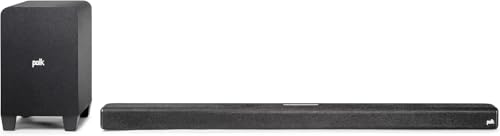
Polk Audio Signa S4 TV Sound Bar with Subwoofer - Dolby Atmos Audio VoiceAdjust
How to Choose the Right Soundbars
Choosing the right soundbar depends on how immersive you want your audio, your room size, content habits, and brand preferences—trade-offs that shift based on your setup and priorities. Generic top-10 lists fail because a feature that’s perfect for a home theater can be overkill in a small apartment, or vice versa. Our recommendation engine evaluates your unique needs across 5 key dimensions and matches you to the right soundbar in under 60 seconds.
About this guide
Soundbars
The Real Buying Challenge: Specs, Trade-Offs, and Price Tiers
Choosing a soundbar in 2026 is more complicated than it looks, thanks to a dizzying range of options from basic 2.0 bars under $200 to full 11.2.6 Atmos systems like the Samsung HW-Q990F that can run $1,500 or more. Buyers are bombarded with jargon—Atmos, DTS:X, eARC, subwoofers, rear surrounds—and often struggle to match the right bar to their TV and space. The number of channels is make-or-break: a true 5.1.4 or 9.1.4 system (think LG S95AR or Samsung HW-Q990F) delivers real surround, while most budget models fake it with virtual effects. Many shoppers get tripped up by specs that don’t translate to real performance—high wattage doesn’t guarantee clarity, and not all 'Atmos' bars offer convincing height effects. Connectivity is another minefield: HDMI 2.1 and eARC are essential for lossless audio and future-proofing, but plenty of cheaper bars still rely on outdated optical or analog inputs. The biggest mistake? Assuming more features always mean better sound, or that a $200 bar can deliver the same immersion as a $1,500 flagship. Understanding these trade-offs is the first step to making a smart choice.
What Actually Separates the Best Soundbars: Features That Matter
Not all soundbars are created equal, and the differences go way beyond price tags. The key differentiators are channel count, subwoofer design, and the presence of discrete rear satellites. For real 3D immersion, skip any bar that relies solely on virtual surround—models like the Hisense AX5140Q and Vizio SV510X-0806 do a surprisingly good job for under $500 by including physical satellites, but they can’t match the room-filling impact of a Samsung HW-Q990F or LG S95AR. Upfiring drivers are only as good as their implementation; many budget 'Atmos' bars barely deliver noticeable height effects, while Samsung’s flagship models excel here. Sound customization is another separator: graphic EQ and adjustable bass/treble, found in Samsung and LG’s premium lines, let you tune the experience to your room and content. HDMI eARC and 2.1 are must-haves for anyone with a modern TV or gaming console—don’t settle for less if you want future-proofing. And don’t overlook the brand ecosystem: Sonos is unbeatable for multi-room setups, but Samsung and LG offer better value if you want full surround affordably. Bottom line: prioritize real channels, connectivity, and expansion options over flashy marketing claims.
Decision Factors and How to Choose the Right Soundbar
Room size, content preferences, and your willingness to stay within a brand ecosystem all interact to shape the best soundbar for you. For example, a massive 11.1.4-channel system like the Samsung HW-Q990F can overwhelm a small apartment, while a compact Sonos Beam Gen 2 might get lost in a large open-plan living room. Your content matters: action movies and gaming demand deep bass and surround, while news and TV shows benefit from clear dialogue and center channel focus. Budget is a real constraint—$300 gets you solid basics, but you’ll need $800+ for true Atmos and rear surrounds. Brand loyalty isn’t just about logos; sticking with Samsung, LG, or Sonos can simplify setup and future upgrades, but may limit flexibility. Our quiz evaluates these factors—immersion, configuration, connectivity, ecosystem, and content type—to match you with the right bar. The smartest approach? Measure your space, decide how immersive you want your experience, and don’t pay for features you’ll never use. Always check for HDMI eARC and consider the total cost of ownership, including add-ons like subwoofers or satellites. Test thoroughly within the return window to ensure your pick fits your real-world needs.
Buyer's guide
How to choose
1Core Performance Criteria
- Choose soundbars with true Dolby Atmos and at least 5.1.4 channels for immersive 3D audio—Samsung HW-Q990F and LG S95AR set the gold standard here.
- Look for graphic EQ and customizable sound profiles, especially if your room is oddly shaped or you watch a mix of content types.
- Dedicated subwoofers, like those found in Hisense AX5140Q or Samsung HW-Q990F, deliver deep bass crucial for movies and gaming.
- Prioritize HDMI eARC and HDMI 2.1 for lossless audio and future-proofing—older HDMI or optical can bottleneck your sound quality.
- Discrete rear satellites outperform virtual surround; Nakamichi Shockwafe Ultra 9.2 eARC’s four satellites create true immersion in large rooms.
- Don’t be fooled by high wattage specs—real-world clarity and soundstage width matter more, as seen in Sonos and Denon’s compact bars.
2Build Quality and Durability
- Metal grills and solid chassis, like those on Sonos and Samsung flagships, resist dings and protect delicate drivers over years of use.
- Weighty builds reduce unwanted vibrations, keeping audio crisp even at high volumes—avoid ultra-light bars that rattle or buzz.
- Check for high-quality connectors; HDMI eARC ports should feel secure, not loose—cheap plastics can lead to intermittent dropouts.
- Detachable surrounds, as seen in JBL Bar 1300MK2, offer flexible placement and make future upgrades easier without replacing your whole system.
- Brands like Sonos and LG have strong reputations for longevity, often outlasting bargain models by several years before needing replacement.
- Avoid models with thin, hollow enclosures—these can sound boxy and are more prone to damage during moves or accidental knocks.
3Value Analysis
- The $400-$800 range, with models like Hisense AX5140Q, offers the best balance of immersion, bass, and future-proof features for most buyers.
- Premium setups like Samsung HW-Q990F ($1,500+) deliver unmatched performance, but diminishing returns set in fast above $2,000.
- Budget soundbars under $300, such as Samsung HW-B750D or Vizio SV510X-0806, are ideal for TV audio upgrades but lack real Atmos and deep bass.
- Factor in the total cost of ownership—Sonos add-ons, like subwoofers or surrounds, can easily add $500 or more to your setup.
- Watch for last year’s flagships (e.g., LG S95TR) on sale—discounts of 20-30% can make premium features much more accessible.
- Don’t overspend on features you won’t use; if you rarely watch movies, a simpler 2.1 or 3.1 setup saves money without sacrificing clarity.
4Use-Case Fit
- Large, open rooms demand setups with dual subs and multiple satellites, like Nakamichi Shockwafe Ultra 9.2 eARC, to avoid thin or underwhelming sound.
- Compact bars such as Sonos Beam Gen 2 or Denon Home 550 excel in apartments and bedrooms, offering clarity without overpowering small spaces.
- Music lovers should prioritize models with wide stereo soundstage—Sonos and Denon outperform LG in this area for immersive listening.
- Gamers benefit from low-latency HDMI 2.1 connections and dynamic EQ; Samsung HW-Q990F and JBL Bar 1300MK2 are standouts for action-heavy content.
- If you need clear dialogue for news or TV, seek out bars with speech enhancement and center channel focus—Vizio and Polk have strong options.
- For mixed use, versatile models like Hisense AX5140Q provide balanced performance across movies, TV, and music without overwhelming complexity.
5Common Mistakes
- Don’t assume all Dolby Atmos soundbars deliver real height effects—many budget models fake it with weak upfiring drivers.
- Ignoring room size leads to disappointment; a massive Samsung HW-Q990F can swamp a small living room with boomy bass.
- Mixing brands without checking compatibility can result in app headaches or lost smart features—Sonos, Samsung, and LG all have unique ecosystems.
- Skipping HDMI eARC means losing out on true Atmos and high-res audio, especially with next-gen TVs and streaming devices.
- Buying based on wattage alone is a trap—clarity, soundstage, and real-world reviews matter far more than inflated power numbers.
- Failing to test within the return window can leave you stuck with muddy dialogue or weak bass you only notice after a week.
6Maintenance and Longevity
- Dust your soundbar and subwoofer regularly to prevent speaker blockage and maintain optimal sound clarity over time.
- Keep firmware updated—brands like Samsung and LG release performance tweaks and bug fixes that can noticeably improve audio quality.
- Check cables and connections every few months; loose HDMI or power cords are a common cause of dropouts and audio glitches.
- Avoid placing soundbars in direct sunlight or near heat sources, which can warp plastic and degrade internal components.
- Store manuals and packaging if you plan to move—premium models like Sonos and JBL are best transported in original boxes for protection.
- Test all features, including surround and streaming, within the retailer’s return window to catch any early defects or setup mismatches.
FAQ
Frequently asked questions
Is Dolby Atmos worth paying extra for in a soundbar?
Dolby Atmos is absolutely worth the investment if you want immersive, theater-like audio at home. True Atmos soundbars, like the Samsung HW-Q990F or LG S95AR, create a 3D soundstage with height effects that dramatically enhance action movies and gaming. However, not all Atmos-labeled bars deliver real overhead sound—budget models often simulate it with weak upfiring drivers. If your primary use is movies or gaming, prioritize a soundbar with genuine Atmos channels and eARC support. For casual TV, Atmos may be less critical.
How does Samsung compare to LG for premium soundbars?
Samsung’s flagship models, such as the HW-Q990F, consistently outperform LG in terms of immersive soundstage, customizable EQ, and subwoofer power. Reviewers note that Samsung excels with 11.1.4 channels and strong Atmos effects, making it ideal for movies and large rooms. LG’s S95AR is versatile and integrates well with both wired and wireless setups, but its stereo width and upfiring drivers aren’t as impactful as Samsung’s. If you want the widest, most cinematic sound, Samsung is the clear leader in 2026.
What system configuration do I need for a small apartment?
For small apartments, a compact soundbar like the Sonos Beam Gen 2 or Denon Home 550 is ideal. These models deliver clear dialogue and impressive sound without overwhelming your space. Avoid full multi-speaker systems with large subwoofers or rear satellites, as they can create muddy acoustics in tight rooms. Look for 2.0, 2.1, or 3.1 setups that fit neatly under your TV. Wireless subwoofers are a bonus, but make sure there’s room to place them without clutter.
Are detachable surrounds, like those in the JBL Bar 1300MK2, really useful?
Detachable surrounds offer genuine flexibility and can transform your experience, especially for movies and gaming. The JBL Bar 1300MK2’s removable rear speakers let you position them for optimal surround effects, then dock them for charging. This is a huge advantage in rooms where permanent wiring is impractical. While detachable surrounds add to the price, they deliver a much more immersive soundstage than virtual surround or upfiring drivers alone. If you want true surround without drilling holes, they’re worth it.
Does HDMI eARC really matter for most users?
HDMI eARC is a make-or-break factor if you want to enjoy lossless Dolby Atmos or DTS:X from your TV’s streaming apps or Blu-ray player. Without eARC, you may lose height channels or experience audio lag. Most new TVs in 2026 support eARC, but many budget soundbars still rely on basic HDMI ARC or optical inputs. If you’re investing in a mid-range or premium soundbar, make sure it has eARC to unlock its full potential and avoid future compatibility headaches.
Is it worth paying extra for a Sonos ecosystem?
Sonos offers seamless multi-room audio, intuitive app control, and easy expansion with wireless surrounds and subwoofers. If you already own Sonos speakers or plan to build out your system over time, paying extra for Sonos integration is usually justified. However, expansion can get expensive—adding a sub or surrounds may cost $500 or more. If you’re not committed to the ecosystem, brands like Samsung and LG offer more affordable expansion options with nearly as much flexibility.
What’s the best value soundbar setup for mixed content?
For a mix of movies, TV, and music, the sweet spot is a 5.1.4 or 5.1.2 system in the $400-$800 range, such as the Hisense AX5140Q. These models provide immersive surround, strong bass, and versatile connectivity without the complexity or price tag of flagship kits. Avoid ultra-budget bars if you want real surround or subwoofer impact, but you don’t need to spend $1,500 for excellent performance. Look for HDMI eARC and at least one wireless subwoofer for best results.
Best Soundbars By Category
Related Guides
AV Receivers
Room size, speaker setup, streaming features, and gaming needs—get matched to the right AV receiver for your home theater.
Home Theater Speaker Packages
Room size, audio priorities, and setup style—get matched to the right soundbar or speaker system for your home theater.
Blu-ray Players
Resolution, HDR, audio, streaming, and disc region—matched to your TV, sound system, and movie collection in seconds.
Budget Home Theater Systems
Room size, surround immersion, and setup style—get matched to the right budget home theater system for your space and habits.
Build the Ultimate Home Bar: Carts, Glassware, Tools & Storage
Entertaining style, storage needs, and drink preferences—get matched to the right bar cart, glassware, tools, and storage for your home.