Skip the research trap. Get your smart refrigerators in 60 seconds.
We scored 300+ smart refrigerators across 5 dimensions — answer 5 quick questions and we'll match you to YOUR best pick.

Powered by DecisionScore™
Each product is evaluated across 18 weighted criteria — covering performance, value, build quality, and real-world usability. Your quiz answers re-weight the criteria to match what matters most to you, so two people can get different #1 picks from the same data.
See the DecisionScore methodology →- 25 cu. ft. capacity French door design
- Wi-Fi connectivity and app control
- 4.4 stars from 2,800+ Amazon reviews
Find your perfect smart refrigerators
5 quick questions. No quiz-takes-10-minutes trap. A personalized match from 27 scored picks — with clear reasoning for every recommendation.
What refrigerator style are you looking for?
French door models offer wide fresh-food storage and a bottom freezer. Counter-depth units sit flush with cabinetry. Side-by-side puts freezer and fridge side by side for equal access.
- French door models are best for wide platters and flexible storage.
- Counter-depth French doors look built-in but hold less food.
- Side-by-side fridges split fridge and freezer space equally.
As an Amazon Associate and affiliate partner we earn from qualifying purchases. Links on this page may earn us a commission at no extra cost to you. Full disclosure
Not ready for the quiz? Here are our overall top picks
These are our top-rated picks overall. For a recommendation matched to YOUR specific needs,
Whirlpool WRF535SWHZ 25 cu. ft. French Door Refrigerato
Check today’s price →25 cu. ft. capacity French door design
View Today's Price
GE GNE27JYMFS 36" French Door Refrigerator with 27 cu. ft. Total Capacity LED
27 cu. ft. French door refrigerator with 36" width
View Today's Price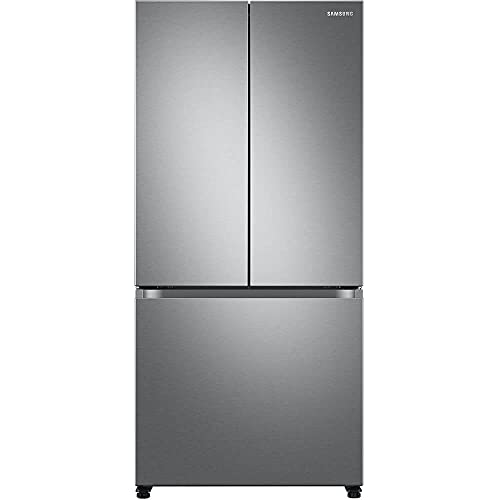
Samsung 17.5 cu. ft. Smart Counter Depth 3-Door French Door Refrigerator,
28.2 cu. ft. 4-door French door configuration
View Today's PriceHow to Choose the Right Smart Refrigerators
Choosing the right smart refrigerator depends on how your kitchen layout, storage needs, feature priorities, and budget interact—trade-offs that shift based on your household size and space. A feature that’s perfect for a tech-focused family might be overkill for someone prioritizing food preservation or energy savings. Our recommendation engine analyzes your unique situation across 12+ dimensions and matches you to the best-fit smart fridge in under 60 seconds.
About this guide
Smart Refrigerators
The Real Buying Challenge: What Most Shoppers Get Wrong
Choosing smart refrigerators in 2026 is trickier than it looks. The market for smart refrigerators is packed with models from Samsung, LG, GE Profile, Bosch, Whirlpool, and Frigidaire, spanning the $800–$2,500 range. At first glance, features like Wi-Fi, touchscreens, and internal cameras seem like the main differentiators among smart refrigerators, but the real significant upgrade is cooling performance. Many buyers focus on flashy features in smart refrigerators and overlook temperature uniformity—RTINGS found shelf variance from 0.4°F to over 1.2°F, which can make or break produce longevity in smart refrigerators. Another common mistake: assuming all French door or counter-depth smart refrigerators offer the same storage or fit. In reality, counter-depth smart refrigerators sacrifice 2–4 cu. ft. compared to standard depth, which matters for larger families. Price tiers are stark: entry-level Wi-Fi smart refrigerators hover around $900, but true smart feature sets (touchscreen, app, voice control) cluster in the $1,500–$2,500 sweet spot. Most shoppers underestimate the trade-off between smart tech and core cooling hardware—dual evaporators in premium smart refrigerators (often $2,000+) actually do more for food freshness than any app. Don’t let marketing distract you from these critical details when shopping for smart refrigerators.
What Actually Separates the Best: Key Differentiators
Not all smart refrigerators are created equal, even within the same price band. Dual evaporators (found in Samsung Bespoke, Bosch 800 Series, and some LG ThinQ smart refrigerators) deliver dramatically better humidity control than single-evap systems—this matters more for food preservation than any touchscreen found in smart refrigerators. Skip built-in cameras in smart refrigerators unless you truly need remote inventory checks; they add cost but rarely improve daily use. Touchscreen displays, like Samsung’s Family Hub smart refrigerators, are genuinely useful for shared calendars and streaming, but only if you’ll use them—otherwise, a solid Wi-Fi app on smart refrigerators suffices. LG’s InstaView panel is more than a gimmick: knocking to light up the fridge interior saves energy and keeps cold air in, making these smart refrigerators more efficient. GE Profile’s AutoFill water pitchers and SmartHQ app are standouts for hands-off convenience in smart refrigerators. Energy Star certification is non-negotiable if you care about utility bills—Bosch and Whirlpool smart refrigerators consistently lead here. In short, prioritize cooling performance (dual evaporators, compressor quality) and storage fit in smart refrigerators before splurging on advanced smart features. Unless you’re building a full smart home ecosystem, basic Wi-Fi/app control in smart refrigerators covers 90% of real-world needs.
Decision Factors and How to Choose the Right Model
Your kitchen layout, household size, and budget interact in ways that can make or break your satisfaction with smart refrigerators. Room size dictates whether you can opt for a standard-depth (more storage, sticks out) or counter-depth (sleeker, less capacity) smart refrigerator. A family of four typically needs at least 20–25 cu. ft. in smart refrigerators; entertaining or larger households should look for 27+ cu. ft. French door smart refrigerators. Budget is a hard constraint: under $1,200, expect basic Wi-Fi and app control in smart refrigerators, but not touchscreens or premium finishes. In the $1,500–$2,500 tier, you’ll see dual evaporators, convertible drawers, and robust smart features in smart refrigerators. The quiz weighs your style, space, feature, capacity, and budget preferences to pinpoint your best fit among smart refrigerators. Beyond that, think about your actual usage: do you want voice assistant integration in your smart refrigerator, or will you never use it? Will a flush counter-depth smart refrigerator look matter more than a few extra cubic feet? Don’t forget to factor in Energy Star ratings for smart refrigerators—over a decade, energy savings can offset a higher upfront price. The right choice is the one that balances performance, features, and fit for your kitchen and lifestyle, making smart refrigerators a worthwhile investment.
Buyer's guide
How to choose
1Core Performance Criteria
- Dual evaporators, now standard in $2,000+ models like Samsung Bespoke, maintain separate humidity for fridge and freezer, dramatically improving produce longevity.
- Temperature uniformity matters: RTINGS testing shows some fridges vary by 1.2°F shelf-to-shelf, which can spoil delicate items faster than you expect.
- Energy Star certification is critical for long-term cost savings; Bosch and Whirlpool consistently lead on energy efficiency across all price tiers.
- Look for at least 20–25 cu. ft. of storage for a family of four; anything less will feel cramped and force more frequent grocery runs.
- Compressor quality affects both cooling speed and noise—premium models often run quieter and recover temperature faster after door openings.
- Touchscreens and Wi-Fi are only valuable if paired with reliable cooling hardware—never sacrifice core performance for flashy features.
2Build Quality and Durability
- Fingerprint-resistant stainless steel finishes, found on most Samsung, GE Profile, and LG models, keep your fridge looking clean even in high-traffic kitchens.
- Solid door hinges and drawer glides are essential for longevity—Bosch and Whirlpool excel here, while some budget models feel flimsy after a year.
- Look for reinforced shelving and spill-proof glass shelves, which resist sagging and make cleanup easier if something leaks.
- Premium models often use metal cooling backplates for better temperature retention and durability, a feature rarely found below $1,800.
- Check for robust gasket seals around doors; weak seals can lead to frost buildup and energy waste, especially in cheaper models.
- Warranty length and coverage vary—LG and Samsung typically offer 10-year compressor warranties, while some budget brands only cover one year.
3Value Analysis and Price Tiers
- The $1,500–$2,500 range is the true value sweet spot, offering 85% of premium performance with most must-have smart features included.
- Entry-level smart fridges under $1,200 provide basic Wi-Fi and app control but usually lack dual evaporators and premium finishes.
- Paying $3,000+ only makes sense if you demand dual compressors (Bosch 800, KitchenAid) and absolute best-in-class produce preservation.
- Samsung and LG dominate the mid-range, balancing feature-rich smart platforms with reliable cooling and attractive design.
- Don’t overpay for touchscreen displays if you’ll never use them—basic app control covers nearly all practical needs for most households.
- Factor in long-term energy costs; Energy Star models may cost more upfront but can save hundreds over a decade of use.
4Use-Case Fit and Lifestyle Matching
- French door models are ideal for families and frequent cooks, offering wide access and flexible storage for oversized trays and platters.
- Counter-depth designs create a built-in look but trade away 2–4 cu. ft. of capacity—best for smaller kitchens or style-focused buyers.
- Side-by-side layouts give equal access to fridge and freezer but can be less space-efficient for wide items like pizza boxes.
- Internal cameras and inventory tracking are only worth it if you regularly shop on the go or manage a busy household.
- Voice assistant integration (Alexa, Google) is a genuine time-saver if you already use smart speakers in your home ecosystem.
- Convertible drawers and quick-chill zones are a must for entertainers who need flexible space for drinks, snacks, or party platters.
5Common Mistakes and Buyer Pitfalls
- Don’t ignore cooling performance—dual evaporators matter more than any smart feature for food longevity and freshness.
- Assuming all counter-depth models offer enough storage is a mistake; always check the actual cubic feet before buying.
- Overvaluing touchscreen displays leads many buyers to overspend; assess how often you’ll actually use these features.
- Not all Wi-Fi platforms are created equal—Samsung’s SmartThings and LG’s ThinQ are more reliable than most budget-brand apps.
- Skipping Energy Star models to save upfront costs can backfire with higher utility bills and lower resale value later.
- Neglecting warranty details is risky; compressor failures are costly and more common in lower-tier models with shorter coverage.
6Maintenance and Longevity
- Regularly clean condenser coils and replace water filters to maximize efficiency and prevent premature compressor wear.
- Touchscreen and app features require periodic firmware updates; Samsung and LG push updates automatically, but some brands require manual intervention.
- Door seals should be wiped monthly to prevent mold and ensure tight closure, especially in humid climates.
- Ice makers and water dispensers are common failure points; models with auto-fill pitchers (GE Profile) tend to be more reliable long-term.
- Metal cooling backplates and reinforced drawers in premium models resist wear and tear better than plastic-heavy budget designs.
- Plan for filter and accessory costs—replacement water filters typically run $40–$60 each and need changing every 6 months.
FAQ
Frequently asked questions
Is a touchscreen display worth paying extra for in a smart refrigerator?
A touchscreen display, like Samsung’s Family Hub, is genuinely useful for shared calendars, recipes, and streaming—if you’ll use these features daily. However, for most households, basic Wi-Fi and app control cover nearly all practical needs. Unless you specifically want in-door entertainment or digital notes, it’s smarter to invest in better cooling performance or storage capacity. Touchscreens add $300–$600 to the price, so weigh your actual usage before paying extra.
How does LG’s ThinQ platform compare to Samsung’s Family Hub in 2026?
LG’s ThinQ platform focuses on practical features like InstaView knock-to-light panels and energy-saving diagnostics, while Samsung’s Family Hub emphasizes a rich touchscreen experience with SmartThings integration. Both offer robust app control and voice assistant compatibility, but Samsung leads in smart home ecosystem breadth. If you want a visually interactive fridge, Samsung wins; for energy efficiency and hands-off operation, LG ThinQ is hard to beat.
What storage capacity do I need for a family of five?
For a family of five, aim for at least 25–28 cu. ft. of total storage. French door models in this range, like the GE Profile PVD28BYNFS or Samsung RS28A500ASR, provide ample space for weekly groceries, leftovers, and party platters. Anything smaller will feel cramped, especially if you batch-cook or entertain. Larger 27+ cu. ft. models are ideal if you want to shop less frequently or store bulk items.
Are dual evaporators really necessary, or just a premium gimmick?
Dual evaporators are not a gimmick—they’re a proven upgrade for food preservation. By maintaining separate humidity levels for fridge and freezer, they prevent odor transfer and keep produce fresher up to twice as long. Models like Samsung Bespoke and Bosch 800 Series feature this tech, which is especially valuable if you store lots of fruits and vegetables. If freshness is a priority, dual evaporators are worth the investment.
Which brands offer the best reliability for smart refrigerators in 2026?
Bosch, LG, and Samsung consistently lead in reliability, according to RTINGS and Consumer Reports. Bosch excels in build quality and energy efficiency, while LG and Samsung offer strong smart platforms and robust compressor warranties. GE Profile is also a solid choice for user-friendly features. Budget brands may save you money upfront but often fall short in long-term durability and app stability.
What’s the real difference between standard-depth and counter-depth smart refrigerators?
Standard-depth fridges stick out 6–10 inches past your counters but offer 2–4 cu. ft. more storage than counter-depth models. Counter-depth units sit flush for a built-in look, making kitchens feel larger and more modern. The trade-off is less interior space, which can be a deal-breaker for large families or bulk shoppers. Choose based on your kitchen layout and storage needs.
Do internal cameras and inventory tracking actually help, or are they just a gimmick?
Internal cameras and inventory tracking are genuinely helpful for busy households that shop frequently or manage multiple family members’ diets. They let you check fridge contents from your phone while shopping, reducing duplicate purchases. However, if you plan meals in advance or shop on a schedule, you may rarely use this feature. Consider your habits before paying extra for cameras.
Related reading
Best Smart Refrigerators By Category
Compare Smart Refrigerators
Related Guides
Air Fryers
Matched to your kitchen space, batch size, cooking style, and must-have features—get an air fryer that truly fits your needs.
Bar Tools
Skill level, tool type, finish, budget, and how you’ll use your bar tools—get matched to the right set for your home bar.
Beginner Espresso Machines
Skill level, hands-on control, milk frothing, and kitchen space—get matched to the perfect beginner espresso machine for your daily ritual.
Best Bread Machines for Home Bakers
Loaf size, bread style, add-ins, and control—get matched to the bread machine that fits your kitchen and baking goals.
Breakfast Cookware
Matches your breakfast routine, kitchen setup, budget, and health priorities to the perfect pan, griddle, or appliance.