Skip the research trap. Get your best ceiling fans in 60 seconds.
We scored 600+ best ceiling fans across 5 dimensions — answer 5 quick questions and we'll match you to YOUR best pick.
Powered by DecisionScore™
Each product is evaluated across 18 weighted criteria — covering performance, value, build quality, and real-world usability. Your quiz answers re-weight the criteria to match what matters most to you, so two people can get different #1 picks from the same data.
See the DecisionScore methodology →- 52-inch blade span and 3 blades deliver airflow up to 5000 CFM.
- Remote control with handheld remote.
- Integrated LED light kit provides flexible illumination.
Find your perfect best ceiling fans
5 quick questions. No quiz-takes-10-minutes trap. A personalized match from 59 scored picks — with clear reasoning for every recommendation.
Which style best matches your home?
Modern fans have sleek lines and minimal decoration. Farmhouse styles use rustic finishes and wood blades. Industrial or statement fans feature unique shapes or tropical blades. Classic designs are simple and timeless.
- Modern fans feature sleek lines and metallic finishes for a contemporary look.
- Farmhouse and rustic styles use wood blades and distressed finishes to add warmth.
- Industrial or tropical fans can serve as bold statement pieces in unique spaces.
As an Amazon Associate and affiliate partner we earn from qualifying purchases. Links on this page may earn us a commission at no extra cost to you. Full disclosure
Not ready for the quiz? Here are our overall top picks
These are our top-rated picks overall. For a recommendation matched to YOUR specific needs,
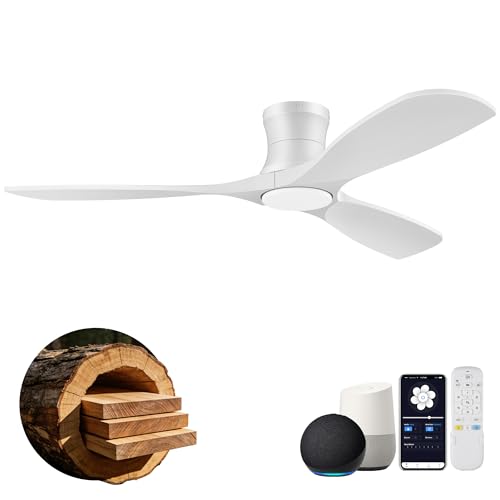
52” Smart Wood Ceiling Fans with Lights Remote,Low Profile Flush Mount Ceiling
52-inch blade span and 3 blades deliver airflow up to 5000 CFM.
View Today's Price
Depuley Modern Ceiling Fan with Light: 42-Inch Black Small Fans for Bedroom
54-inch blade span and 5 blades deliver airflow up to 5246 CFM.
View Today's Price
DREO Smart Ceiling Fan with Lights, 52 Inch, 12 Speeds & 3 Fan Modes, Stepless,
52-inch blade span and 5 blades deliver airflow up to 5600 CFM.
View Today's PriceHow to Choose the Right Best Ceiling Fans
Choosing the right ceiling fan depends on airflow needs, room size, ceiling height, and your lighting preferences—factors that interact in surprising ways. A fan perfect for a low-ceiling bedroom is all wrong for a vaulted living room, and features like smart controls or reversible motors only matter if they fit your specific setup. Generic top-10 lists can’t account for these trade-offs. Our recommendation engine evaluates your exact needs across five dimensions and matches you to the right ceiling fan in under 60 seconds.
About this guide
Best Ceiling Fans
Why Ceiling Fan Choices Are Trickier Than You Think
Selecting ceiling fans in 2026 isn’t just about picking a style that matches your décor—it’s a balancing act between airflow, fit, and features. Blade diameter on ceiling fans directly impacts comfort: a 44-inch ceiling fan might be perfect for a 10x12 bedroom, but it’ll leave a 400 sq ft living room stuffy. Yet, most buyers fixate on looks or brand names, not realizing that blade pitch (12-15° is ideal) and CFM ratings (>4,000 for large rooms) are what actually move air with ceiling fans. Price tiers are real: $60–$100 gets you a basic Honeywell or Broan-NuTone ceiling fan, but you’ll sacrifice silent operation and smart features found in $200+ Minka-Aire ceiling fans. Ceiling height is another make-or-break factor—pick a flush-mount ceiling fan for an 8-foot room or risk head bumps, but a downrod is mandatory for vaulted ceilings. Many buyers overlook reversible motors in ceiling fans, which save on winter heating, or skip damp ratings for outdoor ceiling fans, leading to rust. The biggest mistake? Ignoring maintenance—dust buildup kills airflow and lifespan, and no ceiling fan reminds you to clean.
What Actually Sets Ceiling Fans Apart in 2026
The real differences in ceiling fans come down to airflow engineering, control tech, and build quality—not just the finish or brand. Skip ceiling fans with blade pitches under 12°; they look sleek but barely circulate air. Prioritize ceiling fans with reversible motors for true year-round value, especially if you want to push warm air down in winter. DC motors, found in higher-end ceiling fans like Minka-Aire, run quieter and use less energy than AC, but cost more up front. Smart controls—app, remote, or voice—are now common above $120 in ceiling fans, but if you don’t care about automation, a pull-chain ceiling fan saves money and complexity. Integrated LED lighting is handy in ceiling fans, but removable kits add flexibility if you want a cleaner look later. For outdoor or bathroom installs, only buy damp- or wet-rated ceiling fans; indoor ceiling fans rust quickly in humidity. Don’t be fooled by marketing: a $60 tower fan like the Honeywell QuietSet can outperform a cheap ceiling fan in airflow, but lacks the year-round efficiency and style integration of ceiling fans. Always check CFM specs and mounting compatibility on ceiling fans before falling for a design.
How to Weigh the Trade-Offs and Make the Right Choice
Room size, ceiling height, and your lighting needs all interact—choose ceiling fans that are too small or mounted too high, and you’ll feel nothing but regret (and stale air). Budget is a hard constraint: under $100, expect fewer smart features and louder motors, but you can still get reliable airflow from ceiling fans if you check blade specs and CFM. If your ceilings are under 8 feet, a flush-mount ceiling fan is non-negotiable; for vaulted spaces, you’ll need an angled mount and possibly a longer downrod for your ceiling fans. Lighting integration matters most if you’re replacing an existing fixture with a ceiling fan—otherwise, skip it for a sleeker look and better airflow. Outdoor installations absolutely require damp or wet-rated ceiling fans, or you’ll be replacing a rusted ceiling fan within a year. Our quiz asks about style, controls, room size, lighting, and mounting to match you with the right ceiling fan fit. Don’t overlook maintenance: easy-to-clean blades and access to the motor housing on ceiling fans will save you headaches and preserve efficiency. Ultimately, the best ceiling fan is the one that balances airflow, durability, and aesthetics for your specific space and habits.
Buyer's guide
How to choose
1Core Performance Criteria
- Always check the blade pitch—12 to 15 degrees is ideal for strong airflow, while lower pitches dramatically reduce comfort in larger rooms.
- Look for CFM ratings above 4,000 if you’re cooling a living room over 350 square feet, as this directly impacts how much air the fan circulates.
- Prioritize reversible motors for year-round use, since they let you push warm air down in winter and cool air in summer.
- DC motors, found in premium models like Minka-Aire, are quieter and more energy-efficient than AC motors, but come at a higher upfront cost.
- Integrated LED lighting is convenient, but removable kits offer more flexibility if you want to change the look or boost airflow later.
- Smart controls—remote, app, or voice—add real convenience, but only pay extra if you’ll actually use them daily.
2Build Quality and Durability
- Fans in the $200+ range, such as Minka-Aire, typically use higher-grade bearings and motor housings, resulting in quieter operation and longer lifespan.
- Damp- or wet-rated models are essential for outdoor or bathroom use, as standard indoor fans will rust or fail in humid environments.
- Metal blade fans are more durable but can be heavier and noisier than wooden or composite blades, which offer a good balance for most homes.
- Check for wobble-reducing features like blade balancing kits, which are crucial for maintaining smooth, quiet operation over time.
- Avoid fans with plastic mounting hardware, as these are prone to cracking and can lead to unsafe installations or early failure.
- Look for warranties of at least 3 years on the motor and 1 year on parts—premium brands often offer longer coverage, reflecting better build quality.
3Value and Price Analysis
- Expect to pay $60–$100 for basic models like Honeywell, which offer reliable airflow but limited smart features and louder operation.
- Midrange fans ($120–$200) add features like remote controls, integrated LEDs, and more stylish finishes—this is the sweet spot for most buyers.
- Premium models ($200–$300+) from brands like Minka-Aire deliver ultra-quiet DC motors, advanced controls, and superior build, but may be overkill for small rooms.
- Tower fans like Honeywell QuietSet ($60–$120) can outperform cheap ceiling fans in airflow, but lack the permanent, integrated look and year-round efficiency.
- Spring and summer sales can drop prices by 20–30%, so timing your purchase can net you a higher-end fan for less.
- Don’t overpay for features you won’t use—skip smart controls or dimmable LEDs if you’re unlikely to take advantage of them.
4Matching to Your Space and Use Case
- Small rooms under 150 sq ft need 44-inch or smaller fans, while large living rooms require 60-inch or larger models for effective airflow.
- Ceiling height determines mount type: flush-mount for under 8 feet, standard downrod for 8–10 feet, and angled or extended downrod for vaulted ceilings.
- For outdoor patios or bathrooms, only choose damp- or wet-rated fans—indoor models will corrode quickly in humid or wet conditions.
- If replacing a light fixture, choose a fan with a bright integrated LED; otherwise, consider a no-light model for a cleaner look and better airflow.
- Remote and smart controls are best for bedrooms or living rooms where convenience matters, while pull-chain models suit utility spaces.
- If your space is oddly shaped or has obstructions, check blade clearance and opt for compact or hugger designs to avoid installation headaches.
5Common Mistakes and Pitfalls
- Many buyers ignore blade pitch and CFM ratings, ending up with fans that look great but barely move air—always check these specs first.
- Failing to measure ceiling height leads to improper mounting: too low risks head bumps, too high means poor airflow and wasted energy.
- Skipping reversible motors limits year-round value, as you won’t be able to recirculate warm air in winter for heating efficiency.
- Choosing indoor-rated fans for outdoor spaces results in rust, motor failure, and voided warranties—read the label before you buy.
- Improper cleaning—using liquids near the motor or bending blades—can cause permanent damage, noise, and imbalance.
- Overlooking maintenance needs leads to dust buildup, which reduces airflow and strains the motor, shortening the fan’s lifespan.
6Maintenance and Longevity
- Clean blades and housings at least every two months to prevent dust buildup, which reduces airflow and can trigger allergies.
- Never use liquids directly on the motor housing; always use a dry microfiber duster or vacuum attachment to avoid electrical damage.
- Check blade alignment and balance annually, as even minor warping can cause wobble, noise, and premature motor wear.
- Replace LED bulbs with compatible dimmable types to maintain lighting performance and avoid overheating the fixture.
- Lubricate bearings if recommended by the manufacturer—premium models often have sealed bearings that require no maintenance.
- Inspect mounting hardware for signs of wear or cracking, especially on older or plastic components, to ensure safe operation over time.
FAQ
Frequently asked questions
Is it worth paying extra for a DC motor ceiling fan?
Yes, DC motor ceiling fans are worth the premium if you value whisper-quiet operation and energy efficiency. DC motors, found in brands like Minka-Aire, use up to 70% less electricity than traditional AC fans and often provide more speed options. They’re especially recommended for bedrooms or living rooms where noise and long-term savings matter. However, if you’re outfitting a utility space or only need basic airflow, a standard AC motor fan will suffice and cost less upfront.
How does Honeywell compare to Minka-Aire for ceiling fans?
Honeywell fans generally offer solid performance and value in the $60–$120 range, making them ideal for budget-conscious buyers or secondary rooms. Minka-Aire, on the other hand, targets the $200+ segment with premium finishes, ultra-quiet DC motors, and advanced smart controls. If you want a statement piece with top-tier efficiency and minimal noise, Minka-Aire is the better choice. For basic comfort and reliability, Honeywell delivers without the luxury price tag.
What size ceiling fan do I need for a large living room?
For living rooms over 350 square feet, choose a ceiling fan with at least a 60-inch blade span and a CFM rating above 4,000. This ensures enough airflow to actually cool the space. Avoid undersized fans—44-inch models are only suitable for bedrooms or offices. If your ceiling is higher than 10 feet, use a longer downrod to position the blades at the optimal height for air circulation.
Are integrated LED lights on ceiling fans bright enough to replace existing fixtures?
Most modern integrated LED lights on ceiling fans are designed to provide general room illumination, but brightness varies by model. Look for fans with at least 1,200 lumens if you’re replacing a main light source. Some models offer dimmable or removable kits for added flexibility. If you need maximum brightness, check the specs or opt for a fan that accepts standard E26 LED bulbs for easy upgrades.
Do I really need a damp- or wet-rated fan for my covered patio?
Absolutely. Even on covered patios, humidity and occasional splashes can damage standard indoor fans, causing rust and motor failure. Only damp- or wet-rated fans are designed to withstand outdoor conditions and maintain safe, reliable operation. Using an indoor fan outdoors will void most warranties and likely lead to early replacement.
How important is reversible airflow for year-round comfort?
Reversible airflow is essential if you want your ceiling fan to help with both cooling in summer and heating in winter. In winter, running the fan in reverse pushes warm air down from the ceiling, reducing heating costs. Many buyers skip this feature and lose out on significant year-round energy savings. Always check for a reversible motor if efficiency is a priority.
What’s the best way to maintain my ceiling fan for long life?
Dust the blades and housing at least every two months using a dry microfiber duster—never spray liquid near the motor. Check blade balance annually and tighten mounting hardware if needed. Replace bulbs with compatible LEDs, and inspect for wobble or noise, which can signal blade warping. Regular maintenance preserves airflow, reduces noise, and extends the fan’s lifespan by years.
Related reading
Best Best Ceiling Fans By Category
Related Guides
AC Units
Room size, installation, noise, budget, and smart features—get matched to the AC unit that fits your space and lifestyle.
Compact Air Purifier Fans
Room size, filtration, climate control, and smart features—get matched to the compact air purifier fan that truly fits your lifestyle.
Dehumidifiers
Room size, drainage, noise, and convenience—get matched to the dehumidifier that actually fits your space and lifestyle.
Door Sweeps
Door location, installation method, seal type, and budget—all matched to your needs for the perfect draft and pest barrier.