Skip the research trap. Get your mechanical gaming keyboards in 60 seconds.
We scored 250+ mechanical gaming keyboards across 5 dimensions — answer 5 quick questions and we'll match you to YOUR best pick.
Powered by DecisionScore™
Each product is evaluated across 18 weighted criteria — covering performance, value, build quality, and real-world usability. Your quiz answers re-weight the criteria to match what matters most to you, so two people can get different #1 picks from the same data.
See the DecisionScore methodology →- Affordable 75 percent board with gasket mount and wireless connectivity
- Tri‑mode support including 2.4 GHz for gaming
- Hot‑swappable PCB and durable PBT keycaps
Find your perfect mechanical gaming keyboards
5 quick questions. No quiz-takes-10-minutes trap. A personalized match from 22 scored picks — with clear reasoning for every recommendation.
What keyboard size/layout do you prefer?
Full‑size boards include a numpad and extra keys. Tenkeyless/75 percent models drop the numpad but keep function keys. Compact 60–65 percent boards sacrifice more keys for a smaller footprint.
- Full-size keyboards are best for data entry and productivity, but take up more space and limit mouse movement.
- Tenkeyless and 75% layouts drop the numpad for a more compact footprint, perfect for gaming and smaller desks.
- Compact 60–65% boards maximize portability, but you’ll lose dedicated arrow and function keys—great for travel, less ideal for work.
As an Amazon Associate and affiliate partner we earn from qualifying purchases. Links on this page may earn us a commission at no extra cost to you. Full disclosure
Not ready for the quiz? Here are our overall top picks
These are our top-rated picks overall. For a recommendation matched to YOUR specific needs,
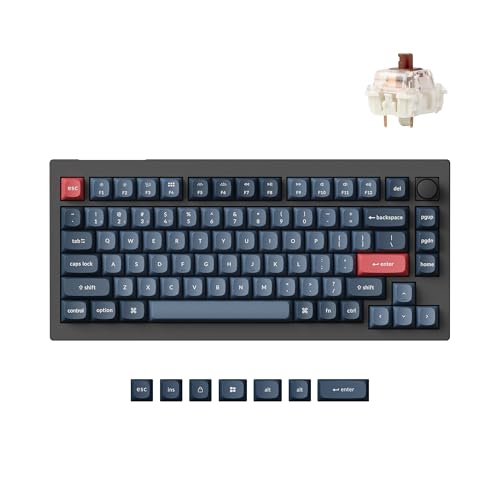
Keychron V1 Max 75% RGB Custom Mechanical Keyboard, 2.4Ghz/Bluetooth 5.1/Wired
Affordable 75 percent board with gasket mount and wireless connectivity
View Today's Price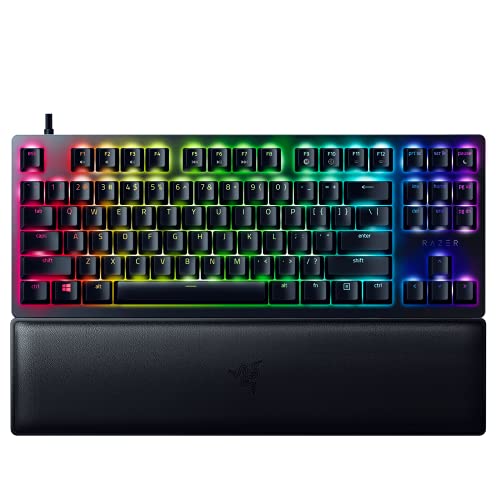
Razer Huntsman V2 TKL Tenkeyless Gaming Keyboard: Fast Linear Optical Switches
Tenkeyless optical keyboard with near‑zero input latency
View Today's Price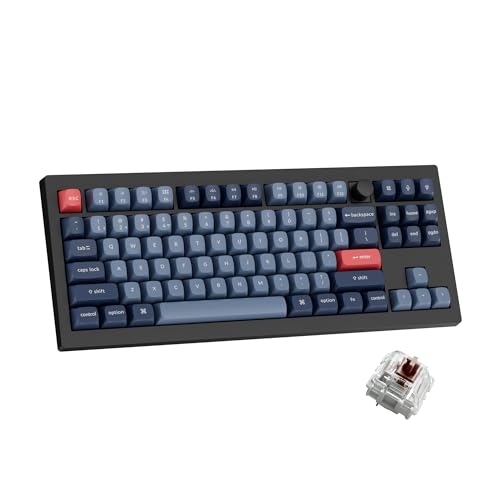
Keychron V3 Max TKL Wireless Mechanical Keyboard, QMK/VIA RGB Bluetooth/2.4
Compact 65 percent design with gasket mount and PBT keycaps
View Today's PriceHow to Choose the Right Mechanical Gaming Keyboards
Choosing the right mechanical gaming keyboard depends on layout, switch technology, connection type, and how much you’ll customize—factors that interact based on your desk setup, gaming habits, and budget. A feature perfect for esports can be wrong for productivity, and the fastest polling rate is wasted if your system can’t support it. Our recommendation engine evaluates your specific preferences across five dimensions and matches you to the right keyboard in under 60 seconds.
About this guide
Mechanical Gaming Keyboards
Why Mechanical Gaming Keyboard Choices Are Trickier Than They Look
Picking the right premium mechanical gaming keyboards in 2026 is a minefield of trade-offs that catch even seasoned gamers off guard. Size is the first hurdle: a full-size premium mechanical gaming keyboard with a numpad is great for spreadsheets but hogs desk space, while 60–65 percent layouts or tenkeyless (TKL) premium mechanical gaming keyboards free up room for your mouse—at the cost of losing keys some rely on. Switch technology is another make-or-break factor. Traditional mechanical switches (like Cherry or Kailh) feel familiar, but Hall effect sensors—found in premium mechanical gaming keyboards like the Wooting 80HE—unlock adjustable actuation and analog control, which can shave milliseconds off your reaction time. Price tiers are stark: $36 Lemokey X1 premium mechanical gaming keyboards deliver 1,000Hz polling, but you’ll need $110–$200 for 8KHz polling, aluminum builds, or true analog features (think Keychron V1 Ultra 8K or Wooting 80HE premium mechanical gaming keyboards). Most buyers get tripped up by chasing RGB or “clicky” switches, ignoring polling rate, latency, or layout fit in premium mechanical gaming keyboards. And don’t underestimate the learning curve of advanced software—per-key actuation sounds cool in premium mechanical gaming keyboards until you’re lost in menus.
What Actually Sets Keyboards Apart in 2026
The real differentiators in premium mechanical gaming keyboards now go far beyond color or lighting. Hall effect (HE) switches, as seen in premium mechanical gaming keyboards like the Wooting and Lemokey P2 HE models, are a significant upgrade for esports: they allow you to tune actuation from 0.1–4.0mm, enabling 20–30% faster response than traditional mechanical switches in premium mechanical gaming keyboards. Polling rate is another spec that matters more than most realize—Keychron’s V1 Ultra 8K premium mechanical gaming keyboard delivers 8,000Hz wireless polling, but only if your PC supports USB 3.0 or higher. Gasket-mounted designs, like those in Keychron Q5 Max or NuPhy Gem80 premium mechanical gaming keyboards, provide a softer, “thocky” typing feel that’s both quieter and more comfortable for long sessions. Wireless tech has matured: NuPhy WH80 and Keychron Q5 Max premium mechanical gaming keyboards offer low-latency 2.4GHz that rivals wired boards, but budget wireless premium mechanical gaming keyboards still lag by 5–10ms. Skip low-profile premium mechanical gaming keyboards unless you need portability; they sacrifice acoustics and mod options. And don’t pay extra for hot-swappable PCBs in premium mechanical gaming keyboards if you never plan to change switches—those dollars are better spent on build quality or software features.
How to Weigh Specs, Features, and Your Real Needs
Choosing premium mechanical gaming keyboards isn’t just about picking the flashiest model—it’s about balancing specs, ergonomics, and your actual use case. Room on your desk dictates whether a full-size, TKL, or compact premium mechanical gaming keyboard makes sense; competitive gamers benefit from smaller layouts, but anyone who codes or works in Excel may regret losing the numpad on premium mechanical gaming keyboards. Your budget sets hard limits: $100–$130 gets you 8KHz polling, gasket mounts, and robust software (Keychron V1 Ultra 8K premium mechanical gaming keyboard), while $170+ brings analog actuation and premium materials (Wooting 80HE premium mechanical gaming keyboard). Connectivity matters: wired premium mechanical gaming keyboards still win on raw latency, but modern wireless premium mechanical gaming keyboards from NuPhy or Keychron now match them for most users. Our quiz evaluates your size, switch, connection, customization, and build preferences in one go for premium mechanical gaming keyboards. For the best experience, focus on features you’ll actually use—skip per-key actuation if you never tweak settings, and don’t overspend on aluminum premium mechanical gaming keyboards if you travel often. Remember, the interplay between layout, switch tech, and connection type in premium mechanical gaming keyboards is what determines real-world satisfaction.
Buyer's guide
How to choose
1Core Performance Criteria
- Look for Hall effect switches if you want adjustable actuation and true analog input—Wooting 80HE and Lemokey P2 HE are standouts in 2026.
- Polling rate directly impacts input lag; 8,000Hz (Keychron V1 Ultra 8K) is ideal for esports, but only if your PC supports USB 3.0 or higher.
- Gasket-mounted designs, like those in Keychron Q5 Max and NuPhy Gem80, deliver softer, quieter keystrokes and a more premium typing feel.
- Low-latency wireless (2.4GHz) on models like NuPhy WH80 now matches wired boards in tests, but budget Bluetooth options still add 5–10ms delay.
- N-key rollover and anti-ghosting are must-haves for fast-paced gaming—avoid boards that skip these, even at lower price points.
- Software customization (VIA/QMK, Wootility) unlocks macros, per-key lighting, and actuation tuning, but expect a learning curve for advanced features.
2Build Quality and Durability
- Aluminum cases, found on Keychron Q5 Max and NuPhy Gem80, resist flex and last longer than plastic frames common in sub-$50 models.
- Double-gasket mounts reduce vibration and extend switch life, making premium boards quieter and more comfortable for marathon sessions.
- PBT keycaps are more durable and less prone to shine than ABS; most premium boards in 2026 use PBT for longevity and feel.
- Hot-swappable PCBs let you replace switches without soldering, but cheaper boards may use lower-quality sockets that wear out faster.
- Check for reinforced USB-C ports—budget models often skimp here, leading to early cable failures with frequent plugging and unplugging.
- Premium wireless boards like NuPhy WH80 use larger batteries (up to 7,000mAh) for weeks of use, while older models require frequent charging.
3Value and Price Analysis
- The $100–$130 range is the current sweet spot for 8KHz polling, gasket mounts, and robust software—Keychron V1 Ultra 8K excels here.
- Budget boards like Lemokey X1 ($36) deliver 1,000Hz polling and solid build, outperforming some pricier rivals for casual gamers.
- Expect to pay $170+ for true analog actuation and the lowest latency—Wooting 80HE is the esports benchmark but often sells out.
- Don’t pay extra for hot-swap or RGB if you won’t use them; that budget is better spent on switch quality or wireless reliability.
- Premium features like double-gasket mounts and aluminum cases add cost but make a noticeable difference in daily comfort and acoustics.
- Watch for limited-time sales on Keychron and NuPhy models—these often bring mid-tier boards into budget territory, maximizing value.
4Use-Case Fit and Ergonomics
- Full-size boards suit productivity and gaming but eat up desk space; TKL and 75% layouts balance key access with mouse movement.
- Compact 60–65% boards like Wooting 60HE are perfect for travel and small desks but lack dedicated arrow and nav keys.
- Low-profile mechanicals are best for portability but sacrifice the “thocky” sound and cushioned feel of standard-height boards.
- Heavy aluminum builds provide stability for intense gaming but may be overkill if you frequently move your setup.
- Wireless models with multi-device pairing (NuPhy WH80, Keychron Q5 Max) are ideal for users who switch between PC, Mac, and tablets.
- Consider wrist support—foam rests or sculpted cases reduce fatigue during long typing or gaming sessions.
5Common Mistakes and Pitfalls
- Chasing RGB lighting or clicky switches while ignoring polling rate and latency leads to disappointing gaming performance.
- Assuming all wireless boards are equal—budget Bluetooth adds delay, while 2.4GHz or tri-mode wireless is now nearly as fast as wired.
- Overlooking layout needs—compact boards save space but frustrate users who need dedicated function or arrow keys for work.
- Buying hot-swappable boards with no intention of ever changing switches wastes money that could go toward better build quality.
- Ignoring software complexity—advanced boards like Wooting 80HE require time to master per-key actuation and analog settings.
- Neglecting battery life—some wireless models last weeks, while others need daily charging; always check real-world endurance claims.
6Maintenance and Longevity
- PBT keycaps resist shine and fading, making them a better long-term investment than ABS, especially for heavy typists.
- Regular cleaning with a keycap puller and compressed air keeps switches responsive and prevents dust buildup under the keys.
- Lubricating switches can extend lifespan and improve feel, but sealed boards like Razer Huntsman V3 may void warranty if opened.
- Check for firmware updates—brands like Keychron and Wooting regularly release bug fixes and new features for their boards.
- Replaceable USB-C cables reduce downtime from cable failures; look for detachable, braided options for extra durability.
- Store wireless boards with battery at 50–70% charge if unused for long periods to preserve battery health.
FAQ
Frequently asked questions
Is Hall effect switch technology worth paying extra for in a gaming keyboard?
Yes, if you want adjustable actuation and the fastest gaming response. Hall effect (HE) switches, as found in Wooting 80HE and Lemokey P2 HE, let you set actuation points from 0.1–4.0mm. This enables true analog input and can reduce input lag by 20–30% compared to traditional mechanical switches. For competitive gamers or those who like to fine-tune their experience, the premium is justified. Casual users may not notice the difference, so weigh your priorities.
How does Keychron compare to Wooting for gaming and daily use?
Keychron models like the V1 Ultra 8K and Q5 Max offer excellent value, robust software (VIA/QMK), and premium aluminum builds at $110–$150. They’re versatile for both gaming and productivity, with 8KHz polling and gasket mounts. Wooting keyboards, such as the 80HE, are purpose-built for esports with Hall effect switches, ultra-low latency, and deep analog customization. Choose Keychron for all-around use and Wooting if you want the absolute lowest latency and analog features for competitive play.
What polling rate do I need for fast-paced gaming?
For serious gaming, aim for at least 1,000Hz polling rate—this is standard on most mid-range boards like Lemokey X1. Esports-focused models such as Keychron V1 Ultra 8K and Wooting 80HE push this to 8,000Hz, reducing input lag even further. However, your PC must support USB 3.0 or higher to fully benefit from 8KHz. For most users, 1,000Hz is plenty, but if you’re chasing every millisecond, higher polling rates do make a difference.
Are wireless mechanical keyboards as fast as wired ones in 2026?
Top-tier wireless boards like NuPhy WH80 and Keychron Q5 Max now match wired latency thanks to 2.4GHz low-latency modes. RTINGS tests show these models perform within 1–2ms of wired counterparts, making them suitable even for competitive gaming. Budget Bluetooth-only boards still lag by 5–10ms, so avoid them if speed is critical. Always check for tri-mode or dedicated gaming wireless for the best results.
What layout should I choose if I need both gaming and productivity?
A tenkeyless (TKL) or 75% layout strikes the best balance for most users. You keep essential keys like arrows and function row but save desk space for mouse movement. Full-size boards are better if you use the numpad regularly for data entry or spreadsheets. Compact 60–65% layouts are great for travel and gaming but can frustrate if you rely on navigation or function keys for work.
How does Lemokey X1 compare to more expensive boards for value?
Lemokey X1 delivers surprising performance for its $36 price—1,000Hz polling, solid build, and hot-swappable PCB. While it lacks the premium feel and advanced features of Keychron V1 Ultra 8K or Wooting 80HE, it outperforms many $80–$100 boards for casual gaming. If you’re on a tight budget or new to mechanical keyboards, it’s an excellent entry point. For esports or enthusiast-level features, you’ll need to spend more.
Do I need hot-swappable switches if I never plan to mod my keyboard?
No, hot-swappable PCBs are only valuable if you want to experiment with different switch types or replace worn-out switches yourself. If you’re happy with the stock switches and don’t plan to mod, skip this feature and allocate your budget toward better build quality, keycaps, or wireless performance. Many premium boards offer excellent feel and acoustics out of the box, making mods unnecessary for most users.
Best Mechanical Gaming Keyboards By Category
Compare Mechanical Gaming Keyboards
Related Guides
Controller Lanyards
Device compatibility, attachment style, comfort, and value—get matched to the right lanyard for your controller and gaming habits.
Enthusiast Mechanical Keyboards
Matched to your layout, switch feel, wireless needs, modding plans, and budget—get the perfect enthusiast keyboard for your workflow.
Esports Gaming Mice Bundles
Matched to your genre, budget, keyboard size, connection, and mousepad needs—get the right esports bundle for your setup.
Gaming Keyboards
Switch feel, layout, RGB, and budget—get matched to the perfect gaming keyboard for your setup and play style.
Gaming Routers
Wi-Fi standard, home size, device load, and gaming platform—all matched to your budget for the perfect gaming router.