Skip the research trap. Get your premium inversion tables in 60 seconds.
We scored 300+ premium inversion tables across 5 dimensions — answer 5 quick questions and we'll match you to YOUR best pick.
Powered by DecisionScore™
Each product is evaluated across 18 weighted criteria — covering performance, value, build quality, and real-world usability. Your quiz answers re-weight the criteria to match what matters most to you, so two people can get different #1 picks from the same data.
See the DecisionScore methodology →- Removable lumbar support pad for targeted lower-back relief
- Reversible ankle holders for personalized comfort
- Easy assembly with foldable design for storage
Find your perfect premium inversion tables
5 quick questions. No quiz-takes-10-minutes trap. A personalized match from 26 scored picks — with clear reasoning for every recommendation.
What type of ankle lock system do you prefer?
The ankle lock system is crucial for safety and comfort during inversion. Different systems offer varying levels of security and ease of use, impacting your overall experience.
- If back pain relief is your top priority, focus on lumbar support and stable angle control over extra features like heat or massage.
- For muscle relaxation, look for models with integrated heat and massage pads, such as Innova’s ITM4800 or ITM280.
- Active stretching and core work require smooth rotation and easy angle adjustments—don’t settle for basic pin-only systems if flexibility matters.
As an Amazon Associate and affiliate partner we earn from qualifying purchases. Links on this page may earn us a commission at no extra cost to you. Full disclosure
Not ready for the quiz? Here are our overall top picks
These are our top-rated picks overall. For a recommendation matched to YOUR specific needs,
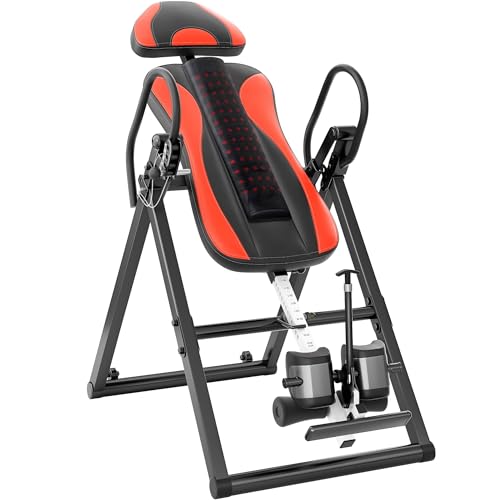
YOLEO ITX360 Inversion Table for Back Pain 2025
Removable lumbar support pad for targeted lower-back relief
View Today's Price
INNOVA HEALTH AND FITNESS ITM5900 Advanced Heat and Massage Inversion Table,
Remote-controlled ankle lock for hands-free convenience during sessions
View Today's Price
Innova Health and Fitness Inversion Table with Adjustable Headrest, Reversible
Adjustable lumbar pad with hot/cold compress support for versatile therapy
View Today's PriceHow to Choose the Right Premium Inversion Tables
Choosing the right premium inversion table depends on your body weight, therapy goals, space constraints, and comfort preferences—trade-offs that shift based on your unique situation. A feature that’s perfect for daily spinal decompression might be overkill for occasional stretching, while space-saving models can sacrifice comfort or safety. Our recommendation engine evaluates your specific needs across five dimensions and matches you to the right inversion table in under 60 seconds.
About this guide
Premium Inversion Tables
Why Buying the Right Inversion Table is Tricky
Selecting premium inversion tables in 2026 is a real challenge because the differences between models go far beyond price or brand. The $150–$400 range covers everything from basic steel frames to advanced, FDA-registered premium inversion tables like Teeter’s 510(k) medical models. Most buyers underestimate how much weight capacity (300–350 lbs) impacts both safety and long-term durability—choosing premium inversion tables rated too close to your weight is a recipe for instability and faster wear. Ankle locking systems are another make-or-break factor: lever-activated, ergonomic cups are a must for comfort, while old-school spring pins or no-pinch designs on less advanced premium inversion tables can leave you sore or even bruised. Angle adjustment is deceptively complex—pin systems on premium inversion tables offer fixed, safe increments, but if you want granular control, disk brakes or tether straps are better. Many buyers get distracted by heat and massage pads on premium inversion tables, but skip lumbar support, which is actually more important for chronic pain. And don’t forget storage: foldability among premium inversion tables varies wildly, with some models collapsing in seconds and others requiring partial disassembly. Even top brands like Teeter, Innova, and Ironman have distinct trade-offs in their premium inversion tables, so it’s easy to buy the wrong fit if you don’t match your needs to the specs of premium inversion tables.
What Actually Sets Premium Inversion Tables Apart
Not all premium inversion tables are created equal, even if they look similar at first glance. The true differentiators among premium inversion tables are in the details: Teeter stands out as the only FDA-registered 510(k) medical device in this space, which means it’s certified for back pain, sciatica, and muscle tension relief—not just fitness. Innova’s True Balance System and patented heat-and-massage pads are significant upgrades for those who want more than basic decompression from premium inversion tables. Skip disk brake angle locks on premium inversion tables unless you need stepless control; for most, pin systems or adjustable tether straps on premium inversion tables are safer and simpler. Ankle comfort is non-negotiable—Teeter’s lever-activated locks and Ironman’s ergonomic cups are leagues ahead of generic spring-pin designs found on lower-tier premium inversion tables. Don’t get lured by extra features like acupressure nodes on premium inversion tables unless you’ll actually use them; lumbar support (integrated pads or adjustable bridges) is far more valuable for targeted relief on premium inversion tables. Foldability is another real-world difference: some premium inversion tables fold flat in seconds (like Exerpeutic and Body-Solid), while others are semi-permanent fixtures. If you’re over 300 lbs, only trust premium inversion tables rated to 350 lbs—don’t risk it with lesser frames. Ultimately, brand reputation matters: Teeter and Innova have the best track records for safety and user satisfaction with their premium inversion tables, while Health Gear and HARISON offer strong value but fewer advanced features in their premium inversion tables.
How to Choose: Decision Factors That Matter
Your body weight, therapy goals, safety preferences, and available space all interact to determine which premium inversion tables will actually work for you. For example, if you’re primarily seeking spinal decompression, focus on premium inversion tables with robust lumbar support and a stable frame rated at least 25–50 lbs above your weight. If heat and massage therapy are priorities, Innova’s ITM4800 or ITM280 premium inversion tables with removable lumbar pads and remote-controlled ankle locks are worth the extra $50–$100. Space is a real constraint—if you need to fold and store your premium inversion tables regularly, avoid heavy-duty premium inversion tables that require tools to collapse. Budget is a hard limit: under $200 means sacrificing advanced ankle systems or FDA registration found on higher-end premium inversion tables, while $300–$400 unlocks medical-grade safety and premium comfort on top-tier premium inversion tables. Our quiz evaluates your primary therapy goal, safety/angle control preference, weight, space needs, and budget to pinpoint the best premium inversion tables for you. The smartest approach is to prioritize safety and comfort first with premium inversion tables, then add features like heat, massage, or acupressure only if they’ll truly enhance your daily use of premium inversion tables. Don’t pay for extras you’ll never use, and never compromise on weight capacity or ankle security when choosing premium inversion tables.
Buyer's guide
How to choose
1Core Performance Criteria
- Always choose a table rated for at least 25–50 lbs above your body weight; most premium models support 300–350 lbs for optimal safety and longevity.
- Look for precision angle adjustment systems—pin systems are safest for most, while disk brake locks offer stepless control for advanced users.
- Integrated lumbar support, like Innova’s removable pads or Teeter’s adjustable bridges, is essential for targeted lower back relief and effective decompression.
- Heat and massage features, such as Innova’s patented pads, are worthwhile if muscle relaxation is a top priority, but don’t substitute for structural quality.
- Ankle locking mechanisms matter more than most buyers realize; lever-activated ergonomic cups prevent discomfort and bruising during inversion.
- FDA registration, available only on Teeter, certifies medical-grade safety and efficacy for conditions like back pain and sciatica.
2Build Quality and Durability
- Heavy-duty steel frames, as found on Ironman and Teeter, withstand years of daily use and support higher weight capacities without flexing or creaking.
- Powder-coated finishes resist corrosion and scratches, extending the table’s lifespan, especially in humid environments or garages.
- Welded joints and reinforced pivot arms, common in premium models, prevent wobble and ensure smooth, controlled inversion.
- High-quality foam padding on backrests and ankle supports is crucial for comfort and resists flattening over time.
- Check for commercial-grade hardware—bolt sizes and locking pins should feel substantial, not flimsy or loose after assembly.
- Warranty coverage of at least 1–3 years, as offered by Teeter and Innova, signals confidence in long-term durability.
3Value Analysis
- Budget models ($150–$200) offer basic decompression and decent build but often lack advanced ankle systems or heat/massage features.
- Mid-range tables ($200–$300) like Innova ITM4800 add lumbar pads, remote ankle locks, and heat/massage, delivering the best balance for most buyers.
- Premium models ($300–$400), especially Teeter, justify the price with FDA registration, medical-grade safety, and unmatched comfort.
- Don’t pay extra for acupressure nodes or extended warranties unless you know you’ll use them regularly.
- A $50 price jump often means a major upgrade in ankle locking comfort or frame stability—worth it if you invert daily.
- Look for models with consistently high user ratings (4.5+ stars) and thousands of reviews, as seen with Innova and Teeter.
4Use-Case Fit
- If your main goal is spinal decompression, prioritize lumbar support and stable angle control over massage or heat features.
- For muscle relaxation or sciatica, invest in models with integrated heat and massage pads like Innova’s ITM4800 or ITM280.
- Active users seeking stretching or core work should look for tables with smooth rotation and easy angle adjustments.
- Taller users (over 6’3”) or those over 300 lbs should verify the table’s height and weight specs—Teeter and Ironman fit up to 6’6” and 350 lbs.
- If space is tight, choose a foldable model like Body-Solid BFINVER10B or Exerpeutic, which store in closets or under beds.
- Those with chronic ankle pain should avoid spring-pin locks and opt for lever-activated, ergonomic ankle systems.
5Common Mistakes to Avoid
- Choosing a table with a weight capacity too close to your actual weight risks instability and voids most warranties.
- Ignoring ankle locking comfort leads to soreness or bruising—never settle for basic spring-pin designs if you invert frequently.
- Overpaying for features like acupressure nodes or extended warranties that add little real-world benefit for most users.
- Assuming all tables fold compactly—some require partial disassembly and are impractical for small spaces or shared rooms.
- Skipping FDA registration if you need a medically certified device for insurance or chronic pain management.
- Neglecting to check height range—some models only fit users up to 6’2”, while Teeter and Ironman accommodate up to 6’6”.
6Maintenance and Longevity
- Wipe down foam pads and ankle cups after each use to prevent sweat buildup and extend material life.
- Regularly inspect pivot points and locking mechanisms for wear—tighten bolts and lubricate moving parts every few months.
- Store foldable models in a dry area to avoid rust on steel frames and hardware.
- Replace worn ankle cuffs or pads promptly; most brands, including Teeter and Innova, sell affordable replacement parts online.
- Check all safety pins and angle locks before each session—failure here is the number one cause of accidents.
- Register your product for warranty coverage and access to replacement parts or customer support if issues arise.
FAQ
Frequently asked questions
Is it worth paying extra for an FDA-registered inversion table like Teeter?
If you want medical-grade safety and are managing chronic back pain, Teeter’s FDA-registered 510(k) certification is absolutely worth the premium. This registration means the table is cleared for use as a medical device for back pain, sciatica, and muscle tension. Insurance reimbursement may also require this certification. For general stretching or wellness, non-FDA models can suffice, but for clinical-level safety and peace of mind, Teeter stands alone in 2026.
How does Innova compare to Teeter for back pain relief?
Innova tables, like the ITM4800 and ITM280, excel at combining heat and massage therapy with solid decompression features at a mid-range price. Teeter, however, leads in medical certification, ankle comfort, and long-term durability. If you prioritize heat/massage and want to spend under $300, Innova is a strong choice. For maximum safety and clinical-grade reliability, Teeter is the gold standard, but it comes at a higher price.
What weight capacity do I need for safe inversion?
Always choose a table rated at least 25–50 lbs above your actual body weight for safety and longevity. Most premium inversion tables in 2026 support 300–350 lbs. For example, if you weigh 250 lbs, opt for a 350 lb-rated model like Ironman Gravity 4000 or Teeter. Never risk using a table near its max limit, as this increases wear and the risk of frame failure.
Are heat and massage features on inversion tables actually effective?
Heat and massage pads, like those on Innova’s ITM4800, can significantly enhance muscle relaxation and circulation during inversion. However, they are not a substitute for proper lumbar support or stable angle control. If muscle tension is a major concern, these features are worth the extra $50–$100. For pure spinal decompression, prioritize structural quality and ankle comfort first, then add heat/massage if your budget allows.
Which ankle locking system is most comfortable for daily use?
Lever-activated, ergonomic ankle locking systems—like those on Teeter and Ironman—are the most comfortable and secure for regular inversion. Avoid basic spring-pin or foam roller designs, which can cause discomfort or bruising. If you plan to invert daily or have sensitive ankles, invest in a model with a no-pinch, lever-based lock. This single feature can make or break your experience.
Can I store a premium inversion table in a small apartment?
Yes, but only if you choose a truly foldable model like Body-Solid BFINVER10B or Exerpeutic. Some tables fold flat in seconds and fit in a closet or under a bed, while others require partial disassembly and are impractical for tight spaces. Always check folded dimensions before buying—premium features don’t matter if the table won’t fit your home.
Are $150–$200 inversion tables good enough for daily use?
Budget models in the $150–$200 range can deliver basic decompression and are fine for occasional use. However, they often sacrifice ankle comfort, lumbar support, and advanced safety features. If you plan to use your inversion table daily or have chronic pain, it’s worth spending $50–$100 more for mid-range options like Innova ITM4800, which add essential features and better durability.
Related reading
Best Premium Inversion Tables By Category
Compare Premium Inversion Tables
Related Guides
Adjustable Dumbbells
Weight range, adjustment speed, handle style, and space—get matched to adjustable dumbbells that fit your real training needs.
Bike Mats
Matched to your bike type, floor surface, noise needs, material preference, and budget for the perfect indoor cycling mat.
Bike Trainers
Matched to your riding style, noise tolerance, tech needs, and space—get a bike trainer that fits your real routine.
Cold Plunge Tubs
Insulation, chilling method, space, and budget—get matched to the cold plunge tub that fits your recovery style and setup.
Compact Home Gyms
Matched to your space, resistance needs, tech comfort, and how you actually want to train—no more guessing or wasted space.