Skip the research trap. Get your home theater speakers in 60 seconds.
We scored 350+ home theater speakers across 5 dimensions — answer 5 quick questions and we'll match you to YOUR best pick.
Powered by DecisionScore™
Each product is evaluated across 18 weighted criteria — covering performance, value, build quality, and real-world usability. Your quiz answers re-weight the criteria to match what matters most to you, so two people can get different #1 picks from the same data.
See the DecisionScore methodology →- Affordable 5.0 system with bookshelf fronts and surrounds
- MDF cabinets and silk dome tweeters offer precise, energetic sound
- Add your own subwoofer for full 5.1 performance
Find your perfect home theater speakers
5 quick questions. No quiz-takes-10-minutes trap. A personalized match from 35 scored picks — with clear reasoning for every recommendation.
Which type of home theater setup appeals to you most?
Soundbars are slim and simple; compact 5.1 systems use small satellites; full‑size systems employ larger speakers or towers; stereo pairs are for music‑first setups that can form the basis of a custom theater.
- Soundbars are slim and easy to install, perfect for tight spaces or minimalist setups.
- Compact 5.1 systems use small satellites and a subwoofer—great for balanced sound in mid-sized rooms.
- Full-size systems with towers or large bookshelves deliver the most dynamic range, but require more space and setup effort.
As an Amazon Associate and affiliate partner we earn from qualifying purchases. Links on this page may earn us a commission at no extra cost to you. Full disclosure
Not ready for the quiz? Here are our overall top picks
These are our top-rated picks overall. For a recommendation matched to YOUR specific needs,
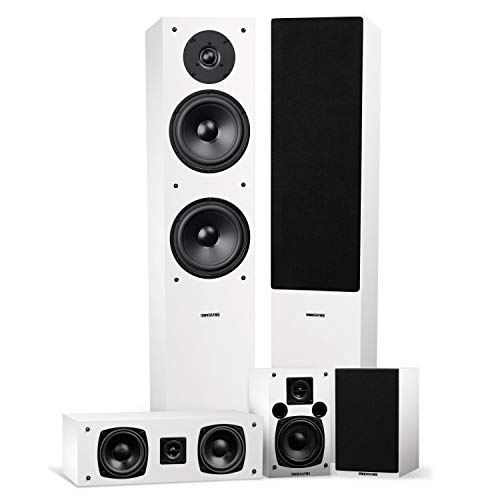
Fluance Elite High Definition Surround Sound Home Theater 5.0 Channel Speaker
Affordable 5.0 system with bookshelf fronts and surrounds
View Today's Price
YAMAHA Audio NS-C210BL Center Channel Speaker - Each (Black)
Simple 5.1 package designed to pair with Yamaha receivers
View Today's Price
Acoustic Audio AA5170 Home Theater 5.1 Bluetooth Speaker System 700W with
Features 5.25‑inch C‑CAM drivers and gold dome tweeters
View Today's PriceHow to Choose the Right Home Theater Speakers
Choosing the right home theater speakers depends on your room size, content preferences, budget, and willingness to manage setup complexity—trade-offs that shift based on your unique situation. A feature that’s perfect for a large living room may be overwhelming in a small apartment, and the best system for movies isn’t always ideal for music. Our recommendation engine evaluates your specific needs across 15+ dimensions and matches you to the right speaker system in under 60 seconds.
About this guide
Home Theater Speakers
The Real Buying Challenge: Navigating Trade-Offs and Pitfalls
Choosing premium home theater speakers in 2026 is more complicated than most buyers expect. The first major fork is whether to go with an all-in-one soundbar like the Samsung HW-Q990F (11.1.4 channels, $1,500–$1,800) or assemble a traditional 5.1 or 7.1 system with brands like Focal or Bowers & Wilkins. Premium home theater speakers in soundbar form now offer wireless satellites and cinematic Atmos effects, but full-size premium home theater speakers still win for raw fidelity and customizability—if you have the space and patience for setup. Price tiers for premium home theater speakers are stark: under $300 (e.g., Samsung HW-B750D) gets you basic 5.0 sound, while $1,000–$1,800 unlocks immersive Atmos and room correction. Many buyers get tripped up by channel count (mistaking wattage for performance), subwoofer placement, and the impact of room size on clarity when shopping for premium home theater speakers. Cable clutter and TV stand fit are constant headaches—oversized premium home theater speakers like the Nakamichi Dragon can physically block screens. Most people also underestimate the importance of room correction and HDMI 2.1 for gaming with premium home theater speakers. Our guide is built to help you avoid these common mistakes and make sense of the real trade-offs when investing in premium home theater speakers.
What Separates the Options: Real-World Differentiators
Not all premium home theater speakers are created equal, and the differences go far beyond brand names or price tags. In 2026, premium home theater speakers in soundbar form with discrete wireless surrounds (like Samsung HW-Q990F or Klipsch Flexus Core 300) have eclipsed traditional speaker packages for most buyers, thanks to their seamless Dolby Atmos height effects and room correction (Dirac on Klipsch is a standout). Skip virtual surround bars unless you truly can’t fit satellites—real rear premium home theater speakers are night and day for immersion. Channel count matters more than wattage: an 11.1.4 premium home theater speaker system delivers a vastly more cinematic experience than a basic 5.1, even at the same price. HDMI 2.1 support (Sony BRAVIA Theater Bar 9) is essential for 4K/120Hz gaming, not just for future-proofing your premium home theater speakers. Room correction is a must—out-of-box tuning is rarely ideal, and skipping this step leads to muddy dialogue or boomy bass with premium home theater speakers. Expandable ecosystems (Sonos, Samsung) are smart investments for premium home theater speakers, while locked-in packages (older Yamaha NS-P41) limit future upgrades. Don’t be seduced by specs alone—test for clarity, real Atmos height, and ease of setup when evaluating premium home theater speakers.
Decision Factors and How to Choose: Matching System to Space and Priorities
Room size, layout, and your main listening habits interact in surprising ways when choosing premium home theater speakers. A compact 5.1 premium home theater speaker system or slim soundbar (like Sonos Beam Gen 2) is ideal for apartments or bedrooms, but these rarely deliver the full Atmos impact that larger premium home theater speakers in a 7.1 or 9.2.4 system can in a big living room. If you crave deep bass and blockbuster dynamics, prioritize premium home theater speakers with dedicated subwoofers and wireless surrounds—Nakamichi Shockwafe Ultra 9.2 eARC is overkill for small spaces but perfect for open-plan homes. Music-first listeners will want stereo tower premium home theater speakers (Bowers & Wilkins 603 S2) or high-res clarity, while movie lovers should focus on channel count and room correction in their premium home theater speakers. Budget is a hard limiter: under $300 means sacrificing immersive effects, while $1,000–$1,500 is the sweet spot for balanced performance and features in premium home theater speakers. Our quiz weighs your space, content preferences, and feature priorities to pinpoint the right premium home theater speakers for you. Don’t forget: HDMI cable quality, premium home theater speaker placement, and even your flooring (hardwood vs. carpet) all subtly shape the final experience.
Buyer's guide
How to choose
1Core Performance Criteria
- Prioritize channel count (e.g., 5.1.2, 9.2.4, 11.1.4) over wattage, as more discrete channels deliver better surround and Atmos immersion.
- Dolby Atmos and DTS:X support are essential for modern movie soundtracks—skip systems without up-firing or dedicated height speakers if you want true immersion.
- Room correction (like Dirac on Klipsch Flexus Core 300) dramatically improves clarity and bass, especially in irregular or open spaces.
- Compression and distortion at high volumes plague budget models under $300—avoid these for large rooms or cinematic impact.
- HDMI 2.1 passthrough (Sony BRAVIA Theater Bar 9) is critical for 4K/120Hz gaming and future-proofing your setup.
- Wireless surrounds and subwoofers (Samsung HW-Q990F, Nakamichi Shockwafe Ultra 9.2) eliminate cable clutter and make placement far more flexible.
2Build Quality and Durability
- Premium soundbars like Samsung HW-Q990F and Klipsch Flexus Core 300 use reinforced cabinets and redesigned subwoofers to reduce rattle at high volumes.
- Look for metal mesh grilles and solid MDF enclosures in full-size speakers (Bowers & Wilkins 603 S2) for long-term durability.
- Wireless modules should use robust, interference-resistant protocols—cheap wireless kits often drop signal or introduce latency.
- Subwoofer feet and isolation pads help prevent vibration transfer to floors, especially on hardwood surfaces.
- Check for replaceable drivers or modular parts in high-end towers, which extend lifespan and simplify repairs.
- Warranty coverage of at least two years is standard on premium brands; budget models may only offer 12 months and less support.
3Value Analysis and Price Tiers
- Expect to pay $1,000–$1,500 for a balanced Atmos system with room correction and wireless surrounds—this is the current sweet spot for value.
- Under $300 (Samsung HW-B750D) compromises on bass, surround realism, and overall output—fine for TV, but not for home cinema.
- Spending over $1,800 (Nakamichi Dragon) yields diminishing returns unless you have a massive space and crave extreme bass.
- Soundbars with included satellites and subwoofers (Klipsch Flexus Core 300) offer better value than piecemeal upgrades.
- Expandable systems (Sonos, Samsung) justify a higher initial cost if you plan to add speakers over time.
- Avoid one-off or locked-in packages (Yamaha NS-P41) if you want future flexibility or multi-room audio.
4Use-Case Fit and Room Matching
- Compact soundbars and 5.1 systems are best for apartments or bedrooms, where space and cable management are top concerns.
- Large living rooms benefit from multi-channel setups (9.2.4 or 11.1.4), which fill the space and deliver true Atmos effects.
- Music-first listeners should consider stereo towers or high-res bookshelf speakers for clarity and imaging over surround effects.
- Gamers need HDMI 2.1 support and low-latency wireless for smooth, immersive play—Sony BRAVIA Theater Bar 9 excels here.
- If you watch mostly TV or dialogue-heavy content, prioritize systems with strong center channels and clear speech reproduction.
- Open-plan homes with hardwood floors may need extra room correction or isolation to avoid echo and muddiness.
5Common Mistakes and Pitfalls
- Many buyers confuse wattage with real-world loudness—channel count and speaker placement matter far more for immersive sound.
- Ignoring bar width or subwoofer size leads to setups that block TV stands or dominate small rooms.
- Skipping room correction results in muddy bass and unclear dialogue, especially in asymmetrical or open spaces.
- Assuming all wireless systems are truly wireless—some require power cables or proprietary hubs that add clutter.
- Overlooking HDMI 2.1 support means missing out on 4K/120Hz gaming and future content compatibility.
- Buying locked-in systems like Yamaha NS-P41 limits future upgrades and multi-room expansion.
6Maintenance and Longevity
- Dust and debris can clog speaker grilles and ports—regular cleaning preserves clarity and prevents overheating in compact soundbars.
- Firmware updates (via app or USB) are essential for bug fixes and new features, especially in smart soundbars and wireless systems.
- Check for replaceable batteries or power supplies in wireless satellites to avoid costly repairs down the line.
- Speaker cables and HDMI cords should be periodically checked for wear, especially if routed under carpets or behind furniture.
- Subwoofers with auto-calibration or room correction last longer without manual retuning, maintaining optimal bass response.
- Store manuals and warranty info—premium brands often offer extended support or discounted repairs for registered owners.
FAQ
Frequently asked questions
Is Dolby Atmos worth paying extra for in home theater speakers?
Yes, Dolby Atmos is absolutely worth the premium if you want a truly immersive movie experience in 2026. Systems with real up-firing or dedicated height speakers—like the Samsung HW-Q990F (11.1.4) or Klipsch Flexus Core 300 (5.1.2)—deliver overhead effects that basic 5.1 setups simply can’t match. If you mostly watch movies or play games, Atmos height channels add realism and depth, especially in larger rooms. For TV-only use, it’s less critical, but for home cinema, Atmos is a game changer.
How does the Samsung HW-Q990F compare to the Klipsch Flexus Core 300?
The Samsung HW-Q990F leads for immersive surround with 11.1.4 channels, wireless satellites, and a redesigned subwoofer that minimizes rattle. It’s the top pick for movies and large rooms. The Klipsch Flexus Core 300, at 5.1.2 channels, excels in all-in-one convenience and Dirac room correction, making it ideal for balanced cinematic sound in mid-sized spaces. Both outperform older traditional packages for Atmos, but Samsung wins on sheer channel count and output, while Klipsch offers better room tuning.
What channel count do I need for a large living room?
For a large living room, aim for at least a 7.1.2 or 9.2.4 channel setup to fill the space with immersive sound. Systems like the Nakamichi Shockwafe Ultra 9.2 eARC or Samsung HW-Q990F deliver discrete surround and Atmos height effects that basic 5.1 or 5.1.2 systems can’t match. More channels mean more precise placement of effects and a bigger, more cinematic experience—especially important if your seating is spread out or your room is open-plan.
Are wireless home theater speakers reliable enough for serious movie watching?
Modern wireless home theater speakers—like those in the Samsung HW-Q990F or Sonos Arc systems—are highly reliable in 2026. They use robust Wi-Fi or proprietary wireless protocols that minimize dropouts and latency. However, all wireless speakers still require power cables, and placement flexibility is limited by available outlets. For most users, the convenience and reduced cable clutter outweigh the minor risk of interference. Only audiophiles or those in very crowded Wi-Fi environments might prefer fully wired setups.
Does spending more than $1,800 on speakers actually improve sound quality?
Above $1,800, you enter the realm of diminishing returns for most home theater setups. Flagship systems like the Nakamichi Dragon or high-end Bowers & Wilkins towers offer incremental improvements in bass, detail, and build quality, but the difference is subtle compared to the leap from budget to mid-premium ($1,000–$1,500). Unless you have a massive space or demand reference-level audio, you’re better off investing in room correction, better subwoofers, or acoustic treatments rather than chasing ultra-premium price tags.
How does a traditional 5.1 speaker package compare to a modern soundbar system?
Traditional 5.1 packages (like Yamaha NS-P41 or Focal Aria 926) offer more customization and, in some cases, higher fidelity for music. However, modern soundbar systems such as the Samsung HW-Q990F or Klipsch Flexus Core 300 now rival or surpass them for movies, thanks to built-in wireless surrounds, room correction, and true Atmos support. Soundbars are easier to set up, minimize cable mess, and often integrate smart features. Unless you’re a purist or have unique room needs, today’s soundbars are the practical choice.
What’s the best speaker setup for both music and movies?
For balanced music and movie performance, choose a system with strong stereo imaging and discrete surround channels. The Klipsch Flexus Core 300 offers excellent music clarity with Dirac room correction, while the Samsung HW-Q990F delivers cinematic impact for movies. If you lean music-first, consider adding stereo towers (like Bowers & Wilkins 603 S2) to a surround setup. Avoid virtual surround-only bars if music is a priority—they often lack the midrange detail and imaging needed for critical listening.
Best Home Theater Speakers By Category
Related Guides
AV Receivers
Room size, speaker setup, streaming features, and gaming needs—get matched to the right AV receiver for your home theater.
Home Theater Speaker Packages
Room size, audio priorities, and setup style—get matched to the right soundbar or speaker system for your home theater.
Blu-ray Players
Resolution, HDR, audio, streaming, and disc region—matched to your TV, sound system, and movie collection in seconds.
Budget Home Theater Systems
Room size, surround immersion, and setup style—get matched to the right budget home theater system for your space and habits.
Build the Ultimate Home Bar: Carts, Glassware, Tools & Storage
Entertaining style, storage needs, and drink preferences—get matched to the right bar cart, glassware, tools, and storage for your home.