Skip the research trap. Get your toaster ovens in 60 seconds.
We scored 300+ toaster ovens across 5 dimensions — answer 5 quick questions and we'll match you to YOUR best pick.
Powered by DecisionScore™
Each product is evaluated across 18 weighted criteria — covering performance, value, build quality, and real-world usability. Your quiz answers re-weight the criteria to match what matters most to you, so two people can get different #1 picks from the same data.
See the DecisionScore methodology →Find your perfect toaster ovens
5 quick questions. No quiz-takes-10-minutes trap. A personalized match from 29 scored picks — with clear reasoning for every recommendation.
What do you mostly plan to cook in your toaster oven?
This question helps match your oven to your cooking habits. Toasting and snacks need less capacity; baking requires precise heating; air frying calls for higher airflow; multi-meal cooking benefits from larger cavities and more functions. If unsure, choose the option that describes how you cook today.
- If you mainly toast bread or reheat pizza, you don’t need a large-capacity oven—compact models will save space and energy.
- Baking pastries or casseroles requires precise temperature control and even heat—look for models with strong expert test results.
- Air frying or multi-course meals benefit from convection fans and larger interiors, but these features usually come at a higher price.
As an Amazon Associate and affiliate partner we earn from qualifying purchases. Links on this page may earn us a commission at no extra cost to you. Full disclosure
Not ready for the quiz? Here are our overall top picks
These are our top-rated picks overall. For a recommendation matched to YOUR specific needs,
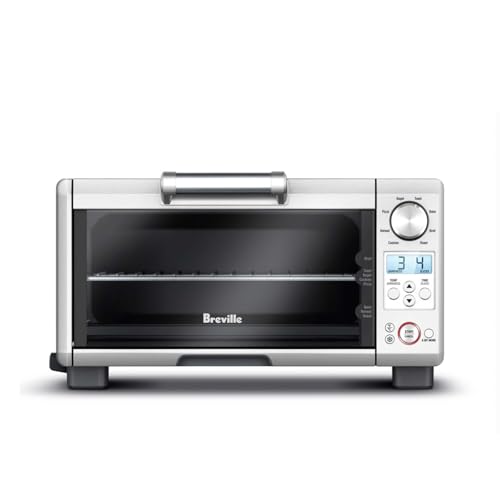
Breville BOV450XL Mini Smart Countertop Oven and Toaster Oven, Small, Brushed
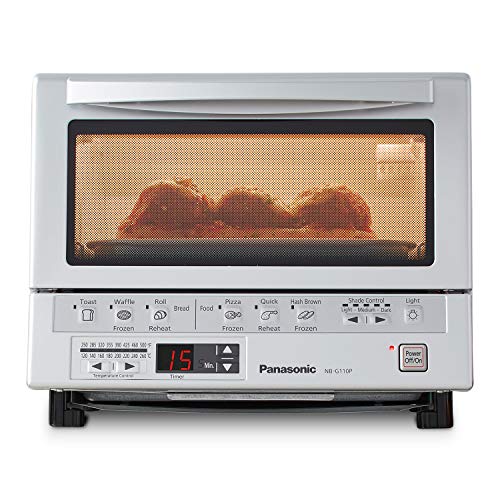
Panasonic FlashXpress Toaster Oven Countertop, 4-Slice Small Toaster Oven

Breville BOV800XL Smart Oven Countertop Convection, Brushed Stainless Steel
How to Choose the Right Toaster Ovens
Choosing the right toaster oven depends on temperature precision, capacity, interface style, and feature set—trade-offs that shift based on your kitchen space and cooking habits. Generic top-10 lists fail here because a feature perfect for a baker is wrong for someone who just wants fast toast. Our recommendation engine evaluates your specific needs across 12+ dimensions and matches you to the right oven in under 60 seconds.
About this guide
Toaster Ovens
Why Toaster Ovens Matter in 2026 Kitchens
Toaster ovens in 2026 aren’t just for browning bread—they’re compact powerhouses that can rival full-size ranges for everyday cooking. Modern models from brands like Breville, Ninja, and Cuisinart now offer air fry, convection, steam, and even smart-assistant compatibility, making them versatile enough for everything from crisping wings to baking sourdough. The right toaster oven can save you real counter space and energy, especially if you’re in an apartment or cooking for one or two. But it’s not just about features: expert reviewers stress that precise temperature control and even heating are make-or-break factors, especially for baking and reheating. Smaller flip-up designs suit tight spaces, while larger ovens can handle whole chickens or multiple sheet pans but demand more real estate. Prices range from $200 for budget workhorses like the Ninja Flip SP151 to $600+ for premium models like the Breville BOV800XL, so picking the right balance of size, features, and reliability is crucial. Whether you’re reheating pizza, proofing bread dough, or feeding a family, the right choice will transform your daily cooking.
What’s Changed: The 2026 Toaster Oven Landscape
The toaster oven market in 2026 is packed with innovation—and confusion. Air fryers have driven up prices by 20–30%, but drawer-style air fryers still outperform most oven combos for speed, so don’t get swayed by marketing hype. Precision matters more than ever: models like the Breville BOV800XL with ±4°F temperature swings consistently outperform larger, less stable ovens that can swing ±27°F, especially for baking and delicate recipes. Four-slice toasting evenness is now a better predictor of real-world satisfaction than raw capacity—RTINGS gives the Ninja DT201 a 9.5 for this, while some high-capacity models still disappoint. Many buyers get tripped up by flashy features like app controls or dozens of presets, but miss the basics: reliable heating, easy cleaning, and a footprint that actually fits their counter. Entry-level models under $200 are tempting, but experts warn about poor temperature stability and uneven results—don’t expect miracles at the bottom of the price range. The smartest buyers focus on proven performance, not just a laundry list of features.
How Our Guide and Quiz Deliver Better Matches
Our 2026 toaster oven guide goes beyond generic top-10 lists by focusing on the specs and features that actually impact your daily cooking. The quiz evaluates your cooking habits, preferred controls, space constraints, and desired level of automation—matching you to ovens that fit your lifestyle, not just what’s popular. We factor in expert testing, like temperature uniformity scores and four-slice toasting ratings, so you don’t end up with an oven that looks great on paper but burns your cookies or hogs your counter. Unlike most lists, we highlight where spending $200 more truly gets you better results, and where it’s just marketing fluff. Whether you need a compact flip-up model for a studio apartment or a full-featured air fry convection oven for family meals, our tool walks you through the real trade-offs. You’ll leave with a short list tailored to your needs, budget, and kitchen—not just a random bestseller.
Buyer's guide
How to choose
1Core Performance Criteria: Heating and Cooking
- Temperature uniformity is crucial—models like the Breville BOV800XL with ±4°F swings bake and toast more evenly than larger ovens with ±27°F fluctuations.
- Four-slice toasting evenness, as tested by RTINGS, predicts satisfaction better than max capacity; Ninja DT201 scores a 9.5, outperforming many bigger ovens.
- Air fry performance in toaster ovens often lags behind dedicated drawer models, so don’t pay a 20–30% premium unless you truly need the convenience.
- Convection fans speed up cooking and improve crisping, but only if the oven maintains a steady temperature—check expert reviews for real-world test results.
- Steam and proofing modes are useful for bread bakers, but add cost and complexity; most buyers get more value from reliable convection and broil functions.
- Preheat speed matters for busy cooks—premium models can reach 400°F in under 6 minutes, while entry-level ovens may take twice as long.
2Build Quality and Durability
- Ovens under $200 often sacrifice build quality, with thin metal and loose doors that leak heat and wear out after a year or two.
- Premium models from Breville and Cuisinart use heavier-gauge steel, better insulation, and more robust door hinges for years of daily use.
- Removable crumb trays and nonstick interiors make cleaning easier and prevent burnt-on residue that can shorten the oven’s lifespan.
- Digital controls can fail if exposed to steam or grease—look for sealed interfaces and well-reviewed reliability, especially in mid-range and high-end models.
- Check for a solid warranty (at least 1 year, preferably 2) and responsive support; some brands are notorious for slow or unhelpful service.
- User-replaceable heating elements and racks extend the life of your oven, so avoid models with proprietary or hard-to-source parts.
3Value Analysis: Price vs. Performance
- The sweet spot for performance and features is $350–$500, where you get reliable heating, good capacity, and useful extras without paying for gimmicks.
- Budget models like the Ninja Flip SP151 ($200–$250) deliver strong four-slice toasting but may lack precise baking or premium build quality.
- Premium ovens ($500–$600+) like the Breville BOV800XL justify their cost with superior temperature stability and larger, more versatile interiors.
- Air fryer toaster ovens command a 20–30% price premium but don’t always outperform dedicated air fryers in speed or crispiness.
- Avoid entry-level models under $200 unless you only need basic toasting—temperature swings and uneven results are common complaints.
- Look for real-world test data (RTINGS, Wirecutter) to confirm that a higher price actually delivers better cooking, not just more features.
4Matching Use-Case to Oven Design
- Flip-up and compact models are ideal for apartments or dorms but may only fit four slices of bread or a single pizza at a time.
- Large-capacity ovens can handle whole chickens or multiple sheet pans but require significant counter space—measure before you buy.
- If you mostly reheat or toast, skip oversized ovens and focus on models that excel at even browning and quick preheat times.
- Frequent bakers should prioritize temperature precision and steam/proofing features, as found in higher-end Breville or Cuisinart models.
- Families or meal preppers benefit from ovens with multiple racks and convection, enabling batch cooking and more flexible meal planning.
- If you want true air frying, consider a dedicated drawer air fryer instead—combo ovens are convenient but rarely match standalone performance.
5Common Mistakes and Buyer Pitfalls
- Don’t be fooled by high wattage—actual cooking results depend more on temperature stability and airflow than raw power numbers.
- Buying the biggest oven you can afford often backfires if it doesn’t fit your counter or you rarely cook large meals.
- Overpaying for smart features or dozens of presets can lead to frustration if the core heating and toasting performance is lacking.
- Assuming all air fryer toaster ovens perform equally is a mistake; many are slower and less crispy than standalone air fryers.
- Neglecting to check cleaning ease—crumb trays, nonstick coatings, and accessible interiors make a huge difference in everyday use.
- Ignoring real-world test data (like RTINGS temperature uniformity) can leave you with an oven that burns edges and undercooks centers.
6Maintenance and Longevity Tips
- Clean crumb trays and wipe down the interior after each use to prevent buildup that can cause smoke and reduce heating efficiency.
- Avoid using foil directly on heating elements, as this can cause uneven heating or even damage the oven’s sensors and controls.
- Check and replace door seals if you notice heat escaping or uneven cooking—this simple fix can extend your oven’s useful life.
- Run the oven empty at high heat monthly to burn off grease and odors, especially if you use air fry or broil modes frequently.
- Use only manufacturer-approved racks and pans; ill-fitting accessories can block airflow and lead to uneven results or overheating.
- Store your oven in a dry, well-ventilated area and avoid stacking heavy items on top, as this can warp the housing or damage controls.
FAQ
Frequently asked questions
Is it worth paying extra for precise temperature control in a toaster oven?
Absolutely. Models like the Breville BOV800XL, which maintain temperature within ±4°F, produce far more consistent baking and toasting results than cheaper ovens with ±27°F swings. If you bake pastries or want reliable reheating, that precision is worth every dollar. Cheaper ovens often burn edges or undercook centers, leading to frustration and wasted ingredients. For most cooks, investing in temperature stability pays off in daily satisfaction and fewer ruined meals.
How does the Ninja Flip SP151 compare to the Breville BOV800XL for everyday use?
The Ninja Flip SP151 excels at four-slice toasting and quick snacks in tight spaces, making it ideal for apartments or dorms. However, the Breville BOV800XL delivers superior temperature uniformity and larger capacity, which is crucial for baking and multi-course meals. If you mostly toast or reheat, the Ninja is a strong value. For serious bakers or families, the Breville’s precision and versatility justify the higher price.
What oven size do I need to bake a whole chicken or multiple sheet pans?
Look for large-capacity ovens with at least 0.8 cubic feet of interior space and multiple rack positions. Models like the Breville BOV800XL or Cuisinart TOA-70 can handle a whole chicken or two quarter-sheet pans at once. Measure your counter space before buying—these ovens are wider and deeper than standard models, so make sure you have at least 18 inches of clearance.
Are air fryer toaster ovens as effective as standalone air fryers?
Not always. While air fryer toaster ovens offer convenience, they usually take longer and don’t crisp as evenly as dedicated drawer-style air fryers. Expect a 20–30% price premium for the air fry function, but know that drawer models still win on speed and crunch. If air frying is your main goal, a standalone air fryer may serve you better, though combo ovens are great for multi-purpose use.
Does a digital display or smart controls make a real difference in daily cooking?
Digital displays with presets add precision and convenience, especially for repeat tasks like baking or reheating. Smart controls—like app connectivity or voice assistants—are handy for guided recipes or remote monitoring, but they’re not essential for everyone. If you value hands-on control, manual dials are simpler and less prone to failure. Choose the interface that matches your comfort and cooking style.
What features should I avoid if I want a reliable, easy-to-clean toaster oven?
Skip models with overly complex hinges, exposed heating elements, or hard-to-remove crumb trays. Prioritize ovens with nonstick interiors, removable racks, and sealed controls. Entry-level ovens often cut corners on these basics, leading to headaches down the line. A simple, well-built oven is easier to maintain and will last longer with regular cleaning.
How does the Cuisinart TOA-70 stack up against similar ovens in the $300–$400 range?
The Cuisinart TOA-70 offers a balanced mix of air fry, convection, and toasting functions, with solid build quality and reliable performance for its price. It’s faster and more versatile than most sub-$200 models, but doesn’t quite match the temperature precision of premium Breville ovens. For most buyers seeking versatility and speed without breaking $400, the TOA-70 is a strong contender.
Related reading
Best Toaster Ovens By Category
Related Guides
Air Fryers
Matched to your kitchen space, batch size, cooking style, and must-have features—get an air fryer that truly fits your needs.
Bar Tools
Skill level, tool type, finish, budget, and how you’ll use your bar tools—get matched to the right set for your home bar.
Beginner Espresso Machines
Skill level, hands-on control, milk frothing, and kitchen space—get matched to the perfect beginner espresso machine for your daily ritual.
Best Bread Machines for Home Bakers
Loaf size, bread style, add-ins, and control—get matched to the bread machine that fits your kitchen and baking goals.
Breakfast Cookware
Matches your breakfast routine, kitchen setup, budget, and health priorities to the perfect pan, griddle, or appliance.