Skip the research trap. Get your portable induction cooktops in 60 seconds.
We scored 350+ portable induction cooktops across 5 dimensions — answer 5 quick questions and we'll match you to YOUR best pick.
Powered by DecisionScore™
Each product is evaluated across 18 weighted criteria — covering performance, value, build quality, and real-world usability. Your quiz answers re-weight the criteria to match what matters most to you, so two people can get different #1 picks from the same data.
See the DecisionScore methodology →- 1800W power with 20 preset temperature (100°F–460°F) and 20 power levels (100W–1800W)
- LCD sensor touch panel with fast boil and keep-warm shortcut buttons
- 10-hour countdown timer — usable as a slow cooker
Find your perfect portable induction cooktops
5 quick questions. No quiz-takes-10-minutes trap. A personalized match from 35 scored picks — with clear reasoning for every recommendation.
How many burners do you need?
Single-burner models are lighter and less expensive. Double-burner models offer extra cooking capacity but share the same 15-amp outlet wattage.
- Single burners are lighter, more portable, and fit easily on crowded counters or in dorm rooms.
- Double burners let you cook two dishes at once, but both share the same power circuit—don’t expect full power on both simultaneously.
- Consider your typical meal prep: if you rarely multitask, a single burner is usually more efficient and affordable.
As an Amazon Associate and affiliate partner we earn from qualifying purchases. Links on this page may earn us a commission at no extra cost to you. Full disclosure
Not ready for the quiz? Here are our overall top picks
These are our top-rated picks overall. For a recommendation matched to YOUR specific needs,
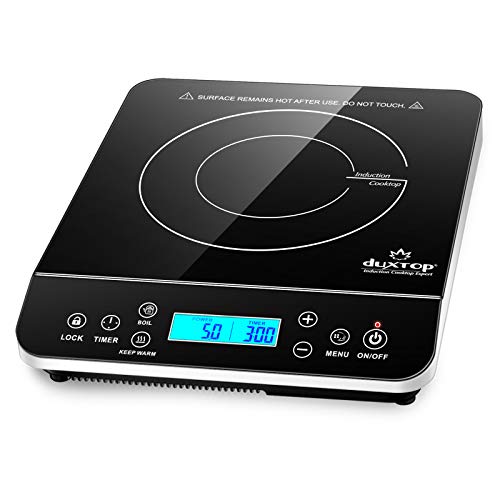
Duxtop Portable Induction Cooktop, Countertop Burner Induction Hot Plate with
1800W power with 20 preset temperature (100°F–460°F) and 20 power levels (100W–1800W)
View Today's Price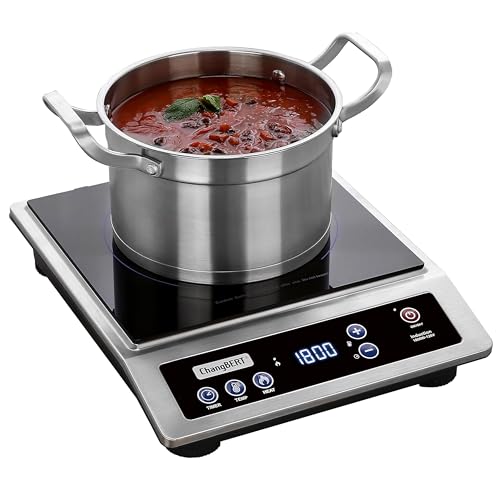
ChangBERT Induction Cooktop, Commercial Grade Portable Cooker, Large 8” Heating
NSF Certified commercial-grade stainless steel construction; holds up to 100 lbs
View Today's Price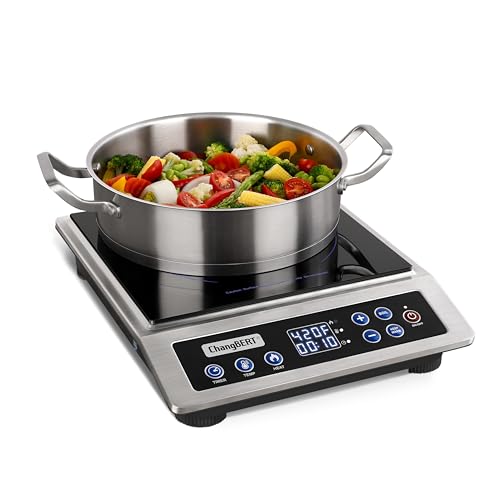
ChangBERT Portable Induction Cooktop Enhanced Version, One-Click Max Power 1800W
One-click Max Power button for instant 1800W at full output
View Today's PriceHow to Choose the Right Portable Induction Cooktops
Choosing the right portable induction cooktop depends on burner count, power precision, available space, and your cookware—all factors that interact based on your actual cooking habits and kitchen setup. A feature that’s perfect for an RV traveler might be a hassle in a crowded apartment, and budget constraints shift which features are realistic. Our recommendation engine evaluates your unique needs across five dimensions and matches you to the best-fit cooktop in under 60 seconds.
About this guide
Portable Induction Cooktops
The Real Buying Challenge: Specs, Price Tiers, and Common Pitfalls
Choosing portable induction cooktops in 2026 is more nuanced than most buyers expect. The market for portable induction cooktops spans single-burner models like the Duxtop 8100MC and AMZCHEF at under $70, up to commercial-grade portable induction cooktops such as the Nuwave PIC Pro Chef and ChangBERT NSF-certified models pushing $200. The core trade-off with portable induction cooktops is between price and precision: budget portable induction cooktops offer 1,800W power and 10–20 temperature levels, but lack the fine control and durability of premium portable induction cooktops. Many buyers fixate on wattage alone, but lab tests show that true performance in portable induction cooktops depends on sensor quality and boil times—an 1,800W label doesn’t guarantee fast, even heating. Another overlooked detail with portable induction cooktops: pan compatibility. Nearly 40% of returns for portable induction cooktops stem from buyers using non-magnetic cookware, causing frustrating shut-offs and error beeps. Double-burner portable induction cooktops (like Duxtop 9620LS) seem appealing for multitasking, but both burners share a single 15-amp circuit, limiting total output. Most shoppers underestimate the impact of portable induction cooktops’ footprint (often 14x11 inches) on crowded counters. If you skip these details when shopping for portable induction cooktops, you’ll likely end up with a model that underperforms or doesn’t fit your space.
What Actually Sets Models Apart: Features, Brands, and Real Performance
The real differentiators among portable induction cooktops are precision, safety, and interface quality. Brands like Duxtop and Nuwave dominate the portable induction cooktops market for a reason: their sensor accuracy and reliable power output consistently outperform cheaper portable induction cooktops in expert tests. Skip any portable induction cooktops under 1,800W—lower wattage units struggle with fast boils and can’t maintain high heat for searing. If you care about precise temperature (think sous vide or candy-making), premium portable induction cooktops like the Nuwave PIC Pro Chef and ChangBERT’s commercial line offer 94+ settings in 5°F increments, far surpassing the basic 10–20 levels found on entry portable induction cooktops. Touch-panel controls and child safety locks, now common on mid-range portable induction cooktops from Hamilton Beach, iSiLER, and CUSIMAX, make daily use safer and more intuitive. Don’t be swayed by “sensor” marketing alone; real-world tests show that auto-shutoff at 140°F for boil-over prevention is a must-have feature in portable induction cooktops. Double-burner portable induction cooktops are only worth it if you routinely cook two dishes at once and can live with the power split. For most, a single-burner portable induction cooktop with robust safety and a reliable timer is the smarter buy.
Decision Factors and How to Choose the Right Induction Cooktop
The ideal portable induction cooktop is a function of your cooking habits, space, and budget. Room size and counter space determine whether double-burner portable induction cooktops are feasible or if a compact single-burner portable induction cooktop (like the Duxtop 8100MC) is a better fit. If you’re outfitting a dorm, RV, or need a holiday backup, prioritize lightweight portable induction cooktops with auto-pan detection and a timer. For daily home cooking, look for mid-range portable induction cooktops with more power levels and safety features. Your budget constrains precision: under $75 gets you basic 10-level portable induction cooktops, while $120+ unlocks commercial-grade accuracy and build in portable induction cooktops. The quiz evaluates your needs for burner count, use case, budget, control style, and temperature precision in portable induction cooktops. Beyond that, remember that pan compatibility is non-negotiable for portable induction cooktops—test with a magnet before buying. Also, consider noise: most 1,800W portable induction cooktops have audible cooling fans, and premium portable induction cooktops tend to be quieter. Finally, don’t underestimate the value of a shatter-proof glass surface and a warranty that covers at least two years for portable induction cooktops. Your cooking style, not just your wishlist, should drive the decision when choosing portable induction cooktops.
Buyer's guide
How to choose
1Core Performance Criteria
- Prioritize models with a true 1,800W power rating—anything less will struggle to boil large pots or sustain high-heat searing.
- Look for at least 10–20 temperature and power settings for everyday versatility, but choose 94+ settings only if you need precise control.
- Check lab-tested boil times—Duxtop 9100MC reaches a rolling boil in under 8 minutes, while cheaper units may take much longer.
- Sensor accuracy matters more than raw wattage; Nuwave and Duxtop consistently score highest for even heating and reliable temperature response.
- Auto-pan detection and quick shutoff at 140°F are essential safety features, especially in busy kitchens or with kids around.
- Double-burner models split wattage between zones, so don’t expect both burners to hit 1,800W simultaneously on a standard outlet.
2Build Quality and Durability
- Shatter-proof ceramic glass surfaces, found on Nuwave PIC Pro Chef and ChangBERT, resist cracks and scratches better than standard glass.
- Units with reinforced edges and sealed control panels, like Duxtop 9600LS, stand up to daily use and accidental spills.
- Premium models feature continuous-duty circuitry, making them suitable for commercial or heavy home use without overheating.
- Cheaper models may develop residue buildup around control panels, making them harder to clean and less hygienic over time.
- Look for ETL or NSF certifications for added assurance of safety and build quality, especially if you’ll use the cooktop daily.
- Warranty length varies—aim for at least a two-year warranty, as budget brands often provide only one year or less.
3Value Analysis and Price Tiers
- The sweet spot for most buyers is $75–$100, where you get Duxtop’s sensor accuracy and fast boil times without paying for pro features.
- Budget models under $70 cut corners on sensor quality and timer reliability, which can lead to frustrating user experiences.
- Premium units ($120–$200) add precision, commercial durability, and advanced timers, but most home cooks won’t need 94+ temperature settings.
- Double-burner models cost $120–$200 but are only worth it if you regularly cook two dishes at once in a small space.
- Sales events like Amazon’s Big Spring often drop the Duxtop 8100MC and 9100MC to $75–$80, making them excellent value picks.
- Don’t pay extra for WiFi or app features—these rarely add real-world value and can complicate setup without improving core performance.
4Use-Case Fit: Matching Features to Your Needs
- For RVs, dorms, or travel, choose lightweight single-burners with auto-pan detection and a compact footprint under 14x11 inches.
- Home cooks needing an extra burner should focus on mid-range models with reliable timers, child locks, and a shatter-resistant surface.
- Double-burners like the Duxtop 9620LS are ideal for small apartments, but remember both burners share the same 15-amp outlet.
- If you do candy-making, sous vide, or chocolate tempering, only premium models with 5°F increments will deliver the precision you need.
- Entertaining with hot pot or fondue? Look for models with wide temperature ranges (140°F–460°F) and a stable, easy-to-clean surface.
- Always test your cookware with a magnet before buying—non-magnetic pans won’t work, and this is the number one source of user frustration.
5Common Mistakes and How to Avoid Them
- Ignoring pan compatibility leads to 40% of returns—always test with a magnet before using your induction cooktop.
- Assuming all 1,800W models perform the same is a mistake; sensor quality and boil times vary widely between brands.
- Overlooking cooktop footprint can result in space issues—measure your counter and compare to the product’s dimensions, typically 14x11 inches.
- Believing more temperature levels always means better cooking—most users only need 10–20 settings unless doing precise culinary work.
- Failing to check for auto-shutoff and boil-over sensors can result in unsafe operation, especially in homes with children or pets.
- Buying double-burner models expecting full power on both burners is unrealistic; power is split, so simultaneous high-heat cooking is limited.
6Maintenance and Longevity
- Choose models with sealed touch panels or minimal seams, as these are much easier to wipe clean and resist residue buildup.
- Ceramic glass tops are durable but can scratch—avoid dragging heavy pans and always let surfaces cool before cleaning.
- Fan noise is common on 1,800W units; regular dusting of vents prolongs fan life and reduces operating noise over time.
- Avoid glass-only pans; a slight curve on the base ensures better contact and prevents hotspots, improving both cooking and longevity.
- Check for dishwasher-safe removable parts, though most induction cooktops require only a damp cloth for daily cleaning.
- Store the cooktop in a dry, ventilated area—prolonged moisture exposure can damage internal circuits and reduce lifespan.
FAQ
Frequently asked questions
Is it worth paying extra for 5°F temperature increments on a portable induction cooktop?
If you regularly cook dishes that demand precise temperature control—like candy-making, sous vide, or tempering chocolate—then premium models with 5°F increments, such as the Nuwave PIC Pro Chef, are absolutely worth the investment. For most everyday cooking tasks, standard 10–20 level controls found on models like Duxtop 8100MC are more than sufficient. Unless your recipes require pinpoint accuracy, you can save money by sticking with a mid-range unit and still enjoy fast, reliable performance.
How does Duxtop compare to Nuwave for portable induction cooktops in 2026?
Duxtop excels at offering reliable, affordable 1,800W models with accurate sensors and intuitive controls, making them a top choice for most home cooks. Nuwave, especially the PIC Pro Chef, stands out for its commercial-grade build, ultra-precise 5°F increments, and shatter-proof glass—ideal for demanding users or those needing fine control. If you want the best value for everyday use, Duxtop is tough to beat, but Nuwave is worth the premium for advanced culinary tasks or heavy-duty use.
What wattage should I look for in a portable induction cooktop for fast boiling?
Always look for a true 1,800W rating if rapid boiling is a priority. Models like the Duxtop 9100MC and Nuwave PIC Pro consistently reach a rolling boil in under 8 minutes for a 6-quart pot, according to lab tests. Lower-wattage units often struggle with large volumes and can’t maintain high heat, leading to longer cook times and uneven results. For most kitchens, 1,800W is the sweet spot for both speed and versatility.
Are double-burner induction cooktops worth it for small apartments?
Double-burner models like the Duxtop 9620LS and Cuisinart ICT-60 are great for small apartments where you need to cook two dishes at once but lack a full stove. However, keep in mind that both burners share a single 15-amp outlet, so you won’t get full 1,800W power on each simultaneously. For most users, a single-burner with a fast boil and reliable timer is more practical unless you truly need the extra cooking space.
What control style is better: touch panel or push-button?
Touch panel controls, found on models like iSiLER and CUSIMAX, are sleeker and easier to clean, making them ideal for modern kitchens. Push-button or dial controls, common on budget Duxtop models, offer tactile feedback and are easier to use without looking. If hygiene and aesthetics matter, go with touch panels. If you want simplicity and don’t mind a slightly retro look, push-buttons are perfectly functional and often more forgiving for quick adjustments.
How do I know if my cookware is compatible with induction cooktops?
The easiest way is to test your cookware with a magnet—if the magnet sticks firmly to the bottom, it’s induction-compatible. Stainless steel, cast iron, and some enameled steel pans work well, but aluminum, copper, and glass pans usually do not. Using non-magnetic pans is the number one cause of induction cooktop returns, so always check before buying. Some models will beep or shut off immediately if incompatible cookware is detected.
What are the most common maintenance issues with portable induction cooktops?
The top complaints are residue buildup around control panels, scratches on glass surfaces, and fan noise during high-power use. To avoid these, choose models with sealed touch panels, regularly wipe down the surface after use, and avoid dragging pans across the glass. Dusting fan vents every few weeks helps keep noise down and extends the cooktop’s lifespan. For long-term durability, store the unit in a dry, ventilated area when not in use.
Related reading
Best Portable Induction Cooktops By Category
Related Guides
Air Fryers
Matched to your kitchen space, batch size, cooking style, and must-have features—get an air fryer that truly fits your needs.
Bar Tools
Skill level, tool type, finish, budget, and how you’ll use your bar tools—get matched to the right set for your home bar.
Beginner Espresso Machines
Skill level, hands-on control, milk frothing, and kitchen space—get matched to the perfect beginner espresso machine for your daily ritual.
Best Bread Machines for Home Bakers
Loaf size, bread style, add-ins, and control—get matched to the bread machine that fits your kitchen and baking goals.
Breakfast Cookware
Matches your breakfast routine, kitchen setup, budget, and health priorities to the perfect pan, griddle, or appliance.