Skip the research trap. Get your budget home theater systems in 60 seconds.
We scored 300+ budget home theater systems across 5 dimensions — answer 5 quick questions and we'll match you to YOUR best pick.

Powered by DecisionScore™
Each product is evaluated across 18 weighted criteria — covering performance, value, build quality, and real-world usability. Your quiz answers re-weight the criteria to match what matters most to you, so two people can get different #1 picks from the same data.
See the DecisionScore methodology →- 5.1-channel configuration with Dolby TrueHD, DTS-HD support
- Connectivity: HDMI, HDMI eARC, Wi-Fi, Bluetooth
- Includes 8-inch subwoofer and 80W total output
Find your perfect budget home theater systems
5 quick questions. No quiz-takes-10-minutes trap. A personalized match from 27 scored picks — with clear reasoning for every recommendation.
What will you primarily enjoy on your home theater system?
This helps match systems with the right dynamic range, latency and audio tuning. Movie lovers benefit from strong surround and dialogue clarity, gamers need low latency and immersive positioning, music fans want tonal accuracy. If you’re not sure, choose a balanced option.
- If you watch mostly movies, systems with dedicated center channels make dialogue clearer and action scenes more immersive.
- Gamers should look for systems with low audio latency and HDMI ARC to avoid lag during gameplay.
- Music lovers benefit from systems with customizable EQ or brands known for natural sound, like Klipsch or Yamaha.
As an Amazon Associate and affiliate partner we earn from qualifying purchases. Links on this page may earn us a commission at no extra cost to you. Full disclosure
Not ready for the quiz? Here are our overall top picks
These are our top-rated picks overall. For a recommendation matched to YOUR specific needs,
Yamaha YHT-5960U Home Theater System with 8K HDMI and MusicCast
5.1-channel configuration with Dolby TrueHD, DTS-HD support
View Today's Price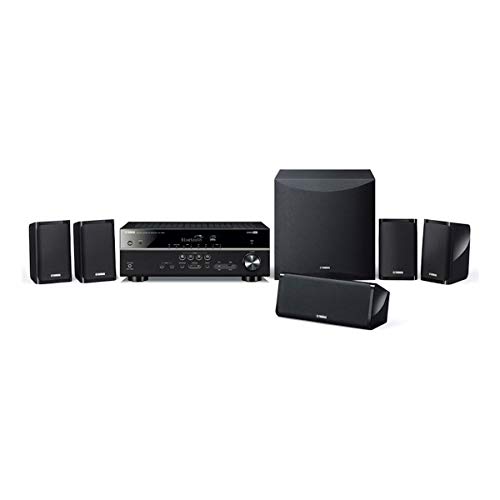
Yamaha Audio YHT-4950U 4K Ultra HD 5.1-Channel Home Theater System with
5.1-channel configuration with Dolby Digital, DTS support
View Today's Price
KALI AUDIO LP-UNF-R 4” Ultra Nearfield Studio Monitors - Powered Studio Speakers
5.1-channel configuration with Dolby Digital, DTS support
View Today's PriceHow to Choose the Right Budget Home Theater Systems
Choosing the right budget home theater system depends on room size, content preferences, setup complexity, and upgrade plans—factors that interact in surprising ways. A feature that’s perfect for a small apartment may disappoint in a large living room, and convenience often comes at the cost of future flexibility. Generic top-10 lists can’t account for these real-world trade-offs. Our recommendation engine analyzes your specific needs across five key dimensions and matches you to the ideal system in under 60 seconds.
About this guide
Budget Home Theater Systems
Why Budget Home Theater Choices Are Tricky
Shopping for budget home theater systems in 2026 isn’t just about picking the cheapest box at the store. The real challenge with budget home theater systems is balancing convenience, sound quality, and future-proofing—all while avoiding the most common buyer traps. For under $350, budget home theater systems typically force you to choose between soundbars with wireless satellites (like the Hisense AX5140Q or Vizio SV510X-0806) and compact speaker packages that require a receiver. The trade-off with budget home theater systems? Soundbars offer plug-and-play ease and compact form factors, but true surround immersion usually means dedicated satellites and a subwoofer—not just virtual surround or downmixed Atmos. Many buyers get budget home theater systems wrong, thinking any “Atmos” label guarantees cinematic audio, when in reality, most budget home theater systems downmix and skip discrete height channels. Specs like HDMI ARC/eARC, subwoofer size, and channel count matter more than flashy branding when comparing budget home theater systems. Price tiers are real: $100 gets you a basic soundbar (Sony HT-S100F), $200–$300 unlocks true 5.1 budget home theater systems with satellites, and above $350 you’re often paying for features you may not need. Don’t let marketing hype or a low sticker price steer you into budget home theater systems that underwhelm in your actual room.
What Actually Sets Systems Apart
The main differentiators in budget home theater systems are channel configuration, subwoofer design, support for Dolby Atmos or DTS:X, and the inclusion of true wireless satellites. For example, the Hisense AX5140Q stands out among budget home theater systems with its 5.1.4 layout and up-firing drivers for real Atmos effects, while the Vizio SV510X-0806 delivers actual rear-channel immersion under $300—something most all-in-one budget home theater systems can’t match. Skip budget home theater systems that only simulate surround unless you truly have no space for satellites. Advanced 3D audio is great for movies but less critical for gaming or music; if you mostly stream TV, prioritize clear dialogue and a strong center channel in your budget home theater systems. Brands like Klipsch and Yamaha offer better bass extension and customizable EQ in their budget home theater systems, but often lack the wireless convenience of Hisense or Vizio. Don’t get distracted by Wi-Fi streaming or voice assistant support in budget home theater systems unless you’ll use them daily. HDMI ARC is a must for lip-sync in budget home theater systems, but optical is a last resort. In short: prioritize real surround, a capable subwoofer, and the right channel count for your room—skip “virtual” features in budget home theater systems unless you’re truly space-constrained.
How to Choose: Room, Budget, and Use Case
Room size, primary use, and your willingness to tinker all interact to shape the right budget home theater systems. A compact soundbar like the Sony HT-S100F is fine for apartments or bedrooms, but a medium living room benefits hugely from 5.1 budget home theater systems with satellites (think Vizio SV510X-0806 or Hisense AX5140Q). If you want plug-and-play, stick to all-in-one budget home theater systems; if you want upgrade paths, look for modular budget home theater systems or packages with a separate receiver. Your budget caps which features are realistic—under $200 means basic surround and no Atmos in budget home theater systems, $200–$350 opens up true 5.1 and some Atmos support, while above $350, you’re paying for premium features like room correction or more powerful amps in budget home theater systems. The quiz evaluates your space, content preferences, and setup style to filter out budget home theater systems that won’t fit your needs. But here’s the real trick: don’t overspend for features you’ll never use, and don’t undersize your budget home theater systems for your room—bass and surround immersion drop off fast if you mismatch. Think honestly about your space and habits, and you’ll avoid the biggest regrets with budget home theater systems.
Buyer's guide
How to choose
1Core Performance Criteria: Surround and Audio Quality
- Prioritize true 5.1 or 5.1.4 channel setups like the Hisense AX5140Q or Vizio SV510X-0806 for real surround immersion under $350.
- Look for dedicated wireless satellites and a separate subwoofer—virtual surround or downmixed Atmos rarely delivers convincing effects in budget systems.
- HDMI ARC or eARC connectivity is essential for proper audio sync and full surround pass-through; avoid relying solely on optical connections.
- Dialogue clarity depends on a strong center channel, so check expert reviews for speech intelligibility, especially if you watch a lot of TV or movies.
- Bass performance is driven by subwoofer size and placement—models like Klipsch Flexus Core 200 and Vizio SV510X-0806 offer better low-end extension.
- Atmos support is only meaningful if the system has up-firing or discrete height drivers; otherwise, you’re just getting a label, not real 3D audio.
2Build Quality and Durability
- Budget systems under $200 often use lightweight plastics and basic drivers, which can impact long-term reliability and sound consistency.
- Brands like Klipsch and Yamaha are praised for more robust construction and better cabinet materials, even in their entry-level lines.
- Wireless subwoofers and satellites add convenience, but check for solid wireless range and minimal dropouts—Vizio and Hisense score well here.
- Speaker grilles and mounting hardware quality varies; Vizio and Polk tend to include sturdier brackets than ultra-cheap competitors.
- Look for systems with replaceable cables and standard connectors—hardwired speakers are harder to fix or upgrade if something breaks.
- Warranty coverage is typically one year at this price point, but some brands offer extended protection or better customer service for a small premium.
3Value Analysis: What You Really Get for Your Money
- The $200–$300 price band is the sweet spot for real 5.1 setups with satellites and a subwoofer, offering 2–3x the immersion of TV speakers.
- Ultra-budget systems around $100, like the Hisense HS2100 or Sony HT-S100F, are best for basic TV upgrades but lack true surround and Atmos.
- Above $350, you often pay for features like room correction or streaming apps, which may not add much value if you just want better sound.
- Stock and pricing fluctuate—older models like Samsung HW-B750D ('D' series) can match new models in performance at a lower cost.
- Don’t be fooled by flashy Atmos or DTS:X logos on cheap bars; most downmix and skip real height channels, so check the actual driver layout.
- Accessories like HDMI cables, speaker wire, and mounting hardware are rarely included in budget bundles—factor these into your total cost.
4Use-Case Fit: Matching System to Room and Content
- Small rooms or apartments benefit from compact soundbars or 2.1 systems, while medium rooms need 5.1 setups with satellites for full effect.
- Movie lovers should prioritize systems with discrete rear channels and up-firing drivers for immersive surround and Atmos effects.
- Gamers need low latency and accurate positional audio—soundbars with HDMI ARC and minimal processing delay are best for consoles.
- Music fans should look for tonal balance and EQ presets; Klipsch and Yamaha models are praised for natural sound in this price range.
- If you plan to upgrade later, choose modular systems or packages with a separate receiver for more flexibility.
- Projector bundles at this price often disappoint in bright rooms—budget for blackout curtains or stick to TV-based setups for best results.
5Common Mistakes and Pitfalls
- Relying on virtual surround or 'Atmos' marketing without checking for real rear or height drivers often leads to disappointment.
- Placing the subwoofer in the center of the room mutes bass impact—always position it near a wall or corner for best results.
- Skipping HDMI ARC/eARC and using only optical cables can cause lip-sync issues and limit surround sound capabilities.
- Ignoring room size leads to mismatched systems—small bars in big rooms sound thin, while towers overwhelm small spaces.
- Assuming all-in-one bars are always easier—some require tricky wireless pairing or firmware updates out of the box.
- Not checking stock or price history—top picks like Vizio SV510X-0806 sell out quickly, and prices can spike unexpectedly.
6Maintenance and Longevity
- Wireless systems need occasional firmware updates for bug fixes and stability—brands like Hisense and Vizio provide regular support.
- Dust and pet hair can clog speaker grilles and subwoofer ports, so plan for regular cleaning to preserve sound quality.
- Keep subwoofers off carpet or use isolation pads to prevent vibration and extend driver life, especially in high-traffic rooms.
- Avoid overdriving budget speakers—cranking volume to max can cause distortion or shorten the lifespan of small drivers.
- Replace batteries in remote controls and wireless satellites annually to avoid sudden dropouts during movies or games.
- If you plan to move or rearrange, choose systems with detachable cables and modular components for easier reinstallation and repair.
FAQ
Frequently asked questions
Is Dolby Atmos worth paying extra for in a budget home theater system?
Dolby Atmos is only worth the premium if the system has dedicated up-firing or height speakers, like the Hisense AX5140Q. Many budget soundbars just downmix Atmos content, so you don’t get true overhead effects. If you mainly watch movies and crave immersive sound, real Atmos can be a significant upgrade. But if your budget is tight or you mostly watch TV, a solid 5.1 system without Atmos will still deliver a huge upgrade over built-in TV speakers.
How does the Hisense AX5140Q compare to the Vizio SV510X-0806 for surround sound?
The Hisense AX5140Q offers a 5.1.4 channel setup with up-firing drivers for true Dolby Atmos effects, making it great for immersive movie nights. The Vizio SV510X-0806, on the other hand, delivers excellent true surround with dedicated rear satellites under $300 but lacks up-firing height channels. If you want the most cinematic experience with overhead effects, the Hisense is the better pick. For pure surround immersion on a tighter budget, Vizio is hard to beat.
What’s the best budget home theater system for a small apartment?
For small apartments, a compact soundbar like the Sony HT-S100F or Hisense HS2100 is ideal. Both are easy to set up, take up minimal space, and provide a major upgrade over TV speakers. If you want a bit more immersion, look for a soundbar with wireless satellites, such as the Vizio SV510X-0806, but make sure you have room for the extra speakers. Avoid large tower systems—they’ll overpower small spaces and are harder to place.
Do I need HDMI ARC or eARC for my home theater system?
HDMI ARC or eARC is strongly recommended, especially for soundbars and 5.1 systems. It ensures proper audio sync, supports higher-quality surround formats, and makes setup much simpler. Optical connections can work in a pinch but may limit you to stereo or basic surround and often cause lip-sync issues. If your TV and system both support eARC, you’ll get the best compatibility and future-proofing for new audio formats.
Are wireless home theater systems reliable for everyday use?
Modern wireless systems like those from Hisense and Vizio are generally reliable, offering stable connections for subwoofers and rear satellites. However, occasional dropouts can occur if your home has a lot of Wi-Fi interference. Placement matters—keep wireless modules within range of the main bar and avoid thick walls. For most users, the convenience outweighs the rare hiccup, but if you’re sensitive to interruptions, a wired setup may be safer.
What should I look for in a budget system if I want to upgrade later?
If future upgrades are important, choose a modular system or a compact speaker package with a separate AV receiver. Brands like Polk and Fluance offer packages that let you swap out speakers or add components over time. Avoid all-in-one soundbars if you want flexibility—they’re usually closed systems. Also, check that the receiver supports additional channels and modern audio formats so you’re not locked into your initial setup.
How does Klipsch compare to Yamaha and Hisense in the budget segment?
Klipsch is known for strong bass and dynamic sound, making it great for action movies and music. Yamaha models excel at dialogue clarity and natural tonal balance. Hisense, especially with the AX5140Q, leads on value and Atmos features in the sub-$350 range. If you want deep bass and don’t mind a slightly larger footprint, Klipsch is a solid choice. For all-in-one convenience and immersive formats, Hisense is tough to beat in 2026.
Related reading
Best Budget Home Theater Systems By Category
Related Guides
AV Receivers
Room size, speaker setup, streaming features, and gaming needs—get matched to the right AV receiver for your home theater.
Home Theater Speaker Packages
Room size, audio priorities, and setup style—get matched to the right soundbar or speaker system for your home theater.
Blu-ray Players
Resolution, HDR, audio, streaming, and disc region—matched to your TV, sound system, and movie collection in seconds.
Build the Ultimate Home Bar: Carts, Glassware, Tools & Storage
Entertaining style, storage needs, and drink preferences—get matched to the right bar cart, glassware, tools, and storage for your home.