Skip the research trap. Get your compact under‑desk ellipticals in 60 seconds.
We scored 250+ compact under‑desk ellipticals across 5 dimensions — answer 5 quick questions and we'll match you to YOUR best pick.

Powered by DecisionScore™
Each product is evaluated across 18 weighted criteria — covering performance, value, build quality, and real-world usability. Your quiz answers re-weight the criteria to match what matters most to you, so two people can get different #1 picks from the same data.
See the DecisionScore methodology →- Ready‑to‑use design with no assembly required
- ZeroGravitii flywheel provides the smoothest operation
- Backlit LCD display for clear metrics in low light
Find your perfect compact under‑desk ellipticals
5 quick questions. No quiz-takes-10-minutes trap. A personalized match from 25 scored picks — with clear reasoning for every recommendation.
How would you like your under‑desk elliptical to move?
Manual machines require you to push the pedals, providing active exercise. Motorized models move on their own and are ideal for rehabilitation or passive movement. Hybrid machines offer both manual and motorized modes. If you’re unsure, pick hybrid for maximum flexibility.
- Manual models are best for active engagement and calorie burn, but require constant pedaling effort.
- Motorized assistance is ideal for rehab or multitasking, letting the machine move your legs for you.
- Hybrid machines offer both modes, giving you flexibility if your needs may change over time.
As an Amazon Associate and affiliate partner we earn from qualifying purchases. Links on this page may earn us a commission at no extra cost to you. Full disclosure
Not ready for the quiz? Here are our overall top picks
These are our top-rated picks overall. For a recommendation matched to YOUR specific needs,
Cubii JR1, Under Desk Elliptical, Bike Pedal Exerciser, Seated Elliptical, Work
Ready‑to‑use design with no assembly required
View Today's Price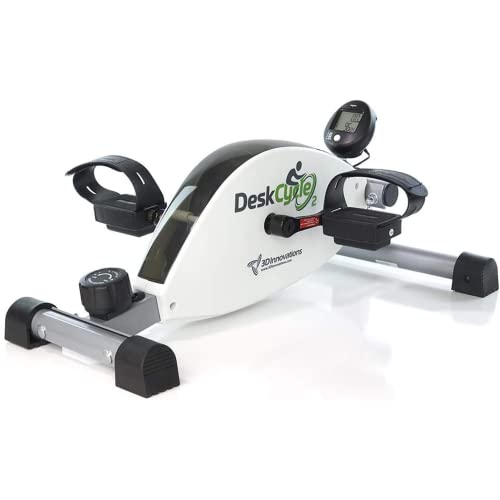
DeskCycle Under Desk Bike Pedal Exerciser - Stationary Bikes for Home & Office -
Low‑profile pedal exerciser with quiet magnetic mechanism
View Today's Price
Lifepro Portable Under Desk Elliptical Exercise Machine - Manual Pedal Exerciser
Eight resistance levels with smooth and silent motion
View Today's PriceHow to Choose the Right Compact Under‑Desk Ellipticals
Choosing the right compact under‑desk elliptical depends on portability, drive type, stride length, and your intended use—factors that interact based on your space, fitness goals, and body size. A feature perfect for a petite, mobile user may be completely wrong for a tall, stationary worker. Our recommendation engine evaluates your specific needs across five dimensions and matches you to the best-fit elliptical in under 60 seconds.
About this guide
Compact Under‑Desk Ellipticals
Why Picking an Under-Desk Elliptical Is Trickier Than It Looks
Choosing compact under desk ellipticals in 2026 is a balancing act between portability, durability, and actual workout benefit. Many shoppers assume all compact under desk ellipticals are similar, but the difference between a featherweight 5‑pound mini cycle and a 30‑pound, stay-put unit is massive. Lighter compact under desk ellipticals like the Wakeman Portable are easy to move but tend to slide around and wear out faster, while heavier picks such as the Exerpeutic 2000XL (over 40 lbs) offer rock-solid stability but are a pain to relocate. Manual-only compact under desk ellipticals require you to pedal every stride—great for active engagement, but not ideal if you want a passive, motor-assisted option for rehab or multitasking. Price tiers matter: budget compact under desk ellipticals like the Stamina InMotion E1000 ($149–$169) are tempting, but most develop squeaks and wobbles within a year. Premium compact under desk ellipticals like the Cubii Go ($299–$329) justify their cost with better build quality and app connectivity, but the calorie burn is still modest (30–60 calories/hour, not the 200+ some brands claim). Most buyers overlook stride length—anything under 14 inches can feel cramped if you’re over 5'10". It’s easy to get lured by slick marketing, but the wrong trade-off with compact under desk ellipticals means you’ll abandon the machine within months.
What Actually Sets Models Apart: Features That Matter
The real differentiators in compact under desk ellipticals are drive type, resistance range, tracking, and build. Skip motorized compact under desk ellipticals unless you specifically need passive movement for rehab; manual or hybrid compact under desk ellipticals like the j/fit Under Desk & Stand-Up Mini Elliptical offer more versatility for most users. Magnetic resistance, found on mid-range compact under desk ellipticals like the Sunny Health & Fitness SF-E3912, is smoother and quieter than friction-based systems, and makes a bigger difference than most realize—especially if you care about noise during Zoom calls. App connectivity, as seen on the Cubii Go, is only worth the premium if you’ll actually use the data; otherwise, a basic LCD readout on compact under desk ellipticals suffices. Don’t be fooled by calorie tracking: expert testing shows most compact under desk ellipticals overestimate by 20–40%. For standing or upper-body band use, only sturdier compact under desk ellipticals with reinforced frames will hold up—budget models wobble or tip under load. Stride length and pedal angle are more important than raw resistance levels if you want comfort for longer sessions on compact under desk ellipticals. In short, skip features you won’t use, and prioritize build quality and resistance smoothness over flashy displays when shopping for compact under desk ellipticals.
How to Choose: Matching Specs to Your Space, Goals, and Budget
Your ideal compact under desk ellipticals depend on how you’ll use them, your available space, and the level of intensity you want. If you plan to move compact under desk ellipticals often, prioritize models under 20 lbs, but be prepared for more sliding and less stability. For daily, stationary use, a heavier 25–45 lb compact under desk elliptical is worth the hassle of setup. Taller users (5'10"+) should check stride length—most compact under desk ellipticals max out at 12–16 inches, which can feel restrictive. If you want to stand or use resistance bands, only mid-range or premium compact under desk ellipticals are sturdy enough; budget picks like the Stamina InMotion E1000 are strictly for seated use. The quiz evaluates your needs across portability, tracking, use case, and intensity to match you to the right tier of compact under desk ellipticals. Don’t overpay for Bluetooth on compact under desk ellipticals if you’ll never sync your phone, but do factor in warranty length—1-year coverage often signals a short lifespan, while 3-year warranties (like on Cubii) reflect real durability. Finally, ignore marketing calorie claims and focus on comfort, quietness, and resistance adjustability in compact under desk ellipticals for long-term satisfaction.
Buyer's guide
How to choose
1Core Performance Criteria
- Check for magnetic resistance systems, as found in the Cubii Go and Sunny Health SF-E3912, for smoother and quieter operation during work hours.
- Look for at least 8 resistance levels if you want a range of intensity; budget models often max out at 3–5, limiting workout variety.
- Stride length is crucial—anything under 14 inches can feel cramped for users over 5'10", leading to awkward knee angles or discomfort.
- Manual models require constant pedaling effort, while motorized or hybrid machines can offer passive movement for rehab or multitasking.
- App connectivity is only valuable if you plan to track progress; otherwise, a basic LCD display showing time and strides is sufficient.
- Noise levels vary widely—watch real-world video reviews, as even mid-range models can squeak or rattle after several months of use.
2Build Quality and Durability
- Heavier machines (25–45 lbs), like the Exerpeutic 2000XL, offer greater stability and longevity, but can be difficult to move or store.
- Budget models such as the Stamina InMotion E1000 often develop squeaks and loose bolts within 6–12 months of regular use.
- Look for reinforced steel frames and non-slip endcaps to prevent wobbling, especially if you plan to stand or use resistance bands.
- Warranty length is a good durability signal—Cubii’s 3-year coverage suggests more confidence in build than the 1-year Stamina offers.
- User-replaceable parts, like pedals and tension knobs, extend the useful life of your elliptical and reduce maintenance headaches.
- Check for high-quality bearings and pedal mechanisms, as these are the first components to fail on cheaper or heavily-used machines.
3Value and Cost Analysis
- The $180–$220 range delivers the best durability-to-cost ratio, with most mid-range models lasting 2–3 years under regular use.
- Expect diminishing returns above $250 unless you need premium features like app integration or extra-sturdy construction.
- Budget units under $170 are tempting, but most develop mechanical issues or noise within a year, increasing total cost of ownership.
- Factor in the cost of accessories like anti-slip mats or lubricant spray, which may be essential for long-term quiet operation.
- Warranty coverage can offset higher upfront costs—longer warranties often mean fewer out-of-pocket repairs or replacements.
- Don’t be swayed by inflated calorie burn claims; actual energy expenditure is modest, so focus on comfort and reliability instead.
4Matching to Your Use Case
- If you’ll use the elliptical while standing or with resistance bands, choose a model specifically rated for that—most budget units are seated-only.
- For frequent relocation, prioritize models under 20 lbs with built-in handles, but expect more sliding and less stability during use.
- Taller users should seek out models with longer stride lengths or adjustable pedal angles to avoid knee strain and maximize comfort.
- If you want app-based tracking or guided workouts, only premium models like the Cubii Go offer reliable Bluetooth connectivity.
- For rehab or gentle movement, motorized or hybrid machines provide passive motion and lower resistance, ideal for injury recovery.
- If you’ll use the machine daily, invest in a mid-range or premium unit with proven long-term reliability and a multi-year warranty.
5Common Mistakes and Pitfalls
- Assuming all compact ellipticals are truly portable—many weigh 25–45 lbs and are awkward to store or move between rooms.
- Ignoring stride length and pedal angle, leading to discomfort or restricted movement, especially for users over 5'10".
- Overestimating calorie burn—expect 30–60 calories per hour at a comfortable pace, not the 200+ claimed by some brands.
- Neglecting to check warranty terms; many budget models have only 1-year coverage and show problems after 6–12 months.
- Failing to budget for anti-slip mats or lubricant, which are often required to keep the machine quiet and stable.
- Buying based on flashy displays or app features you’ll never use, instead of prioritizing resistance smoothness and build quality.
6Maintenance and Longevity
- Regularly check and tighten bolts every 2–3 months to prevent squeaking and wobbling, especially on budget and mid-range models.
- Apply silicone lubricant to pedal mechanisms every 6 months to reduce noise and extend the life of moving parts.
- Clean the machine weekly to prevent dust buildup, which can accelerate wear on bearings and resistance components.
- Store your elliptical on an anti-slip mat to protect floors and minimize vibration-induced hardware loosening.
- Replace worn pedals or tension knobs as soon as issues arise—delaying repairs can lead to more costly breakdowns.
- Monitor warranty expiration dates and contact the manufacturer promptly if you notice persistent mechanical or tracking issues.
FAQ
Frequently asked questions
Is app connectivity on under-desk ellipticals worth the extra cost?
App connectivity is only worth the premium if you’re motivated by tracking progress or want guided workouts. Models like the Cubii Go sync with Bluetooth apps for detailed stats, but most users find a basic LCD display sufficient. If you don’t plan to use the data regularly, save your money and opt for a simpler model with reliable resistance and build quality instead.
How does the Cubii Go compare to the Stamina InMotion E1000?
The Cubii Go ($299–$329) offers superior build quality, quieter magnetic resistance, and Bluetooth app integration, making it ideal for daily use. The Stamina InMotion E1000 ($149–$169) is a solid budget pick but tends to develop squeaks and loose bolts within a year. Choose Cubii Go for durability and tracking, or Stamina for occasional, light-duty use on a tight budget.
What stride length is best for taller users?
Taller users (5'10" and above) should look for under-desk ellipticals with at least a 14-inch stride length. Most models range from 12–16 inches, but anything under 14 inches often feels cramped and can cause awkward knee angles. Always check this spec before buying, as it’s rarely highlighted in marketing materials but makes a huge difference in comfort.
Do heavier under-desk ellipticals offer better stability?
Yes, heavier models (25–45 lbs) provide much better stability, especially during vigorous pedaling or standing use. The Exerpeutic 2000XL and Sunny Health & Fitness SF-E3912 are examples of stable, heavier units that stay put under your desk. Lightweight options are easier to move but tend to slide and feel less secure, especially on smooth floors.
How accurate are calorie and distance displays on these machines?
Most under-desk ellipticals, even premium models like the Cubii Go, overestimate calories and distance by 20–40%. These numbers are best used for rough tracking, not precise fitness metrics. If accurate data is important, consider using a separate fitness tracker or smartwatch to monitor your activity rather than relying solely on the machine’s display.
Which models are best for standing or upper-body workouts?
If you want to stand or use resistance bands, look for robust models like the j/fit Under Desk & Stand-Up Mini Elliptical or the Sunny Health & Fitness SF-E3912. These have reinforced frames and non-slip endcaps for stability. Budget models like the Stamina InMotion E1000 are not recommended for anything beyond seated use, as they can wobble or tip.
How long can I expect a mid-range elliptical to last with regular use?
Mid-range models in the $180–$220 range, such as the Sunny Health & Fitness SF-E3912, typically last 2–3 years with regular use if maintained properly. Regular tightening of bolts and occasional lubrication are key to longevity. Models with longer warranties, like the Cubii Go, may last even longer and provide better support if issues arise.
Best Compact Under‑Desk Ellipticals By Category
Related Guides
Adjustable Dumbbells
Weight range, adjustment speed, handle style, and space—get matched to adjustable dumbbells that fit your real training needs.
Bike Mats
Matched to your bike type, floor surface, noise needs, material preference, and budget for the perfect indoor cycling mat.
Bike Trainers
Matched to your riding style, noise tolerance, tech needs, and space—get a bike trainer that fits your real routine.
Cold Plunge Tubs
Insulation, chilling method, space, and budget—get matched to the cold plunge tub that fits your recovery style and setup.
Compact Home Gyms
Matched to your space, resistance needs, tech comfort, and how you actually want to train—no more guessing or wasted space.