Skip the research trap. Get your avalanche beacons & transceivers in 60 seconds.
We scored 300+ avalanche beacons & transceivers across 5 dimensions — answer 5 quick questions and we'll match you to YOUR best pick.
Powered by DecisionScore™
Each product is evaluated across 18 weighted criteria — covering performance, value, build quality, and real-world usability. Your quiz answers re-weight the criteria to match what matters most to you, so two people can get different #1 picks from the same data.
See the DecisionScore methodology →Find your perfect avalanche beacons & transceivers
5 quick questions. No quiz-takes-10-minutes trap. A personalized match from 28 scored picks — with clear reasoning for every recommendation.
What type of guidance system do you prefer?
The guidance system of an avalanche beacon can significantly impact ease of use during a rescue. Voice-guided systems can provide clear instructions, while digital displays offer visual cues. Choose based on your comfort level and the conditions you expect to encounter.
- Beginners benefit from beacons with minimal buttons and clear displays to reduce stress during rescues.
- Intermediate users can handle Bluetooth and multi-burial features with regular practice.
- Advanced users should seek models with analog mode and advanced search support for complex scenarios.
As an Amazon Associate and affiliate partner we earn from qualifying purchases. Links on this page may earn us a commission at no extra cost to you. Full disclosure
Not ready for the quiz? Here are our overall top picks
These are our top-rated picks overall. For a recommendation matched to YOUR specific needs,
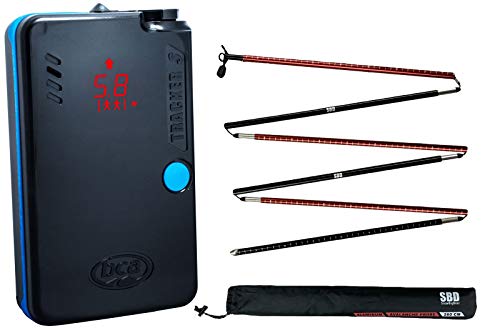
Backcountry Access Tracker S Avalanche Beacon + Avalanche Probe

BCA Backcountry Access T4 Turbo Avalanche Beacon Kit Rescue Package - Includes
Full rescue kit: Tracker 4 beacon, Stealth 300 probe, and Dozer 2H-S shovel
View Today's Price
BCA Backcountry Access Tracker S Avalanche Beacon Rescue Package
How to Choose the Right Avalanche Beacons & Transceivers
Choosing the right avalanche beacon depends on your experience level, rescue scenario needs, budget, and battery preference—trade-offs that shift with your group size and terrain. A feature that’s essential for a professional guide may be unnecessary (and confusing) for a recreational skier. Generic top-10 lists can’t account for how these factors interact in real rescue situations. Our recommendation engine evaluates your specific needs across five dimensions and matches you to the right beacon in under 60 seconds.
About this guide
Avalanche Beacons & Transceivers
The Real Buying Challenge: Trade-offs and Buyer Pitfalls
Choosing avalanche beacons in 2026 is far trickier than most realize. The stakes are life-or-death, but the differences between a $300 BCA Tracker S avalanche beacon and a $500 Mammut Barryvox S2 avalanche beacon aren’t just about price—they’re about how you’ll actually perform in a rescue. Entry-level avalanche beacons like the Tracker S excel at single-burial speed and simplicity, but lack advanced multiple-victim marking and Bluetooth firmware updates that some avalanche beacons now offer. Mid-range avalanche beacons such as the Arva Evo BT provide longer search ranges (70m+), app-based updates, and group check features, but may introduce complexity that can trip up beginners under stress. Premium avalanche beacons like the Mammut Barryvox S2 and Black Diamond Guide BT add pro-grade analog modes, haptic feedback, and extended range—features most recreational users never use, yet pay a steep premium for in avalanche beacons. Too many buyers focus on maximum range specs (80m vs. 60m) and ignore the critical importance of multi-victim marking and ease of use in avalanche beacons. The biggest mistake? Skipping hands-on practice and assuming any avalanche beacon will “just work” in a crisis. Don’t let price or feature lists blind you to what actually matters in the field when choosing avalanche beacons.
What Separates the Options: Specs and Features That Matter
Not all avalanche beacons are created equal, even among models that claim three antennas and digital processing. The real differentiators in avalanche beacons for 2026 are multi-burial handling, Bluetooth connectivity, search strip width, and interface design. For most users, a 70m digital range (found in the BCA Tracker S avalanche beacon and Arva Neo BT avalanche beacon) is more than enough—chasing 80m+ specs like the Mammut Barryvox S2 avalanche beacon is only worth it for guides or those in large groups using avalanche beacons professionally. Skip analog toggle features in avalanche beacons unless you’re a professional; they add bulk and complexity. Bluetooth for firmware updates and app-based training is a genuine advantage for ongoing reliability in avalanche beacons, but only if your phone is compatible—Pieps Micro BT avalanche beacon, for example, is notorious for Android pairing issues. Prioritize avalanche beacons with auto-revert-to-transmit (like the Barryvox S2 and Tracker S) for rescuer safety. Don’t get lured by ultralight avalanche beacons (e.g., Pieps Micro BT at 113g) unless you’re counting every gram for alpine missions. For most, intuitive controls and fast, reliable victim marking in avalanche beacons matter more than raw range or weight.
Decision Factors and How to Choose the Right Beacon
Your experience level, group size, and budget all interact to shape which avalanche beacon is actually right for you. Beginners are best served by avalanche beacons with a single-switch interface and clear displays—think BCA Tracker S avalanche beacon—while intermediate and advanced users may benefit from the extra range, group check, and multiple-burial suppression found in the Mammut Barryvox 2 avalanche beacon or Arva Evo BT avalanche beacon. If you travel with large groups or guide professionally, advanced features like analog toggle and haptic feedback (Barryvox S2 avalanche beacon, Black Diamond Guide BT avalanche beacon) become relevant, but they come at a premium in avalanche beacons. Budget is a real constraint: under $300 means sacrificing Bluetooth and pro-level multi-burial support in avalanche beacons, but you still get reliable 3-antenna performance. Battery type matters too: AAA batteries in avalanche beacons are field-replaceable and cold-proof, while rechargeables are lighter but risk running out mid-tour. Our quiz evaluates your skill level, rescue priorities, budget, battery preference, and Bluetooth needs to pinpoint the best avalanche beacon match. The key is to balance ease of use, must-have safety features, and the complexity you’ll actually use in avalanche beacons—not just what looks impressive on paper.
Buyer's guide
How to choose
1Core Performance Criteria
- Always choose a beacon with three antennas, as dual-antenna models lose up to 40% accuracy when searching on the move.
- Look for a digital search range of at least 60 meters; 70 meters is the sweet spot for most users, as seen in the BCA Tracker S.
- Multi-burial marking is more important than maximum range—BCA and Mammut models reliably mark three or more victims in under two minutes.
- Auto-revert-to-transmit is essential for rescuer safety, especially if you’re digging or exposed to secondary avalanches, as found in the Barryvox S2.
- A large, goggle-friendly display with clear direction and distance readouts speeds up fine search, especially under stress or in poor visibility.
- Bluetooth connectivity allows for firmware updates and app-based training, but only pay for it if you’ll actually use the features regularly.
2Build Quality and Durability
- Prioritize sturdy cases and reinforced battery compartments, as accidental drops are common—BCA and Mammut both score high in lab durability tests.
- Check that the holster fits securely over both slim layers and bulky jackets; Black Diamond Guide BT is notably bulkier and less adjustable.
- Water resistance is non-negotiable; look for IPX7 ratings or equivalent, especially if you ski in wet snow or spring conditions.
- Button quality matters: tactile, glove-friendly controls reduce accidental mode changes, a frequent complaint with the Tracker S in 2026 user reviews.
- Battery doors should be easy to open with gloves but lock securely—models with flimsy latches (notably some older Ortovox) risk popping open in a fall.
- Warranty length and customer support responsiveness vary; Mammut and BCA offer the most reliable post-purchase support in North America.
3Value Analysis and Price Tiers
- Entry-level beacons ($250–$350) like the BCA Tracker S deliver 95% of the performance most users need without pro-level extras.
- Mid-range models ($350–$400) add Bluetooth, group check, and better multi-burial handling—Arva Neo BT is a standout for value in this bracket.
- Premium options ($400–$500) justify their price only for guides or frequent group leaders; features like analog mode and haptic feedback are rarely used by recreational skiers.
- Prices have stabilized in 2026, with spring sales offering 15–20% discounts and Black Friday dropping prices by up to 25%.
- Resale value is strong—expect to recover 60–70% of your investment after two years if you buy a current-gen model.
- Avoid sub-$250 analog-only beacons; they consistently fail multi-burial tests and lack critical safety features found in modern digital models.
4Use-Case Fit and Scenario Matching
- Beginners should prioritize simple, intuitive beacons like the BCA Tracker S, which minimizes stress-induced errors during real rescues.
- Intermediate users benefit from Bluetooth-enabled models for firmware updates and training, such as the Arva Evo BT or Mammut Barryvox 2.
- Guides and patrollers need advanced features: analog toggle, extended range, and haptic feedback—only found in premium picks like the Barryvox S2.
- If you travel light (alpine, ski mountaineering), ultralight models like the Pieps Micro BT (113g) are worth the premium.
- Large groups or high-traffic zones require beacons with robust multi-burial marking and group check modes—Arva Neo BT and Mammut Barryvox excel here.
- Snowmobilers or splitboarders should check holster fit and durability, as bulkier jackets and frequent impacts can dislodge less-secure models.
5Common Mistakes and Buyer Pitfalls
- Many buyers chase maximum range specs but ignore multi-victim marking—real-world tests show this is a critical error for group safety.
- Failing to test Bluetooth compatibility with your own phone leads to frustration; Pieps and Black Diamond are especially picky with Android devices.
- Buying a beacon without a practice kit or holster means you’re less likely to train, which directly impacts survival odds in a real avalanche.
- Assuming all three-antenna beacons perform equally is risky—motion accuracy and fine search drift vary significantly between brands.
- Ignoring battery type and cold-weather performance can leave you stranded; AAA-powered models like the Tracker S hold up best in -10°C conditions.
- Overlooking holster fit leads to accidental mode switches or lost devices—always check that the strap system works with your outerwear.
6Maintenance and Longevity
- Replace batteries before every trip—AAA cells degrade in cold, and premium models like the Barryvox S2 alert you at 50% charge.
- Update firmware regularly if your beacon supports Bluetooth; outdated software can cause search or marking glitches, as seen in 2026 field reports.
- Inspect holsters and straps for wear each season, as frayed webbing or loose buckles are a leading cause of lost beacons.
- Store beacons in a cool, dry place and remove batteries in the off-season to prevent corrosion and extend device life.
- Test all functions—including group check and flagging—before heading out, not just transmit/receive; 20% of failures are due to overlooked secondary features.
- Plan for a replacement cycle every 5–7 years, as advances in signal processing and safety features make older models obsolete for group use.
FAQ
Frequently asked questions
Is it worth paying extra for Bluetooth connectivity in avalanche beacons?
Bluetooth connectivity is worth the premium if you plan to update firmware regularly or use app-based training tools. Models like the Arva Evo BT and Mammut Barryvox 2 allow over-the-air updates and practice scenarios, keeping your beacon current and your skills sharp. However, if you rarely update devices or practice only in-person, you can safely skip this feature and save $50–$100. Always check phone compatibility first, as some beacons have limited Android support.
How does the BCA Tracker S compare to the Mammut Barryvox S2?
The BCA Tracker S is a top pick for simplicity, offering a 70m digital range, intuitive controls, and reliable single or dual victim marking. It's ideal for beginners or those prioritizing speed under stress. The Mammut Barryvox S2, at a higher price, adds an 80m range, analog mode, haptic feedback, and best-in-class multi-burial performance. Guides and advanced users benefit most from the S2’s pro features, but most recreational users will be fully served by the Tracker S.
What search range do I need for backcountry skiing?
For most backcountry skiing, a digital search range of 60–70 meters is sufficient. Models like the BCA Tracker S and Arva Neo BT hit this sweet spot, enabling fast signal acquisition in realistic terrain. Only guides or those in very large groups benefit from 80m+ ranges, as found in the Mammut Barryvox S2. Chasing maximum range is less important than ensuring your beacon has reliable multi-burial marking and a clear, intuitive display.
Are ultralight avalanche beacons like the Pieps Micro BT worth it?
Ultralight beacons such as the Pieps Micro BT (113g) are worth considering if you’re a weight-conscious alpinist or ski mountaineer. They save 50–80g over standard models and pack easily, but typically have a shorter range (50m) and can be more finicky to operate with gloves. For most recreational users, the weight savings aren’t significant enough to justify the trade-offs in range and interface simplicity. Only prioritize ultralight if every gram matters in your kit.
How do I avoid Bluetooth pairing issues with avalanche beacons?
To avoid Bluetooth pairing headaches, always check the manufacturer’s compatibility list before buying. Pieps and Black Diamond beacons are known to have issues with certain Android phones, leading to failed firmware updates or bricked app functions. Test pairing immediately after purchase, and update firmware only on a fully charged device. If you rely on Bluetooth features, stick to brands like Mammut or Arva, which have better cross-platform support in 2026.
What battery type is best for cold-weather avalanche rescue?
AAA alkaline or lithium batteries remain the gold standard for avalanche beacons in cold weather, as they’re field-replaceable and maintain charge better below -10°C. Rechargeable USB models are lighter and more eco-friendly, but risk running out of power on multi-day trips without easy recharging. For reliability in harsh conditions, choose a beacon like the BCA Tracker S or Mammut Barryvox S2 that uses standard AAA cells and alerts you to low battery before each outing.
Do I need a premium beacon for recreational use, or is mid-range enough?
For most recreational users, a mid-range beacon ($300–$400) like the Arva Evo BT or BCA Tracker S is more than adequate. These models offer 70m+ range, Bluetooth updates, and reliable multi-burial handling. Premium beacons such as the Mammut Barryvox S2 or Black Diamond Guide BT are only necessary for guides, patrollers, or those consistently leading large groups. Unless you need analog mode or haptic feedback, save your money and invest in training instead.
Best Avalanche Beacons & Transceivers By Category
Related Guides
Advanced Telescopes
Aperture, mount type, portability, and setup—matched to your observing goals and real-life constraints in seconds.
Backyard Playground Sets
Play features, yard size, age range, and installation—get matched to a backyard playground set that truly fits your family.
Backyard Trampolines
We match trampolines to your jumpers’ ages, bounce style, yard size, safety needs, and budget—no more guessing or risky shortcuts.
Bike Lights
Matched to your commute, riding environment, brightness needs, charging style, and budget—get the right bike light for your safety.