Skip the research trap. Get your digital audio mixers in 60 seconds.
We scored 250+ digital audio mixers across 5 dimensions — answer 5 quick questions and we'll match you to YOUR best pick.

Powered by DecisionScore™
Each product is evaluated across 18 weighted criteria — covering performance, value, build quality, and real-world usability. Your quiz answers re-weight the criteria to match what matters most to you, so two people can get different #1 picks from the same data.
See the DecisionScore methodology →- Stagebox‑style digital mixer with 18 inputs and 6 outputs
- Smart Gain and Feedback Assistants for automatic setup
- App‑controlled mixing via iOS/Android with no physical faders
Find your perfect digital audio mixers
5 quick questions. No quiz-takes-10-minutes trap. A personalized match from 23 scored picks — with clear reasoning for every recommendation.
What is your preferred brand for a digital audio mixer?
Brand preference can significantly impact your satisfaction with a product, as different brands offer varying levels of quality, support, and features. Some users may prefer brands they have previously used or those known for specific strengths.
- Count microphones, instruments, and any stereo sources to estimate your true input needs.
- Drum kits alone can use 5–8 channels—plan for growth if you play with full bands.
- Extra channels allow for future expansion, guest musicians, or backing tracks.
As an Amazon Associate and affiliate partner we earn from qualifying purchases. Links on this page may earn us a commission at no extra cost to you. Full disclosure
Not ready for the quiz? Here are our overall top picks
These are our top-rated picks overall. For a recommendation matched to YOUR specific needs,
Allen & Heath CQ-18T Digital Mixer with 7" Touchscreen WiFi and Bluetooth
Stagebox‑style digital mixer with 18 inputs and 6 outputs
View Today's Price
Gator Cases ATA-Style Flight Case for QSC TouchMix-30 Pro 32-channel Touchscreen
32 mixing channels with 24 mic/line inputs and six line inputs
View Today's Price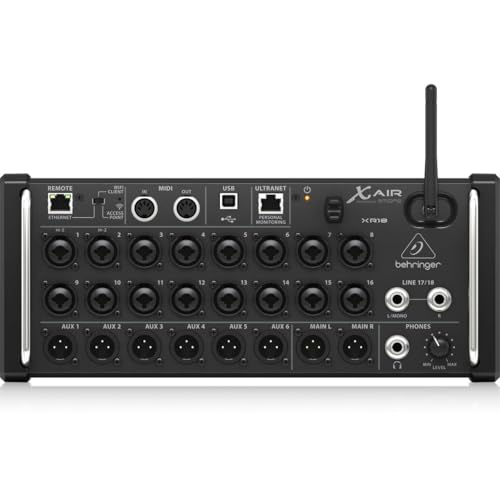
Behringer X AIR XR18 18-Channel, 12-Bus Digital Mixer for iPad/Android Tablets
18‑input digital mixer with 16 Midas preamps and integrated Wi‑Fi
View Today's PriceHow to Choose the Right Digital Audio Mixers
Choosing the right digital audio mixer depends on how many channels you need, your preferred recording workflow, control style, and your experience with digital mixing—factors that all interact in surprising ways. A feature that’s perfect for a solo podcaster can be a dealbreaker for a gigging band, and vice versa. Our recommendation engine weighs your specific needs across five dimensions and matches you to the ideal mixer in under 60 seconds.
About this guide
Digital Audio Mixers
Why Digital Mixer Decisions Are So Tricky
Choosing digital audio mixers in 2026 is a balancing act between channel count, recording features, portability, and future-proofing. Many buyers underestimate how quickly their input needs grow—what seems like overkill today (say, 16-channel digital audio mixers) becomes essential when adding a few more mics or instruments. Entry-level digital audio mixers with 6–12 channels and built-in recording (like those aimed at podcasters) are tempting for solo acts, but small bands quickly run into routing limitations with these digital audio mixers. Once you step up to 12–24 channel digital audio mixers, you enter the $1,000–$1,500 range, where models like the Behringer X32 Compact or QSC TouchMix-16 offer multitrack USB recording, app control, and effects. However, most buyers overlook critical trade-offs: budget digital audio mixers may have noisy preamps or unreliable app connectivity, while premium digital audio mixers like the SSL Big SiX ($3,000) deliver pristine sound but are overkill for most. Many assume more channels on digital audio mixers always mean better value, but unused inputs add cost and complexity. The biggest mistake with digital audio mixers? Ignoring how your needs might change—upgrading digital audio mixers later is rarely seamless.
What Actually Sets Mixers Apart
The real differentiators among digital audio mixers are the quality of preamps, onboard DSP, control interface, and expandability. Brands like Yamaha, PreSonus, and QSC consistently deliver reliable performance in digital audio mixers, with the Yamaha TF1 standing out for its motorized faders and touchscreen workflow—ideal for bands needing fast scene recall on digital audio mixers. Behringer’s X32 Compact is a value leader among digital audio mixers, but you’ll notice more app glitches and WiFi dropouts compared to QSC’s TouchMix-16, which excels in wireless stability and intuitive touchscreen control for digital audio mixers. Skip the SSL Big SiX unless you specifically want analog warmth and top-tier preamps for studio work; for most live or hybrid setups, the digital flexibility of digital audio mixers trumps analog purity. DSP effects in digital audio mixers matter more than most buyers realize—built-in EQ, compression, and reverb can make or break a mix, especially for small venues or streaming with digital audio mixers. Don’t get distracted by channel count alone; prioritize USB recording compatibility, app control reliability, and whether you’ll need Dante or AES67 networking for future-proofing your digital audio mixers. If you don’t plan to expand, modular digital audio mixers add unnecessary cost.
How to Match Features to Your Workflow
Your ideal digital audio mixers depend on how input needs, recording style, and control preferences interact—these factors shape everything from price to daily usability with digital audio mixers. For example, a solo performer might value compact hybrid digital audio mixers with built-in SD recording, while a small band needs at least 12–16 channel digital audio mixers, monitor sends, and a robust USB interface. If you plan to record live shows directly, look for digital audio mixers with built-in multitrack recorders; if you’re DAW-centric, interface-only digital audio mixers suffice. Portability and form factor also matter: rackmount and stagebox digital audio mixers save space but require comfort with app-based mixing, which can be daunting for beginners. Advanced features like motorized faders or remote control are significant upgrades for complex gigs on digital audio mixers but add cost and learning curve. Our quiz weighs your channel needs, recording workflow, control style, and experience level to pinpoint the best digital audio mixers for your setup. Ultimately, think about how your digital audio mixers might evolve—choosing digital audio mixers that are too basic or too advanced will either bottleneck your creativity or overwhelm you with unused features.
Buyer's guide
How to choose
1Core Performance Criteria
- Always match your mixer’s input channel count to your largest foreseeable setup—aim for at least 20% headroom beyond your current needs.
- Prioritize mixers with high-quality preamps; entry-level Behringer and PreSonus models can introduce hiss at high gain, especially for quiet sources.
- Look for true multitrack USB recording if you plan to capture live shows or studio sessions without external gear.
- DSP effects and onboard EQ are essential for live sound polish—QSC TouchMix-16 and Yamaha TF1 offer flexible processing that outperforms basic models.
- App control reliability varies; QSC’s wireless apps are more stable than Behringer’s, which can suffer from WiFi dropouts during live events.
- Check for low-latency monitoring and direct output routing if you’ll use the mixer as a DAW interface for overdubbing or hybrid workflows.
2Build Quality and Durability
- Metal chassis and solid fader construction, as found in Yamaha TF1 and SSL Big SiX, withstand years of gigging better than plastic-bodied budget mixers.
- Behringer X32 faders can show wear after one to two years of heavy use; invest in higher-end models if reliability is mission-critical.
- Touchscreen interfaces like QSC TouchMix-16 are convenient but prone to scratches—always use a screen protector and case for transport.
- Check for universal power supplies (100–240V) if you plan to travel internationally; some US-market models lack this flexibility.
- Avoid ultra-budget Chinese brands under $800, as reliability issues and poor component quality are common in long-term use.
- Look for dust covers and rackmount options to protect your investment in studio or live environments.
3Value and Price Analysis
- The $1,000–$1,500 range offers the best balance of features, reliability, and expandability for most users—think Behringer X32 Compact or QSC TouchMix-16.
- Premium models like SSL Big SiX and Yamaha TF1 cost $2,000–$3,000 but deliver superior preamps, automation, and build for demanding pro use.
- Used and refurbished mixers can save 5–10%, but always check for fader wear, dead pixels, and software update eligibility before buying.
- Entry-level mixers under $800 often lack robust DSP, have noisier preamps, and limited routing—these are best for small podcast or solo setups only.
- Ignore “producer” variants unless you need advanced effects routing; the full X32 Compact is a better long-term investment than the X32 Producer.
- Factor in the cost of accessories—XLR cables, cases, and WiFi routers can add $100–$300 to your total spend.
4Use-Case Fit and Workflow
- Solo performers and podcasters thrive with 6–12 channel mixers featuring built-in SD recording and simple headphone mixes.
- Small bands and hybrid studios need at least 12–24 inputs, multiple monitor sends, and reliable USB DAW integration for live and recording flexibility.
- Large ensembles, theaters, and touring acts require 25+ channels, advanced bus routing, and powerful DSP engines for complex mixes.
- If you prioritize portability, rackmount or stagebox mixers with app control (like QSC TouchMix-16) are easier to transport but require confidence with remote mixing.
- Physical consoles with motorized faders (Yamaha TF1) are best for users who value tactile control and fast scene recall during performances.
- Hybrid/podcast units combine mixing, effects, and recording in a compact footprint—ideal for content creators with limited space.
5Common Mistakes and Pitfalls
- Underestimating future channel needs leads to early obsolescence—always buy with at least 20% more inputs than you currently require.
- Assuming all USB interfaces are plug-and-play; Behringer X32 requires driver tweaks on Mac, while others offer true class compliance.
- Ignoring app reliability—unstable WiFi or buggy remote control can ruin a live show if you rely solely on touchscreen mixing.
- Choosing analog-style workflow for digital-heavy setups adds unnecessary complexity and limits recall and automation capabilities.
- Overpaying for features like Dante networking or modular expansion when your use case doesn’t require them wastes budget.
- Neglecting build quality—cheap faders and screens wear out quickly, especially on road gigs or in high-use venues.
6Maintenance and Longevity
- Regularly update mixer firmware to maintain compatibility with new DAWs and improve stability—manufacturers like Yamaha and QSC provide frequent updates.
- Clean faders and rotary encoders with compressed air to prevent dust buildup, which can cause crackling or erratic behavior over time.
- Store mixers in padded cases or racks to protect against knocks, spills, and temperature swings that can damage sensitive electronics.
- Replace worn fader caps and knobs promptly; generic replacements are inexpensive and prevent further wear on internal components.
- Check for available replacement parts before buying—brands like Behringer and Yamaha offer better long-term support than lesser-known imports.
- Back up your mixer’s scenes and settings to USB or cloud regularly to avoid losing critical presets during firmware updates or hardware failures.
FAQ
Frequently asked questions
Is it worth paying extra for motorized faders and automation?
Motorized faders and scene automation, as found on mixers like the Yamaha TF1, are absolutely worth the premium if you manage complex shows, need fast recall, or work with multiple bands. For simple podcasting or solo gigs, these features add cost and complexity without much benefit. If you regularly need to switch mixes or recall detailed settings, automation saves huge amounts of time and reduces errors. For most home studios, though, manual faders suffice.
How does the Behringer X32 Compact compare to the QSC TouchMix-16?
The Behringer X32 Compact offers more physical faders and deeper routing, making it ideal for users who want hands-on control. However, its app control is less reliable than the QSC TouchMix-16, which excels in wireless stability and touchscreen usability. The TouchMix-16 is more portable and intuitive for beginners, while the X32 Compact is better suited for users who need extensive effects routing and are comfortable with a steeper learning curve.
What channel count do I need for a small band with drums and vocals?
For a small band with drums, vocals, guitar, and keys, you’ll need at least 12–16 input channels. Drums alone can use 5–8 channels, and adding multiple vocal mics, instruments, and possible backing tracks quickly fills up a 12-channel mixer. Opt for a 16-channel model like the PreSonus StudioLive AR16c or QSC TouchMix-16 to ensure enough headroom for future expansion and separate monitor mixes.
Are built-in DSP effects necessary for live streaming or podcasting?
Built-in DSP effects like EQ, compression, and reverb are essential for live streaming and podcasting. They let you polish your sound without extra gear or software, ensuring consistent audio quality. Models like the QSC TouchMix-16 and Yamaha TF1 offer flexible onboard processing that can dramatically improve vocal clarity and reduce background noise. Skipping DSP to save money often leads to flat or noisy mixes, especially in untreated rooms.
How reliable are budget digital mixers under $800?
Budget digital mixers under $800, especially from lesser-known brands, often compromise on preamp quality, durability, and software support. Behringer’s entry-level models offer good value but can develop fader issues and app glitches after a year or two. For occasional home use or podcasting, they’re serviceable, but for regular gigging or mission-critical recording, it’s worth saving for a $1,000+ model from a reputable brand like QSC or Yamaha.
Can I use a digital mixer as my main audio interface for studio recording?
Yes, many digital mixers double as multi-channel audio interfaces. Models like the Behringer X32 Compact and PreSonus StudioLive AR16c offer 16–32 channel USB connectivity for direct DAW recording. Check for class-compliant USB (especially on Mac), low-latency monitoring, and driver support. Some mixers require driver installation or firmware updates for full compatibility, so always verify with your DAW and operating system before purchase.
Does the SSL Big SiX justify its high price for home studios?
The SSL Big SiX commands a premium due to its SuperAnalogue preamps, classic bus compressor, and hybrid analog/digital workflow. For most home studios, this level of sonic purity and hardware is overkill unless you specifically want SSL’s signature sound or plan to do high-end mixing and mastering. For typical podcasting, streaming, or small band work, a $1,000–$1,500 digital mixer offers 90% of the functionality at a fraction of the price.
Best Digital Audio Mixers By Category
Related Guides
Advanced Portable Field Recorders
Matched to your workflow, input needs, portability, and feature priorities—get a recorder that fits your real-world recording style.
Bookshelf Speakers
Room size, amp setup, sound signature, and features—get bookshelf speakers tailored to your space and listening style.
Gaming Headsets
Matched to your device, sound style, connection, mic needs, and must-have extras—get a headset that actually fits your gaming life.
Noise Cancelling Headphones
We match you to headphones based on comfort, ANC strength, battery life, sound profile, and your real-world listening needs.