Skip the research trap. Get your power stations in 60 seconds.
We scored 300+ power stations across 5 dimensions — answer 5 quick questions and we'll match you to YOUR best pick.

Powered by DecisionScore™
Each product is evaluated across 18 weighted criteria — covering performance, value, build quality, and real-world usability. Your quiz answers re-weight the criteria to match what matters most to you, so two people can get different #1 picks from the same data.
See the DecisionScore methodology →- 256Wh LiFePO4, 300W pure sine wave AC output
- 6.8 lbs – among the lightest LFP stations available
- OGG top mobility score alongside Jackery 300
Find your perfect power stations
5 quick questions. No quiz-takes-10-minutes trap. A personalized match from 26 scored picks — with clear reasoning for every recommendation.
What is the battery capacity range you are looking for?
Battery capacity determines how long the power station can supply energy before needing a recharge. Larger capacities are ideal for extended use or powering multiple devices.
- Think about the largest device you’ll need to power—home backup requires much more than charging phones at a festival.
- If you camp or travel often, portability and weight matter more than maximum output.
- Jobsite or power tool users should prioritize surge output and robust build quality over compact size.
As an Amazon Associate and affiliate partner we earn from qualifying purchases. Links on this page may earn us a commission at no extra cost to you. Full disclosure
Not ready for the quiz? Here are our overall top picks
These are our top-rated picks overall. For a recommendation matched to YOUR specific needs,
Anker 521 Portable Power Station Upgraded with LiFePO4 Battery, 256Wh 6-Port
256Wh LiFePO4, 300W pure sine wave AC output
View Today's Price
Anker SOLIX C1000 Portable Power Station(Black Version ), 1800W (Peak 2400W)
1,056Wh LiFePO4, 1,800W AC output (2,400W SurgePad)
View Today's Price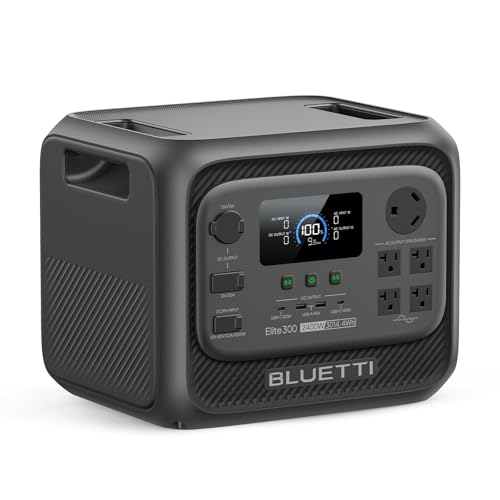
BLUETTI Elite 300 Portable Power Station, 3014Wh LiFePO4 Battery Backup for Home
537Wh LiFePO4, 700W AC output (1,400W surge)
View Today's PriceHow to Choose the Right Power Stations
Choosing the right portable power station depends on capacity, output, battery chemistry, charging options, and budget—factors that interact based on your specific use case and power needs. A feature that’s essential for home backup could be wasted weight for a camper, while solar compatibility is crucial for some but irrelevant for others. Generic top-10 lists can’t account for these trade-offs. Our recommendation engine evaluates your unique requirements across five dimensions and matches you to the best-fit power station in under 60 seconds.
About this guide
Power Stations
Why Buying the Right Portable Power Station Is Tricky
Choosing the right portable power station in 2026 is more complex than most people realize. The market is flooded with power stations ranging from $100 compact units to $600 home-backup beasts, but the real challenge is matching the capacity and output of power stations to your needs. A 300Wh power station seems cheap and portable, but it won’t run a CPAP or mini-fridge overnight—most buyers underestimate how quickly devices drain these power stations. On the flip side, spending $500+ on a 2,000Wh power station is overkill for festival-goers who just want to charge phones and laptops. The two specs you can’t ignore with power stations are capacity (Wh) and output (W): get these wrong, and you’ll either run out of juice or pay for power you never use. Many buyers also overlook battery chemistry in power stations—LiFePO4 is now standard even at $200, and it outlasts old lithium-ion by a factor of six. The most common mistake with power stations? Focusing on flashy features instead of real-world performance and longevity. Brands like Jackery, EcoFlow, Anker SOLIX, and Bluetti all offer solid power stations, but each has its own trade-offs between price, speed, and expandability.
What Actually Sets Power Stations Apart in 2026
Not all portable power stations are created equal—even at similar price points. The biggest differentiator among power stations is battery chemistry: LiFePO4 (lithium iron phosphate) is now the gold standard, delivering 3,000–4,000+ charge cycles and 10+ years of use, while older lithium-ion power stations top out at 500 cycles and are best left for rare, lightweight use. Fast charging is another significant upgrade—look for power stations that hit 80% in under an hour via AC, like the EcoFlow RIVER 2 Pro or Anker PowerHouse 521. Solar compatibility is a must for off-grid users; top power stations accept 400–600W solar input, but many budget power stations under $200 can’t handle more than 100W or skip solar entirely. Jackery and Bluetti lead on reliability and real-world testing for power stations, while EcoFlow dominates on fast charging and modular expandability. Skip lithium-ion power stations unless you’re chasing the lowest weight or price, and don’t get seduced by wireless charging pads or app controls unless you’ll actually use them. Capacity matters more than output wattage for most power stations—don’t buy a 1,000W inverter if your power station battery is only 300Wh.
How to Choose: Decision Factors and Trade-Offs
Capacity, output, battery chemistry, and charging options all interact in ways that can make or break your experience with power stations. For example, a 1,000Wh LiFePO4 power station is ideal for home backup or RV use, but it’s heavy and overkill for backpackers who only need 300Wh from their power stations. Budget is a real constraint: under $200, you’ll get 200–300Wh power stations with limited solar input; $200–$400 opens up 500–1,000Wh LiFePO4 power stations with fast charging; $400–$600 gets you 1,000Wh+ power stations and premium features. Solar input matters if you want off-grid flexibility from your power station, but it adds cost and weight. Our quiz weighs your use case, desired capacity, battery preference, solar needs, and budget to pinpoint the best power station match. The key is to balance long-term value (LiFePO4, fast charging) with the features you’ll actually use—don’t pay for 600W solar input on power stations if you’ll never camp off-grid, and don’t skimp on capacity if you need reliable backup from power stations for medical devices or appliances.
Buyer's guide
How to choose
1Core Performance Criteria
- Capacity, measured in watt-hours (Wh), directly determines how long you can power devices—300Wh is fine for phones, but 1,000Wh is needed for appliances.
- Output wattage (W) must match or exceed your highest-draw device; a 500W station won’t run a 700W blender, even briefly.
- Look for fast-charging capability—stations like EcoFlow RIVER 2 Pro recharge in under 1 hour, which is a major real-world advantage.
- Solar input rating is critical for off-grid use; top models accept 400–600W, while budget units may only allow 100W or none at all.
- Check for pure sine wave AC output if you’ll run sensitive electronics, as modified sine wave can damage laptops or medical gear.
- Port selection matters: prioritize multiple USB-C, AC, and DC outputs for flexibility, not just total wattage.
2Build Quality and Durability
- LiFePO4 batteries, now standard above $200, offer 3,000–4,000+ cycles—expect 10+ years of use versus 2–3 years for old lithium-ion.
- Brands like Jackery, Bluetti, and Anker SOLIX have proven reliability, with robust cases and well-tested electronics that survive real-world abuse.
- Check for reinforced handles and impact-resistant corners if you’ll transport the station frequently or use it outdoors.
- Ingress protection (IP rating) is rare but valuable for camping; some models offer splash resistance, but most must be kept dry.
- Warranty length is a good durability signal—EcoFlow and Bluetti offer 3–5 years on LiFePO4 models, while budget brands may only give 12 months.
- Avoid stations with visible seams or cheap plastic—these tend to crack or warp after a few hot/cold cycles.
3Value Analysis
- The $200–$400 range is the current sweet spot for 500–1,000Wh LiFePO4 stations with fast charging and solid port selection.
- Entry-level units under $200 sacrifice capacity and often skip solar input or fast charging—fine for emergencies, but not daily use.
- Premium models ($400–$600) deliver 1,000Wh+, rapid recharge, and advanced features, but are overkill for most unless you need home backup.
- Watch for bundled deals on solar panels—sometimes the combined price is lower than buying separately, especially from EcoFlow or Bluetti.
- Don’t overpay for app controls or wireless charging pads unless you’ll use them regularly; these features rarely justify a $50+ premium.
- LiFePO4 chemistry is now available at budget prices, so skip older lithium-ion unless weight is your absolute top priority.
4Use-Case Fit
- For camping and festivals, prioritize portability (under 10 lbs) and 300–500Wh capacity—Jackery Explorer 300 or Anker PowerHouse 521 are strong fits.
- Home backup or RV users should target 1,000Wh+ and 800W+ output, with expandable options like EcoFlow RIVER 2 Pro or Bluetti EB70S.
- Medical device users (CPAP, oxygen) need pure sine wave AC and at least 500Wh to ensure overnight reliability.
- Jobsite or power tool users should check surge output ratings—EcoFlow’s X-Boost tech allows running tools above the rated continuous wattage.
- If you want true off-grid capability, solar input of 400W+ is essential for same-day recharging; budget units often can’t keep up.
- For car and road trips, compact designs with car charging and pass-through power are more valuable than maximum capacity.
5Common Mistakes and Pitfalls
- Underestimating power needs is the #1 mistake—calculate device wattage and runtime, then add 20% margin for safety.
- Assuming all lithium batteries are equal—LiFePO4 lasts six times longer than standard lithium-ion, which is now outdated for frequent use.
- Ignoring recharge time—some budget models take 6–8 hours to recharge, which is painful during emergencies or multi-day trips.
- Overpaying for features like Bluetooth apps or wireless charging that sound cool but add little real-world value.
- Buying on brand alone—Jackery, EcoFlow, Anker, and Bluetti all have strengths, but model specs vary widely even within the same brand.
- Skipping solar compatibility if you ever plan to camp or go off-grid—retrofitting later is expensive or impossible.
6Maintenance and Longevity
- LiFePO4 batteries require minimal maintenance—just recharge every 3–6 months if stored, and avoid leaving them fully depleted.
- Store stations in a cool, dry place; heat accelerates battery aging, and cold can temporarily reduce output.
- Check firmware updates if your station has app connectivity—EcoFlow and Bluetti frequently release improvements for charging and safety.
- Clean ports and fans regularly to prevent dust buildup, especially if you use the station outdoors or on jobsites.
- Test your station monthly by running a real load—don’t wait until an emergency to discover a dead battery or faulty inverter.
- Replace worn cables and adapters promptly; cheap cords can cause overheating or unreliable charging, especially with high-output models.
FAQ
Frequently asked questions
Is it worth paying extra for LiFePO4 batteries over standard lithium-ion?
Absolutely—LiFePO4 batteries deliver 3,000–4,000+ charge cycles, translating to over 10 years of regular use. Standard lithium-ion batteries typically last only 500 cycles, so you’ll need to replace those units far sooner. In 2026, even $200–$300 power stations from brands like Anker and EcoFlow use LiFePO4, making the upgrade a no-brainer for anyone who plans to use their station regularly. Only choose lithium-ion if you need the lightest possible weight or are on a strict budget.
How does EcoFlow compare to Jackery for portable power stations?
EcoFlow leads on fast charging and modular expandability—its RIVER 2 Pro can recharge in under 70 minutes and supports higher solar input. Jackery, meanwhile, is renowned for reliability and ease of use, with robust cases and simple controls. Both offer LiFePO4 batteries in 2026, but EcoFlow’s app features and advanced port selection give it an edge for tech-savvy users. For pure plug-and-play reliability, Jackery remains a top pick, especially for camping.
What capacity portable power station do I need for camping?
For most camping trips, a 300–500Wh station is ideal. This range covers charging phones, tablets, cameras, and running LED lights for several nights. If you want to power a mini-fridge or CPAP, step up to 700–1,000Wh. Brands like Anker PowerHouse 521 (256Wh) are great for ultralight trips, while Jackery Explorer 500 (518Wh) provides more versatility. Always calculate your expected watt-hour needs and add a 20% buffer for safety.
Is fast charging really necessary for a power station?
If you rely on your power station for emergencies, road trips, or frequent use, fast charging is a huge advantage. Models like EcoFlow RIVER 2 Pro and Anker SOLIX can recharge in under an hour, meaning less downtime and more flexibility. Older or budget models may take 6–8 hours to fully recharge, which can be a real problem during power outages or back-to-back camping days. For most users, fast charging is well worth the small premium.
Can I use a portable power station as a home backup during outages?
Yes, but you’ll need at least 1,000Wh capacity and 800W+ output to run essentials like a fridge, WiFi, and lights for several hours. Models like EcoFlow RIVER 2 Pro and Bluetti EB70S fit this use case. For whole-home backup, look for expandable systems above 2,000Wh, but these cost more and are heavier. Always check your appliances’ wattage and estimate runtime before relying on a portable station for home emergencies.
How important is solar charging compatibility?
Solar charging is essential if you want true off-grid capability or plan to use your station for extended periods away from wall power. Top models from EcoFlow and Bluetti accept 400–600W solar input, enabling same-day recharging. Most budget units under $200 have limited or no solar input, so factor this into your decision. If you only need backup for short outages, solar may not be necessary, but for camping or RV use, it’s a must-have feature.
Are Anker SOLIX power stations reliable for long-term use?
Anker SOLIX power stations have earned a reputation for reliability and durability, especially since switching to LiFePO4 batteries in their 2026 lineup. The PowerHouse 521, for example, offers 3,000+ charge cycles and robust build quality in a lightweight package. Anker’s warranty and customer support are also strong, making them a safe choice for both casual and regular users. For those prioritizing longevity and portability, Anker SOLIX is a standout brand.
Related reading
Best Power Stations By Category
Related Guides
Extra Batteries
Battery size, device type, chemistry, pack count, and budget—get matched to the best extra batteries for your real-world needs.
Portable Car Jump Starters
Engine size, feature extras, portability, and charging tech—get matched to the jump starter that actually fits your car and lifestyle.
Portable Generators
Power needs, fuel type, portability, and safety—get matched to the best generator for your backup, camping, or job site use.
Portable Power Stations
Matched to your power needs, runtime priorities, battery type, solar charging, and expandability—no more guessing or generic lists.