Skip the research trap. Get your luxury coffee makers in 60 seconds.
We scored 200+ luxury coffee makers across 5 dimensions — answer 5 quick questions and we'll match you to YOUR best pick.

Powered by DecisionScore™
Each product is evaluated across 18 weighted criteria — covering performance, value, build quality, and real-world usability. Your quiz answers re-weight the criteria to match what matters most to you, so two people can get different #1 picks from the same data.
See the DecisionScore methodology →Find your perfect luxury coffee makers
5 quick questions. No quiz-takes-10-minutes trap. A personalized match from 20 scored picks — with clear reasoning for every recommendation.
What style of coffee making do you prefer?
Do you want simple drip coffee, pods, manual espresso using a portafilter, semi‑automatic machines that automate some steps or fully automatic bean‑to‑cup machines? The more automated the machine, the less hands‑on work is required. If unsure, pick semi‑automatic for a balanced experience.
- Manual espresso gives you full control, but requires practice and more cleanup.
- Semi-automatic machines automate some steps, striking a balance between ritual and convenience.
- Super-automatic (bean-to-cup) machines handle everything—just press a button for barista-style drinks.
As an Amazon Associate and affiliate partner we earn from qualifying purchases. Links on this page may earn us a commission at no extra cost to you. Full disclosure
Not ready for the quiz? Here are our overall top picks
These are our top-rated picks overall. For a recommendation matched to YOUR specific needs,
Breville Barista Express Impress Espresso Machine BES876BSS, Brushed Stainless

Breville Barista Touch Impress Espresso Machine BES881BSS, Brushed Stainless
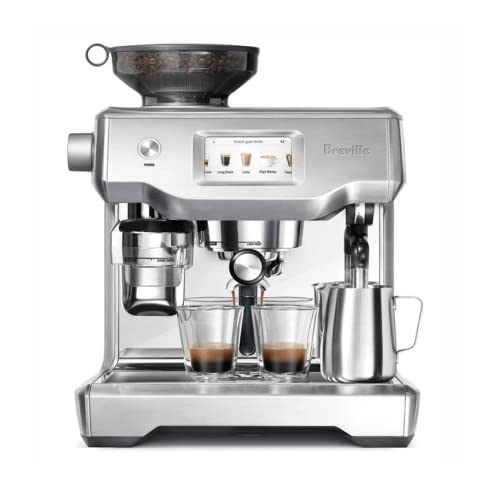
Breville Oracle Touch Espresso Machine BES990BSS, Brushed Stainless Steel
How to Choose the Right Luxury Coffee Makers
Choosing the right luxury coffee maker depends on your preferred brewing style, milk drink habits, involvement level, and space constraints—trade-offs that shift based on your daily routine and kitchen setup. Generic top-10 lists fail here because features like automation or manual control are perfect for some but frustrating for others. Our recommendation engine evaluates your specific needs across five dimensions and matches you to the right coffee maker in under 60 seconds.
About this guide
Luxury Coffee Makers
The Real Buying Challenge: Trade-Offs, Specs, and Price Tiers
Choosing a luxury coffee maker in 2026 is far trickier than it looks. The first hurdle is understanding what you’re really paying for: a $300 De’Longhi Dedica Maestro Plus might deliver solid espresso, but you’ll miss out on the automation and customization of a $900 Sage Barista Express Impress or a $2,500 Jura J10. The trade-offs are real—manual steam wands give you café-quality microfoam but demand skill, while automatic milk frothers save time but can disappoint on texture. Many buyers obsess over grind settings, thinking more is always better, yet Sage’s 7 settings are enough for most. Counter space is another make-or-break factor; machines like the Barista Express Impress eat up 12–16 inches of depth, which catches people off guard. Price doesn’t always equal quality: some $400–$600 models outperform pricier options if you match their features to your actual needs. Most buyers get tripped up by ignoring pump pressure (15+ bar is essential for real crema), or by assuming programmability is just a gimmick. In reality, the right machine is about balancing automation, daily drink habits, and long-term reliability.
What Separates the Options: Key Differentiators That Matter
Not all luxury coffee makers are created equal—real differences go beyond shiny exteriors and big price tags. Bean-to-cup automation, like you’ll find on the Sage Barista Express Impress or De’Longhi Rivelia, is a significant upgrade for anyone who wants café-quality drinks without mastering the barista craft. Skip pod-only systems unless you’re okay with higher ongoing costs and limited customization; bean-to-cup is now the clear winner for both flavor and sustainability in 2026. Don’t get distracted by grind settings—unless you’re a true espresso nerd, 7 options (as on Sage) are plenty. Pump pressure is non-negotiable: 15+ bar is the threshold for authentic espresso, so anything less is a dealbreaker. Advanced models like the Jura J10 or Siemens EQ900 Plus justify their $2,000+ price with features like 10+ user profiles, app control, and milk systems that actually deliver microfoam worthy of a flat white. If you mostly drink black coffee, skip the milk system and invest in programmable shot control instead. For lattes and cappuccinos, prioritize proven steam wand quality over fancy digital displays. In short: focus on what you’ll use daily, not what looks flashiest on the spec sheet.
Decision Factors and How to Choose
The best luxury coffee maker for you depends on how your drink habits, kitchen space, and appetite for hands-on involvement intersect. For example, if you crave daily cappuccinos but have limited counter depth, a compact De’Longhi Dedica Maestro Plus (under 12 inches deep) beats bulkier bean-to-cup giants. If you want to save user profiles for a busy household, only ultra-premium models like the Siemens EQ900 Plus or Jura J10 make sense—otherwise, you’re overpaying for features you’ll never use. Budget is a real constraint: the $400–$1,000 range is the sweet spot for most, offering automation without the eye-watering premiums of $2,000+ machines. But don’t ignore build quality—solid metal construction and removable brew groups (as on De’Longhi and Philips) mean fewer headaches down the road. Our quiz weighs your preferences for brewing style, milk system, programmability, and drink variety in one streamlined process. Ultimately, your kitchen setup, daily routine, and willingness to learn new controls all interact to determine which machine will actually make you happy for years—not just on day one.
Buyer's guide
How to choose
1Core Performance Criteria
- Look for a minimum 15-bar pump pressure, as found on De’Longhi and Breville models, to ensure authentic espresso crema and consistent extraction every time.
- Rapid heat-up times under 40 seconds, like on the Sage Barista Express Impress, are essential for busy mornings and multiple back-to-back drinks.
- Bean-to-cup machines with integrated grinders, such as the Philips Baristina, offer true freshness and flavor but may limit grind adjustment compared to standalone grinders.
- Check for programmable shot volume and temperature, which premium models like Siemens EQ900 Plus provide, allowing you to fine-tune every cup to your taste.
- Manual steam wands offer superior milk texture for lattes, but require practice—automatic frothers are easier but sometimes produce less silky foam.
- Cold extraction or specialty drink modes, available on De’Longhi Dedica Maestro Plus, expand your options beyond classic espresso and milk drinks.
2Build Quality and Durability
- Solid metal construction, as seen on the De’Longhi Dedica Maestro Plus, resists daily wear far better than plastic-heavy designs found in cheaper models.
- Premium brands like Jura and Siemens justify higher prices with robust internal components and longer service intervals, reducing maintenance headaches over time.
- Removable brew groups, common on Philips and De’Longhi, make cleaning easier and extend machine life by preventing internal buildup.
- Check for easily accessible water tanks and drip trays, since awkward placement leads to accidental spills and more frequent cleaning hassles.
- Warranty length matters: expect at least 2 years on machines above $800, with Jura and Siemens often offering longer coverage for peace of mind.
- Avoid models with known weak points, such as difficult-to-remove portafilters on Breville or excessive post-brew dripping on De’Longhi, which frustrate daily use.
3Value Analysis: Getting the Most for Your Budget
- The $400–$1,000 range offers the best balance of automation, build quality, and drink quality—think De’Longhi Maestro Plus or Breville Barista Express Impress.
- Entry-level luxury (De’Longhi Dedica Duo at $250–$350) delivers reliable espresso but sacrifices programmability and advanced milk options found in pricier models.
- Ultra-premium models like Jura J10 and Siemens EQ900 Plus ($2,000+) add user profiles and perfect milk texture, but only justify the cost for heavy multi-user households.
- Bean-to-cup machines hold value better than pod-based systems, as rising pod prices and environmental concerns make pods less attractive in 2026.
- Look for 10–15% discounts on previous-year models—last year’s Breville or De’Longhi often matches new releases in performance for less money.
- Don’t overspend on features you won’t use daily—skip app control or 10 user profiles unless you know you’ll benefit from them.
4Use-Case Fit: Matching Machine to Your Routine
- If you mostly drink black coffee, a programmable espresso machine without a milk system, like De’Longhi Dedica Maestro Plus, is ideal and saves money.
- For daily cappuccinos or lattes, prioritize machines with high-quality steam wands or proven automatic frothers—Siemens EQ900 Plus excels for microfoam.
- Tight kitchen? Compact models under 12 inches deep, such as De’Longhi Dedica Duo, fit small spaces better than the bulky Barista Express Impress.
- Multi-user households benefit from machines with user profiles and app integration, like Jura J10, to avoid constant reprogramming.
- If you want both espresso and drip-style coffee, seek multi-beverage models—Philips Baristina offers this flexibility without sacrificing espresso quality.
- Cold brew or iced drink fans should target machines with dedicated cold extraction modes, now found even in sub-$600 De’Longhi models.
5Common Mistakes and How to Avoid Them
- Many buyers skip measuring counter depth, only to find large machines like the Barista Express Impress don’t fit their space—always check dimensions first.
- Don’t assume more grind settings mean better espresso; Sage’s 7 settings suffice for most, while pump pressure is far more critical for crema.
- Relying on pod machines for luxury coffee is a mistake in 2026—bean-to-cup models now match or beat pod crema at lower long-term cost.
- Test milk frothing systems in-store if possible, as automatic frothers vary wildly and some produce subpar foam compared to manual steam wands.
- Skipping single-walled baskets on De’Longhi Dedica limits shot quality—buy these separately for better results, as they’re rarely included.
- Ignoring warranty and serviceability leads to regret—premium machines cost more to repair, so prioritize brands with strong support and easy access to parts.
6Maintenance and Longevity
- Regular descaling with products like Dezcal extends boiler life, especially in hard water areas—plan for monthly maintenance on premium machines.
- Removable brew groups, as found on Philips and De’Longhi, make deep cleaning easier and prevent costly breakdowns from internal residue buildup.
- Use filtered water or install water filter cartridges to reduce scale and improve taste, a must for any machine over $500.
- Wipe down steam wands and milk systems after every use to prevent clogging and ensure consistently silky microfoam for lattes and cappuccinos.
- Replace group gaskets and seals annually on manual and semi-automatic machines to maintain pressure and prevent leaks.
- Keep an eye on grinder burr wear—bean-to-cup machines need burr replacement every 2–3 years for optimal flavor and performance.
FAQ
Frequently asked questions
Is a bean-to-cup machine worth paying extra for over a pod system?
Yes, in 2026 bean-to-cup machines like the Sage Barista Express Impress or Philips Baristina deliver fresher coffee, richer crema, and lower long-term costs than pod systems. Pods have become more expensive and less sustainable, while bean-to-cup models offer full automation and better flavor. If you value convenience but want café-quality drinks, the extra upfront investment pays off within a year or two, especially for daily coffee drinkers.
How does the De’Longhi Dedica Maestro Plus compare to the Breville Barista Express Impress?
The De’Longhi Dedica Maestro Plus excels as a compact, reliable espresso machine with automatic milk frothing and rapid heat-up for under $600. The Breville Barista Express Impress, at around $1,000, offers full bean-to-cup automation, integrated grinding, and manual steam wand for more control. Choose De’Longhi for space-saving and simplicity; pick Breville for hands-on customization and fresher espresso from whole beans.
What pump pressure and grind settings do I need for real espresso at home?
Aim for a machine with at least 15-bar pump pressure—this is essential for extracting true espresso with rich crema. While more grind settings can help fine-tune flavor, even seven settings (as on the Sage Barista Express) are sufficient for most home baristas. Focus on pressure and consistent grind quality over sheer number of grind options for the best results.
Are premium features like app control and user profiles actually useful?
App control and user profiles, found on models like the Siemens EQ900 Plus and Jura J10, are significant upgrades for multi-user households or those who love to experiment. They let you save favorite drinks, adjust temperature and milk texture, and even start brewing remotely. However, if you’re the only user and stick to one or two drinks, these features may not justify the extra $1,000+ price tag.
How do I avoid common durability issues with luxury coffee makers?
Choose machines with solid metal construction and removable brew groups, like those from De’Longhi and Philips, for easier cleaning and longer life. Avoid models with known weak points, such as hard-to-remove portafilters on Breville or excessive dripping on De’Longhi. Regular maintenance—descaling, cleaning milk systems, and replacing seals—will keep your investment running smoothly for years.
What’s the best option for small kitchens or limited counter space?
For small kitchens, compact models like the De’Longhi Dedica Duo (under 12 inches deep) are ideal. They deliver reliable espresso and even cold extraction without the bulky footprint of machines like the Barista Express Impress or Siemens EQ900 Plus. Always check both width and depth before buying, as many luxury machines require more space than buyers expect.
Does spending $2,000+ on a Jura or Siemens really make a difference?
Spending $2,000 or more on a Jura J10 or Siemens EQ900 Plus brings ultra-consistent results, perfect milk texture, and features like 10 user profiles and Sweet Foam. These models shine in busy households or for those who want every cup to be flawless and customizable. For solo drinkers or basic espresso needs, mid-range options offer better value without sacrificing daily enjoyment.
Best Luxury Coffee Makers By Category
Compare Luxury Coffee Makers
Related Guides
Air Fryers
Matched to your kitchen space, batch size, cooking style, and must-have features—get an air fryer that truly fits your needs.
Bar Tools
Skill level, tool type, finish, budget, and how you’ll use your bar tools—get matched to the right set for your home bar.
Beginner Espresso Machines
Skill level, hands-on control, milk frothing, and kitchen space—get matched to the perfect beginner espresso machine for your daily ritual.
Best Bread Machines for Home Bakers
Loaf size, bread style, add-ins, and control—get matched to the bread machine that fits your kitchen and baking goals.
Breakfast Cookware
Matches your breakfast routine, kitchen setup, budget, and health priorities to the perfect pan, griddle, or appliance.