Skip the research trap. Get your mountaineering boots in 60 seconds.
We scored 300+ mountaineering boots across 5 dimensions — answer 5 quick questions and we'll match you to YOUR best pick.
Powered by DecisionScore™
Each product is evaluated across 18 weighted criteria — covering performance, value, build quality, and real-world usability. Your quiz answers re-weight the criteria to match what matters most to you, so two people can get different #1 picks from the same data.
See the DecisionScore methodology →Find your perfect mountaineering boots
5 quick questions. No quiz-takes-10-minutes trap. A personalized match from 26 scored picks — with clear reasoning for every recommendation.
What is your preferred boot material?
The material of a mountaineering boot affects its durability, weight, and water resistance. Leather is durable and water-resistant, while synthetic materials can be lighter and more breathable.
- If you mostly hike trails, flexible soles and lighter weight will keep you comfortable for long distances.
- Glacier travel and snowfields require stiffer soles and B1/B2 crampon compatibility for safety and efficiency.
- Scrambling and alpine approaches benefit from aggressive outsoles and moderate ankle support for mixed terrain.
As an Amazon Associate and affiliate partner we earn from qualifying purchases. Links on this page may earn us a commission at no extra cost to you. Full disclosure
Not ready for the quiz? Here are our overall top picks
These are our top-rated picks overall. For a recommendation matched to YOUR specific needs,
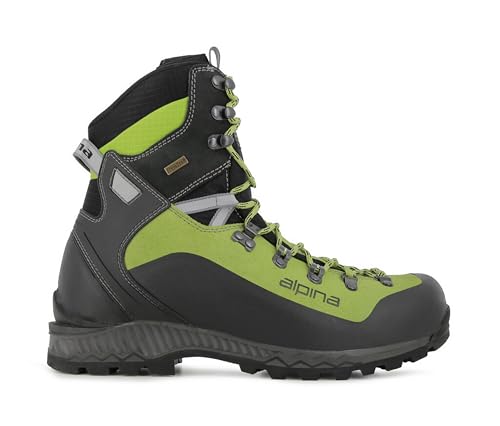
Alpina Diablo 2.0 Men's Mountaineering Boots Leather Sympatex Waterproof All
Alpina Diablo 2.0 Men's Mountaineering Boots Leather Sympatex Waterproof All
Check today’s price →8-inch high nubuck leather upper handmade in Europe
View Today's Price
La Sportiva Karakorum Mountaineering/Hiking Boots, Green, 10
How to Choose the Right Mountaineering Boots
Choosing the right mountaineering boots depends on terrain, insulation, waterproofing, weight, and budget—trade-offs that shift based on your specific mountain goals and climate. A boot perfect for technical glacier travel can be miserable on moderate trails, while lightweight models may fail in winter. Generic top-10 lists miss these critical interactions. Our recommendation engine evaluates your unique needs across five dimensions and matches you to the ideal boot in under 60 seconds.
About this guide
Mountaineering Boots
Why Mountaineering Boot Selection Is Tricky
Choosing mountaineering boots in 2026 is more nuanced than most climbers expect. The $100–$300 price range covers everything from entry-level waterproof mountaineering boots like the Columbia Newton Ridge Plus II—great for mixed terrain but lacking technical features—to mid-range icons like the Merrell Moab 3 Mid Waterproof and KEEN Targhee III Mid, both mountaineering boots with proven Vibram outsoles and rugged uppers. The real challenge is balancing sole stiffness in mountaineering boots for crampon compatibility (B1/B2 ratings), insulation for winter use, and weight for fast approaches. Many buyers mistakenly chase the stiffest mountaineering boots or the highest ankle, only to find them overkill for moderate trails or approach scrambles. Others underestimate the value of a true waterproof membrane in mountaineering boots—GORE-TEX or Sympatex—until they’re ankle-deep in slush. Don’t assume more expensive mountaineering boots always mean better for your use case: Danner’s Mountain 600 series offers heritage build and resolvable soles at the top end, but lighter Salomon X Ultra 4 Mid GTX mountaineering boots excel for speed and comfort on alpine approaches. Trade-offs are real: more support in mountaineering boots means more weight, and technical features can be wasted if your goals are mostly trail-based.
What Actually Sets Boots Apart
The differences that matter in mountaineering boots go far beyond brand names or price tags. Crampon compatibility is non-negotiable for glacier travel—look for B1 or B2 rated mountaineering boots if you’ll be strapping on spikes. Sole stiffness in mountaineering boots is critical: too soft and you’ll fatigue fast on steep snow, too stiff and you’ll hate every mile of trail approach. Waterproofing tech in mountaineering boots is a real separator: GORE-TEX and Sympatex membranes, as found in Salomon and Alpina mountaineering boots, are leagues ahead of generic liners for sustained wet conditions. Vibram outsoles, standard on KEEN Targhee III and Danner Mountain 600 mountaineering boots, deliver grip and longevity you can’t fake. Skip ultra-heavy mountaineering boots unless you need maximum insulation or support for loaded glacier hauls—most buyers overestimate how much boot they need. Lightweight mountaineering boots like Salomon X Ultra 4 Mid GTX are significant upgrades for fast-and-light alpine missions but won’t hold up to crampon abuse. Handcrafted European mountaineering boots from Alpina bring old-school durability and repairability, a rare find under $300. Prioritize fit and intended terrain when choosing mountaineering boots—comfort and real-world traction matter more than insulation ratings for most three-season use.
How to Decide: Key Interactions and Trade-offs
Your terrain, season, and budget all interact to shape the right mountaineering boots for you. Glacier travel demands stiffer soles and true B1/B2 crampon compatibility in mountaineering boots, while moderate trail approaches can get away with lighter, more flexible mountaineering boots like the Columbia Newton Ridge Plus II. If winter is your main season, prioritize insulation and a proven waterproof membrane in mountaineering boots—think GORE-TEX in Salomon or Danner, or Sympatex in Alpina. Weight matters: lighter mountaineering boots like the Salomon X Ultra 4 Mid GTX are ideal for fast alpine approaches but sacrifice some support and warmth. Budget also constrains your mountaineering boots selection: $100–$150 gets you entry-level waterproofing and basic traction, $150–$200 brings in Vibram outsoles and better materials, and $200–$300 unlocks premium mountaineering boots with features like resolvable soles or handcrafted leather. Our quiz evaluates your terrain, waterproofing needs, weight preference, seasonality, and budget in one go to help you find the best mountaineering boots. Beyond that, think about how these factors overlap: mountaineering boots perfect for summer scrambles will be miserable on a January glacier. Always match your mountaineering boots to your most demanding planned use, not just your average outing.
Buyer's guide
How to choose
1Core Performance Criteria
- Crampon compatibility is essential for glacier travel—look for B1 or B2 ratings if you plan to use strap-on or semi-automatic crampons.
- Sole stiffness directly affects fatigue and safety; stiffer soles excel on steep snow, while flexible soles are better for long trail approaches.
- Waterproof membranes like GORE-TEX (Salomon, Danner) or Sympatex (Alpina) provide reliable protection in snow, slush, and rain.
- Vibram outsoles, found on KEEN Targhee III and Danner Mountain 600, offer proven grip and durability on rock, scree, and ice.
- Insulation level matters for winter use—boots with higher insulation ratings keep feet warm in sub-freezing conditions but can overheat in summer.
- Ankle height impacts support on uneven terrain; higher cuffs stabilize on snowfields, while lower cuts save weight for fast approaches.
2Build Quality and Durability
- Full-grain leather uppers, as seen in Alpina and Danner boots, resist abrasion and can be reconditioned for longer life.
- Handcrafted European boots (Alpina) typically offer better stitching and more robust construction than mass-market models under $200.
- Vibram Megagrip soles, featured on Danner Mountain 600, last longer and grip better than generic rubber outsoles.
- Look for double-stitched seams and reinforced toe caps to handle rocky alpine terrain and prevent premature blowouts.
- Resolvable soles, available on some Danner and Alpina models, extend the usable life of your boots by years with proper care.
- Synthetic-mesh/leather blends (Merrell Moab 3, KEEN Targhee III) balance weight and durability but may wear faster on technical routes.
3Value Analysis
- Entry-level boots ($100–$150) like Columbia Newton Ridge Plus II deliver basic waterproofing and traction but lack technical features for alpine use.
- Mid-range picks ($150–$200) such as Merrell Moab 3 and KEEN Targhee III add Vibram outsoles and improved waterproof membranes for better all-weather performance.
- Premium boots ($200–$300) like Danner Mountain 600 and Alpina’s handcrafted models offer full-grain leather, resolvable soles, and advanced waterproofing.
- Don’t pay extra for insulation unless you’ll use boots in true winter or high-altitude conditions—over-insulation can make summer hikes miserable.
- Lightweight mountaineering boots (Salomon X Ultra 4 Mid GTX) are worth the premium for fast-and-light missions but aren’t suited for crampon-intensive routes.
- Handcrafted European boots often deliver better long-term value due to repairability and material quality, even if the upfront cost is higher.
4Use-Case Fit
- Trail hiking and backpacking require flexible soles and lighter weight—Columbia Newton Ridge Plus II is a solid entry-level choice.
- Winter mountain and snow/ice conditions demand insulation, stiff soles, and B1/B2 crampon compatibility—skip lightweight boots for these trips.
- Alpine approaches and scrambling benefit from aggressive outsoles and moderate ankle support; Salomon X Ultra 4 Mid GTX excels here.
- Glacier travel is non-negotiable: you need a boot with a stiff sole and true crampon compatibility, not just a waterproof hiking boot.
- If you’ll use boots year-round, seek models with removable insoles and moderate insulation for versatility across seasons.
- Women’s-specific fits (Alpina TIBET Women’s, KEEN Targhee III) improve comfort and support for narrower feet and lower volume ankles.
5Common Mistakes
- Buying boots that are too stiff or insulated for your actual use leads to discomfort and fatigue on moderate trails.
- Assuming all waterproof membranes are equal—GORE-TEX and Sympatex outperform generic liners in sustained wet or snowy conditions.
- Ignoring fit and comfort in favor of specs; a poorly fitting boot will ruin any trip, regardless of features or price.
- Overestimating the need for crampon compatibility—don’t pay for B1/B2 features unless you truly need them for glacier or ice travel.
- Choosing boots based solely on weight; ultra-light models often sacrifice durability and support needed for technical alpine use.
- Neglecting break-in time—leather boots especially require several outings to mold to your foot and reach peak comfort.
6Maintenance and Longevity
- Regularly clean mud and salt from leather and synthetic uppers to prevent cracking and premature wear—especially after winter trips.
- Condition full-grain leather with appropriate products (Nikwax, Obenauf’s) every few months to maintain waterproofing and flexibility.
- Check and replace insoles annually; worn insoles reduce support and can cause blisters on long expeditions.
- Inspect seams and toe caps after each trip—early repairs prevent small issues from becoming catastrophic failures mid-climb.
- Air-dry boots thoroughly after wet use; never use direct heat, which can damage waterproof membranes and adhesives.
- Resolvable soles (Danner, Alpina) can be replaced by a cobbler, dramatically extending the lifespan of your investment boots.
FAQ
Frequently asked questions
Is GORE-TEX worth paying extra for in mountaineering boots?
Yes, GORE-TEX is worth the premium if you expect sustained wet, snowy, or slushy conditions. It outperforms generic membranes for waterproofing and breathability, especially in boots like the Salomon X Ultra 4 Mid GTX and Danner Mountain 600. If you mostly hike in dry climates, you can save money by opting for water-resistant or non-membrane models, but for alpine or winter use, GORE-TEX is a smart investment that keeps feet dry and comfortable.
How does Alpina compare to Danner for mountaineering boots under $300?
Alpina and Danner both offer excellent boots in the $200–$300 range, but they differ in style and construction. Alpina focuses on handcrafted European leather boots with Sympatex waterproof membranes and Vibram outsoles, offering traditional durability and resolvable soles. Danner’s Mountain 600 series uses full-grain leather, GORE-TEX, and Vibram Megagrip for modern comfort and heritage looks. Choose Alpina for old-school craftsmanship and repairability; pick Danner for a blend of classic style and modern tech.
What crampon compatibility do I need for glacier travel?
For glacier travel, you need boots rated B1 or B2 for crampon compatibility. B1 boots work with flexible strap-on crampons, suitable for moderate glacier crossings and snowfields. B2 boots accept semi-automatic crampons, offering more security on steeper or icier terrain. Avoid standard hiking boots—they lack the sole stiffness and heel welt needed for safe crampon use. Always match your boot’s rating to your planned technical objectives for safety and performance.
Are lightweight boots like the Salomon X Ultra 4 Mid GTX durable enough for alpine use?
Lightweight boots such as the Salomon X Ultra 4 Mid GTX excel for fast-and-light alpine approaches and scrambling, offering GORE-TEX waterproofing and aggressive Contagrip soles. However, they’re not designed for heavy crampon use or sustained glacier travel. If your primary goal is speed and comfort on mixed terrain, they’re a great choice. For technical mountaineering or frequent crampon use, opt for sturdier boots with reinforced soles and uppers.
How much insulation do I need for winter mountaineering?
For winter mountaineering, prioritize boots with substantial insulation—look for models with dedicated cold-weather linings or insulation ratings down to at least -20°C. Danner Mountain 600 and some Alpina models offer winter-ready insulation. Too much insulation can cause overheating in milder conditions, so only choose heavily insulated boots if you’ll be in sub-freezing temperatures for extended periods. For 3-season or shoulder-season use, moderate insulation is usually sufficient.
What’s the best value boot for beginners?
For beginners, the Columbia Newton Ridge Plus II offers excellent value at the entry-level, providing waterproof construction and Omni-Grip outsoles for reliable traction on mixed terrain. It’s not suitable for technical glacier travel or crampon use, but it’s perfect for trail hiking, backpacking, and moderate alpine scrambles. If you need more technical features, consider stepping up to the Merrell Moab 3 Mid Waterproof or KEEN Targhee III Mid for improved durability and Vibram outsoles.
How do I maintain my mountaineering boots for maximum lifespan?
To maximize boot lifespan, clean them after every trip—remove mud, salt, and debris to prevent material breakdown. Condition leather uppers regularly with Nikwax or similar products to maintain waterproofing and flexibility. Air-dry thoroughly after wet use, avoiding direct heat. Inspect seams, laces, and toe caps for early signs of wear, and replace insoles annually. Boots with resolvable soles, like Danner or Alpina, can be resoled by a cobbler, extending their life by years if properly cared for.
Related reading
Best Mountaineering Boots By Category
Related Guides
Advanced Telescopes
Aperture, mount type, portability, and setup—matched to your observing goals and real-life constraints in seconds.
Avalanche Beacons & Transceivers
Skill level, rescue needs, budget, battery type, and Bluetooth—get matched to the safest avalanche beacon for your backcountry trips.
Backyard Playground Sets
Play features, yard size, age range, and installation—get matched to a backyard playground set that truly fits your family.
Backyard Trampolines
We match trampolines to your jumpers’ ages, bounce style, yard size, safety needs, and budget—no more guessing or risky shortcuts.
Bike Lights
Matched to your commute, riding environment, brightness needs, charging style, and budget—get the right bike light for your safety.