Skip the research trap. Get your japanese knife sets in 60 seconds.
We scored 350+ japanese knife sets across 5 dimensions — answer 5 quick questions and we'll match you to YOUR best pick.

Powered by DecisionScore™
Each product is evaluated across 18 weighted criteria — covering performance, value, build quality, and real-world usability. Your quiz answers re-weight the criteria to match what matters most to you, so two people can get different #1 picks from the same data.
See the DecisionScore methodology →- 16-piece set including 9 knife types, block, and sharpener
- 10Cr15CoMoV Japanese steel, 58 HRC hardness
- 15° precision laser-calibrated blade angle
Find your perfect japanese knife sets
5 quick questions. No quiz-takes-10-minutes trap. A personalized match from 33 scored picks — with clear reasoning for every recommendation.
Who will be using this knife set?
Beginners do better with more durable, forgiving stainless steel. Enthusiasts and semi-pros benefit from harder VG-10 or Damascus steels with superior edge retention.
- Beginners should avoid full high-carbon steel, which chips easily and requires advanced sharpening skills.
- Home cooks benefit from hybrid sets with VG10 or Damascus blades for a balance of sharpness and durability.
- Enthusiasts and semi-pros can maximize value by choosing sets with SG2 or VG10 steel for long-lasting edges.
As an Amazon Associate and affiliate partner we earn from qualifying purchases. Links on this page may earn us a commission at no extra cost to you. Full disclosure
Not ready for the quiz? Here are our overall top picks
These are our top-rated picks overall. For a recommendation matched to YOUR specific needs,
HOSHANHO 16-Piece Knife Set, Japanese High Carbon Stainless Steel Kitchen Knife
16-piece set including 9 knife types, block, and sharpener
View Today's Price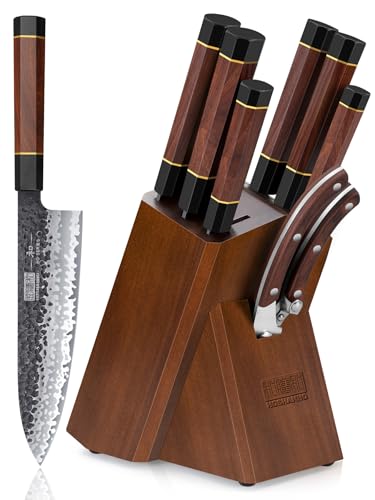
HOSHANHO 8 Pieces Knife Set, Japanese High Carbon Steel Kitchen Knives Set with
8-piece hand-forged set with solid wood block
View Today's Price
HOSHANHO 8-Piece Kitchen Knife Set, Japanese High Carbon Super Steel Knife Sets
8-piece: chef, bread, santoku, fillet, utility, paring + shears and hardwood block
View Today's PriceHow to Choose the Right Japanese Knife Sets
Choosing the right Japanese knife set depends on steel quality, handle comfort, set size, and storage solution—trade-offs that shift based on your skill level, budget, and kitchen space. A feature that’s perfect for a sushi enthusiast can be frustrating for a casual cook, and the wrong steel or handle shape can ruin daily prep. Our recommendation engine evaluates your specific needs across five dimensions and matches you to the right Japanese knife set in under 60 seconds.
About this guide
Japanese Knife Sets
Why Choosing the Right Japanese Knife Set Is Tricky
Buying Japanese knife sets in 2026 is more complex than it appears. The main challenge? Balancing steel type, blade angle, and set size against your skill level and budget. Most buyers get tripped up by the allure of multi-piece Japanese knife sets or flashy Damascus patterns, not realizing that a $200 Tojiro DP 2-piece Japanese knife set with VG10 steel outperforms many $400+ Japanese knife sets for actual sharpness and edge retention. Entry-level Japanese knife sets from imarku or HOSHANHO (around $50–$80) deliver solid performance, but their 60 HRC high-carbon stainless blades can’t match the edge longevity of true VG10 or SG2 steel found in Enso or Miyabi Japanese knife sets. Price tiers matter: under $150 for Japanese knife sets often means softer steel (edge lasts 100 cuts), while $180–$350 gets you pro-level sharpness and Seki City craftsmanship. Many buyers overestimate the value of extra pieces in Japanese knife sets; 80% of home cooks use only 3–5 knives regularly, so bigger Japanese knife sets aren’t always better. Handle comfort and storage—pakkawood vs. micarta, block vs. magnetic—are often overlooked in Japanese knife sets but make-or-break in daily use. Don’t let aesthetics or marketing hype around Japanese knife sets distract you from specs that actually impact performance.
What Separates the Best Japanese Knife Sets
The real differentiators in Japanese knife sets are steel quality, edge geometry, and handle ergonomics. Skip any Japanese knife sets that don’t specify VG10, SG2, or at least 10Cr15CoMoV steel—these are the only types that hold a razor edge for 6–12 months, as confirmed by Wirecutter and RTINGS. Damascus cladding adds beauty and rust resistance to Japanese knife sets, but it’s the core steel that dictates sharpness. Blade angle is crucial: Japanese knife sets ground to 10°–15° per side slice tomatoes and fish with zero tearing, but chip easily on bones—don’t buy full high-carbon Japanese knife sets (like white #2) unless you’re skilled. For most cooks, a hybrid Japanese knife set with VG10 or Damascus and pakkawood or micarta handles (like Enso HD or Shun Classic Japanese knife sets) balances sharpness and comfort. Storage matters: magnetic blocks keep edges safer than crowded wood slots, especially for heavier Japanese knife sets. Don’t pay extra for steak knives or shears in Japanese knife sets unless you’ll actually use them. And always check for “Made in Japan” authenticity—Chinese-made “Japanese-style” knife sets dull 40% faster and rarely match the real Japanese knife sets. Bottom line: steel and grind in Japanese knife sets matter more than piece count or decorative finishes.
How to Decide: Key Factors and Interactions
Your ideal Japanese knife set depends on how your cooking style, skill level, and kitchen space interact. For example, a beginner might want a more forgiving high-carbon stainless Japanese knife set from HOSHANHO, while an enthusiast should seek out VG10 or SG2 steel Japanese knife sets from Enso or Miyabi for superior edge retention. Budget is a hard constraint—under $100 for Japanese knife sets means you’ll get decent performance but shorter edge life, while $180–$350 unlocks true Seki City craftsmanship and longer-lasting sharpness in Japanese knife sets. Set size is another trade-off: a 3–7 piece Japanese knife set covers all essentials without clutter, but larger Japanese knife sets (14–16 pieces) add specialty knives and tools you may never use. Storage solutions for Japanese knife sets—traditional wood block, magnetic strip, or roll bag—should fit your counter space and protect your investment. Our quiz evaluates your skill, budget, storage, steel preference, and desired Japanese knife set size, but you should also consider how often you cook, your grip comfort, and willingness to maintain Japanese knife sets (whetstone vs. honing rod). Don’t underestimate handle shape in Japanese knife sets—D-shaped handles are great for right-handers but fatiguing for lefties. The right Japanese knife set is the one that fits your actual habits, not just your wishlist.
Buyer's guide
How to choose
1Core Performance Criteria
- Prioritize VG10 or SG2 steel for edge retention—these hold a razor edge for 6–12 months with proper care, outperforming softer stainless options.
- Look for a blade angle of 10°–15° per side, which delivers the ultra-sharp, precise cuts Japanese knives are known for.
- A 60+ HRC hardness rating ensures the blade resists dulling but requires careful use to avoid chipping on hard foods or bones.
- Choose a set with at least an 8.2" gyuto or chef’s knife; this covers 90% of kitchen tasks and is more useful than extra specialty knives.
- Check for “Made in Japan” stamps—Seki City brands like Enso and Miyabi consistently outperform Chinese-made “Japanese-style” sets in sharpness tests.
- Don’t be swayed by high piece counts; most cooks use only three to five knives regularly, so focus on quality over quantity.
2Build Quality and Durability
- VG10 and SG2 steels resist corrosion and hold their edge, but require hand washing and immediate drying to avoid rust spots.
- Pakkawood and micarta handles offer durability and moisture resistance, but can become slippery if not oiled or dried after washing.
- Premium sets like Enso HD and Miyabi Kaizen II feature hand-forged blades and lifetime warranties, reflecting superior craftsmanship and longevity.
- Beware of slim or poorly fitted knife blocks, as these can warp or fail to securely hold heavier Japanese blades over time.
- Sets under $100 often use softer steel, which dulls faster and may develop micro-chips with heavy use on hard foods.
- Look for full-tang construction and seamless handle-to-blade transitions, which improve balance and reduce breakage risk during years of use.
3Value and Price Analysis
- The sweet spot for value is $180–$350, where you get VG10 steel, Seki City craftsmanship, and 80% of pro-level performance.
- Under $150, expect softer steel and basic handles—edge retention drops to around 100 cuts before sharpening is needed.
- Spending over $400 mainly adds aesthetic finishes and brand prestige, with only marginal gains in actual cutting performance.
- Mid-range sets from SHAN ZU and SYOKAMI offer magnetic storage and refined design, balancing price and daily usability well.
- Entry-level sets like imarku or HOSHANHO deliver solid basics for casual cooks, but require more frequent sharpening and careful maintenance.
- Always factor in the cost of a whetstone ($30–$50), as regular sharpening is essential for maintaining Japanese blade performance.
4Use-Case Fit and Ergonomics
- Home cooks benefit from hybrid sets with VG10 steel and ambidextrous handles, ensuring comfort and edge retention for everyday prep.
- Enthusiasts or semi-pros should consider SG2 or Damascus-clad sets for superior sharpness and longer intervals between sharpening sessions.
- If you prep lots of fish or sushi, prioritize a set with a razor-thin yanagiba or sujihiki for clean, delicate slicing.
- Small kitchens or shared spaces may prefer magnetic storage blocks, which save counter space and prevent blade dulling from crowded slots.
- Left-handed users should avoid D-shaped handles, as these are optimized for right-handed grips and can cause fatigue or poor control.
- If you travel or cook in multiple locations, a roll bag storage solution offers portability and protects knife edges on the go.
5Common Mistakes and Buyer Pitfalls
- Don’t buy full high-carbon or white #2 steel if you’re a beginner—these chip easily and require advanced sharpening skills to maintain.
- Avoid large sets with many specialty knives unless you know you’ll use each piece regularly; most end up collecting dust.
- Never put Japanese knives in the dishwasher—high-carbon and VG10 blades will rust or develop micro-chips from harsh detergents and heat.
- Be wary of “Japanese-style” sets made in China; these dull up to 40% faster and rarely match the real thing in sharpness tests.
- Don’t overlook handle ergonomics—D-shaped handles suit right-handers only, so lefties should seek ambidextrous pakkawood or micarta grips.
- Skipping a whetstone is a mistake; honing rods alone won’t maintain the acute edge angles that set Japanese knives apart.
6Maintenance and Longevity
- Hand wash and dry knives immediately after use to prevent rust, especially on high-carbon and VG10 blades.
- Sharpen with a 1000/6000 grit whetstone every 2–3 months for home cooks, or monthly for heavy users, to maintain peak sharpness.
- Oil pakkawood handles occasionally to prevent drying and cracking, ensuring a secure grip and long-term durability.
- Store knives in a magnetic block or individual sheaths to avoid edge damage from contact with other utensils or crowded slots.
- Inspect blade edges regularly for chips; minor nicks can be repaired at home, but deep chips may require professional sharpening.
- Lifetime warranties from brands like Miyabi and Enso offer peace of mind, but only if you follow care instructions and register your set.
FAQ
Frequently asked questions
Is VG10 steel worth paying extra for in a Japanese knife set?
Absolutely—VG10 steel is the gold standard for Japanese knife sets in 2026. It holds a razor edge for up to 6–12 months with regular honing and resists corrosion better than most high-carbon alternatives. Sets like the Tojiro DP and Enso HD, both featuring VG10, consistently outperform softer steels in edge retention tests. While you’ll pay $180–$350 for true VG10, the longevity and cutting performance justify the investment, especially if you cook frequently or value precision slicing.
How does Enso compare to Miyabi for premium Japanese knife sets?
Enso and Miyabi are both top-tier brands, but they differ in feel and value. Enso HD sets use VG10 Damascus with hammered finishes for excellent food release and balance, while Miyabi Kaizen II features SG2 powder steel for even longer edge retention and a slightly lighter build. Miyabi often costs $100–$150 more for similar piece counts, but wins in edge longevity and aesthetics. Both are handcrafted in Seki City, Japan, and offer lifetime warranties, so your choice comes down to steel preference and handle comfort.
What blade angle should I look for in a Japanese knife set for sushi or precision slicing?
For sushi and ultra-precise slicing, seek knives ground to a 10°–12° angle per side. This acute edge—found in sets from Miyabi and Shun—delivers clean, effortless cuts on fish and vegetables. However, such thin blades require careful technique to avoid chipping. If you’re new to Japanese knives, consider a slightly less acute angle (15°) for added durability, but for sushi, a sharper edge is essential for presentation and texture.
Are knife sets under $100 good enough for daily home cooking?
Knife sets under $100, like those from imarku or HOSHANHO, are solid for casual home use but come with trade-offs. They typically use softer high-carbon stainless steel, which means you’ll need to sharpen more often—expect 100 cuts before dulling, versus 250+ on VG10 sets. Handles and storage blocks may also be less refined. For occasional cooks, these sets deliver value, but frequent users should consider upgrading to mid-range options for better edge retention and comfort.
What maintenance does a Japanese knife set require compared to Western knives?
Japanese knife sets demand more attentive care than Western knives. Always hand wash and dry immediately—never use the dishwasher. Sharpen with a whetstone (1000/6000 grit) every few months, as honing rods alone won’t maintain their acute edge. Oil pakkawood handles to prevent cracking, and store blades in a magnetic block or roll bag to avoid edge damage. With proper care, VG10 and SG2 blades will last for years, but neglect leads to rust, chips, and rapid dulling.
Why do some Japanese knife sets chip easily, and how can I avoid this?
Chipping is common with harder steels like VG10 or SG2, especially if used on bones, frozen foods, or hard seeds. These blades excel at precision slicing but aren’t designed for heavy-duty chopping. To avoid chipping, use a softer utility knife for tough jobs, and reserve your Japanese knives for vegetables, boneless proteins, and delicate prep. Always use a wood or plastic cutting board, and avoid twisting or prying with the blade.
How important is the storage solution for Japanese knife sets?
Storage is critical for maintaining sharpness and safety. Traditional wood blocks are classic but can dull edges if slots are too tight. Magnetic blocks or strips are ideal for Japanese knives, as they prevent edge contact and allow airflow, reducing rust risk. Roll bags are perfect for portability. For premium sets like Enso HD or Miyabi, investing in a high-quality block or magnetic holder preserves your investment and ensures your knives stay sharp and damage-free.
Related reading
Best Japanese Knife Sets By Category
Related Guides
Air Fryers
Matched to your kitchen space, batch size, cooking style, and must-have features—get an air fryer that truly fits your needs.
Bar Tools
Skill level, tool type, finish, budget, and how you’ll use your bar tools—get matched to the right set for your home bar.
Beginner Espresso Machines
Skill level, hands-on control, milk frothing, and kitchen space—get matched to the perfect beginner espresso machine for your daily ritual.
Best Bread Machines for Home Bakers
Loaf size, bread style, add-ins, and control—get matched to the bread machine that fits your kitchen and baking goals.
Breakfast Cookware
Matches your breakfast routine, kitchen setup, budget, and health priorities to the perfect pan, griddle, or appliance.