Skip the research trap. Get your kids electric ride-on cars in 60 seconds.
We scored 300+ kids electric ride-on cars across 5 dimensions — answer 5 quick questions and we'll match you to YOUR best pick.

Powered by DecisionScore™
Each product is evaluated across 18 weighted criteria — covering performance, value, build quality, and real-world usability. Your quiz answers re-weight the criteria to match what matters most to you, so two people can get different #1 picks from the same data.
See the DecisionScore methodology →- Licensed Mercedes-Benz G63 replica
- 12V 7Ah heavy-duty battery (55% more capacity than standard)
- Real-time battery indicator + low-battery voice alert
Find your perfect kids electric ride-on cars
5 quick questions. No quiz-takes-10-minutes trap. A personalized match from 29 scored picks — with clear reasoning for every recommendation.
How many kids will ride at the same time?
Two-seaters typically require 24V power and have a higher weight capacity (up to 132 lbs combined).
- Two-seaters are heavier and take up more storage space, so measure your garage or play area before choosing.
- Single-seaters are often more affordable and easier for toddlers to handle independently.
- Always check the combined weight limit—some two-seaters only fit two small kids, not two older children.
As an Amazon Associate and affiliate partner we earn from qualifying purchases. Links on this page may earn us a commission at no extra cost to you. Full disclosure
Not ready for the quiz? Here are our overall top picks
These are our top-rated picks overall. For a recommendation matched to YOUR specific needs,
ANPABO Licensed Mercedes-Benz G63 Car for Kids, 12V 7AH Ride on Car w/Parent
Licensed Mercedes-Benz G63 replica
View Today's Price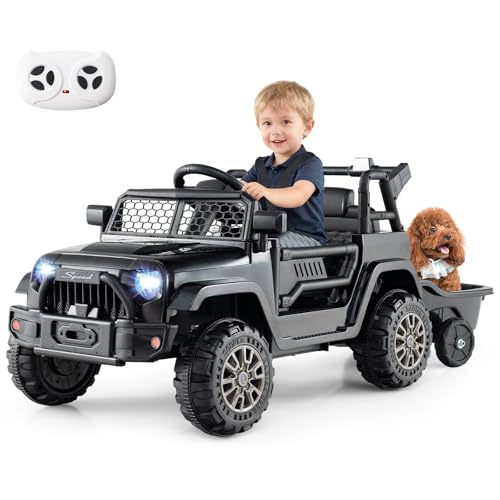
Costzon Ride on Car with Detachable Trailer, 12V Battery Powered Ride on Truck
12V battery-powered ride-on truck
View Today's Price
ENYOPRO 12V Licensed Ford Bronco Raptor Ride on Car for Kids, Battery Powered
12V 7Ah battery, 80–120 min run time
View Today's PriceHow to Choose the Right Kids Electric Ride-On Cars
Choosing the right kids electric ride-on car depends on seating needs, battery voltage, terrain, safety, and budget—trade-offs that shift based on your family, play space, and age range. A feature that’s perfect for one child or backyard is totally wrong for another situation, so generic top-10 lists just don’t cut it. Our recommendation engine evaluates your unique needs across five key dimensions and matches you to the right ride-on car in under 60 seconds.
About this guide
Kids Electric Ride-On Cars
Why Picking the Right Ride-On Car Is Tricky
Choosing kids electric ride on cars in 2026 is far more nuanced than grabbing the flashiest model on Amazon. The $100–$400 price range hides huge differences: a $120 12V single-seater might look tempting, but it’ll struggle on grass and max out at 2.5 mph, while a $350 24V two-seater can handle 132 lbs and tackle backyard slopes with ease. Most buyers focus on looks—like a licensed Ford F-150 Raptor or Lamborghini Urus—without realizing that battery voltage, seating capacity, and real terrain capability are make-or-break for kids electric ride on cars. Trade-offs are everywhere: a 12V car is lighter and cheaper, but can’t match the runtime or power of a 24V model. Many parents get caught out by weight limits, buying kids electric ride on cars marketed as two-seaters but really only comfortable for one. Others skip the parental remote, then regret it when their toddler can’t steer. Even run time varies wildly—60 minutes on a 12V, up to 120 on a 24V, but only if you’re not maxing out the weight or driving on rough ground. Getting kids electric ride on cars right means understanding these details, not just picking by color or brand.
What Actually Sets Models Apart: Specs That Matter
The real differentiators in kids electric ride on cars aren’t always obvious. Battery voltage is the biggest: 12V is fine for toddlers on smooth driveways, but only a 24V model with 4WD and spring suspension will handle backyard grass or gravel. Skip 4WD unless you need off-road traction; it adds cost but is overkill for pavement in most kids electric ride on cars. Officially licensed kids electric ride on cars—like the Ford Bronco Raptor or Mercedes-Benz G63—bring real automotive details and brand cachet, but sometimes at the expense of extra features. Entertainment options vary: some kids electric ride on cars add Bluetooth, FM radio, and LED headlights, while others stick with a basic horn. Parental remote control is a must if your child is under 4 or you want emergency-stop safety—most premium kids electric ride on cars include a 2.4GHz remote with full override. Don’t get distracted by flashy extras like hydraulic scissor doors unless you’re already getting the basics right. Weight capacity is non-negotiable: if you want two kids to ride, look for kids electric ride on cars with 120+ lbs combined capacity, or you’ll be replacing it in a year. Prioritize voltage, drive system, and seat belts in kids electric ride on cars over cosmetic add-ons.
How to Decide: Matching Car to Kid, Space, and Budget
The best kids electric ride on cars for your family depend on how many kids you have, where they’ll drive, and how much you want to spend. Room size and terrain matter—if you only have a small paved area, a 12V single-seater kids electric ride on car is perfect and budget-friendly. For siblings or playdates, a 24V two-seater kids electric ride on car is worth the investment, especially if your backyard includes grass or gravel. Budget is a real constraint: under $175 means you’ll get a basic 12V kids electric ride on car with fewer features, while $275–$400 opens up premium two-seater kids electric ride on cars with 4WD, Bluetooth, and advanced safety. Don’t forget safety: soft-start motors and 3-point seat belts are crucial for younger kids using kids electric ride on cars. Our quiz weighs all these factors—number of riders, battery voltage, terrain, budget, and need for parental remote—to match you to the right kids electric ride on car. Ultimately, it’s about balancing power, safety, and fun in kids electric ride on cars without paying for features you won’t use. Think hard about your real use case before you click buy, and double-check specs like weight limit and run time on kids electric ride on cars—they’re more important than brand or color.
Buyer's guide
How to choose
1Core Performance Criteria
- Battery voltage is the most important spec—12V for flat driveways, 24V for grass, gravel, or heavier kids needing more power.
- Seating capacity matters: single-seaters max out at 66 lbs, while premium two-seaters handle up to 132 lbs combined weight.
- Look for a 4WD drivetrain and spring suspension if you want true off-road capability, especially for backyard use or uneven terrain.
- Run time per charge ranges from 60 minutes on basic 12V models to 120 minutes on 24V trucks, but drops with heavy loads or rough terrain.
- Speed is typically 2.5 mph for 12V and up to 5 mph for 24V, but always check the listed top speed for your chosen model.
- Soft-start motors and 3-point seat belts are essential safety features, especially for younger or first-time riders.
2Build Quality and Durability
- Officially licensed models like Ford Bronco Raptor or Mercedes-Benz G63 usually have better plastics, paint, and detailing than generic brands.
- Check for reinforced steel frames and thick axles in two-seaters, which prevent sagging and frame flex over time.
- Tires make a difference—rubberized or EVA foam tires grip better and last longer than hard plastic wheels on rough surfaces.
- Look for water-resistant electronics and sealed battery compartments if you plan to store the car outdoors or use it after rain.
- Spring suspension systems add comfort and reduce wear on the chassis, especially if your kids drive on bumpy grass or gravel.
- Premium models in the $275–$400 range typically offer longer-lasting motors and higher-quality wiring, reducing risk of early electrical failure.
3Value Analysis: What You Get at Each Price
- Budget picks under $175 are almost always 12V, single-seater, and lack advanced features like Bluetooth or remote control.
- The $175–$275 range is the sweet spot for most families, offering 24V power, two-seater capacity, and some entertainment features.
- Premium models at $275–$400 deliver 4WD, spring suspension, full parental remote, and official licensing from brands like Ford or Lamborghini.
- Don’t overpay for cosmetic extras—hydraulic doors or LED light bars add flash, but rarely improve the driving experience or safety.
- Factor in replacement batteries and spare tires when comparing value, as these can add $30–$50 over the car’s lifespan.
- Some mid-range brands like ENYOPRO and Costzon offer near-premium features at a lower price, but may cut corners on tire or seat quality.
4Use-Case Fit: Matching Car to Child and Space
- For a single toddler on a smooth driveway, a 12V single-seater is lighter, safer, and easier to store after playtime.
- If you have two kids or frequent playdates, only a true two-seater with 120+ lbs capacity will avoid sibling fights and early breakdowns.
- Backyard use with grass or gravel demands a 24V model with 4WD and spring suspension—otherwise, you’ll get stuck or drain the battery fast.
- Small indoor spaces limit you to compact 12V cars, as two-seaters are too wide for hallways or tight turns.
- Older kids (ages 6–8) will quickly outgrow a 12V model, so invest in a 24V with higher speed and weight limits for longer use.
- Consider storage: two-seaters are heavy and bulky—measure your garage or shed before buying a premium truck or Jeep replica.
5Common Mistakes and Pitfalls
- Ignoring weight capacity leads to motor burnout—always check combined rider weight before letting two kids ride together.
- Assuming all parental remotes are equal—budget models may lack emergency stop or have limited range compared to 2.4GHz remotes on premium cars.
- Buying by brand alone can disappoint; some licensed models skimp on real features to pay for the badge.
- Overlooking battery replacement costs—most ride-ons need a new battery after 12–18 months, so check availability and price before purchase.
- Forgetting to check tire type—hard plastic wheels wear out quickly on rough ground and make for a bumpier ride.
- Not measuring your play area—oversized two-seaters can be unwieldy for small patios or indoor spaces, leading to frustration and storage headaches.
6Maintenance and Longevity
- Charge batteries fully after each use and avoid deep discharges to maximize battery lifespan—expect 12–18 months before replacement is needed.
- Keep electronics dry and store the car indoors during rain or winter to prevent rust and circuit damage.
- Inspect tires and axles monthly for wear, especially if the car is used on gravel or grass—replace worn tires promptly to avoid traction loss.
- Lubricate moving parts like steering and wheel axles every few months to prevent squeaks and premature wear.
- Check seat belts and safety harnesses for fraying or loose stitching, tightening or replacing as needed for continued safety.
- Order replacement parts from the original brand (Costzon, ENYOPRO, etc.) to ensure compatibility—generic parts may not fit licensed or premium models.
FAQ
Frequently asked questions
Is a 24V ride-on car worth the extra cost over a 12V model?
If your child is older (ages 5–8), or you want to drive on grass, gravel, or hilly terrain, a 24V ride-on car is absolutely worth it. You’ll get more power, higher speed (up to 5 mph), and longer run time—up to 120 minutes per charge. For flat driveways and younger kids, a 12V model is fine, but most outgrow it quickly. The extra $75–$150 for 24V pays off in versatility and longevity.
How does the ENYOPRO Ford Bronco Raptor compare to Costzon’s Lamborghini ride-on?
ENYOPRO’s Ford Bronco Raptor is a 24V, two-seater truck with 4WD and a 132 lb capacity, making it ideal for siblings and off-road use. Costzon’s Lamborghini is a 12V sports car, best for single riders on pavement. The ENYOPRO offers more power, higher weight limit, and better suspension, while the Costzon wins on style and compactness. Choose ENYOPRO for rugged versatility; Costzon for driveway cruising and brand flair.
What battery voltage do I need for backyard grass or gravel?
For backyard grass, gravel, or any uneven surface, you need at least a 24V ride-on car. 12V models lack the torque and will bog down or drain quickly on rough terrain. Look for 24V models with 4WD and spring suspension for the best performance outdoors. These can handle inclines, heavier kids, and keep going for up to two hours per charge.
Is a parental remote control necessary for safety?
For children under 4 or first-time drivers, a parental remote control is highly recommended. It lets you steer, brake, and even stop the car instantly if needed. Most premium models include a 2.4GHz remote with emergency-stop. For older, confident kids, it’s less essential, but still a great backup for peace of mind—especially in busy areas or near driveways.
How long does a typical ride-on car battery last before replacement?
Most ride-on car batteries last 12–18 months with regular use and proper charging. 12V batteries tend to wear out faster, especially if overloaded or deeply discharged. 24V batteries, if maintained well, can go up to two years. Always charge after each use and avoid letting the battery sit empty for long periods to maximize lifespan.
Are officially licensed models like the Ford F-150 Raptor or Mercedes-Benz G63 better built?
Licensed models usually feature better plastics, paint, and attention to detail, reflecting the real vehicle’s design. However, some brands prioritize looks over core specs, so always check weight capacity, voltage, and safety features. In 2026, top licensed models from ENYOPRO and Costzon combine authenticity with real performance, but avoid off-brand licensed cars that skimp on motors or electronics.
What’s the best value for families with two kids under 8?
A 24V two-seater truck, like the ENYOPRO Ford Bronco Raptor, offers the best value for families with two kids. You get 4WD, 132 lb capacity, and enough power for backyard adventures. It costs more upfront—typically $275–$400—but avoids the need to upgrade as your kids grow. Always check seat width and weight limits to ensure both children fit comfortably.
Related reading
Related Guides
Baby Monitors
Privacy, range, video quality, and smart features—get matched to a baby monitor that fits your space, habits, and security needs.
Best Breast Pumps
Matched to your pumping routine, comfort needs, portability, and cleaning preferences—find the right breast pump for your daily life.
Car Seats
Age, vehicle fit, safety extras, and comfort—get matched to the perfect car seat for your real-world needs, not just brand names.
Convertible Kids Beds
Matched to your room size, budget, safety needs, and how long you want the bed to last.
Electric Ride-On Cars for Kids
Power, seating, terrain, brand, and budget — we’ll match you to the perfect ride-on car for your family’s real needs.