Skip the research trap. Get your kids car beds in 60 seconds.
We scored 1050+ kids car beds across 5 dimensions — answer 5 quick questions and we'll match you to YOUR best pick.

Powered by DecisionScore™
Each product is evaluated across 18 weighted criteria — covering performance, value, build quality, and real-world usability. Your quiz answers re-weight the criteria to match what matters most to you, so two people can get different #1 picks from the same data.
See the DecisionScore methodology →- Race car bed with storage shelves and realistic wheels
- Sleek black finish with vibrant race car design
- Non-rolling decorative wheel design for safety
Find your perfect kids car beds
5 quick questions. No quiz-takes-10-minutes trap. A personalized match from 102 scored picks — with clear reasoning for every recommendation.
What size bed are you looking for?
The size of the bed is crucial as it determines the longevity of use and comfort for your child. Toddler beds are smaller and suitable for younger children, while twin beds are larger and can accommodate older kids or last longer as your child grows.
- Classic race car beds work for most kids and resale better than character-specific designs.
- Licensed beds like Lightning McQueen cost more but delight fans of the movie.
- Specialty vehicles (police, fire truck) are great for themed rooms or kids with unique interests.
As an Amazon Associate and affiliate partner we earn from qualifying purchases. Links on this page may earn us a commission at no extra cost to you. Full disclosure
Not ready for the quiz? Here are our overall top picks
These are our top-rated picks overall. For a recommendation matched to YOUR specific needs,
Bellemave Twin Race Car Bed with Wheels and Storage Shelves - Fun Themed Low
Race car bed with storage shelves and realistic wheels
View Today's Price
Bellemave Wood Twin Size Race Car-Shaped Platform Bed with LED and Upholstered
Blue race car bed with LED lighting and upholstered backrest
View Today's Price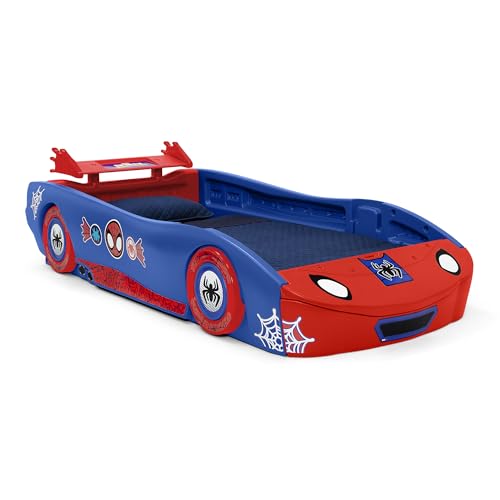
Delta Children - Spidey and His Amazing Friends Web Crawler Race Car Twin Bed,
Sport race car style in vibrant blue
View Today's PriceHow to Choose the Right Kids Car Beds
Choosing the right kids car bed depends on style, frame material, storage needs, lighting features, and budget—trade-offs that shift based on your child’s age, room size, and family priorities. A feature that makes sense for a toddler’s shared room might be a headache for a grade-schooler with a small space. Generic top-10 lists miss these nuances, but our recommendation engine evaluates your specific needs across five dimensions and matches you to the right car bed in under 60 seconds.
About this guide
Kids Car Beds
Why Picking the Right Kids Car Bed Is Tricky
Choosing kids car beds in 2026 is more complex than most parents expect. The first challenge is balancing your child’s dream design—race car, Lightning McQueen, or a fire truck—with practical specs like frame material, weight capacity, and safety features. At $150, most kids car beds feature basic molded plastic frames with fun shapes but minimal extras. Step up to $250 and you’ll find kids car beds with sturdier pine or MDF builds, often with better guardrails and more realistic 3D details. Premium $350–$400 kids car beds add LED lighting, remote sound effects, and even upholstered PU leather headboards. Many buyers get tripped up by assuming all kids car beds are equally safe or durable; in reality, a Delta Children wood frame supports up to 250 lbs, while some no-name plastic kids car beds flex and creak after a year. Another common mistake: forgetting to check if kids car beds fit a standard twin mattress (most do, but not all) or if the bed is convertible for toddlers. The trade-off between price, features, and longevity is real—don’t let a flashy kids car bed design blind you to what actually holds up.
What Actually Sets Car Beds Apart
Not all kids car beds are created equal, and the differences go far beyond color or decals. Frame material is a major separator: solid pine or MDF kids car beds from brands like Harper & Bright Designs and Merax feel rock-solid and last through years of jumping, while molded plastic kids car beds from Delta Children or SOFTSEA are lighter, easier to move, and wipe clean, but may wobble if assembled loosely. LED lighting is a genuine upgrade—found on premium LUMISOL and Bellemave kids car beds—doubling as a nightlight and wow factor, but skip it if your child is sensitive to light at bedtime. Built-in storage is a sleeper feature: kids car beds with toy box compartments or headboard shelves save precious floor space, especially in small bedrooms. Upholstered PU leather headboards on kids car beds look luxe but add little to durability. Skip character-licensed kids car beds unless your child is obsessed—generic race car shapes are often sturdier and more versatile. Safety features like full-perimeter guardrails and rounded edges matter more than most parents realize, especially for kids under six. Assembly varies: some kids car beds are a two-hour solo project, others require a second set of hands and patience.
How to Decide: Features, Fit, and Family Needs
Finding the right kids car bed means weighing how your space, child’s age, and budget interact. Room size directly affects whether you can fit a full 3D kids car bed with side spoilers, or need a more compact platform design. If you’re shopping for a toddler, convertible kids car beds like the Delta Children Grand Prix or Lightning McQueen grow with your child, saving money long-term. Budget under $200? Expect to sacrifice LED features and storage, but you can still get a safe, fun kids car bed design. Prioritize frame material if your child is rough on furniture—solid wood or MDF kids car beds are worth the extra $50–$100 for durability. Built-in storage in kids car beds is a must in apartments or shared rooms, but adds cost and complexity. Our quiz evaluates your style, material, lighting, storage, and budget preferences in one go for kids car beds. Beyond that, think about how much assembly you’re willing to tackle, and whether you want kids car beds that can handle sleepovers (250 lb capacity is the benchmark). The best kids car bed is the one that fits your child’s imagination and your real-world needs—not just the flashiest car on the lot.
Buyer's guide
How to choose
1Core Performance Criteria
- Always check weight capacity—250 lbs is the standard for reputable brands like Delta Children and Merax, ensuring the bed lasts through years of use.
- A full-perimeter guardrail is essential for younger kids, especially if the bed sits higher or has molded side panels that could be climbed.
- Look for beds that accept a standard twin mattress with no box spring needed, which simplifies setup and replacement.
- LED lighting is a real differentiator at the $350–$400 tier, but can be skipped if your child prefers a dark room for sleep.
- Convertible toddler-to-twin beds stretch your investment, letting the frame adapt as your child grows from toddler to grade school.
- Prioritize beds with slat systems for mattress support, as these prevent sagging and extend the life of both the bed and mattress.
2Build Quality and Durability
- Solid pine or MDF frames, found in Harper & Bright Designs and Bellemave, withstand rough play far better than lightweight plastic models.
- Molded plastic beds are easier to move and clean, but may flex or squeak over time, especially if not assembled tightly.
- Check for reinforced corners and hardware—beds with metal crossbars or extra bracing hold up best to jumping and climbing.
- Upholstered PU leather headboards look premium but don’t add much to structural integrity; prioritize core frame material for durability.
- Rounded edges and smooth finishes are a must for safety and longevity, reducing the risk of chips and scrapes during daily use.
- Read assembly reviews—some beds are notorious for unclear instructions or missing parts, which can compromise long-term stability if not built correctly.
3Value and Price Analysis
- Budget models under $200 typically offer simple molded plastic frames with minimal features, but can still be safe and fun for younger kids.
- The $200–$300 mid-range is the sweet spot, balancing sturdy wood/MDF builds, good guardrails, and sometimes basic storage or decals.
- Premium $350–$400 beds justify their price with LED lighting, remote sound effects, and more realistic 3D details, but these are wants, not needs.
- Skip licensed character beds unless your child is truly passionate—these often cost more for branding, not better build quality.
- Look for included slats or mattress supports, as buying these separately can add $30–$50 to your total cost.
- Consider resale value—well-known brands like Delta Children and Merax tend to hold up better and sell faster secondhand.
4Fit for Your Space and Use Case
- Measure your room carefully—full 3D car beds with spoilers or side panels can be over 45 inches wide, crowding small bedrooms.
- Convertible toddler-to-twin beds are ideal if you want a single purchase to last from age 2 through early elementary years.
- Built-in storage is a lifesaver in apartments or shared bedrooms, but adds bulk and can make moving the bed more difficult.
- If sleepovers are likely, prioritize a 250 lb+ weight capacity and a frame that doesn’t creak under extra weight.
- Gender-neutral designs and colorways maximize resale and hand-me-down potential, especially if you have siblings or plan to move.
- Beds with easy-clean surfaces are best for kids prone to spills or accidents—molded plastic and PU leather wipe down in seconds.
5Common Mistakes and Pitfalls
- Assuming all car beds fit standard twin mattresses—some toddler beds require special sizes or conversion kits, so always double-check dimensions.
- Overpaying for flashy features like LED lights or sound effects that your child may outgrow or find distracting at bedtime.
- Neglecting safety—beds without full guardrails or with sharp edges can pose real risks, especially for kids under six.
- Ignoring assembly complexity—some beds need two adults and several hours; rushing this step leads to wobbly, unsafe frames.
- Forgetting about floor protection—heavy wood frames can scratch hardwood, so add felt pads or a rug underneath.
- Buying based on looks alone—prioritize build quality, safety, and mattress compatibility over the coolest paint job or decals.
6Maintenance and Longevity
- Wipe down plastic and PU leather beds regularly to prevent dust buildup and maintain their vibrant appearance over the years.
- Tighten all bolts and hardware every few months, especially after moving the bed or during growth spurts when kids get heavier.
- Check slat systems for sagging or cracks annually—replacing a broken slat is cheaper than a whole new bed.
- Avoid harsh cleaners on painted or stickered surfaces; use mild soap and water to preserve graphics and finish.
- If your bed has LED lighting, replace batteries or check connections periodically to keep features working as intended.
- Store assembly instructions and spare hardware in a labeled bag for easy repairs or resale down the line.
FAQ
Frequently asked questions
Is LED lighting in kids car beds worth the extra cost?
LED lighting adds a fun, nightlight-like glow and serious wow factor, especially in models from LUMISOL and Bellemave. For many kids, it makes bedtime more exciting and helps with nighttime fears. However, it bumps the price into the $350–$400 range and may not suit kids who need total darkness. If your child is sensitive to light or you’re on a tight budget, you can safely skip this feature and still get a fantastic bed.
How do Delta Children car beds compare to Harper & Bright Designs?
Delta Children is known for their molded plastic and licensed character beds, like the Lightning McQueen series, which are lightweight and easy to assemble. Harper & Bright Designs focuses on solid pine and MDF frames that feel sturdier and last longer, especially for older or more active kids. Delta’s beds are best for fans of specific characters or those needing a lighter, easier-to-move bed, while Harper & Bright is ideal for durability and a more classic race car look.
What weight capacity should I look for in a kids car bed?
Aim for a minimum weight capacity of 250 lbs, which is the standard for most reputable brands like Delta Children, Merax, and Harper & Bright Designs. This ensures the bed can handle active play, sleepovers, and growth spurts without risk of collapse or creaking. Beds with lower capacities may not last through the elementary years or support an adult sitting for bedtime stories.
Are convertible toddler-to-twin car beds a good investment?
Convertible toddler-to-twin beds, such as the Delta Children Grand Prix and Lightning McQueen models, offer excellent long-term value. They start as safe, low-profile toddler beds with guardrails and convert to standard twin frames as your child grows. This saves you from buying a second bed in a few years and ensures a consistent look in the bedroom. They’re especially smart for families planning ahead.
What should I expect when assembling a kids car bed?
Assembly varies by brand and model. Simple molded plastic beds often take 1–2 hours and can be built solo, while solid wood or MDF frames from Merax or Bellemave may require two adults and 2–3 hours. Always read reviews for notes on unclear instructions or missing hardware. Having a power screwdriver and extra patience helps. Tight assembly is crucial for long-term stability and safety.
Do I need to buy a special mattress for these beds?
Most kids car beds in 2026—especially from Delta Children, Merax, and LUMISOL—are designed for standard twin mattresses, so you won’t need a specialty size. However, some toddler beds or convertible models may require a crib or toddler mattress for the initial setup. Always check the manufacturer’s dimensions before purchasing to avoid surprises.
How much should I budget for a durable, feature-rich kids car bed?
For a sturdy frame with guardrails and good design, expect to spend $200–$300. If you want extras like LED lighting, remote sound effects, or PU leather upholstery, plan for $350–$400. Budget options under $200 are fun but may sacrifice durability or storage. Investing in a mid-range model from a trusted brand like Merax or Harper & Bright Designs offers the best balance of features and longevity.
Best Kids Car Beds By Category
Related Guides
Baby Monitors
Privacy, range, video quality, and smart features—get matched to a baby monitor that fits your space, habits, and security needs.
Best Breast Pumps
Matched to your pumping routine, comfort needs, portability, and cleaning preferences—find the right breast pump for your daily life.
Car Seats
Age, vehicle fit, safety extras, and comfort—get matched to the perfect car seat for your real-world needs, not just brand names.
Convertible Kids Beds
Matched to your room size, budget, safety needs, and how long you want the bed to last.
Electric Ride-On Cars for Kids
Power, seating, terrain, brand, and budget — we’ll match you to the perfect ride-on car for your family’s real needs.