Skip the research trap. Get your top-rated humidifiers for every room and budget in 60 seconds.
We scored 450+ top-rated humidifiers for every room and budget across 5 dimensions — answer 5 quick questions and we'll match you to YOUR best pick.
Powered by DecisionScore™
Each product is evaluated across 18 weighted criteria — covering performance, value, build quality, and real-world usability. Your quiz answers re-weight the criteria to match what matters most to you, so two people can get different #1 picks from the same data.
See the DecisionScore methodology →Find your perfect top-rated humidifiers for every room and budget
5 quick questions. No quiz-takes-10-minutes trap. A personalized match from 44 scored picks — with clear reasoning for every recommendation.
Where will you mainly use your humidifier?
This question helps us match the humidifier to your typical environment. Choose whether you need moisture for a personal desk, a bedroom or nursery, a medium living space, or a large open area. If uncertain, pick 'Bedroom or nursery' as a balanced option.
- Measure your main room’s square footage before choosing—coverage claims are often exaggerated by manufacturers.
- Open-plan spaces need higher daily output and larger tanks than bedrooms or nurseries.
- If you’ll move the humidifier between rooms, consider a portable model with a mid-sized tank for flexibility.
As an Amazon Associate and affiliate partner we earn from qualifying purchases. Links on this page may earn us a commission at no extra cost to you. Full disclosure
Not ready for the quiz? Here are our overall top picks
These are our top-rated picks overall. For a recommendation matched to YOUR specific needs,
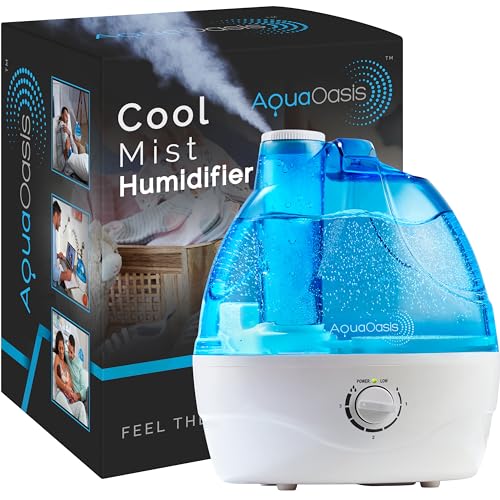
AquaOasis® Cool Mist Humidifier (2.2L Water Tank) Quiet Ultrasonic Humidifiers

Crane Droplet Ultrasonic Small Air Humidifiers for Bedroom and Office, 0.5
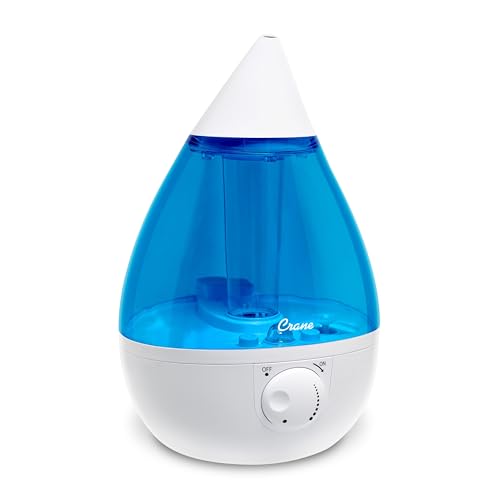
Crane Ultrasonic Cool Mist Humidifier for Bedroom, Baby Nursery, Kids Room,
How to Choose the Right Top-Rated Humidifiers for Every Room and Budget
Choosing the right humidifier depends on room size, water hardness, desired features, and maintenance trade-offs—factors that shift based on your space and comfort needs. A feature that’s perfect for a nursery could be a hassle in a large living room, and water quality can make or break your experience. Generic top-10 lists miss these interactions. Our recommendation engine evaluates your specific situation across five dimensions and matches you to the right humidifier in under 60 seconds.
About this guide
Top-Rated Humidifiers for Every Room and Budget
The Real Buying Challenge: Room Size, Water, and Feature Trade-Offs
Most people underestimate how tricky it is to match humidifiers to their actual space and lifestyle. A $40 ultrasonic humidifier might seem like a steal, but it only covers 300 square feet and needs distilled water or frequent filter changes to avoid white dust—especially if you have hard water. Meanwhile, a $150 evaporative humidifier can humidify up to 1,000 square feet, but you'll deal with more maintenance and a constant fan hum. Warm mist humidifiers kill bacteria but spike your electricity bill, while cool mist humidifiers save energy but may leave mineral residue. Tank size is another make-or-break detail: a 0.5-gallon humidifier means daily refills, but a 6-gallon reservoir can run for days—if you have the space for such large humidifiers. Coverage claims for humidifiers are often exaggerated; a 500-square-foot bedroom genuinely needs at least 3 gallons of daily output from your humidifier, while a 150-square-foot nursery is fine with just 1 gallon. The most common mistake? Ignoring room size and ending up with humidifiers that are either overworked or overkill. Price tiers for humidifiers matter: under $50, you’ll miss out on auto-shutoff and humidity sensors, while $150+ brings app controls and UV sanitization. Every detail, from water hardness to the feature set of humidifiers, directly impacts your daily experience.
What Separates the Options: Technology, Features, and Real Performance
Not all humidifiers are created equal—technology and features make a real difference. Ultrasonic humidifiers, like the Crane Teardrop, are nearly silent and energy-efficient but only make sense if you use distilled water or invest in demineralization cartridges; otherwise, you’ll battle white dust everywhere. Evaporative humidifiers, such as the Venta LW25, self-regulate humidity and handle hard water better, but their fans run constantly and require regular wick filter changes. Hybrid humidifiers, priced between $100 and $200, combine ultrasonic and evaporative benefits, offering both mist types and advanced controls—ideal if you want flexibility and precise humidity. Skip warm mist humidifiers unless you specifically need bacteria-killing heat; their comfort boost is minor unless you’re in a freezing climate, and they cost more to operate than other humidifiers. Don’t be distracted by tank size alone—output per day and coverage area matter more for humidifiers. Premium humidifiers from brands like LEVOIT and Honeywell offer app controls, UV sanitization, and accurate humidity tracking, but you’ll pay $150 or more. For most people, evaporative or hybrid humidifiers strike the best balance between maintenance, performance, and running costs.
Decision Factors and How to Choose the Right Humidifier
Room size, water hardness, and feature priorities interact in ways that make a one-size-fits-all pick impossible for humidifiers. If you’re humidifying a 2,000-square-foot open-plan area, even a top-rated LEVOIT Classic 300S humidifier won’t cut it—look for humidifiers with at least 4 gallons of daily output. For a small nursery, a compact 1-gallon humidifier suffices, but safety features like auto-shutoff and filterless operation become crucial in humidifiers for kids’ rooms. Hard water? Ultrasonic humidifiers will leave white dust unless you use distilled water or install demineralization cartridges, which adds to long-term cost for these humidifiers. If you want app controls, UV sanitization, or aromatherapy, budget at least $120–$200 for feature-rich humidifiers. Our quiz evaluates your space, mist preference, desired features, technology, and design style to match you with the right humidifier model. The real key: balance output capacity against tank size, maintenance effort, and your willingness to pay for convenience in humidifiers. Don’t be swayed by flashy features if you’ll never use them—prioritize reliable humidity control, easy cleaning, and a tank size that fits your refill tolerance. Think about where and how you’ll use humidifiers, and let those factors drive your choice.
Buyer's guide
How to choose
1Core Performance Criteria
- Always match the humidifier’s output and coverage to your real room size—500 square feet needs at least 3 gallons per day, not just a big tank.
- Ultrasonic humidifiers are nearly silent but require distilled water or demineralization cartridges to prevent white dust, especially in hard water areas.
- Evaporative models self-regulate humidity and work better with tap water, but their fan noise is constant and wick filters need regular replacement.
- Warm mist units kill bacteria but use more electricity and are less energy-efficient than cool mist models, making them a niche choice for most homes.
- Hybrid humidifiers, typically $100–$200, combine ultrasonic and evaporative benefits, offering flexible mist options and advanced controls for precise humidity.
- Don’t trust inflated coverage claims—verify daily output (in gallons) and real-world user reviews before buying, especially for open-plan spaces.
2Build Quality and Durability
- Premium brands like LEVOIT and Honeywell consistently offer better tank seals, sturdier plastics, and longer warranties than budget brands under $50.
- Evaporative models tend to last longer than ultrasonics due to fewer moving parts, but wick filters are a recurring expense and must be replaced regularly.
- Warm mist units have heating elements that can fail with mineral buildup, so opt for models with easy-access cleaning and replaceable parts if you choose this type.
- Look for auto-shutoff and tip-over protection, especially for nursery or bedroom use, as these features prevent leaks and overheating accidents.
- Budget humidifiers often skimp on gasket quality and tank design, leading to leaks or cracks within the first year—read real user reviews for longevity insights.
- Units with larger, removable tanks (over 1.5 gallons) are easier to clean thoroughly and less prone to mold or mildew buildup over time.
3Value Analysis: What You Get at Each Price Point
- Under $50, expect basic manual controls, no humidity sensor, and smaller tanks—fine for a desk or nursery but not for large rooms or set-and-forget use.
- $60–$120 covers most evaporative models with self-regulation, replaceable filters, and better reliability, but you’ll still lack app controls and advanced features.
- Hybrid humidifiers in the $100–$200 range add dual mist, digital displays, and sometimes app integration, making them the sweet spot for most buyers.
- Premium units ($150+) offer UV sanitization, smart home compatibility, and precise humidity tracking, but only pay for these if you’ll use them regularly.
- Factor in ongoing costs: ultrasonic models need distilled water or filter cartridges, while evaporative units require regular wick replacements.
- Don’t overpay for tank size alone—a huge reservoir is pointless if daily output or misting power can’t keep up with your room’s needs.
4Use-Case Fit: Matching Humidifier Type to Your Space
- For bedrooms and nurseries (under 200 sq ft), a 1-gallon ultrasonic or evaporative model with auto-shutoff is safest and most convenient.
- Large living rooms or open-plan areas over 1,000 square feet require high-output evaporative or hybrid models—small tanks will drive you crazy with constant refills.
- If you have hard water, avoid ultrasonics unless you’re committed to using distilled water or buying demineralization cartridges regularly.
- Warm mist models are best reserved for cold climates or when you need extra bacteria control, but they’re overkill for most moderate environments.
- Travel or desk use calls for compact, portable humidifiers with spill-resistant tanks and simple controls—don’t expect them to handle whole-room coverage.
- If aromatherapy or air purification is a priority, look for hybrid or premium models with dedicated essential oil trays and built-in UV or HEPA features.
5Common Mistakes and How to Avoid Them
- Underestimating room size is the top mistake—don’t expect a $40, 0.5-gallon unit to cover a master bedroom or living room effectively.
- Ignoring water hardness leads to white dust everywhere with ultrasonics; always check your water type and plan for filters or distilled water if necessary.
- Choosing a huge tank without considering daily output means you’ll still have dry air, even if you refill less often.
- Skipping maintenance details—evaporative wicks and ultrasonic filters add recurring costs and hassle, so factor these into your decision.
- Falling for flashy features like app controls or night lights that you’ll never use, instead of prioritizing reliable humidity and easy cleaning.
- Assuming all humidifiers are quiet—evaporative models run fans constantly, which can be disruptive in bedrooms or nurseries.
6Maintenance and Longevity
- Regular cleaning is non-negotiable—plan on weekly tank and base scrubbing to prevent mold, especially for units with complex internal parts.
- Evaporative humidifiers require wick filter replacements every 1–2 months, adding $10–$20 per year to your running costs.
- Ultrasonic models need demineralization cartridges or distilled water to avoid mineral buildup and white dust, especially in hard water areas.
- Look for wide tank openings and removable parts, as these make deep cleaning much easier and extend the life of your humidifier.
- Premium units with UV or antimicrobial features reduce bacteria but still need regular manual cleaning—don’t skip this step thinking tech replaces elbow grease.
- Check warranty terms: most budget models offer only 1 year, while brands like Honeywell and LEVOIT provide 2–3 years on premium models.
FAQ
Frequently asked questions
Is it worth paying extra for a humidifier with app controls or UV sanitization?
If you want precise humidity tracking, remote scheduling, or germ-killing features, premium humidifiers with app controls or UV sanitization are worth the investment. These models, typically $150 and up, offer convenience and peace of mind, especially for allergy sufferers or those managing large spaces. However, if you just need basic humidity for a small bedroom, you can safely skip these features and focus on reliable output and easy cleaning instead.
How does an ultrasonic humidifier compare to an evaporative model?
Ultrasonic humidifiers, like the Crane Teardrop, are quieter and more energy-efficient but require distilled water or demineralization cartridges to avoid white dust, especially in hard water areas. Evaporative models, such as the Venta LW25, are louder due to their fans but handle tap water better and self-regulate humidity. For bedrooms or nurseries, ultrasonics are great if you can manage the water quality. For larger rooms or hard water, evaporative is usually the smarter choice.
What size humidifier do I need for a 500-square-foot bedroom?
A 500-square-foot bedroom needs a humidifier capable of at least 3 gallons of daily output. Models like the LEVOIT Classic 300S are popular, but double-check the output specs—many units overpromise on coverage. Look for a tank size of at least 1.5 gallons to minimize refills, and prioritize units with auto-shutoff and humidity sensors for set-and-forget convenience.
Will a budget humidifier under $50 work for my living room?
Budget humidifiers under $50 are best for small bedrooms, nurseries, or personal desks. For a living room or any space over 300 square feet, these models will require constant refilling and likely won’t keep up with humidity needs. You’ll also miss out on features like auto-shutoff and humidity sensors. For larger spaces, invest in an evaporative or hybrid model in the $100–$150 range for reliable performance.
How do I prevent white dust from my ultrasonic humidifier?
White dust is caused by minerals in tap water being dispersed as fine particles by ultrasonic humidifiers. To prevent this, use distilled water or install demineralization cartridges, which capture minerals before they become airborne. If you have hard water, consider switching to an evaporative humidifier, which traps minerals in its wick filter and won’t spread dust. Regular cleaning also helps reduce buildup and dust output.
Are LEVOIT and Honeywell humidifiers really more reliable than cheaper brands?
Yes, LEVOIT and Honeywell consistently earn higher marks for build quality, tank design, and long-term reliability in expert reviews and user ratings. Their models feature better seals, sturdier plastics, and longer warranties—often two to three years—compared to budget brands, which may develop leaks or fail within the first year. While you’ll pay more upfront, the lower hassle and longer lifespan make them a smart investment for most buyers.
What’s the best humidifier type for hard water areas?
For hard water, evaporative humidifiers are the best choice. They use wick filters that trap minerals, preventing white dust from settling on furniture and electronics. Ultrasonic models require distilled water or demineralization cartridges, which adds ongoing cost and hassle. Brands like Venta and Honeywell offer robust evaporative models that handle tap water well and require only periodic filter changes to keep running smoothly.
Related reading
Best Top-Rated Humidifiers for Every Room and Budget By Category
Compare Top-Rated Humidifiers for Every Room and Budget
Related Guides
AC Units
Room size, installation, noise, budget, and smart features—get matched to the AC unit that fits your space and lifestyle.
Best Ceiling Fans
Room size, ceiling height, style, and lighting—get matched to the perfect ceiling fan for your space and comfort.
Compact Air Purifier Fans
Room size, filtration, climate control, and smart features—get matched to the compact air purifier fan that truly fits your lifestyle.
Dehumidifiers
Room size, drainage, noise, and convenience—get matched to the dehumidifier that actually fits your space and lifestyle.
Door Sweeps
Door location, installation method, seal type, and budget—all matched to your needs for the perfect draft and pest barrier.