Skip the research trap. Get your robot vacuums in 60 seconds.
We scored 300+ robot vacuums across 5 dimensions — answer 5 quick questions and we'll match you to YOUR best pick.
Powered by DecisionScore™
Each product is evaluated across 18 weighted criteria — covering performance, value, build quality, and real-world usability. Your quiz answers re-weight the criteria to match what matters most to you, so two people can get different #1 picks from the same data.
See the DecisionScore methodology →- Auto-empty base
- Basic mopping
- LiDAR navigation
Find your perfect robot vacuums
5 quick questions. No quiz-takes-10-minutes trap. A personalized match from 26 scored picks — with clear reasoning for every recommendation.
What type of floors do you have?
- Hardwood floors need soft brushes to avoid scratches while capturing fine dust.
- Carpet cleaning requires beater bars and strong suction to pull debris from fibers.
- Multi-surface homes benefit from vacuums that auto-adjust between floor types.
As an Amazon Associate and affiliate partner we earn from qualifying purchases. Links on this page may earn us a commission at no extra cost to you. Full disclosure
Not ready for the quiz? Here are our overall top picks
These are our top-rated picks overall. For a recommendation matched to YOUR specific needs,
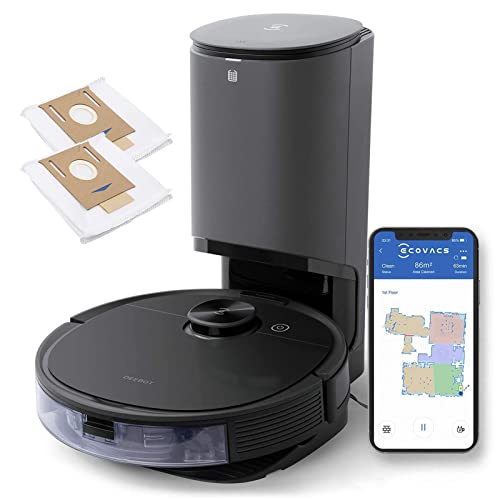
ECOVACS Deebot N8 Pro+ Robot Vacuum and Mop Cleaner, with Self Empty Station,
Auto-empty base
View Today's Price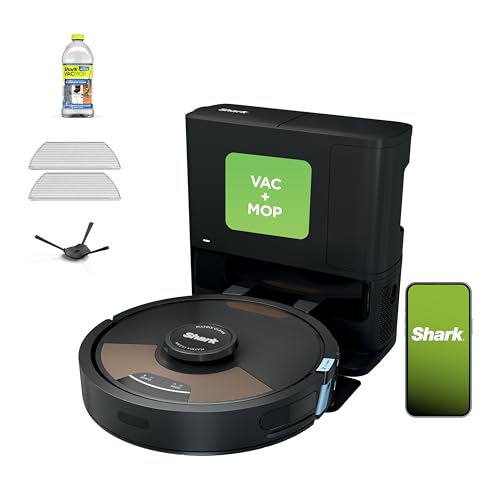
Shark Matrix Plus 2in1 Robot Vacuum & Mop with Sonic Mopping, Matrix Clean, Home
Matrix cleaning pattern
View Today's Price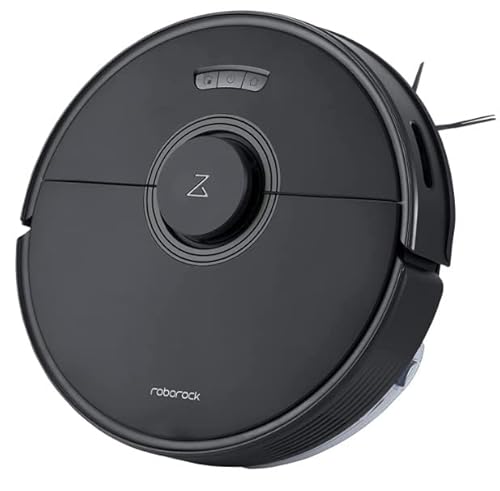
roborock Q7 Max+ Robot Vacuum and Mop with Auto-Empty Dock Pure, Hands-Free
Auto-empty dock
View Today's PriceHow to Choose the Right Robot Vacuums
Choosing the right robot vacuum depends on your floor type, pet ownership, home size, budget, and mopping needs—trade-offs that shift based on your specific situation. Generic top-10 lists often overlook these nuanced interactions, such as a model perfect for hardwood may underperform on carpet. Our recommendation engine evaluates your specific needs across 5 dimensions and matches you to the right robot vacuum in under 60 seconds.
About this guide
Robot Vacuums
The Real Buying Challenge: Trade-Offs, Specs, and Price Tiers
Choosing the right robot vacuum in 2026 is more complicated than it looks. It’s not just about picking a brand or chasing the highest suction number. You have to weigh floor type, pet hair, home size, and how much maintenance you’re willing to do. For example, a $200 eufy RoboVac 11S is quiet and slim but lacks LiDAR navigation and self-emptying—features that become essential in larger homes or for pet owners. On the other hand, a $1,200+ Roborock S8 MaxV Ultra offers twin rubber brushes, a self-wash dock, and 7,000 Pa suction, but that’s overkill for a small apartment with no pets. Many buyers get tripped up by headline specs like max suction or mopping, not realizing that debris pickup and brush design matter more in real-world cleaning. Price tiers are stark: under $300 skips advanced navigation, $600–$900 (think Roborock Qrevo S) hits the sweet spot for performance and features, and over $1,000 only makes sense if you want true set-and-forget automation. The biggest mistake? Ignoring how these trade-offs interact with your actual home.
What Separates the Options: Key Differentiators That Matter
Robot vacuums in 2026 are defined by a few crucial differences: navigation tech, brush design, dock features, and reliability. LiDAR navigation, now common even in mid-range models like Roborock Qrevo S, is a significant upgrade for coverage and avoiding obstacles—skip camera-only models unless your home is clutter-free and well-lit. Twin rubber brushrolls, as seen on Roborock S8 MaxV Ultra and Roomba Max 705, are non-negotiable for pet hair and carpets, preventing tangles that bristle brushes can’t handle. Self-emptying docks, available in models as cheap as the Tapo RV30 Max Plus, dramatically reduce daily maintenance, but watch out for bulky bases if space is tight. Mopping is heavily marketed, but unless you’re spending $1,200+, results are mediocre—prioritize vacuuming performance unless you truly need hybrid cleaning. One contrarian tip: don’t chase max suction numbers; real-world cleaning depends more on brush and dock airflow. Finally, reliability matters—iRobot’s bankruptcy means Roomba app updates are uncertain, so Roborock and eufy are safer bets for long-term support.
Decision Factors and How to Choose
Your floor type, pet situation, home size, budget, and mopping needs all interact in ways most buyers underestimate. For example, large homes (over 2,000 sq ft) need 120+ minute battery life or auto-recharge-resume, while small apartments can get by with 60–90 minutes and a basic bin. Pet owners should focus on tangle-free rubber brushes and self-emptying docks, while mixed-floor homes benefit from auto-adjusting suction and brush height. If you’re on a budget, expect to sacrifice advanced navigation or mopping—under $300 means basic mapping and more manual intervention. The quiz evaluates all these variables in one go, so you don’t have to cross-reference endless spec sheets. One key insight: don’t assume more features are always better. A premium dock or AI obstacle avoidance only pays off if your home is large, busy, or full of pets. Always consider long-term costs—filters, bags, and brush replacements add up, especially for self-emptying models. Ultimately, the right robot vacuum is about matching features to your real-world routine, not just chasing the latest tech.
Buyer's guide
How to choose
1Core Performance Criteria
- LiDAR navigation, available in models like Roborock Qrevo S and Saros 10R, delivers precise mapping and consistent coverage, outperforming camera-only systems in cluttered or low-light homes.
- Suction power above 7,000 Pa is ideal for deep cleaning, but real-world pickup depends more on brush design and dock airflow than raw numbers alone.
- Premium models such as Roborock Saros 10R achieve 9.5/10 on hard floor debris pickup, making them standouts for dust and fine particles.
- Self-emptying docks, featured in eufy E20 and Roomba Max 705, reduce manual bin emptying to once every few weeks, especially helpful for pet owners.
- Auto-lifting mops, found in Roborock Qrevo S, prevent wetting carpets during mixed-floor cleaning—crucial if your home has both rugs and hard surfaces.
- Obstacle avoidance using AI or LiDAR is a must for homes with clutter or cables; budget models without this, like Tapo RV30 Max Plus, may bump furniture regularly.
2Build Quality and Durability
- Premium models above $800, such as Roborock S8 MaxV Ultra, use robust plastics and reinforced wheels for longer lifespan and fewer breakdowns.
- Check for durable, tangle-resistant rubber brush rolls—critical for pet hair and carpets, as seen in Roborock and Roomba Max 705.
- Hybrid models with water tanks (for mopping) add weight; ensure docking stations are stable and easy to align for reliable charging and refilling.
- HEPA filtration, standard in iRobot Roomba Max 705, improves air quality and extends motor life by trapping fine dust before it reaches internal components.
- Avoid models under $250, which often compromise on navigation sensors and build quality, leading to frequent repairs or navigation failures.
- Look for modular designs—Roborock and eufy make it easy to replace brushes, filters, and wheels, extending the usable life of your investment.
3Value Analysis
- The $600–$900 range, with models like Roborock Qrevo S, offers 80–90% of premium performance—LiDAR, strong suction, and self-emptying—without the $1,200+ price tag.
- Budget models such as eufy E20 excel on hard floors but struggle with carpet and pet hair, so don’t expect miracles in mixed or high-pile setups.
- Sales can drop mid-range models by 20–30%, making it possible to score a nearly premium robot for the price of a budget unit.
- Premium features like AI obstacle avoidance and advanced self-wash docks are only worth it if you have pets, large spaces, or frequent messes.
- Factor in long-term costs: replacement filters, brushes, and bags for self-emptying docks can add $50–$100 per year.
- Avoid iRobot for long-term value if you care about app updates—bankruptcy has led to middling reliability and uncertain support, despite strong cleaning scores.
4Use-Case Fit
- Pet owners should prioritize tangle-free rubber brushes and self-emptying docks, as found in Roborock S8 MaxV Ultra and Roomba Max 705, to minimize daily maintenance.
- Large homes (over 2,000 sq ft) require models with 120+ minute battery life or auto-recharge-and-resume, ensuring complete coverage without manual intervention.
- Mixed-floor homes benefit from vacuums with auto-adjusting suction and brush height, like the Roborock Qrevo S, for seamless transitions between carpets and hard floors.
- Small apartments can get by with budget models offering 60–90 minute battery life and basic navigation, as deep mapping isn’t as critical in compact spaces.
- Homes with stairs or multiple levels need multi-floor mapping and the ability to save separate layouts, a feature now common in mid-range and premium models.
- If you need mopping, look for auto-lifting mop pads and self-washing docks; otherwise, skip mopping in budget models, as results are typically disappointing.
5Common Mistakes
- Overvaluing suction power (Pa ratings) without checking debris pickup scores leads to disappointment, as brush design matters more for real-world cleaning.
- Ignoring dock maintenance features—such as self-emptying or self-washing—can result in more frequent manual cleaning than expected, especially with pets.
- Choosing camera-based navigation in homes with dim lighting or clutter often results in poor coverage and frequent bumps into furniture.
- Assuming all 'pet hair' models are equal is a mistake; always check actual pet hair pickup scores, which can vary from 5.0 to 8.0 even among top brands.
- Neglecting to assess your floor type ratio before purchase often leads to suboptimal cleaning—carpet-heavy homes need different features than hard floor setups.
- Forgetting to factor in long-term costs (filters, bags, brushes) can make a seemingly cheap robot vacuum much more expensive over time.
6Maintenance and Longevity
- Regularly clean brushes and empty bins to maintain suction and extend lifespan—neglect leads to clogs and motor strain, even in premium models.
- Self-emptying bases, such as those in Roborock Saros 10R and eufy E20, reduce maintenance frequency to once every few weeks for most households.
- Models with self-wash and drying docks, like Roborock S8 MaxV Ultra, minimize weekly chores but require occasional deep cleaning of the station itself.
- Replace HEPA filters every 4–6 months to maintain air quality and vacuum efficiency, especially if you have pets or allergies.
- Avoid models with heavy or cumbersome docks if you need to move the unit between floors—look for lighter, modular docking stations.
- Check for easy access to replacement parts; brands like Roborock and eufy offer widely available consumables, ensuring your investment lasts several years.
FAQ
Frequently asked questions
Is mopping worth it in a robot vacuum?
Mopping can be a useful feature, but it's often not worth prioritizing unless you're investing over $1,200. Budget and mid-range models, like the ECOVACS DEEBOT N8+, typically underperform in mopping. If mopping is a priority, consider high-end models that offer more reliable performance. Otherwise, focus on models that excel in vacuuming, such as the Roborock Qrevo S, which provides excellent cleaning at a mid-range price.
How does the Roborock Qrevo S compare to the Saros 10R?
The Roborock Qrevo S and Saros 10R deliver similar cleaning results despite the Qrevo S having a higher suction power of 8,000 Pa. Both models excel in practical cleaning due to their effective brush design and quality docking stations. The Qrevo S is often recommended for its value in the $600-$900 range, offering nearly premium performance without the high price tag. Choose based on additional features rather than suction alone.
Are higher Pa ratings important in robot vacuums?
Higher Pa ratings don't always translate to better cleaning performance. For example, the Roborock Qrevo S (8,000 Pa) and Saros 10R perform similarly in real-world scenarios. Focus on brush design and docking quality, which are more crucial for effective cleaning. Prioritize models with well-engineered docks and brushes, like the Tapo RV30 Max Plus, especially if you're in the budget segment.
Is the Roomba i3+ EVO good for pet hair?
The Roomba i3+ EVO is an excellent choice for pet hair, thanks to its strong suction and rubber brushes that prevent tangling. It also features an auto-empty dock, reducing maintenance efforts. While not in the premium tier, it offers a great balance of performance and cost. For those with multiple pets, investing in a higher-end model can further enhance reliability and ease of use.
What is the best budget robot vacuum for hard floors?
For hard floors, the Tapo RV30 Max Plus is a standout in the budget category, offering features like auto-empty and LiDAR navigation under $300. It provides efficient cleaning without the premium price. While it lacks some advanced features of higher-end models, its performance on hard surfaces makes it a great value. Consider this model if you're looking for affordability without sacrificing essential functionality.
How does the eufy RoboVac 11S compare to other budget models?
The eufy RoboVac 11S is a solid choice in the budget category, known for its slim design and quiet operation. However, it lacks advanced features like LiDAR or auto-empty found in newer models like the Tapo RV30 Max Plus. While it performs well on hard floors, it may struggle with thicker carpets. If your home is primarily hard floors, the 11S is a reliable option, but consider newer models for more features.
Is it worth spending over $1,500 on a robot vacuum?
Spending over $1,500 on a robot vacuum can be justified if you need advanced features like superior pet hair handling and high-quality docking stations. Premium models focus on maintenance reduction and reliability rather than just suction power. For most users, models in the $600-$900 range, like the Roborock Qrevo S, offer excellent performance. Consider premium options if you have specific needs, such as heavy pet hair or large areas to clean.
Related reading
Best Robot Vacuums By Category
Related Guides
Air Purifiers
Room size, pollutant type, filter cost, and smart features—get matched to the right air purifier for your real-world needs.
Maintain a Clean and Quiet Home: Find Your Perfect Solution
Matched to your cleaning goals, space size, noise sensitivity, and budget—find the right mix of automation, filtration, and quiet.
Cordless Vacuums
Matched to your floors, pet needs, battery preferences, and how much cleaning hassle you’ll actually tolerate.
Essential Products for a Clean and Healthy Home
We match you to the right mix of cleaning, air, and security tech based on your space, habits, and budget.
Nozzle Cleaners
Matched to your nozzle type, orifice size, cleaning habits, and budget—get the right kit for every maintenance job.