Skip the research trap. Get your av receivers in 60 seconds.
We scored 600+ av receivers across 5 dimensions — answer 5 quick questions and we'll match you to YOUR best pick.
Powered by DecisionScore™
Each product is evaluated across 18 weighted criteria — covering performance, value, build quality, and real-world usability. Your quiz answers re-weight the criteria to match what matters most to you, so two people can get different #1 picks from the same data.
See the DecisionScore methodology →- 7.2-channel, 360 Spatial Sound Mapping (renewed)
- Dolby Atmos, DTS:X, 360 Reality Audio
- HDMI 2.1, 8K, 4K/120Hz, VRR, ALLM
Find your perfect av receivers
5 quick questions. No quiz-takes-10-minutes trap. A personalized match from 56 scored picks — with clear reasoning for every recommendation.
What is your preferred channel configuration?
Channel configuration determines the number of speakers and subwoofers an AV receiver can support. More channels allow for more immersive surround sound experiences, which is crucial for home theater setups.
- 5.1 channels are perfect for most living rooms and apartments, providing immersive sound without needing extra speakers or space.
- Upgrade to 7.1 channels if you want Dolby Atmos, DTS:X, or plan to add rear or height speakers in the future.
- Compact or slim receivers save space but may limit your ability to expand your speaker setup later.
As an Amazon Associate and affiliate partner we earn from qualifying purchases. Links on this page may earn us a commission at no extra cost to you. Full disclosure
Not ready for the quiz? Here are our overall top picks
These are our top-rated picks overall. For a recommendation matched to YOUR specific needs,
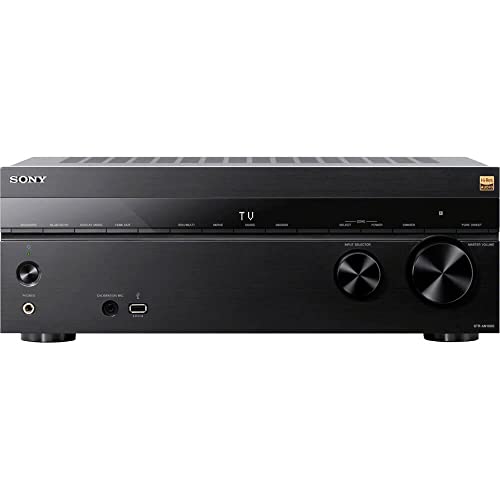
(Renewed) Sony STR-AN1000 7.2 CH Surround Sound Home Theater 8K A/V Receiver
7.2-channel, 360 Spatial Sound Mapping (renewed)
View Today's Price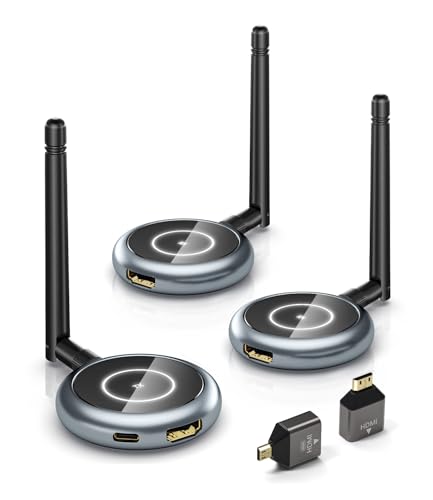
AIMIBO 5.8G Wireless HDMI Transmitter and 2 Receivers, 4K Decode 1080P@60Hz

Cinema 50 Premium 9.4 Channel AV Receiver Powered by HEOS™ with Dolby Atmos, 110
9-channel amplifier with 125 W per channel and 11-channel processing
View Today's PriceHow to Choose the Right AV Receivers
Choosing the right AV receiver depends on speaker configuration, room size, feature priorities, and budget—trade-offs that shift based on your entertainment habits and physical space. Generic top-10 lists can’t account for how HDMI version, channel count, and room correction interact for your specific setup. Our recommendation engine evaluates your unique needs across 12 dimensions and matches you to the right AV receiver in under 60 seconds.
About this guide
AV Receivers
The Real AV Receiver Buying Challenge
Choosing the right AV receivers in 2026 is trickier than it looks. Channel count, HDMI version, room correction, and wireless features all interact with your budget and room size in ways most buyers underestimate when shopping for av receivers. For example, a Denon AVR-S570BT at under $300 delivers 8K HDMI passthrough and Bluetooth—features that cost over $1,000 just a decade ago—but you lose Wi-Fi and advanced room correction found in higher-end av receivers. Jump to a Yamaha RX-V6A or Denon AVR-X1800H in the $400–$600 range, and you unlock Dolby Atmos, AirPlay 2, and robust room calibration—key advantages of mid-tier av receivers. But, more channels mean higher power demands and bigger chassis—tricky for small spaces and a factor to weigh when comparing av receivers. Many buyers fixate on wattage per channel or HDMI port count, but overlook how room size and speaker sensitivity impact real-world performance with av receivers. Price tiers are meaningful: under $300 is basic 5.1 av receivers, $300–$450 brings 7.1 and streaming, $450+ gets you THX, more HDMI 2.1, and premium build quality in av receivers. The most common mistake? Overbuying on specs you won’t use, or underestimating the importance of room correction and future-proof HDMI support in av receivers.
What Separates the Best AV Receivers in 2026
Not all av receivers are created equal—even at the same price point. The biggest differentiators among av receivers are channel count (5.1 vs 7.1), HDMI version (2.0b vs 2.1), and room correction software. For most living rooms, a 5.1 channel av receiver like the Denon AVR-S570BT is enough, but if you want Dolby Atmos or DTS:X, you need at least 7.1 channels and height speaker support, as seen in the Yamaha RX-V6A and other advanced av receivers. HDMI 2.1 is a must for 4K/120Hz gaming—don’t settle for 2.0b av receivers if you own a PS5 or Xbox Series X. Room correction is the hidden hero of av receivers: Audyssey MultEQ (Denon), YPAO (Yamaha), and AccuEQ (Onkyo) each offer different levels of calibration, and skipping this can mean muddy bass or harsh treble in your space. Wireless features matter more than most realize—Wi-Fi and AirPlay 2 (Yamaha, Denon) make streaming effortless on modern av receivers, while Bluetooth-only models feel dated. Skip THX certification unless you’re filling a large, dedicated theater room—otherwise, you’re paying for headroom in av receivers you’ll never use.
How to Choose: Decision Factors That Matter
Room size, speaker setup, and budget interact in ways that force real trade-offs when selecting av receivers. A compact av receiver like the Marantz NR1510 is perfect for apartments, but lacks the power and channel flexibility of the Onkyo TX-NR6100, which shines in larger rooms and is a standout among av receivers for big spaces. If you want immersive Dolby Atmos, you need both a 7.1 av receiver and the physical space (and budget) for ceiling or height speakers—virtual Atmos in av receivers is a compromise, not a substitute. Budget under $300? Expect to sacrifice Wi-Fi and advanced room correction, but you’ll still get 8K passthrough and Bluetooth in entry-level av receivers. Pushing to $600 opens up THX, more HDMI 2.1 ports, and robust multi-room streaming (Denon HEOS, Yamaha MusicCast)—features that define premium av receivers. Our quiz evaluates your room size, use case, desired features, and budget to pinpoint the right av receiver for your needs. The key is to balance must-have features—like HDMI 2.1 for gaming or Wi-Fi for streaming—against the specs in av receivers that actually impact your daily experience, not just what looks impressive on paper.
Buyer's guide
How to choose
1Core Performance Criteria
- Choose at least 5.1 channels for basic surround; upgrade to 7.1 if you want Dolby Atmos or plan to expand your speaker setup.
- HDMI 2.1 is essential for 4K/120Hz gaming and future-proofing—avoid older 2.0b models if you own a PS5 or Xbox Series X.
- Room correction software like Audyssey MultEQ, YPAO, or AccuEQ makes a bigger difference than raw wattage for most home theater rooms.
- Look for at least 70–100 watts per channel (8 ohms, 2 channels driven) for medium to large rooms; compact models may offer less.
- Wireless streaming via Wi-Fi and AirPlay 2 (Yamaha, Denon) is now standard on mid-range models—Bluetooth-only receivers feel dated in 2026.
- THX certification is only worth the premium if you have a large, acoustically treated room and want reference-level performance.
2Build Quality and Durability
- Receivers above $400, like the Yamaha RX-V6A, feature heavier chassis, better shielding, and higher-grade internal components for longer lifespan.
- Entry-level models under $300 may use lighter materials and simpler power supplies, which can limit longevity in high-demand setups.
- Check for robust binding posts and high-quality speaker terminals; spring clips are common on budget models and prone to wear over time.
- Ventilation is crucial—compact receivers like the Marantz NR1510 run hotter, so ensure adequate airflow to prevent thermal shutdowns.
- THX-certified models, such as the Onkyo TX-NR6100, undergo rigorous stress testing for sustained high-output use in large rooms.
- Warranty length and service reputation matter—Yamaha and Denon offer strong support, while lesser-known brands may lack reliable repair options.
3Value Analysis by Price Tier
- Under $300, expect basic 5.1 surround, Bluetooth, and 8K passthrough—Denon AVR-S570BT is a standout, but Wi-Fi is missing at this tier.
- $300–$450 brings 7.1 channels, Dolby Atmos, Wi-Fi, AirPlay 2, and room correction—Yamaha RX-V6A and Denon AVR-X1800H dominate this segment.
- $450–$600 unlocks THX certification, more HDMI 2.1 ports, advanced calibration, and multi-room streaming—best for larger, future-proof setups.
- Don’t pay extra for features like phono inputs or multi-zone audio unless you actually need them for your system.
- Refurbished or renewed models can offer significant savings, but always check warranty terms and firmware update support.
- Avoid overbuying—many users never use more than 5.1 channels or half the streaming features in premium models.
4Use-Case Fit: Matching Receiver to Your Setup
- Small rooms (under 200 sq ft) are well-served by compact receivers like the Marantz NR1510 or Denon’s entry-level models.
- For dedicated theater rooms or open-plan living spaces, prioritize 7.1 channels and at least 90W/channel for immersive, distortion-free sound.
- Gamers should insist on HDMI 2.1, VRR, and ALLM—features found in the Yamaha RX-V6A and Denon AVR-X1800H, not all budget models.
- Music lovers benefit from high-quality DACs and pure direct modes—Yamaha and Denon excel here, while Onkyo leans toward theater performance.
- Multi-room audio is seamless with Yamaha MusicCast or Denon HEOS—skip these ecosystems if you don’t plan to expand beyond a single room.
- If you want Dolby Atmos, make sure you have both the ceiling height and budget for height speakers—virtual Atmos is a compromise.
5Common Mistakes and How to Avoid Them
- Overestimating wattage needs—room correction and speaker placement matter more than raw power for most home setups.
- Ignoring HDMI version—HDMI 2.1 is a must for 4K/120Hz gaming and future compatibility; don’t settle for 2.0b if you own new consoles.
- Buying more channels than you’ll use—7.1 is wasted in small rooms or with basic speaker layouts; stick to 5.1 if that’s all you need.
- Skipping room correction setup—Audyssey, YPAO, and AccuEQ can dramatically improve sound, but only if you actually run the calibration.
- Assuming all wireless features are equal—Bluetooth is not a substitute for Wi-Fi or AirPlay 2 if you want high-quality streaming.
- Neglecting ventilation—stacking receivers in closed cabinets leads to overheating and early failure, especially for compact models.
6Maintenance and Longevity
- Keep firmware updated—Yamaha, Denon, and Onkyo regularly release updates that add features and fix HDMI compatibility issues.
- Dust vents and fans every few months to prevent overheating, especially on compact models like the Marantz NR1510.
- Use surge protection—power spikes can damage HDMI boards and digital circuitry, which are costly to repair on modern receivers.
- Check speaker wire connections annually; loose terminals can cause distortion or trigger receiver protection circuits.
- Avoid running receivers at maximum volume for extended periods—this stresses internal amps and shortens component lifespan.
- Store manuals and calibration microphones—future speaker upgrades or room changes will require re-running setup for optimal sound.
FAQ
Frequently asked questions
Is Dolby Atmos worth paying extra for in an AV receiver?
Dolby Atmos is absolutely worth the investment if you want immersive, 3D sound with overhead effects—especially for movies and next-gen gaming. However, you’ll need both a 7.1 channel receiver and dedicated height or ceiling speakers to experience true Atmos. Virtual Atmos modes found on some mid-range receivers are a compromise, offering a taste of immersion but lacking the impact of real height channels. If your room or budget can’t accommodate extra speakers, standard 5.1 surround is still excellent for most setups.
How does Denon compare to Yamaha for AV receivers in 2026?
Denon and Yamaha remain the leaders in AV receivers for 2026, but they have different strengths. Denon models like the AVR-S570BT and AVR-X1800H excel in room correction (Audyssey MultEQ) and seamless integration with HEOS multi-room streaming. Yamaha’s RX-V6A stands out for MusicCast multi-room, robust YPAO room calibration, and class-leading reliability. Both brands offer HDMI 2.1, Dolby Atmos, and AirPlay 2 in the $400–$600 range. Denon leans slightly toward home theater, while Yamaha has an edge for music lovers and multi-room setups.
What HDMI version do I need for gaming on PS5 or Xbox Series X?
You need HDMI 2.1 for 4K/120Hz gaming and features like Variable Refresh Rate (VRR) and Auto Low Latency Mode (ALLM). Receivers like the Yamaha RX-V6A and Denon AVR-X1800H include HDMI 2.1 ports, ensuring full compatibility with PS5 and Xbox Series X. Avoid models with only HDMI 2.0b—they limit you to 4K/60Hz and lack next-gen gaming features. Always check that all HDMI inputs, not just one, support 2.1 if you have multiple gaming devices.
Do I need THX certification for my home theater receiver?
THX certification, found on models like the Onkyo TX-NR6100, guarantees reference-level performance and rigorous stress testing. It’s beneficial if you have a large, acoustically treated room and want to push your system to its limits. For most users in small or medium rooms, THX is not essential and adds cost without audible benefit. Prioritize room correction and HDMI 2.1 over THX unless you’re building a dedicated theater space.
Is the Denon AVR-S570BT a good choice for a budget setup?
The Denon AVR-S570BT is one of the best budget AV receivers in 2026, offering 5.1 channels, 8K HDMI passthrough, and Bluetooth streaming for under $300. It’s ideal for starter setups or smaller rooms. However, it lacks Wi-Fi, AirPlay 2, and advanced room correction, which are available in pricier models. If you primarily watch movies and don’t need network streaming, it’s a fantastic value. For music streaming or multi-room audio, consider stepping up to a mid-range model.
How much wattage per channel do I really need for my speakers?
For most home theaters, 70–100 watts per channel (8 ohms, 2 channels driven) is more than sufficient. Compact receivers like the Marantz NR1510 offer less power, but work well in small rooms with efficient speakers. Large rooms or low-sensitivity speakers may benefit from 100W or more per channel, as found in the Onkyo TX-NR6100. Don’t get hung up on wattage—room correction and speaker placement have a bigger impact on sound quality than raw power.
What’s the advantage of Wi-Fi and AirPlay 2 over just Bluetooth?
Wi-Fi and AirPlay 2 enable high-resolution, lossless streaming from your phone or networked devices, and support multi-room audio with platforms like Yamaha MusicCast or Denon HEOS. Bluetooth is convenient but limited to compressed audio and shorter range. If you value seamless streaming, voice control, or want to expand your system to multiple rooms, Wi-Fi and AirPlay 2 are must-haves. Bluetooth-only receivers are best for simple setups or occasional use.
Best AV Receivers By Category
Related Guides
Home Theater Speaker Packages
Room size, audio priorities, and setup style—get matched to the right soundbar or speaker system for your home theater.
Blu-ray Players
Resolution, HDR, audio, streaming, and disc region—matched to your TV, sound system, and movie collection in seconds.
Budget Home Theater Systems
Room size, surround immersion, and setup style—get matched to the right budget home theater system for your space and habits.
Build the Ultimate Home Bar: Carts, Glassware, Tools & Storage
Entertaining style, storage needs, and drink preferences—get matched to the right bar cart, glassware, tools, and storage for your home.