Skip the research trap. Get your digital meat thermometers in 60 seconds.
We scored 350+ digital meat thermometers across 5 dimensions — answer 5 quick questions and we'll match you to YOUR best pick.
Powered by DecisionScore™
Each product is evaluated across 18 weighted criteria — covering performance, value, build quality, and real-world usability. Your quiz answers re-weight the criteria to match what matters most to you, so two people can get different #1 picks from the same data.
See the DecisionScore methodology →- 2–3 second thermocouple instant read
- ±0.9°F accuracy
- IPX6 waterproof – rinse under running water
Find your perfect digital meat thermometers
5 quick questions. No quiz-takes-10-minutes trap. A personalized match from 34 scored picks — with clear reasoning for every recommendation.
What type of probe does the thermometer have?
The type of probe affects how you can use the thermometer. Wired probes are great for continuous monitoring, while instant-read probes are ideal for quick checks. Multi-probe options allow for monitoring multiple items simultaneously.
- Instant-read thermometers are perfect for quick spot checks on steaks, chicken, or baked goods.
- Wireless/probe models stay in the meat and let you monitor temperature continuously—ideal for smoking or roasting large cuts.
- Wired probe models with a base display are great for oven use and don’t require a smartphone or Bluetooth setup.
As an Amazon Associate and affiliate partner we earn from qualifying purchases. Links on this page may earn us a commission at no extra cost to you. Full disclosure
Not ready for the quiz? Here are our overall top picks
These are our top-rated picks overall. For a recommendation matched to YOUR specific needs,
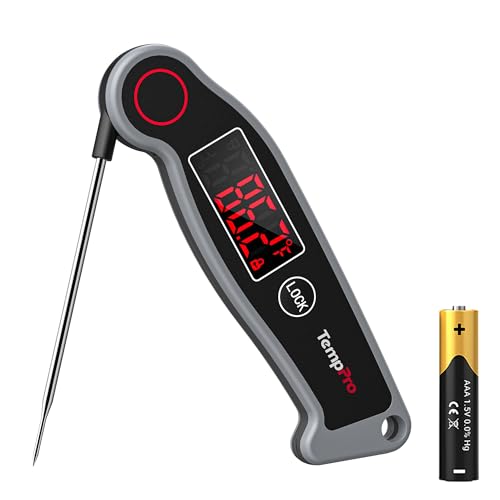
TempPro TP19 Waterproof Digital Meat Thermometer for Grilling with Ambidextrous
2–3 second thermocouple instant read
View Today's Price
ThermoMaven Smart Bluetooth Wireless Meat Thermometer, 10X Enhanced Sub-1G
10X enhanced Sub-1G signal stability
View Today's Price
ThermoMaven Smart Bluetooth Wireless Meat Thermometer: Standalone Base, WiFi
2 ultra-thin probes with 6 sensors each (5 internal + 1 ambient)
View Today's PriceHow to Choose the Right Digital Meat Thermometers
Choosing the right digital meat thermometer depends on cooking context, thermometer type, budget, and feature priorities—trade-offs that shift based on your grilling habits, tech comfort, and how many meats you cook at once. A feature that’s essential for a pitmaster is overkill for a weeknight cook. Our recommendation engine evaluates your specific needs across five dimensions and matches you to the right thermometer in under 60 seconds.
About this guide
Digital Meat Thermometers
The Real Buying Challenge: Hidden Trade-Offs and Common Pitfalls
Choosing digital meat thermometers in 2026 is trickier than it looks, mainly because the specs that matter most aren’t always obvious. For instance, buyers often obsess over ±0.9°F vs ±1.8°F accuracy in digital meat thermometers, but overlook probe length or display brightness—both crucial for grilling at dusk or checking a roast in a dim oven. The $15 budget digital meat thermometers can be surprisingly accurate, but usually cut corners on waterproofing or battery life. Step up to $25–$45 and you’ll find digital meat thermometers with features like IP67 waterproofing, rotating displays, and motion-sensing wake—details that make a real difference in daily use. At $60, you’re in Bluetooth and Wi-Fi territory, with multi-probe digital meat thermometers and robust app ecosystems, but these add complexity and sometimes sacrifice simplicity. Most buyers get tripped up by picking a wireless digital meat thermometer when they only need quick spot checks, or by buying a single-probe instant-read digital meat thermometer when they actually want to monitor a brisket for 12 hours. The key is matching digital meat thermometers’ strengths to your real cooking habits, not just chasing the highest spec or the lowest price.
What Separates the Options: Features That Actually Matter
The main divide among digital meat thermometers is instant-read versus wireless/probe models, and the choice is more consequential than most expect. Instant-read digital meat thermometers like the Lavatools Javelin or ThermoPro TP03 are unbeatable for speed—delivering a reading in just 2–3 seconds and folding away for pocket storage. These digital meat thermometers shine for quick checks on steaks, burgers, or baked goods, but are useless for monitoring a turkey or brisket over hours. Wireless and Bluetooth probe digital meat thermometers, such as those from ThermoPro and Taylor, let you track multiple meats or ambient grill temps in real time, often with app alerts and programmable alarms. Skip wireless digital meat thermometers unless you truly need to monitor long cooks—otherwise, you’re paying for features you’ll never use. Waterproofing (IP65 or IP67) is a must if you grill outdoors or want easy cleanup, and display brightness is non-negotiable for anyone cooking at night or in bright sunlight. Battery life also varies widely: some instant-read digital meat thermometers last months, while wireless digital meat thermometers may need recharging after every smoke. In short, prioritize speed and accuracy for instant-read digital meat thermometers, and probe count, connectivity, and app quality for wireless digital meat thermometers.
Decision Factors and How to Choose the Right Thermometer
Cooking context, budget, and feature set all interact in ways that dramatically change which digital meat thermometers are right for you. If you mostly roast chicken and bake bread, a simple instant-read digital meat thermometer is perfect—don’t overpay for wireless. But for BBQ smokers or those juggling multiple cuts, dual or four-probe wireless digital meat thermometers are a significant upgrade. Budget is a hard constraint: under $20 means you’ll get basic accuracy and speed from digital meat thermometers, but probably miss out on waterproofing or advanced displays. Mid-range ($25–$45) digital meat thermometers unlock more durable builds and smart features, while $60 gets you into multi-probe, app-connected digital meat thermometer territory. Room lighting and cleanup habits matter too—if you grill at night or want to toss your digital meat thermometer in the sink, prioritize display brightness and IP67 waterproofing. Our quiz evaluates your digital meat thermometer type, budget, cooking context, connectivity needs, and desired probe count to pinpoint your best match. The real trick is balancing what you’ll actually use in digital meat thermometers against what sounds impressive on the box—don’t let feature creep or marketing hype steer you off course.
Buyer's guide
How to choose
1Core Performance Criteria
- Prioritize thermometers with a reading speed of 1–5 seconds and accuracy within ±0.9°F for reliable results, especially for steaks and poultry.
- Instant-read models like Lavatools Javelin and ThermoPro TP03 excel at quick spot checks, but can’t monitor long cooks or multiple meats simultaneously.
- Wireless and Bluetooth probe thermometers allow real-time tracking during long BBQ smokes, with programmable alarms and smartphone notifications.
- Display brightness and backlighting are crucial for outdoor grilling or low-light kitchens—don’t underestimate how much this affects usability.
- Probe length matters for larger cuts and whole birds; look for at least 2.75" to 4" probes for versatility across different meats.
- Battery life varies: instant-reads often last months on a single battery, while wireless models may need frequent recharging after long smoking sessions.
2Build Quality and Durability
- IP65 or IP67 waterproofing is essential if you plan to grill outdoors or want to wash your thermometer under running water for easy cleanup.
- Rotating displays and motion-sensing wake features, found in mid-range models ($25–$45), add durability and convenience for frequent use.
- Look for NSF certification or food-safe materials, especially if you’re using the thermometer for sous vide or high-heat grilling.
- Brands like Lavatools and ThermoPro are known for robust construction and reliable hinges on folding instant-read models.
- Magnetic backs or hanging loops help prevent accidental drops and keep your thermometer handy on the fridge, oven, or grill.
- Check for secure probe connections and reinforced cables on wireless models—cheap connectors are a common failure point after repeated use.
3Value Analysis
- Budget models around $15 offer solid accuracy but usually lack waterproofing, rotating displays, or advanced timers—decide which trade-offs you can live with.
- Mid-range thermometers ($25–$45) hit the sweet spot for most buyers, balancing speed, durability, and useful features like motion-sensing wake.
- At the $60 ceiling, expect multi-probe wireless models with app integration, but be aware that complexity and setup time increase significantly.
- Don’t pay extra for Bluetooth or Wi-Fi unless you routinely monitor long cooks or want smartphone alerts for temperature changes.
- Some budget models outperform pricier competitors in core speed and accuracy tests—brand reputation doesn’t always guarantee better performance.
- Consider the total cost, including replacement probes or batteries, especially for wireless models where accessories can add up over time.
4Use-Case Fit
- Instant-read thermometers are ideal for quick kitchen checks, grilling burgers, or baking, but can’t monitor a roast or brisket over hours.
- Wireless probe models excel for BBQ, smoking, or holiday roasts where you need to track temperature without opening the oven or grill.
- If you cook multiple meats or want to monitor both meat and ambient grill temperature, look for dual or four-probe models.
- Bright displays and waterproofing are must-haves for outdoor grilling at night or in unpredictable weather conditions.
- For sous vide or candy making, prioritize accuracy and probe length over wireless connectivity—speed is less critical for these tasks.
- Choose a model with a programmable alarm if you’re prone to multitasking or want to avoid overcooking during busy meal prep.
5Common Mistakes
- Many buyers overpay for wireless features they never use—instant-read is sufficient for most kitchen and grilling tasks.
- Neglecting display brightness leads to frustration when grilling at dusk or checking temps in a dim oven.
- Assuming all probes are dishwasher-safe is a mistake—most require hand washing, even on IP67-rated models.
- Ignoring probe length can result in unreliable readings on large cuts or whole birds—short probes are best for thin meats only.
- Buying a single-probe model when you routinely cook for a crowd limits your ability to monitor multiple items simultaneously.
- Failing to check battery type and replacement cost can turn a bargain thermometer into a headache after a few months of use.
6Maintenance and Longevity
- Always clean probes immediately after use to prevent buildup and extend sensor life—avoid harsh abrasives that can damage sensitive tips.
- Replace batteries with high-quality brands to ensure consistent readings and avoid unexpected shutdowns during long cooks.
- Store folding instant-read thermometers with the probe retracted to protect the hinge and sensor from accidental damage.
- Check for firmware updates if you own a Bluetooth or Wi-Fi model—app-connected thermometers often receive performance improvements and bug fixes.
- Inspect probe cables and connectors regularly for signs of wear or fraying, especially if you use your thermometer for long BBQ sessions.
- Keep spare probes on hand for wireless models; probe failure is the most common issue and replacements are rarely universal between brands.
FAQ
Frequently asked questions
Is it worth paying extra for a wireless or Bluetooth meat thermometer?
Paying extra for a wireless or Bluetooth thermometer only makes sense if you regularly smoke meats, roast large cuts, or want to monitor several items at once without hovering over the grill. For most home cooks and grillers, a fast instant-read model delivers all the accuracy and convenience you need at half the price. Wireless models add complexity and require setup, so only invest if you genuinely need remote monitoring and multi-probe capability.
How does the Lavatools Javelin compare to the ThermoPro TP03?
Both the Lavatools Javelin and ThermoPro TP03 are top picks for instant-read thermometers under $25 in 2026. The Javelin typically delivers slightly faster readings (2–3 seconds) and features a more robust, waterproof build (IP65), while the TP03 offers excellent accuracy and value but lacks full waterproofing. If you grill outdoors or want a longer-lasting hinge, the Javelin is worth the extra few dollars.
What probe length do I need for smoking brisket or whole turkeys?
For large cuts like brisket or whole turkeys, look for a probe length of at least 4 inches. Shorter probes (2.75–3 inches) are fine for steaks or chicken breasts but may not reach the center of bigger roasts. Brands like ThermoPro and Taylor offer wireless models with extra-long probes specifically designed for BBQ and smoking, ensuring accurate readings deep in the meat.
Are budget digital meat thermometers under $20 reliable?
Surprisingly, many budget digital meat thermometers under $20 deliver excellent speed and accuracy, often within ±1.8°F. However, you’ll typically sacrifice waterproofing, advanced display features, and long-term durability. For occasional use or as a backup, these models are a smart buy, but frequent grillers or those who want a more robust tool should consider stepping up to the $25–$45 range.
Do I need multiple probes for everyday kitchen cooking?
For most everyday kitchen tasks—like roasting a chicken or baking bread—a single-probe instant-read thermometer is all you need. Multiple probes become valuable if you routinely cook several meats at once, want to monitor both meat and ambient oven temperature, or host large gatherings. Otherwise, a simple, fast instant-read model will cover nearly all your needs.
How does app connectivity improve the cooking experience?
App connectivity lets you monitor temperatures remotely on your phone, set custom alerts, and even track cook history for repeatable results. This is a significant upgrade for long BBQ smokes or roasts, where opening the grill or oven repeatedly can ruin results. However, for quick grilling or kitchen use, app features are often overkill and can complicate setup.
Which brands are most reputable for digital meat thermometers in 2026?
Lavatools and ThermoPro remain the most trusted brands for digital meat thermometers in 2026, offering reliable accuracy, fast readings, and durable construction. Taylor is also respected for its wireless probe models with programmable alarms. While some budget brands perform well, sticking with these established names minimizes the risk of faulty sensors or poor build quality.
Best Digital Meat Thermometers By Category
Related Guides
Gas Grills
Cooking style, space, portability, and features—get matched to the right gas grill for your real grilling habits and outdoor setup.
Luxury Outdoor Grills
Fuel type, installation, cooking capacity, and build quality—matched to your grilling style, space, and must-have features.
Outdoor Patio Heaters
Matched to your patio size, fuel type, wind exposure, and style—get the right heater for your outdoor comfort and ambiance.
Create the Ultimate Outdoor Cooking & Entertaining Space
We match you to the right grills, ovens, ice makers, and power—based on your space, style, and how you love to host.