Skip the research trap. Get your blackout curtains in 60 seconds.
We scored 350+ blackout curtains across 5 dimensions — answer 5 quick questions and we'll match you to YOUR best pick.
Powered by DecisionScore™
Each product is evaluated across 18 weighted criteria — covering performance, value, build quality, and real-world usability. Your quiz answers re-weight the criteria to match what matters most to you, so two people can get different #1 picks from the same data.
See the DecisionScore methodology →- Grommet top for easy rod installation
- Thermal insulated for year-round energy savings
- Room darkening construction
Find your perfect blackout curtains
5 quick questions. No quiz-takes-10-minutes trap. A personalized match from 35 scored picks — with clear reasoning for every recommendation.
What is the preferred hanging style for your blackout curtains?
The hanging style of curtains affects both the aesthetic and functionality. Grommet styles are easier to slide and often more modern, while rod pocket styles offer a more traditional look. Consider your existing curtain rod and the ease of installation.
- Measure from the curtain rod to the floor for the most effective blackout—shorter curtains often leave light-leaking gaps.
- Standard lengths are 63, 84, and 96 inches; choose the longest that fits your space for maximum coverage.
- Consider furniture placement—if a bed or radiator sits under the window, shorter panels may be more practical.
As an Amazon Associate and affiliate partner we earn from qualifying purchases. Links on this page may earn us a commission at no extra cost to you. Full disclosure
Not ready for the quiz? Here are our overall top picks
These are our top-rated picks overall. For a recommendation matched to YOUR specific needs,
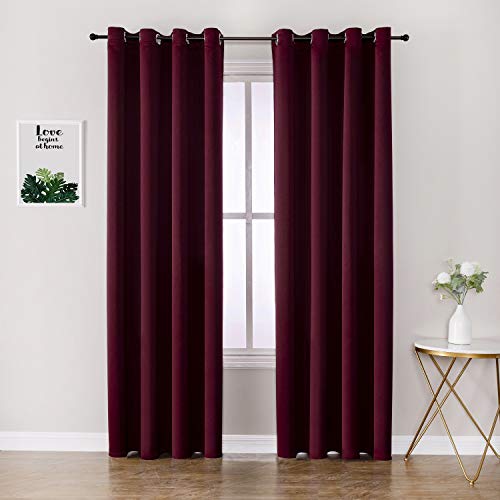
ChrisDowa Grommet Blackout Curtains for Bedroom and Living Room - 2 Panels Set
Grommet top for easy rod installation
View Today's Price
Deconovo Blackout Curtains for Bedroom, Thermal Room Darkening Grommet Window
OEKO-TEX Standard 100 certified materials
View Today's Price
Joydeco Blackout Curtains 72 Inch Length 2 Panels Set, Thermal Insulated Long
Blocks 85–99% of sunlight and UV rays
View Today's PriceHow to Choose the Right Blackout Curtains
Choosing the right blackout curtains depends on window size, blackout level, panel width, and hanging style—trade-offs that shift based on your room’s purpose and decor. A feature that’s perfect for a nursery can be a mistake in a living room, and the wrong length or width can ruin blackout performance. Our recommendation engine evaluates your specific needs across 12+ dimensions and matches you to the ideal blackout curtain in under 60 seconds.
About this guide
Blackout Curtains
Why Blackout Curtain Shopping Is Trickier Than It Looks
Picking blackout curtains in 2026 means juggling trade-offs most buyers underestimate. Do you grab a $20 polyester set of blackout curtains or splurge on $50 triple-weave blackout curtain panels? The price jump isn’t just about looks—cheap single-layer blackout curtains like the MIULEE Blackout block 70-80% of light, but let in edge leaks and fade after a few washes. Pay $40 for mid-range triple-weave blackout curtains from brands like Best Home Fashion and you’ll get 95%+ blackout, a softer drape, and insulation that can cut heating bills by 15-25%. But even the best blackout curtain fabric can’t fix poor sizing: most people buy blackout curtain panels the same width as their window, which leaves 20-30% of light slipping in at the sides. Curtain length is another trap—63-inch blackout curtains are fine for standard windows, but if you want true blackout, you need 84- or 96-inch blackout curtain drops that reach the floor. Hanging style matters too: grommet-top blackout curtains glide easily but look modern, while rod-pocket blackout curtain panels offer a classic tailored look but are harder to open. Most buyers focus on color or price and overlook these make-or-break blackout curtain details.
What Actually Sets Blackout Curtains Apart
The real differentiators in blackout curtains are not just the material or color, but the construction and blackout technology. Triple-weave blackout curtain fabric, found in mid-range $30-$40 blackout curtain sets from brands like Best Home Fashion or Utopia Bedding, blocks up to 99% of light and insulates without the stiff feel of rubber-backed blackout curtain panels. If you need 100% blackout for shift work or nurseries, skip basic polyester—choose blackout curtains with foam or rubberized linings and consider side channels for edge light. Grommet-top blackout curtains are a game changer for large windows, making daily opening and closing smooth, while rod pocket blackout curtain styles suit smaller or traditional spaces but can sag if the blackout curtain is too heavy. Darker blackout curtain colors like jet black or deep gray outperform pale shades in single-layer models, but with proper lining, even beige blackout curtains can deliver near-total blackout. Don’t be fooled by “blackout” labels—Consumer Reports found many budget blackout curtains only block 70-80% of light. Always check for verified lab-tested blackout curtain opacity. If you want automation, Lutron Caséta Smart Shades offer app control but cost $150+ per window—great for tech-forward homes, overkill for most bedrooms needing blackout curtains.
How to Choose: Matching Features to Your Space and Needs
Room size, window dimensions, and your blackout curtain needs all interact to determine the right blackout curtain. For large windows, you’ll need blackout curtain panels at least twice the width of your window for true darkness—skimp and you’ll get annoying leaks. If your priority is sleep (especially for shift workers or nurseries), focus on 100% blackout curtains and triple-weave or foam-backed blackout curtain linings, even if it means sacrificing style or color variety. In living rooms or kitchens, partial blackout curtains or lighter blackout curtain colors may be preferable to avoid groggy mornings—studies show full blackout curtains can delay wakefulness by blocking morning sunlight. Budget also shapes your blackout curtain choices: under $30 gets you basic dimming, $40 buys real blackout curtain performance and insulation, while $60+ unlocks premium blackout curtain finishes and smart features. Our quiz weighs your room size, window type, blackout curtain needs, and style preferences to recommend the best-fit blackout curtain. Don’t forget: blackout curtain panel count, hanging style, and washability all affect daily usability and long-term satisfaction. Measure carefully and prioritize blackout curtain function over looks if sleep or energy savings are your main goals.
Buyer's guide
How to choose
1Core Performance Criteria
- Look for triple-weave or foam-backed panels if you need true blackout—single-layer polyester only blocks 70-80% of light, per Consumer Reports tests.
- Curtain width should be at least twice your window width, plus 4-6 inches overlap on each side, to prevent edge light leaks.
- Panel length matters: 84-inch or 96-inch curtains offer floor-to-ceiling coverage, while short 63-inch panels leave gaps that ruin blackout effects.
- Choose darker colors for maximum light blocking in single-layer designs; black and deep gray outperform beige unless extra lining is used.
- Grommet tops slide smoothly and suit frequent opening, while rod pocket or back tab styles look tailored but can sag with heavy curtains.
- Thermal insulation is a bonus in premium models, cutting winter heating bills by 15-25% according to lab-tested Best Home Fashion panels.
2Build Quality and Durability
- Triple-weave fabrics from brands like Best Home Fashion and Utopia Bedding resist fading and warping better than cheap polyester after repeated washes.
- Foam-backed or rubberized blackout curtains are heavier and may strain standard curtain rods—use reinforced rods to prevent sagging over time.
- Machine-washable curtains are convenient, but always check care labels; 90% of shrinkage complaints come from ignoring dry-clean-only instructions.
- Avoid sub-$15 panels, which often feature flimsy stitching and thin linings that degrade blackout performance within a year.
- Look for reinforced seams and double-stitched hems, especially on long 84-inch or 96-inch panels, to prevent fraying and drooping.
- Colorfastness is crucial—cheaper dyes fade quickly in sun-exposed rooms, so opt for curtains with UV-resistant finishes for lasting appearance.
3Value Analysis
- The best value in 2026 is $25-40 for a set of two triple-weave thermal blackout curtains, balancing opacity, style, and insulation.
- Avoid single panels under $15; they typically leak light and lack the fullness needed for proper blackout, per expert reviews.
- Bulk packs offer around 20% savings if you need multiple windows covered—just ensure each panel meets width and length requirements.
- Premium smart curtains like Lutron Caséta start at $150 per window and are only worth it if you want app or voice control.
- Thermal insulation in mid-range models can pay for itself by reducing heating costs, especially in colder climates or poorly insulated homes.
- Don’t overpay for “designer” labels—focus on verified blackout performance and build quality instead of brand prestige.
4Use-Case Fit
- For bedrooms or nurseries, prioritize 100% blackout with foam-backed or triple-weave construction to ensure deep sleep and nap-friendly darkness.
- Living rooms benefit from partial blackout or lighter colors to avoid excessive darkness and morning grogginess, as shown in sleep studies.
- Large windows require extra-wide panels or multiple sets—measure carefully and aim for at least double the window width for full coverage.
- Shift workers and media rooms need true blackout and side channels to eliminate all light leaks, even at the edges.
- Kitchens and offices may prefer light-filtering or neutral colors for a brighter, more inviting atmosphere during the day.
- If you need frequent opening and closing, choose grommet tops for smooth sliding, especially on wide or heavy curtains.
5Common Mistakes to Avoid
- Measuring only the window width leads to 20-30% light leaks; always add extra width and overlap for true blackout.
- Choosing short curtain lengths exposes gaps at the bottom—always opt for floor-length panels for bedrooms or media spaces.
- Relying on “blackout” labels without checking construction; many budget curtains block only 70-80% of light in real-world use.
- Ignoring care instructions—machine-washing dry-clean-only panels causes shrinkage and ruins blackout effectiveness, as seen in user complaints.
- Using standard rods with heavy, foam-backed curtains results in sagging and drooping over time; upgrade to reinforced rods for durability.
- Prioritizing color or style over blackout percentage can undermine sleep quality if you need total darkness for health or work.
6Maintenance and Longevity
- Machine-washable triple-weave curtains last longer if washed in cold water and hung to dry, preserving blackout lining and color.
- Foam-backed and rubberized panels should be spot-cleaned or dry-cleaned to avoid warping or delamination after repeated laundering.
- Rotate panels every few months if exposed to direct sunlight to prevent uneven fading and prolong fabric life.
- Check for reinforced grommets or back tabs to prevent tearing, especially on heavy or frequently used curtains.
- Inspect seams and hems annually—re-stitch loose threads promptly to prevent larger tears and maintain blackout performance.
- Store off-season curtains in a cool, dry place to avoid mildew or fabric degradation, especially with thermal or foam linings.
FAQ
Frequently asked questions
Is triple-weave fabric really worth the extra cost for blackout curtains?
Yes, triple-weave fabric is a major upgrade if you want true blackout and thermal insulation. Unlike basic polyester, which blocks only 70-80% of light, triple-weave panels like Best Home Fashion or Utopia Bedding consistently achieve 95-99% blackout in lab tests. This construction also provides better drape and helps regulate room temperature, cutting heating costs by up to 25% in winter. The extra $10-20 per set pays off in both comfort and energy savings.
How do Best Home Fashion blackout curtains compare to MIULEE or Utopia Bedding?
Best Home Fashion blackout curtains are a strong mid-range pick, offering triple-weave construction and thermal insulation at $25-35 per set. MIULEE panels are budget-friendly but block less light—about 80-90%—and may fade faster. Utopia Bedding offers similar performance to Best Home Fashion, with solid build quality and color options. For total blackout and insulation, Best Home Fashion and Utopia Bedding outperform MIULEE, especially in bedrooms or nurseries where darkness is essential.
Do I really need 100% blackout curtains for a nursery or bedroom?
If you or your child are sensitive to light or need to sleep during the day, 100% blackout curtains are a game changer. Foam-backed or triple-weave panels block nearly all light, creating a pitch-dark environment ideal for shift workers, babies, or anyone struggling with early morning glare. Partial blackout curtains may leave you with unwanted light leaks, disrupting sleep. For bedrooms and nurseries, always prioritize verified 100% blackout, even if it limits your color or style choices.
What’s the ideal curtain width and length for full blackout?
For true blackout, each panel should be at least twice the width of your window, with 4-6 inches of overlap on each side. Length-wise, opt for 84-inch or 96-inch panels that reach the floor—shorter panels leave gaps that let in light. This sizing ensures maximum coverage and prevents the common mistake of edge leaks, which can undermine even the best blackout fabric. Always measure carefully and round up if in doubt.
Are smart blackout curtains like Lutron Caséta worth the premium?
Smart blackout curtains, such as Lutron Caséta Smart Shades, offer app and voice control, scheduling, and precise light management. They cost $150-250 per window, making them a luxury for most buyers. If you want automation for hard-to-reach windows or integrated smart home control, they’re worth the investment. For standard bedrooms or living rooms, traditional triple-weave curtains deliver similar blackout performance at a fraction of the price. Only pay the premium if convenience is your top priority.
How do I prevent curtain sagging and rod droop with heavy blackout panels?
Heavy blackout curtains, especially foam-backed or extra-wide panels, can overload standard rods and cause sagging. Always use reinforced or thick metal rods rated for your curtain’s weight. For rod pocket or back tab styles, check that the rod diameter matches the pocket size. Installing center supports for wide windows prevents droop. Proper hardware ensures your curtains hang straight and last longer, even with daily use or frequent opening and closing.
What’s the best way to wash and care for blackout curtains?
Machine-washable triple-weave curtains should be washed cold and hung to dry to avoid shrinkage and preserve blackout lining. Foam-backed or rubberized panels should be spot-cleaned or dry-cleaned, as machine washing can cause warping or delamination. Always follow the manufacturer’s care instructions—ignoring them is the top cause of fading and reduced blackout performance. Rotate panels in sun-exposed rooms to prevent uneven fading and extend the life of your investment.
Best Blackout Curtains By Category
Related Guides
Alarm Clocks
Matched to your sleep style, wake-up difficulty, power source, and must-have features—get the alarm clock that actually works for you.
Bar Carts
Style, storage, material, and budget—get matched to the bar cart that fits your space and entertaining style perfectly.
Bidet Toilet Seats
Comfort, hygiene, controls, and installation—get matched to the bidet seat that fits your home, habits, and budget.
Blackout Blinds
Room use, blackout level, window size, color, and budget—get matched to the right blackout blind for your space.