Skip the research trap. Get your whole house fans in 60 seconds.
We scored 300+ whole house fans across 5 dimensions — answer 5 quick questions and we'll match you to YOUR best pick.

Powered by DecisionScore™
Each product is evaluated across 18 weighted criteria — covering performance, value, build quality, and real-world usability. Your quiz answers re-weight the criteria to match what matters most to you, so two people can get different #1 picks from the same data.
See the DecisionScore methodology →- 3,300 CFM (2,425 CFM CA Title 24 certified) for homes up to 1,450 sq ft (2-story)
- 2-speed low voltage wall switch with timer
- R5 insulated gravity backdraft damper – no attic air infiltration
Find your perfect whole house fans
5 quick questions. No quiz-takes-10-minutes trap. A personalized match from 27 scored picks — with clear reasoning for every recommendation.
What is the approximate square footage of your home?
Whole house fans are sized by CFM. A general rule is 2–3 CFM per square foot. Desert climates may need up to 3 CFM/sq ft.
- Measure your home’s total square footage, including all floors you want to cool.
- Multiply your square footage by 2–3 to estimate the CFM needed.
- Larger homes require more attic venting—check for at least 1 sq ft vent per 750 CFM.
As an Amazon Associate and affiliate partner we earn from qualifying purchases. Links on this page may earn us a commission at no extra cost to you. Full disclosure
Not ready for the quiz? Here are our overall top picks
These are our top-rated picks overall. For a recommendation matched to YOUR specific needs,
QA-Deluxe 3300 Energy Efficient Whole House Fan, 2-Speed Wall Switch
3,300 CFM (2,425 CFM CA Title 24 certified) for homes up to 1,450 sq ft (2-story)
View Today's Price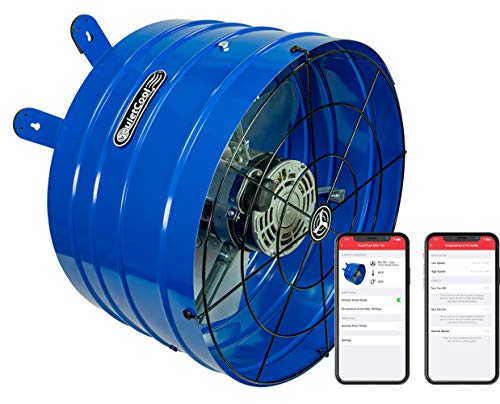
Quietcool AFG SMT PRO-2.0 Smart Attic Fan for Gable Vents - 1945 CFM - Smart App
1,945 CFM smart attic gable fan – cools attic by up to 30–50°F
View Today's Price
Quietcool QC ES-2250 Energy Saver Advanced Whole House Fan - Up to 2465 CFM - As
2,492 CFM on high / 1,991 CFM on low – covers up to 1,246 sq ft
View Today's PriceHow to Choose the Right Whole House Fans
Choosing the right whole house fan depends on airflow needs, home size, installation constraints, noise tolerance, and budget—trade-offs that shift based on your climate, attic space, and comfort priorities. A feature perfect for a 3,000 sq ft home is overkill (and too loud) in a 1,200 sq ft bungalow, while premium insulation may be wasted if you only run the fan in summer. Our recommendation engine evaluates your specific situation across 15+ dimensions and matches you to the right fan in under 60 seconds.
About this guide
Whole House Fans
The Real Buying Challenge: Specs, Trade-Offs, and Price Tiers
Choosing the right whole house fans in 2026 is trickier than it looks. The biggest mistake buyers make with whole house fans is chasing maximum CFM without matching it to their home’s actual square footage—oversizing whole house fans wastes energy, while undersizing leaves you sweating. For example, a 2,000 sq ft home needs 4,000–6,000 CFM from whole house fans, but many buyers grab a 6,000 CFM Master Flow GAF thinking bigger is always better. Not so: higher airflow from whole house fans means more noise and higher energy bills, especially with belt-drive whole house fans that can spike costs by 20–30%. Price tiers for whole house fans matter: budget window whole house fans ($150) are tempting but lack insulation and leak air in winter, while mid-range attic whole house fans ($250–$350) like QuietCool or Centric Air offer better efficiency. Premium whole house fans ($500+) from Tamarack Technologies or Centric Air Elite add R-38 insulated doors, remote controls, and ECM motors for quiet operation, but installation is more complex. Most buyers overlook attic venting requirements for whole house fans—1 sq ft per 750 CFM—or skip checking for durable warranties, leading to regrets when whole house fan motors fail in dusty attics after just a few years.
What Separates the Options: Technologies, Features, and Real Performance
The real differentiators among whole house fans in 2026 come down to motor type, insulation, and control features. Skip old-school belt-drive whole house fans unless you’re cooling a massive home and don’t care about noise—direct-drive and ECM motors in whole house fans are 20–30% quieter and last longer, especially in dusty attics. R-5 or R-38 insulated damper doors are non-negotiable for whole house fans if you want to avoid losing conditioned air in winter; uninsulated whole house fans can lose up to 40% of your cooling efficiency. Brands like Tamarack and Centric Air stand out for their self-sealing doors and long warranties on whole house fans, while QuietCool’s Energy Saver RF series brings wireless controls and smart integration to the mix. Don’t get distracted by multi-speed claims on whole house fans unless you’ll actually use them—two speeds cover most needs. Prioritize washable filters and IP-rated motors for whole house fans in dusty or humid climates. If your attic venting is inadequate, even the best whole house fans will underperform, so always verify you have at least 1 sq ft of venting per 750 CFM. In short: insulation and motor quality in whole house fans matter more than chasing the highest CFM or the fanciest remote.
Decision Factors and How to Choose: Interactions That Matter
Square footage, fan type, and budget all interact in ways that make choosing whole house fans a multi-layered decision. If you have minimal attic space, compact in-line duct whole house fans are a must, but expect to pay more for the same airflow. Large homes (2,000–3,000 sq ft) need 4,000–6,000 CFM from whole house fans, but only if your attic is properly vented—otherwise, you’re just recirculating hot air. Budget constraints force tough choices: at $150–$250, you’ll get basic window whole house fans without insulated doors or long warranties, while $350–$500 unlocks premium features like ECM motors and R-38 insulation in whole house fans. If quiet operation is critical, focus on ECM or PSC motors in whole house fans and avoid belt-drive models, which can exceed 60 dB. Our quiz evaluates your home size, installation preferences, noise tolerance, speed settings, and budget to match you with the right whole house fans. Beyond that, consider your climate—humid regions may need supplemental dehumidification, and coastal homes should prioritize corrosion-resistant whole house fans. Don’t underestimate installation complexity: improper setup of whole house fans can halve performance and void warranties, so factor in professional help if you’re not handy.
Buyer's guide
How to choose
1Core Performance Criteria
- Match airflow (CFM) to your home’s square footage—use 2–3 CFM per sq ft, not just the biggest number on the box.
- Check for at least R-5 insulation on damper doors; R-38 is ideal for year-round efficiency and preventing air leaks.
- Direct-drive and ECM motors run 20–30% quieter and last longer than traditional belt-drive models, especially in dusty attics.
- Multi-speed fans let you balance noise and airflow, but two speeds are sufficient for most households in 2026.
- Ensure attic venting meets 1 sq ft per 750 CFM to avoid recirculation and performance loss of up to 50%.
- Look for models with real-world user reviews and at least a 10-year motor warranty for peace of mind.
2Build Quality and Durability
- Fans from Tamarack Technologies and Centric Air offer R-38 insulated, self-sealing doors that prevent winter heat loss and boost longevity.
- ECM and PSC motors are more reliable and energy-efficient than old belt-drive designs, lasting 10–15 years with proper attic conditions.
- IP-rated motors and washable filters are essential for homes in dusty or humid climates to prevent early motor failure.
- Budget models under $250 often use thinner metal and basic insulation, which can warp or rattle after a few seasons of use.
- Check for sturdy mounting hardware and robust damper mechanisms—cheap plastic parts are a common failure point in window fans.
- A warranty of 10 years or more signals confidence in build quality; Tamarack’s lifetime motor warranty is a standout in 2026.
3Value and Cost Analysis
- Premium fans ($800–$1,000) like Tamarack HV1600 cost more upfront but save $50–$100 per year in AC costs thanks to R-38 insulation.
- Budget belt-drive fans ($400) may seem cheap but can raise energy bills 20–30% higher than ECM-motor models over their lifespan.
- Mid-range attic fans ($250–$350) from QuietCool or Centric Air offer the best balance of performance, efficiency, and warranty.
- Don’t pay extra for smart controls unless you’ll use them daily; a reliable wall switch or RF remote covers most needs.
- Consider installation costs—professional attic installs can add $200–$400, while window fans are truly DIY-friendly.
- Factor in long-term durability: a $500 fan with a 15-year warranty often outlasts two $250 fans that need replacing after 5 years.
4Fit for Your Use Case
- Ceiling-mounted ducted fans are best for whole-home cooling in houses with attic access and proper venting.
- Window fans are ideal for renters or homes without attic space, but lack insulation and can leak air in winter.
- Attic/gable exhaust fans only ventilate attic air—not a true substitute for a whole house fan in warm climates.
- Compact in-line duct models suit homes with minimal attic space, but cost more per CFM than standard attic fans.
- If you need sleep-friendly operation, prioritize ECM motors and insulated ducting to keep noise below 45 dB.
- Homes in humid regions should avoid pulling in moist air during peak humidity—consider pairing with a dehumidifier.
5Common Mistakes and Pitfalls
- Oversizing the fan wastes energy and creates excess noise—match CFM to your actual square footage for best results.
- Ignoring attic venting requirements can cut cooling performance by 50% or more and may void the manufacturer’s warranty.
- Choosing uninsulated models leads to 40% efficiency loss in winter, driving up heating bills and reducing comfort.
- Assuming all fans are DIY-friendly—attic installs often require electrical work and precise ducting for safe operation.
- Neglecting warranty terms—budget fans often have only 1–2 year coverage, while premium models offer 10–15 years or lifetime.
- Failing to check for washable filters or IP-rated motors in dusty climates leads to early motor burnout and costly repairs.
6Maintenance and Longevity
- Clean washable filters and check for dust buildup in the motor housing every 3–6 months to prevent overheating.
- Lubricate moving parts annually if recommended by the manufacturer—especially for belt-drive and older direct-drive fans.
- Inspect damper doors for proper sealing before winter; damaged seals can leak conditioned air and reduce efficiency.
- Replace worn belts or damaged blades promptly to avoid motor strain and noisy operation in belt-drive models.
- Test remote controls and wall switches regularly—malfunctions are a top complaint with Tamarack and other smart-controlled fans.
- Keep attic spaces dry and well-ventilated to extend the lifespan of both the fan motor and insulation materials.
FAQ
Frequently asked questions
Is R-38 insulation on damper doors worth the extra cost?
Absolutely—R-38 insulated damper doors, found on models like the Tamarack HV1600, dramatically reduce winter heat loss and prevent backdrafts. While you’ll pay $100–$200 more upfront, you’ll save $50–$100 per year in heating and cooling costs. Uninsulated or R-5 doors can lose up to 40% of your conditioned air, negating much of the energy savings from running a whole house fan. For year-round comfort and efficiency, R-38 insulation is a smart investment.
How does a QuietCool fan compare to a Master Flow model?
QuietCool fans, especially the Energy Saver RF series, use direct-drive or ECM motors for quieter operation and better efficiency than Master Flow’s belt-drive models. Master Flow’s GAF 30" offers up to 6,000 CFM for large homes but can exceed 60 dB and lacks advanced insulation. QuietCool’s mid-range models balance airflow, noise, and R-5 insulation, making them ideal for most homes under 2,500 sq ft. Choose QuietCool for quieter performance; Master Flow if you need maximum airflow and don’t mind noise.
What CFM rating do I need for a 1,500 sq ft home?
For a 1,500 sq ft home, you should target a whole house fan rated between 3,000 and 4,500 CFM. This ensures rapid air exchange without excessive noise or wasted energy. Always verify your attic has at least 4 sq ft of venting (1 sq ft per 750 CFM). Oversizing above 5,000 CFM is unnecessary and will only increase energy use and noise. Models like the Centric Air 3.4A or QuietCool Classic series fit this range perfectly.
Are window-mounted whole house fans effective for cooling?
Window-mounted fans can be effective for small homes, apartments, or rentals where attic installation isn’t possible. They’re affordable (starting around $150) and easy to install, but lack insulated doors and can leak air in winter. They also typically max out around 2,000–2,500 CFM, so they’re best for spaces under 1,200 sq ft. For larger homes or year-round efficiency, attic-mounted ducted fans with R-38 insulation are a better choice.
Do I need professional installation for a whole house fan?
Professional installation is highly recommended for ceiling-mounted or attic-ducted fans, especially if you’re not comfortable with electrical work or attic ducting. Improper setup can cause hot air recirculation, excessive noise, or even void your warranty. Expect to pay $200–$400 for a pro install. Window fans and some plug-and-play models from Tamarack or QuietCool can be DIY-friendly, but always follow the manufacturer’s instructions closely.
How long do whole house fan motors typically last?
With proper maintenance, ECM and PSC motors from reputable brands like Tamarack and Centric Air can last 10–15 years, especially when installed in clean, well-ventilated attics. Belt-drive motors in dusty conditions may fail after 3–5 years. Regularly cleaning filters, lubricating moving parts, and checking for dust buildup will maximize lifespan. Always check the warranty—Tamarack offers lifetime coverage on some models, while budget fans may only have 1–2 years.
What features should I prioritize for a quiet whole house fan?
For quiet operation, prioritize ECM or PSC motors, insulated ducting, and self-sealing damper doors. Avoid belt-drive models, which can exceed 60 dB. Look for fans rated under 45 dB on low speed, such as the QuietCool Energy Saver RF or Tamarack HV1600. Multi-speed controls help you fine-tune noise levels, and remote or smart app controls let you adjust settings without getting out of bed. Proper attic venting also reduces noise from air turbulence.
Related reading
Best Whole House Fans By Category
Related Guides
AC Units
Room size, installation, noise, budget, and smart features—get matched to the AC unit that fits your space and lifestyle.
Best Ceiling Fans
Room size, ceiling height, style, and lighting—get matched to the perfect ceiling fan for your space and comfort.
Compact Air Purifier Fans
Room size, filtration, climate control, and smart features—get matched to the compact air purifier fan that truly fits your lifestyle.
Dehumidifiers
Room size, drainage, noise, and convenience—get matched to the dehumidifier that actually fits your space and lifestyle.
Door Sweeps
Door location, installation method, seal type, and budget—all matched to your needs for the perfect draft and pest barrier.