Skip the research trap. Get your portable car jump starters in 60 seconds.
We scored 250+ portable car jump starters across 5 dimensions — answer 5 quick questions and we'll match you to YOUR best pick.

Powered by DecisionScore™
Each product is evaluated across 18 weighted criteria — covering performance, value, build quality, and real-world usability. Your quiz answers re-weight the criteria to match what matters most to you, so two people can get different #1 picks from the same data.
See the DecisionScore methodology →- Affordable 2,000‑amp starter rated for up to 7L gas engines
- Doubles as a 20,000 mAh power bank with dual USB outputs
- Simple LED display and rugged water‑resistant case
Find your perfect portable car jump starters
5 quick questions. No quiz-takes-10-minutes trap. A personalized match from 23 scored picks — with clear reasoning for every recommendation.
What size engine do you need to start?
Engine size determines how much current a jump starter must deliver. Small cars need far less power than large SUVs, trucks or commercial rigs. If you’re unsure, check your vehicle’s engine displacement. When in doubt, pick the larger option to ensure reliable starts.
- Check your vehicle’s engine displacement—larger engines need higher peak amps for reliable starts.
- If you own multiple vehicles, size up to cover the largest engine you’ll encounter.
- Diesel engines and cold climates require more power than gas engines of the same size.
As an Amazon Associate and affiliate partner we earn from qualifying purchases. Links on this page may earn us a commission at no extra cost to you. Full disclosure
Not ready for the quiz? Here are our overall top picks
These are our top-rated picks overall. For a recommendation matched to YOUR specific needs,
GOOLOO GP2000 Jump Starter - 12V 2000A Car Battery Jumper Starter Portable
Affordable 2,000‑amp starter rated for up to 7L gas engines
View Today's Price
GOOLOO A3 12V 3000A Portable Jump Starter with Air Compressor
Battery‑free supercapacitor jump starter charges from a weak battery
View Today's Price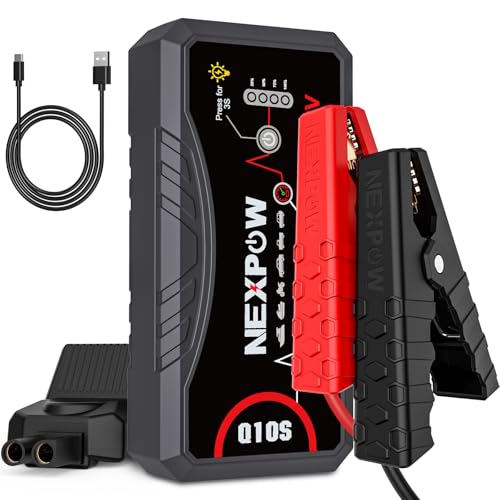
NEXPOW Car Jump Starter 2026 Upgraded Car Battery Jump Starter Pack
2,000‑amp output rated for 7.5L gas and 6.5L diesel engines
View Today's PriceHow to Choose the Right Portable Car Jump Starters
Choosing the right portable car jump starter depends on your engine size, desired features, portability needs, and preferred battery technology—trade-offs that shift based on your vehicle type and usage patterns. A feature perfect for a compact car is often useless for a diesel truck, and extras like air compressors add weight and cost you may not need. Our recommendation engine evaluates your specific situation across five key dimensions and matches you to the right jump starter in under 60 seconds.
About this guide
Portable Car Jump Starters
The Real Buying Challenge: Power, Features, and Price Trade-Offs
Choosing portable car jump starters in 2026 is trickier than it looks because the market is flooded with portable car jump starters that seem similar but differ wildly in performance and reliability. The biggest trap? Focusing only on peak amp ratings or battery capacity (mAh) without matching portable car jump starters to your actual engine size. For example, a 1000A portable car jump starter like the NOCO Boost Plus GB40 might work for a compact sedan, but it will leave you stranded if you try to crank a 6L diesel truck—where a 6000A beast like the GOOLOO GT6000 is essential. Many buyers also overlook how cold weather or a deeply discharged battery can overwhelm underpowered portable car jump starters, especially those under $80 that simply can’t deliver for larger vehicles. Price tiers matter: $100–$150 gets you reliable 2000–6000A portable car jump starters with fast USB-C recharging and 20+ jumps per charge, while $200+ heavy-duty portable car jump starters like the Clore JNC770R are built for commercial use but sacrifice portability. Shoppers often get distracted by flashy extras like built-in air compressors or power banks on portable car jump starters, not realizing these can drive up cost without improving core jump-start performance. Don’t let marketing hype or bargain pricing steer you wrong—real-world needs and specs for portable car jump starters should always come first.
What Separates the Options: Specs, Tech, and Real-World Performance
Not all portable car jump starters are created equal, and the differences go far beyond brand names. The most critical differentiator is matching peak amps on portable car jump starters to your engine size—skip anything under 2000A for trucks or SUVs, and don’t expect a 1000A portable car jump starter to reliably start a 6L diesel. Lithium-ion portable car jump starters like the GOOLOO GT6000 and NOCO GB40 dominate for compact size, fast USB-C PD charging (as quick as 1.4 hours), and long standby times (up to 24 months). Heavy-duty lead-acid portable car jump starters such as the Clore Jump-N-Carry JNC770R are nearly indestructible and deliver massive cranking power, but they’re bulky and best for shop or fleet use. Waterproofing (IP67+), smart safety clamps, and true multi-port charging (USB-A, USB-C, DC) are features that actually matter in daily use—especially if you store portable car jump starters in the trunk year-round. Skip integrated air compressors on portable car jump starters unless you’ll use them often; they add weight and complexity. Prioritize reliable clamps (at least 12-inch, smart jaws) and proven brands of portable car jump starters over flashy extras. In short: engine compatibility, battery tech, and real-world recharge speed matter more than most buyers realize when choosing portable car jump starters.
Decision Factors and How to Choose the Right Jump Starter
Engine size, battery technology, portability, and extra features all interact in ways that can make or break your experience with portable car jump starters. For example, if you drive both a compact car and a diesel truck, you’ll need portable car jump starters with at least 2000A peak amps—anything less is a gamble. If you want to use portable car jump starters as a power bank for camping, look for models with multiple USB and DC ports, but know that these portable car jump starters often cost more and may be heavier. Budget is a real constraint: under $100 means sacrificing power or recharge speed on portable car jump starters, while $150–$200 opens up fast-charging, high-output portable car jump starters like the GOOLOO GT6000. Battery type affects both weight and longevity; lithium-ion portable car jump starters are the sweet spot for most users, while lead-acid portable car jump starters are only worth the heft for shop-grade reliability. Our quiz evaluates your engine type, feature priorities, portability needs, charging preferences, and battery tech to pinpoint the best portable car jump starters for you. The key is to balance must-have power and safety with the convenience features you’ll actually use—don’t pay extra for a compressor on portable car jump starters if you never inflate tires, and don’t skimp on amps if you drive a big vehicle.
Buyer's guide
How to choose
1Core Performance Criteria
- Always match peak amp rating to your largest engine—2000A minimum for trucks or SUVs, 1000A is only safe for compact cars.
- Lithium-ion models like GOOLOO GT6000 deliver 6000A and up to 35 jumps per charge, making them ideal for frequent or multi-vehicle use.
- Recharge speed matters: USB-C PD charging (1.4 hours full) beats older Micro-USB designs, especially in emergencies.
- Standby retention is crucial—look for models rated for 18–24 months, or you’ll lose charge before you need it.
- Short cables (under 12 inches) limit battery access; opt for longer, smart-jaw clamps for easier, safer connections.
- Skip underpowered starters below $80—they rarely deliver enough current for anything larger than a subcompact engine.
2Build Quality and Durability
- Heavy-duty units like the Clore JNC770R use rugged housings and industrial-grade clamps, but weigh more and are harder to store.
- Waterproofing (IP67+) is a must if you plan to keep your jump starter in the trunk or use it in all weather conditions.
- Clamp quality is make-or-break; poorly made jaws spark on dirty terminals and can fail to deliver full power.
- Look for reinforced cables and impact-resistant casings, especially if you’ll use the jump starter for roadside emergencies.
- Lithium-ion models are lighter and more portable, but check for robust internal protection circuits to prevent overheating.
- Units with analog pressure gauges and long air hoses (like Clore JNCAIR) are more reliable for tire inflation than digital-only models.
3Value Analysis and Price Tiers
- The $100–$150 range is the sweet spot for reliable 2000–6000A models with fast charging and solid build quality.
- Premium units ($200+) like Clore deliver unmatched power but are overkill unless you regularly jump large engines or run a shop.
- Avoid sub-$80 models—they lack the power and durability for real emergencies, especially with larger vehicles or cold weather starts.
- Spring sales often bring 18–50% discounts on top models like GOOLOO GT6000, making them a strong value if you time your purchase.
- Don’t overpay for features you won’t use; extras like air compressors and AC outlets are only worth it if you need them regularly.
- Check for warranty coverage—reputable brands like NOCO and Clore back their units for 12–24 months, adding peace of mind.
4Use-Case Fit and Feature Selection
- If you only drive compact cars, a 1000A starter like NOCO GB40 is sufficient and ultra-portable for glovebox storage.
- For trucks, SUVs, or RVs, prioritize 2000A+ models—GOOLOO GT6000 or Clore JNC770R are designed for heavy-duty cranking.
- Frequent campers or road trippers should seek models with multi-port USB, DC, and even AC outlets for powering devices.
- Choose built-in air compressors only if you routinely inflate tires; otherwise, skip the added bulk and cost.
- Urban drivers may prefer ultra-compact, lightweight units, while commercial users need shop-grade, lead-acid designs for reliability.
- If you share the jump starter among multiple vehicles, pick a model with the broadest engine compatibility and robust safety features.
5Common Mistakes and Pitfalls
- Many buyers underestimate how much power is needed for cold weather or large engines—always round up on peak amps.
- Ignoring clamp quality leads to connection failures; always check for smart jaws and at least 12-inch cable length.
- Relying on outdated Micro-USB charging means painfully slow recharge times—USB-C PD is now essential for emergencies.
- Storing the unit for months without checking charge can leave you stranded—recharge every 3 months, even with 24-month standby claims.
- Assuming all jump starters can inflate tires or power AC devices—verify features before you buy, as most don’t include these extras.
- Buying the cheapest model often results in disappointment; under $80 units rarely perform reliably for anything beyond compact cars.
6Maintenance and Longevity
- Recharge lithium-ion jump starters every 3–6 months to maintain battery health, even if the manufacturer claims 24-month standby.
- Store your unit in a cool, dry place—extreme heat or cold can degrade battery performance and reduce lifespan.
- Regularly inspect clamps and cables for corrosion or wear; clean battery terminals before use to ensure solid connections.
- If your model includes an air compressor, run it monthly to keep seals lubricated and prevent failure during emergencies.
- Lead-acid units require occasional top-off charging and should be checked for electrolyte levels if user-serviceable.
- Follow the manufacturer’s instructions for storage and charging cycles—proper care extends the effective life to 3–5 years or more.
FAQ
Frequently asked questions
Is it worth paying extra for a jump starter with a built-in air compressor?
A built-in air compressor is only worth the added cost if you regularly inflate tires or need all-in-one roadside capability. Models like the Battery Tender 800 AMP combine solid jump-start power with tire inflation, but they’re bulkier and pricier—typically $120–$150. If you rarely use this feature, you’re better off with a lighter, more compact jump starter and a separate portable inflator. For most drivers, prioritizing peak amps and recharge speed delivers better value than paying for extras you won’t use.
How does the GOOLOO GT6000 compare to the NOCO Boost Plus GB40?
The GOOLOO GT6000 delivers 6000A peak current, supports up to 8L gas or 6.5L diesel engines, and offers 35 jumps per charge with ultra-fast 1.4-hour USB-C charging. The NOCO Boost Plus GB40, at 1000A, is best for compact cars and offers superior waterproofing (IP67). If you drive trucks or larger vehicles, the GOOLOO is the clear winner for raw power and versatility, while the NOCO is perfect for everyday drivers needing a compact, weatherproof unit.
What peak amps do I need for a diesel truck or large SUV?
For diesel trucks or large SUVs, choose a jump starter with at least 2000A peak amps—preferably 4000A or higher for cold weather reliability. Models like the GOOLOO GT6000 (6000A) or Clore JNC770R are specifically designed for heavy-duty engines and can handle repeated starts. Underpowered units (below 2000A) will struggle or fail entirely, especially if the battery is deeply discharged or temperatures are low.
Are lithium-ion jump starters safe and durable for long-term use?
Modern lithium-ion jump starters are safe and durable, provided you choose a reputable brand with built-in safety protections like overcurrent, reverse polarity, and thermal shutdown. Models such as the GOOLOO GT6000 and NOCO GB40 offer long standby times (up to 24 months) and can last 3–5 years with proper care. Recharge every 3–6 months, store in moderate temperatures, and inspect clamps regularly to maximize lifespan and reliability.
Can I use a portable jump starter as a power bank for camping or emergencies?
Yes, many jump starters double as power banks, offering USB-A, USB-C, and sometimes DC or AC outlets for charging phones, tablets, and small devices. Models like the GOOLOO GT6000 and Etenwolf Helios J1 provide multi-port charging and high capacity (27,000mAh), making them ideal for camping or road trips. However, using these features will drain the battery faster, so always recharge after heavy use to ensure jump-start capability.
What’s the advantage of shop-grade lead-acid jump starters like Clore JNC770R?
Shop-grade lead-acid jump starters like the Clore JNC770R deliver unmatched cranking power and durability, making them ideal for commercial garages, fleet operators, or anyone needing to jump multiple large vehicles daily. They’re heavier (often 10+ lbs) and bulkier than lithium-ion models, but their robust construction and long service life justify the investment for heavy users. For most personal vehicles, a high-quality lithium-ion unit is more practical.
How often should I recharge my jump starter to keep it ready?
Even with models rated for 18–24 months of standby, it’s best to recharge your jump starter every 3–6 months to ensure maximum reliability. Lithium-ion batteries gradually lose charge, especially in extreme temperatures. Set a calendar reminder to top off the unit quarterly, and always check the charge before long trips or winter storage. Regular maintenance prevents disappointment when you need it most.
Best Portable Car Jump Starters By Category
Related Guides
Extra Batteries
Battery size, device type, chemistry, pack count, and budget—get matched to the best extra batteries for your real-world needs.
Portable Generators
Power needs, fuel type, portability, and safety—get matched to the best generator for your backup, camping, or job site use.
Portable Power Stations
Matched to your power needs, runtime priorities, battery type, solar charging, and expandability—no more guessing or generic lists.
Power Stations
Capacity, battery chemistry, solar input, and price—get matched to the right portable power station for camping, backup, or travel.