Skip the research trap. Get your dog gps trackers & smart collars in 60 seconds.
We scored 1900+ dog gps trackers & smart collars across 5 dimensions — answer 5 quick questions and we'll match you to YOUR best pick.
Powered by DecisionScore™
Each product is evaluated across 18 weighted criteria — covering performance, value, build quality, and real-world usability. Your quiz answers re-weight the criteria to match what matters most to you, so two people can get different #1 picks from the same data.
See the DecisionScore methodology →- Health‑tracking collar with Vetinsights monitoring
- Battery lasts about two weeks between charges
- Uses AT&T LTE‑M and GPS for real‑time location
Find your perfect dog gps trackers & smart collars
5 quick questions. No quiz-takes-10-minutes trap. A personalized match from 190 scored picks — with clear reasoning for every recommendation.
Where will you primarily use the tracker?
Different trackers excel in different environments. Urban devices rely on cellular networks; rural and back‑country collars may use radio or satellite, while some can cover huge properties or cross borders. Unsure? Urban is a safe default.
- Urban trackers use cell networks—great for city dogs but unreliable if you lose service.
- Rural and off-grid areas need radio or satellite collars for consistent tracking.
- Large properties may require systems with unlimited fences and long-range coverage.
As an Amazon Associate and affiliate partner we earn from qualifying purchases. Links on this page may earn us a commission at no extra cost to you. Full disclosure
Not ready for the quiz? Here are our overall top picks
These are our top-rated picks overall. For a recommendation matched to YOUR specific needs,
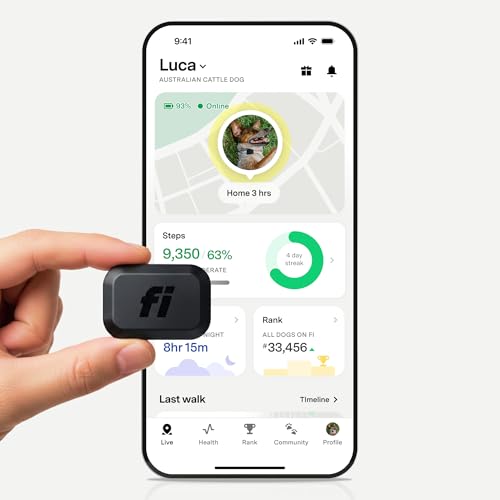
Fi Mini GPS Tracker for Dogs — 12-Month Membership Included — Smart Pet Tracking
Health‑tracking collar with Vetinsights monitoring
View Today's Price![Fi New Series 3+ Smart Dog Tracker Collar [6 Month Membership Included] GPS](https://m.media-amazon.com/images/I/41UoHeHXd9L._SL500_.jpg)
Fi New Series 3+ Smart Dog Tracker Collar [6 Month Membership Included] GPS
Up to six‑week battery life depending on activity
View Today's Price
GPS Tracker for Dogs, Smart Collar with Real-Time Location - Pet Location
Check today’s price →Lightweight GPS tracker with nationwide coverage via Verizon
View Today's PriceHow to Choose the Right Dog GPS Trackers & Smart Collars
Choosing the right dog GPS tracker depends on your dog’s size, roaming environment, feature priorities, and budget—factors that interact in surprising ways. A tracker perfect for city walks may fail on rural acreage, while battery life and subscription costs shift the trade-offs. Generic top-10 lists can’t account for these real-world interactions. Our recommendation engine evaluates your needs across five key dimensions and matches you to the ideal tracker in under 60 seconds.
About this guide
Dog GPS Trackers & Smart Collars
Why Picking the Right Tracker Is Tricky
Choosing dog GPS trackers in 2026 is far more complex than just picking the first collar you see. The market for dog GPS trackers ranges from $30 Bluetooth tags that only work near your phone to $800 multi-satellite collars like the Garmin Alpha T-20, which can cover up to 100,000 acres and set unlimited virtual fences. Many buyers underestimate how much their environment and their dog’s lifestyle affect the performance of dog GPS trackers. For example, Bluetooth-only dog GPS trackers like DOTT are affordable and last months on a charge, but they’re nearly useless if your dog escapes in a rural area. Conversely, a premium dog GPS tracker with cellular or satellite connectivity may require a monthly subscription, adding up over time. Battery life is another trade-off: health-monitoring smart dog GPS trackers with rapid updates may last only a few days, while basic dog GPS trackers can go weeks or even months. Buyers often get tripped up by assuming all dog GPS trackers work everywhere, or by ignoring the total cost of ownership—including subscription fees and replacement straps. The real challenge is matching dog GPS trackers to your specific needs, not just chasing the latest tech.
What Actually Sets Trackers Apart
Not all dog GPS trackers are created equal, and the differences go far beyond brand names. Garmin’s Alpha T-20, for example, is a dog GPS tracker built for rugged, off-grid use, with a self-contained radio system and no subscription required—a significant upgrade for rural or hunting dogs. In contrast, dog GPS trackers like FitBark and Satellai offer health and activity monitoring with AI-driven insights, but rely on cellular networks and require a monthly plan. Skip Bluetooth-only dog GPS trackers unless your dog never leaves your side or you live in a dense urban area with a strong community network. Battery life is a real differentiator among dog GPS trackers: the Marco Polo Advanced Pet Tracker can last up to 45 days in standby, while health-focused smart dog GPS trackers may need charging every 3-5 days. Features like virtual fences, programmable safety zones (up to four on some dog GPS trackers), and escape alerts matter more than most buyers realize—especially if your property isn’t fenced. Don’t be swayed by flashy apps alone; real-world tracking accuracy, coverage area, and device weight are far more important in dog GPS trackers than cosmetic features or brand hype.
How to Decide: Factors That Interact
The best dog GPS trackers for your dog depend on how your environment, your dog’s size, and your budget interact. For example, a tiny toy breed under 9 lbs needs an ultra-light dog GPS tracker (like DOTT’s 0.8 oz model), while a large, active dog on a big property may require a rugged, radio-based dog GPS tracker like Marco Polo or Garmin. If you live in a city, cellular-based dog GPS trackers with health features (like FitBark or Satellai) make sense—just be ready for ongoing subscription fees. Rural owners should prioritize stand-alone radio or satellite dog GPS trackers, even if it means fewer smart features. Battery life is always a trade-off with dog GPS trackers: longer life usually means fewer features or slower updates. Our quiz evaluates your environment, feature priorities, battery expectations, dog size, and subscription tolerance in one go to help you choose the right dog GPS tracker. The key is to be realistic—don’t pay for health tracking if you just need location, and don’t expect a $50 dog GPS tracker to work off-grid. Think about where your dog actually roams and how much hassle you’ll tolerate with charging and fees for dog GPS trackers.
Buyer's guide
How to choose
1Core Performance Criteria
- Prioritize real-time location accuracy and update frequency, especially if your dog is an escape artist or roams large properties.
- Check coverage: Bluetooth tags like DOTT only work near your phone, while Garmin Alpha T-20 operates off-grid with its own radio system.
- Battery life varies dramatically—some health-monitoring collars last 3-5 days, while Marco Polo can go up to 45 days in standby mode.
- Look for programmable safety zones and virtual fences if you want automatic escape alerts or to monitor boundaries on large acreage.
- Evaluate the app interface for ease of use and map clarity—some, like Link, lack location history, which can be frustrating during a search.
- Consider multi-dog support if you have several pets, as some systems allow tracking of multiple collars from a single handheld or app.
2Build Quality and Durability
- Choose rugged, water-resistant collars for active or outdoor dogs—Garmin and Marco Polo excel here, while basic tags may not survive rough play.
- Check the weight and size: DOTT’s 0.8 oz tag suits toy breeds, but heavy collars can be uncomfortable or unsafe for small dogs.
- Look for reinforced attachment points or extra-strong straps if your dog is a puller or chewer, as weak clips are a common failure point.
- Premium models like Satellai and Garmin typically use higher-quality materials than entry-level Bluetooth tags, justifying their higher price.
- Verify the device’s IP rating if your dog swims or plays in mud—waterproofing is a must for outdoor adventures or rainy climates.
- Assess the quality of included mounting hardware—some trackers require additional collar clips or pouches, adding to the real cost.
3Value Analysis and Cost Over Time
- Don’t be fooled by low upfront prices—many cellular trackers require $8–$15 monthly subscriptions, which add up quickly over a year.
- Bluetooth-only trackers like DOTT have no ongoing fees but offer limited range and features, making them best for budget-conscious city dwellers.
- Radio-based systems like Marco Polo are expensive upfront but subscription-free, making them cost-effective for rural or multi-dog households.
- Consider the total package: some trackers need separate collar clips or pouches, so factor in $10–$20 for essential accessories.
- Health-monitoring smart collars cost more but offer AI-driven insights and activity tracking, which may justify the premium for some owners.
- Watch for hidden costs like replacement straps or batteries, especially if your dog is rough on gear or you need backup hardware.
4Use-Case Fit and Feature Priorities
- Urban dogs benefit most from cellular-based trackers with health and activity features, like FitBark or Satellai, but require reliable network coverage.
- Rural or off-grid pets need radio or satellite-based collars—Garmin and Marco Polo excel here, even if they lack fancy app features.
- If you travel internationally, look for global coverage—some trackers work in over 180 countries, but check roaming costs and compatibility.
- Tiny dogs under 9 lbs need ultra-light tags; avoid bulky collars that can cause discomfort or risk injury to small breeds.
- Multi-dog households should prioritize systems that support multiple collars on one app or handheld, simplifying management and reducing costs.
- Skip health tracking and virtual fences if you just want basic location—save money and hassle by focusing on core tracking performance.
5Common Mistakes and Buyer Pitfalls
- Assuming all trackers work everywhere—Bluetooth tags fail outside city limits, and cellular models need reliable coverage to function properly.
- Forgetting to factor in ongoing subscription fees, which can double the real cost over two years if you’re not careful.
- Choosing a tracker that’s too heavy or bulky for your dog’s size, leading to discomfort, chafing, or even refusal to wear it.
- Ignoring battery life—many buyers are surprised when health-monitoring collars need charging every few days, disrupting routines or risking downtime.
- Overvaluing flashy app features while neglecting real-world tracking accuracy, durability, or ease of use in stressful situations.
- Not checking compatibility with your dog’s existing collar or harness, which can require extra purchases or awkward workarounds.
6Maintenance and Longevity
- Regularly clean and inspect the collar and tracker for dirt, moisture, and wear—especially after hikes, swims, or muddy play sessions.
- Recharge the battery according to the manufacturer’s schedule—deep discharges can shorten battery life, especially in health-monitoring smart collars.
- Check for firmware updates in the app; updated software can improve accuracy, add features, or fix bugs that affect reliability.
- Replace worn or damaged straps promptly—loose or frayed attachments are a leading cause of lost trackers, especially for active dogs.
- Store backup charging cables and mounting hardware, as proprietary parts can be hard to replace quickly if lost or broken.
- If your tracker uses replaceable batteries, keep spares on hand—long standby life is only useful if you remember to swap them out.
FAQ
Frequently asked questions
Is paying for a monthly subscription on a GPS dog tracker worth it?
A monthly subscription is often necessary for cellular-based trackers like FitBark or Satellai, which provide real-time location updates and health data. If you want escape alerts, activity monitoring, and coverage beyond Bluetooth range, the subscription is usually worth it. However, if you only need basic proximity tracking and rarely leave urban areas, a subscription-free Bluetooth or radio-based tracker like Marco Polo may be more cost-effective in the long run.
How does the Garmin Alpha T-20 compare to the Marco Polo Advanced Pet Tracker?
The Garmin Alpha T-20 and Marco Polo Advanced Pet Tracker both excel in off-grid and rural environments, but their technology differs. Garmin uses a self-contained radio system with no subscription, covering up to 100,000 acres and supporting unlimited virtual fences. Marco Polo also operates without cellular networks and offers up to 45 days of standby battery life. Garmin is better for advanced training and multiple dogs, while Marco Polo is simpler and ideal for single-dog households.
What battery life should I expect from a health-monitoring smart collar?
Health-monitoring smart collars like Satellai or FitBark typically last 3–5 days per charge, depending on update frequency and feature use. If you enable rapid location updates or continuous health monitoring, expect to charge even more often. In contrast, basic Bluetooth tags can last weeks or months, but with far fewer features. Always check real-world battery life, as advertised numbers often assume minimal usage.
Are Bluetooth-only trackers like DOTT reliable for finding lost dogs?
Bluetooth-only trackers such as DOTT are best for tracking pets within close range—typically up to 100 feet from your phone or a participating network. They’re reliable for locating pets indoors or in dense urban areas with many users, but nearly useless if your dog escapes in rural or remote locations. For true lost-dog recovery, a GPS or radio-based tracker is far more dependable.
Which GPS tracker is best for a small dog under 9 lbs?
For dogs under 9 lbs, prioritize lightweight tags like the DOTT Smart Dog Tag, which weighs just 0.8 oz. Avoid bulky collars designed for large breeds, as they can cause discomfort or even injury. Some health-monitoring collars are too heavy for toy breeds, so always check the weight and dimensions before buying. Lightweight, low-profile trackers are safest for tiny pets.
What features matter most for tracking dogs on large properties?
On large properties, prioritize trackers with long-range radio or satellite connectivity, such as the Garmin Alpha T-20 or Marco Polo. Look for programmable safety zones, unlimited virtual fences, and escape alerts. Battery life is crucial—choose models with at least two weeks of standby. Cellular-only trackers may not work well if coverage is spotty, so self-contained systems are usually best.
How does FitBark compare to Satellai for health and activity monitoring?
Both FitBark and Satellai offer robust health and activity tracking, including AI-driven insights and coaching. Satellai leans into advanced features like multi-satellite coverage and escape alerts, while FitBark is known for its user-friendly app and reliable cellular tracking in urban areas. FitBark may suit owners who want a balance of activity data and straightforward location, while Satellai is better for those needing advanced boundaries and coaching.
Related reading
Best Dog GPS Trackers & Smart Collars By Category
Compare Dog GPS Trackers & Smart Collars
Related Guides
Android Smartwatches
Battery life, health sensors, phone compatibility, and style—get matched to the Android smartwatch that fits your priorities, not just the specs.
Fitness Trackers and Smart Watches
Matched to your activity, comfort, battery needs, and whether you want smart features or pure fitness focus.
Sleep Trackers
Comfort, data detail, subscription fees, and phone compatibility—get matched to the right sleep tracker for your nightly routine.
Smartwatches
Phone compatibility, battery life, fitness tracking, and smart features—get matched to a smartwatch that truly fits your lifestyle.