Skip the research trap. Get your pellet grills in 60 seconds.
We scored 250+ pellet grills across 5 dimensions — answer 5 quick questions and we'll match you to YOUR best pick.

Powered by DecisionScore™
Each product is evaluated across 18 weighted criteria — covering performance, value, build quality, and real-world usability. Your quiz answers re-weight the criteria to match what matters most to you, so two people can get different #1 picks from the same data.
See the DecisionScore methodology →Find your perfect pellet grills
5 quick questions. No quiz-takes-10-minutes trap. A personalized match from 24 scored picks — with clear reasoning for every recommendation.
Where will you primarily use your pellet grill?
Large gatherings require bigger grills with more cooking space. Patio or deck use suits medium-sized grills for family meals. Tailgating or camping needs portable grills that are easy to transport. If unsure, choose based on your most frequent grilling location.
- Large gatherings require bigger grills with more cooking space.
- Patio or deck use suits medium-sized grills for family meals.
- Tailgating or camping needs portable grills that are easy to transport.
As an Amazon Associate and affiliate partner we earn from qualifying purchases. Links on this page may earn us a commission at no extra cost to you. Full disclosure
Not ready for the quiz? Here are our overall top picks
These are our top-rated picks overall. For a recommendation matched to YOUR specific needs,
Traeger Timberline XL Wood Pellet Smoker Grill with 1,320 sq in Cooking Area,

Traeger Grills Pro 575 Wood Pellet Grill & Smoker with Wifi, App-Enabled, Bronze
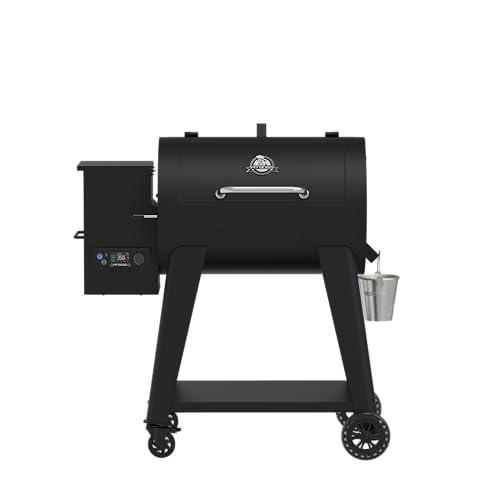
Pit Boss 850 FB2 Series Wood Pellet Grill & Smoker with Flame Broiler and LCD
How to Choose the Right Pellet Grills
Choosing the right pellet grill depends on your cooking style, space, tech preferences, and budget — trade-offs that shift based on your specific needs. Generic top-10 lists fail because a feature perfect for one user may not suit another. Our recommendation engine evaluates your specific situation across 5 dimensions and matches you to the right pellet grill in under 60 seconds.
About this guide
Pellet Grills
The Real Buying Challenge: Trade-Offs, Specs, and Price Tiers
Pellet grills promise smoky, wood-fired flavor with push-button convenience, but choosing the right one in 2026 is more complicated than it looks. The key challenge is balancing size, technology, and cooking performance for your real-world needs. Some grills are purpose-built for low-and-slow smoking, holding a steady 180°F for hours, while others reach 600°F or more for steakhouse-level searing. Wi-Fi and app integration now appear even in mid-tier models, but these electronics add cost and can frustrate if buggy or unnecessary for your style. Large backyard units with 20-pound hoppers and 1,000-square-inch grates are perfect for briskets and big gatherings, yet total overkill for couples or apartment dwellers. Entry-level models like the Traeger Tailgater start around $440, but expect to pay $800–$1,200 for reliable temperature control and smart features in models like the Traeger Pro 575 or Weber Searwood XL 600. Most buyers get tripped up by chasing features they’ll never use or underestimating the importance of hopper size and build quality. Every dollar spent should match your real cooking habits—not just the spec sheet.
What Separates the Options: Features, Brands, and Real Performance
The 2026 pellet grill landscape is defined by a few key differentiators that actually matter. First, temperature consistency is king—Traeger’s digital controllers and Weber’s Searwood XL 600 set the bar for holding rock-steady temps, while cheaper brands often swing wildly. Hopper capacity is a make-or-break spec: anything under 18 lbs means you’ll be refilling mid-cook, especially for overnight brisket. Wi-Fi and app controls are great if you truly want remote monitoring, but skip them if you grill hands-on; many buyers overpay for tech they rarely use. Build quality is another big divider: thick steel and double-wall construction (as found in the Coyote 36-Inch Pellet Grill) deliver durability and heat retention, but add weight and cost. Stainless steel grates and welded seams outlast painted or thin materials. Don’t expect pellet grills to match offset smokers for smoke intensity—manage your flavor expectations. Skip high-end models unless you’re building a permanent outdoor kitchen or grilling for crowds weekly. For most, the $800–$1,000 range offers the best balance of features, reliability, and value.
Decision Factors and How to Choose
Pellet grill selection in 2026 is all about matching capacity, tech, and build to your actual cooking style and space. Room size directly impacts which layout and grill size will work—1,000-square-inch monsters are wasted on balconies, while compact tabletop smokers like the Traeger Ranger excel in tight spaces or for tailgating. Your appetite for tech is another filter: if you love gadgets, go for Wi-Fi and app controls; if not, simple digital dials are more reliable and less distracting. Budget is a hard constraint—under $500 means real trade-offs in temperature stability and longevity, while $800–$1,000 unlocks most must-have features. Hopper size and pellet quality interact with how often you cook and for how many people; frequent entertainers need bigger hoppers and more robust builds. Our quiz evaluates your space, cooking style, tech comfort, durability expectations, and preferred layout in one go. The smartest approach: start with how you’ll actually use the grill, then work backward to the specs and price tier that fit—don’t get seduced by features you’ll never use or by the biggest model on the lot.
Buyer's guide
How to choose
1Core Performance Criteria
- Look for pellet grills with a temperature range of 180°F to 500°F, which allows both low-and-slow smoking and high-heat searing for versatility.
- Consistent temperature control is critical—models like the Traeger Pro 575 use digital thermostats to maintain steady heat, avoiding frustrating temperature swings.
- Built-in meat probes are a must if you want precision; they let you track internal food temps without lifting the lid and losing heat.
- Hopper capacity matters more than most realize; at least 18 lbs prevents mid-session refills during long cooks or overnight briskets.
- Don’t overpay for Wi-Fi if you rarely use remote monitoring—local digital controls are often more reliable and less prone to app glitches.
- If deep smoke flavor is your top priority, know that pellet grills generally produce a lighter smoke than offset smokers—manage your expectations accordingly.
2Build Quality and Durability
- Professional-grade grills like the Traeger Ironwood 885 use heavy-gauge steel for superior heat retention, but weigh more and are harder to move.
- Mid-grade models balance sturdy construction with manageable weight, making them ideal for most patios and family use.
- Lightweight grills, such as the Traeger Tailgater, are portable but may sacrifice some durability and heat retention compared to heavier units.
- Look for stainless steel grates and firepots, which resist rust and wear much better than painted steel or cast iron over time.
- Welded seams and robust hinges are often overlooked but prevent warping and air leaks, especially after a few seasons of use.
- Check the warranty—some brands require you to use their pellets or void coverage, which can be a costly surprise if you prefer third-party fuel.
3Value Analysis
- The true value sweet spot sits between $800 and $1,000, where you get digital controls, Wi-Fi, and enough space for serious cooks without unnecessary extras.
- Entry-level grills under $500 often lack reliable temperature control or robust construction, leading to frustration and early replacement.
- Premium models above $1,500 add size and sometimes extra features, but for most users, the gains are marginal compared to the price jump.
- Factor in pellet consumption—some grills burn through pellets faster due to poor insulation, which increases your long-term operating costs.
- Look for seasonal sales; holiday discounts can shave $200 or more off mid-range models, making higher-end features accessible at a better price.
- Don’t pay extra for app features unless you genuinely plan to use them—many users find themselves defaulting to manual controls after the novelty wears off.
4Use-Case Fit
- For large gatherings, prioritize grills with at least 500 square inches of cooking space to avoid crowding and uneven results.
- Compact models like the Traeger Ranger excel on patios, balconies, or RV trips, offering real wood-fired flavor without taking up much space.
- Tailgating and camping demand true portability—look for foldable legs and lighter builds, but expect some trade-off in cooking area.
- If you mainly smoke brisket or ribs, choose a grill with precise low-temperature control and a large hopper for overnight cooks.
- High-heat searing requires a grill that reliably hits at least 450°F; not all pellet grills can achieve a proper steakhouse crust.
- If you want a true smoker replacement, consider whether you’ll accept lighter smoke flavor—purists may still prefer a stick burner for authenticity.
5Common Mistakes
- Don’t assume Wi-Fi connectivity means unlimited range—many apps struggle with spotty backyard Wi-Fi or disconnect at longer distances.
- Ignoring hopper size leads to mid-cook refills, especially during long smokes; always check capacity before buying.
- Believing the myth that only proprietary pellets work—most reputable brands burn cleanly, and using others rarely voids warranties unless explicitly stated.
- Overlooking warranty fine print can cost you; some brands require registration or restrict coverage if you use non-approved accessories.
- Chasing maximum features instead of matching your actual cooking habits often results in paying for tech you’ll never use.
- Expecting pellet grills to deliver the same smoke punch as offset smokers is a recipe for disappointment—manage your flavor expectations.
6Maintenance and Longevity
- Regular cleaning of the burn pot and ash tray is essential; neglect leads to jams, poor ignition, and uneven heating over time.
- Cover your grill when not in use to prevent rust and moisture damage—especially if you store it outdoors year-round.
- Use high-quality pellets to minimize ash buildup and avoid clogging the auger, which can cause frustrating shutdowns mid-cook.
- Inspect and replace gaskets, probes, and drip pans annually; these affordable parts keep your grill running like new for years.
- Check the auger system for debris or stuck pellets after every few cooks, especially if you use flavored or bargain-brand pellets.
- Avoid water exposure in the control panel area—electronics are a weak point, and even weather-resistant models like the Traeger Pro 575 can fail if soaked.
FAQ
Frequently asked questions
Is Wi-Fi connectivity worth paying extra for in pellet grills?
Wi-Fi connectivity is worth the premium if you value remote monitoring and hands-off control, especially for long smoking sessions. Models like the Traeger Pro 575 and Weber Searwood XL 600 let you adjust temperature and check meat probes from your phone, which is a game changer for multitasking or entertaining. However, if you rarely step away from the grill or have unreliable backyard Wi-Fi, you may be better off with simpler digital controls and can save $100–$200.
How does the Traeger Pro 575 compare to the Weber Searwood XL 600?
The Traeger Pro 575 and Weber Searwood XL 600 are both top-rated for 2026, but they cater to slightly different needs. The Traeger Pro 575 excels in precise temperature control and robust Wi-Fi integration, making it ideal for tech-focused users. The Weber Searwood XL 600 offers a larger cooking surface and a more intuitive app, with a reputation for build quality and reliability. Both are excellent, but Traeger leans toward smoking versatility, while Weber is a better all-around grill for mixed cooking styles.
What hopper capacity do I need for overnight brisket or long cooks?
For overnight brisket or any cook exceeding 8 hours, a pellet grill with at least an 18-pound hopper is essential. Models like the Traeger Pro 780 and Pit Boss Navigator 1600 meet this threshold, letting you run overnight without mid-cook refills. Smaller hoppers—under 15 pounds—will force you to refill in the middle of a smoke, which risks temperature swings and sleep disruption. Always check hopper specs if you plan on long, unattended cooks.
Do I really need built-in meat probes, or can I use a third-party thermometer?
Built-in meat probes are a major convenience, letting you monitor internal food temperatures directly from your grill’s display or app. This is especially useful on Wi-Fi models like the Traeger Ironwood 885. However, third-party thermometers can work just as well for those on a budget or using entry-level grills. The key is real-time feedback—if you want seamless integration and fewer gadgets, built-in probes are worth it. Otherwise, a quality external probe will suffice.
Are budget pellet grills under $500 a good buy in 2026?
Pellet grills under $500 in 2026 often compromise on temperature stability, build quality, and longevity. Expert reviewers note that these entry-level models can struggle to maintain consistent heat and may develop rust or mechanical issues within two years. If your budget is tight, look for seasonal sales on mid-range models like the Traeger Pro 575 or Weber Searwood XL 600, which sometimes dip below $800. Spending a bit more up front usually pays off in reliability and results.
How important is pellet quality, and do I need to buy brand-name pellets?
Pellet quality directly affects both flavor and grill reliability. High-quality, food-grade hardwood pellets burn cleaner, produce more consistent heat, and reduce the risk of auger jams or excess ash. You don’t need to buy only Traeger or Weber pellets—several reputable third-party brands work well—but avoid bargain pellets with fillers or unknown woods. Poor pellets can clog your auger or leave a bitter aftertaste, so always check for 100% hardwood and avoid suspiciously cheap options.
What maintenance is required to keep a pellet grill running smoothly?
Routine maintenance is crucial for pellet grill longevity. Clean the burn pot and ash tray after every few cooks to prevent jams and ignition issues. Inspect the auger for stuck pellets, especially if you use flavored or budget pellets. Cover the grill when not in use to prevent rust, and replace gaskets, probes, and drip pans annually. Even premium models like the Traeger Pro 780 require this upkeep—neglecting maintenance leads to costly repairs and inconsistent results.
Related reading
Best Pellet Grills By Category
Related Guides
Digital Meat Thermometers
Matched to your cooking style, budget, and whether you need instant-read or wireless multi-probe monitoring.
Gas Grills
Cooking style, space, portability, and features—get matched to the right gas grill for your real grilling habits and outdoor setup.
Luxury Outdoor Grills
Fuel type, installation, cooking capacity, and build quality—matched to your grilling style, space, and must-have features.
Outdoor Patio Heaters
Matched to your patio size, fuel type, wind exposure, and style—get the right heater for your outdoor comfort and ambiance.
Create the Ultimate Outdoor Cooking & Entertaining Space
We match you to the right grills, ovens, ice makers, and power—based on your space, style, and how you love to host.