Skip the research trap. Get your cutting boards in 60 seconds.
We scored 300+ cutting boards across 5 dimensions — answer 5 quick questions and we'll match you to YOUR best pick.

Powered by DecisionScore™
Each product is evaluated across 18 weighted criteria — covering performance, value, build quality, and real-world usability. Your quiz answers re-weight the criteria to match what matters most to you, so two people can get different #1 picks from the same data.
See the DecisionScore methodology →- Single large bamboo board
- Non-slip feet and easy-grip handle
- Juice groove protects countertops
Find your perfect cutting boards
5 quick questions. No quiz-takes-10-minutes trap. A personalized match from 28 scored picks — with clear reasoning for every recommendation.
What material do you prefer for your cutting board?
The material of a cutting board affects its durability, maintenance, and how it interacts with your knives. Bamboo is eco-friendly and knife-friendly, while plastic is often dishwasher safe and non-porous.
- Non-slip feet add stability for vigorous chopping tasks.
- Juice grooves help contain mess when carving meats or cutting juicy fruits.
- Smooth edges are easiest to clean and look sleek on your countertop.
As an Amazon Associate and affiliate partner we earn from qualifying purchases. Links on this page may earn us a commission at no extra cost to you. Full disclosure
Not ready for the quiz? Here are our overall top picks
These are our top-rated picks overall. For a recommendation matched to YOUR specific needs,
Bamboo Cutting Board for Kitchen – 3-Piece Wooden Boards with Juice Grooves
Single large bamboo board
View Today's Price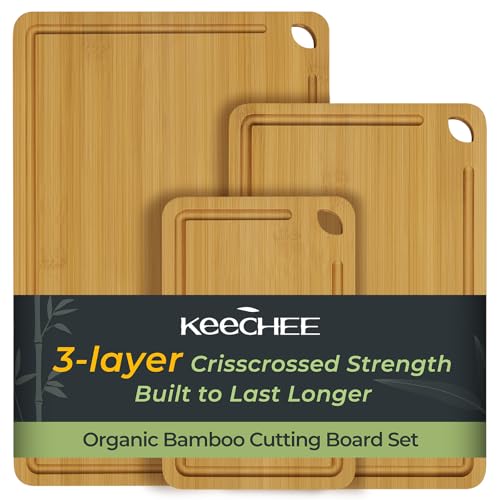
Keechee Bamboo Cutting Board, Cutting Board for Kitchen with Handles
3-piece set: 15x10", 12x8", 9x6"
View Today's Price
Keechee Bamboo Cutting Board, Reversible Wood Cutting Boards for Kitchen with
3 sizes: XL 17x12.4", L 14.5x10.5", M 12x8.7"
View Today's PriceHow to Choose the Right Cutting Boards
Choosing the right cutting board depends on material, size, cleaning method, and how you balance knife care with hygiene—trade-offs that shift based on your cooking habits, kitchen space, and maintenance tolerance. A feature that’s perfect for meat prep may be wrong for bread or produce, and budget constraints limit which premium features are realistic. Our recommendation engine evaluates your specific needs across five dimensions and matches you to the right cutting board in under 60 seconds.
About this guide
Cutting Boards
Why Picking the Right Cutting Board Is Tricky
Choosing cutting boards in 2026 is more nuanced than most cooks realize. You’re balancing knife-friendliness, hygiene, durability, and price — and every cutting board material comes with real trade-offs. Bamboo cutting boards are eco-friendly, gentle on knives, and look great, but they require hand washing and occasional oiling. Plastic cutting boards, especially high-quality BPA-free polypropylene like Farberware’s $15–$25 models, are unbeatable for raw meat prep and dishwasher safety, but can scar or warp over time. Premium wooden and paper-composite cutting boards, such as Epicurean’s $40–$60 offerings, add heat resistance and a luxurious feel, but cost more and may not fit every budget. Flexible cutting board mats seem like a bargain, yet their thinness means they slide around and wear out faster. Most buyers underestimate how much cutting board size impacts usability — a cramped 9"x12" cutting board drives you crazy, while a roomy 12"x18" surface feels game-changing. The biggest mistake? Grabbing the cheapest cutting boards set without considering how material, maintenance, and size affect daily cooking.
What Actually Sets Cutting Boards Apart
Material is the single biggest differentiator for cutting boards: skip budget plastic unless you need strict dishwasher safety for meat, and don’t pay extra for hardwood cutting boards if you won’t maintain them. Knife-friendliness is a real performance factor — bamboo and Epicurean’s paper-composite cutting boards are much gentler on blades than cheap plastic cutting boards, which can dull knives quickly. Brands matter: Epicurean cutting boards are NSF-certified, heat-resistant up to 350°F, and made in the USA, while Farberware’s BPA-free plastic cutting boards are reliably odor-resistant and reversible. Features like non-slip feet, juice grooves, and reversible surfaces matter more than most realize; a cutting board that slides is a safety hazard, and juice grooves are essential for carving meats. Dishwasher safety is a make-or-break feature for some, but don’t assume all plastic cutting boards are equal — only high-quality polypropylene avoids warping. Sets of two or three cutting boards, especially in bamboo or flexible mats, offer real versatility for cross-contamination prevention. Skip extra-large cutting boards unless you have the counter space; bigger isn’t always better if storage is tight.
How to Weigh Your Needs and Make the Right Choice
Surface size, material, and cleaning method all interact — a large bamboo cutting board is fantastic for prep, but only if you’re willing to hand wash and oil it. If your kitchen is small, a set of compact flexible cutting board mats may trump a single giant slab. Budget is a real constraint: under $20 gets you basic plastic or bamboo cutting boards, while $40–$60 unlocks premium Epicurean cutting boards or large, feature-rich sets. Knife-friendliness and hygiene sometimes conflict — wood cutting boards are gentle but not as easy to sanitize as plastic cutting boards. Our quiz evaluates your edge preference, dishwasher needs, material priorities, size requirements, and whether you want a set or single cutting board. The key is to match your actual cooking habits to the right cutting board type: if you prep lots of raw proteins, prioritize dishwasher-safe plastic cutting boards; if you love presentation and knife care, go bamboo or composite cutting boards. Don’t get distracted by trendy extras if they don’t fit your workflow — a juice groove is useless for salad prep, but essential for roast carving on cutting boards.
Buyer's guide
How to choose
1Core Performance Criteria
- Knife-friendliness is crucial; bamboo and Epicurean’s composite boards help maintain sharp edges, while cheap plastic can dull knives rapidly.
- Surface area matters more than most realize; a board under 12"x16" feels cramped for meal prep, so size up if your counter allows.
- Non-slip feet or textured bottoms are a must for safety, especially on slick countertops or when chopping dense foods like squash.
- Juice grooves are essential if you carve meats or cut juicy fruits, but add unnecessary bulk for those who mostly prep vegetables.
- Dishwasher safety is a make-or-break feature for many; only high-quality BPA-free polypropylene or Epicurean’s composite boards truly deliver here.
- Reversible boards double your usable surface and extend lifespan, making them a smarter investment for busy home cooks.
2Build Quality and Durability
- Premium paper-composite boards like Epicurean resist warping and cracking, even after hundreds of dishwasher cycles, unlike budget plastics.
- Bamboo boards are naturally antimicrobial but can split if left wet or stored poorly; regular oiling extends their life dramatically.
- Plastic boards under $15 often warp or scar quickly; look for thicker, high-density polypropylene for real longevity.
- Flexible mats are convenient but wear out faster, especially with frequent knife use or dishwasher cleaning.
- Wooden boards in the $40–$60 range offer excellent durability but require more maintenance than plastic or composite alternatives.
- Check for reinforced edges and molded handles, which prevent chipping and make the board easier to move and store.
3Value Analysis
- The $15–$25 range covers solid single plastic or bamboo boards, but sets of two or three offer better versatility for only a bit more.
- Epicurean’s $40–$60 composite boards justify their price with heat resistance, dishwasher safety, and a long lifespan.
- Cheap multi-packs of flexible mats seem like a deal, but frequent replacements offset any initial savings over time.
- Bamboo sets deliver the best value for eco-conscious cooks who want multiple sizes for different tasks.
- Avoid ultra-cheap plastic boards; they’re prone to warping and can harbor odors, making them a false economy.
- Consider total cost of ownership, including maintenance supplies like board oil for wood and bamboo options.
4Use-Case Fit
- Plastic boards are best for raw meat prep, as they’re easy to sanitize and usually dishwasher safe.
- Bamboo or composite boards shine for bread, cheese, and vegetables, offering a gentle surface for knives and attractive presentation.
- Flexible mats excel in tiny kitchens or for cooks who need color-coded options to prevent cross-contamination.
- Juice grooves are vital for anyone who regularly carves roasts or slices watermelon, but unnecessary for simple veg prep.
- Large boards (12"x18" and up) are perfect for batch cooking or holiday meals, but may overwhelm small counters.
- Sets of boards let you dedicate each to a specific use, reducing cross-contamination and wear.
5Common Mistakes
- Buying the smallest board to save space often backfires; cramped surfaces make prep harder and less safe.
- Ignoring maintenance needs leads to warped or cracked wood and bamboo boards — oiling is not optional for longevity.
- Assuming all plastic boards are dishwasher safe is risky; only high-quality polypropylene resists warping at high temps.
- Skipping non-slip features can turn meal prep into a safety hazard, especially on slick countertops.
- Overlooking board thickness means you might end up with a flimsy mat that slides or bends during use.
- Buying a single board for all tasks increases cross-contamination risk — sets or color-coded mats are safer for multi-protein kitchens.
6Maintenance and Longevity
- Bamboo and wood boards require regular oiling to prevent drying, splitting, and water absorption — a quick monthly routine pays off.
- Plastic and composite boards can go in the dishwasher, but avoid high-heat drying cycles to extend their life.
- Inspect boards for deep grooves; replace plastic mats when cuts become hard to sanitize, as bacteria can hide in scars.
- Never soak wood or bamboo boards; wipe clean and dry upright to prevent warping and mold growth.
- Composite boards like Epicurean handle heat and moisture well, making them the lowest-maintenance option for busy cooks.
- Store boards upright or in racks to promote airflow and prevent warping, especially in humid kitchens.
FAQ
Frequently asked questions
Is it worth paying extra for a paper-composite board like Epicurean?
Absolutely, if you want a board that’s both dishwasher safe and gentle on knives. Epicurean’s paper-composite boards are heat-resistant up to 350°F, won’t warp or crack easily, and are NSF-certified for food safety. While they cost $40–$60 versus $15–$25 for plastic, they last years longer and require less maintenance than bamboo or hardwood. For cooks who value durability, knife protection, and easy cleaning, the premium is justified.
How does bamboo compare to plastic for everyday meal prep?
Bamboo boards are eco-friendly, lightweight, and gentle on knives, making them ideal for slicing fruits, vegetables, and bread. However, they require hand washing and occasional oiling to prevent splitting. Plastic boards, especially high-quality BPA-free polypropylene, excel for raw meat prep due to their dishwasher safety and non-porous surface. If you prioritize hygiene and convenience, plastic is better; if you want sustainability and knife care, bamboo wins.
What size cutting board should I get for a small kitchen?
For compact kitchens, a board around 11"x9" to 12"x14" strikes the best balance between usability and storage. Epicurean’s 11.5"x9" compact board or Farberware’s 11"x14" plastic board both fit easily in most cabinets but still offer enough surface for daily prep. Avoid boards smaller than 9"x12"—they feel cramped and limit what you can prep safely.
Are flexible cutting mats a good long-term solution?
Flexible mats are great for small spaces and cross-contamination prevention, since they’re lightweight and often color-coded. However, they wear out faster than solid boards, especially with frequent dishwasher use or heavy chopping. Expect to replace them every 6–12 months if you cook daily. They’re best as a supplement to a sturdier board, not as your only prep surface.
What’s the difference between reversible and single-sided boards?
Reversible boards offer two usable surfaces, which extends their lifespan and lets you dedicate one side to raw proteins and the other to produce or bread. Single-sided boards may have non-slip feet or juice grooves that limit flipping. If you want maximum versatility and value, choose a reversible design—just make sure both sides are easy to clean and free from deep grooves.
How do I keep my bamboo cutting board from cracking?
Always hand wash your bamboo board promptly after use, dry it upright, and oil it monthly with food-grade mineral oil. Never soak or put it in the dishwasher. Proper care prevents splitting and warping, extending the board’s life for years. Skipping oiling is the number one reason bamboo boards fail prematurely.
Do I need a set of boards or is one enough?
If you regularly prep both raw proteins and produce, a set of two or three boards is safer and more convenient. Sets allow you to dedicate each board to a specific food group, reducing cross-contamination risk. For single-person households or minimalists, one high-quality board can suffice, but you’ll need to clean thoroughly between uses.
Best Cutting Boards By Category
Compare Cutting Boards
Related Guides
Air Fryers
Matched to your kitchen space, batch size, cooking style, and must-have features—get an air fryer that truly fits your needs.
Bar Tools
Skill level, tool type, finish, budget, and how you’ll use your bar tools—get matched to the right set for your home bar.
Beginner Espresso Machines
Skill level, hands-on control, milk frothing, and kitchen space—get matched to the perfect beginner espresso machine for your daily ritual.
Best Bread Machines for Home Bakers
Loaf size, bread style, add-ins, and control—get matched to the bread machine that fits your kitchen and baking goals.
Breakfast Cookware
Matches your breakfast routine, kitchen setup, budget, and health priorities to the perfect pan, griddle, or appliance.