Skip the research trap. Get your convertible sleeper chairs in 60 seconds.
We scored 350+ convertible sleeper chairs across 5 dimensions — answer 5 quick questions and we'll match you to YOUR best pick.
Powered by DecisionScore™
Each product is evaluated across 18 weighted criteria — covering performance, value, build quality, and real-world usability. Your quiz answers re-weight the criteria to match what matters most to you, so two people can get different #1 picks from the same data.
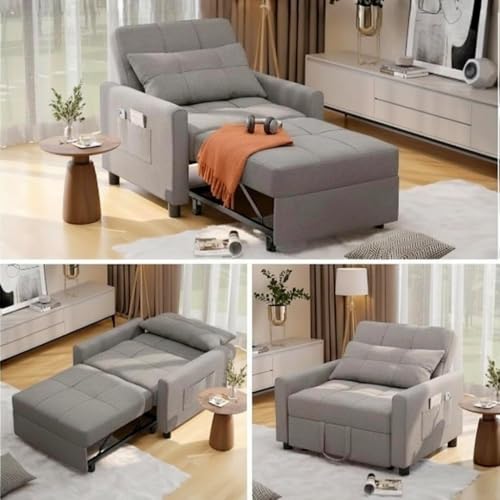
See the DecisionScore methodology →- 3-in-1 convertible: reading chair, TV recliner, guest bed
- Steel frame supports 400 lbs
- High density foam with serpentine springs
Find your perfect convertible sleeper chairs
5 quick questions. No quiz-takes-10-minutes trap. A personalized match from 34 scored picks — with clear reasoning for every recommendation.
How often will this chair be used as a bed?
If guests sleep on it every week, prioritize denser foam and wider sleeping surfaces. For occasional sleepovers, lighter-duty chairs work fine.
- Frequent use as a bed requires higher-density foam and a steel frame for lasting comfort and support.
- Occasional use means you can prioritize style or price over sleep quality.
- If you host guests weekly, avoid budget chairs with thin foam or particleboard frames.
As an Amazon Associate and affiliate partner we earn from qualifying purchases. Links on this page may earn us a commission at no extra cost to you. Full disclosure
Not ready for the quiz? Here are our overall top picks
These are our top-rated picks overall. For a recommendation matched to YOUR specific needs,
Aiho Convertible Sleeper Chair 3-in-1 Sofa Bed, Light Gray
3-in-1 convertible: reading chair, TV recliner, guest bed
View Today's Price
HOMCOM Convertible Chair Bed 2-in-1 Sofa Bed Adjustable Backrest Beige
2-in-1 sofa-to-bed conversion
View Today's Price
VINGLI Black Futon Sofa Bed Convertible Loveseat Sleeper Couch, Faux Leather
Tufted faux leather with industrial metal legs
View Today's PriceHow to Choose the Right Convertible Sleeper Chairs
Choosing the right convertible sleeper chair depends on how often it’ll be used as a bed, your available space, upholstery preferences, and budget—factors that interact in surprising ways. A chair that’s perfect for a guest room can be totally wrong for a dorm or small apartment. Generic top-10 lists miss these nuances: a stylish chair with thin foam might look great but fail as a real bed. Our recommendation engine weighs your unique needs across five key dimensions and matches you to the ideal sleeper chair in under 60 seconds.
About this guide
Convertible Sleeper Chairs
Why Picking the Right Sleeper Chair Is Tricky
Choosing convertible sleeper chairs in 2026 is more complicated than it looks. The biggest challenge? Balancing space, comfort, and durability without blowing your budget. Most buyers underestimate the trade-offs between a $150 Giantex folding convertible sleeper chair and a $400 Vonanda or Serta accent sleeper. Cheaper convertible sleeper chairs often use thin 4–6" foam that compresses quickly, leaving you with back pain after a few weeks—especially if you use convertible sleeper chairs as a bed more than occasionally. Weight capacity is another overlooked spec: sitting ratings for convertible sleeper chairs may hit 330 lbs, but actual sleep support can be much lower. Mechanisms matter too: fold-flat ottoman convertible sleeper chairs are fast but sometimes unstable, while pull-out convertible sleeper chairs with adjustable backrests are comfier but take up more floor space. Many shoppers forget to measure the full extended length—some convertible sleeper chairs stretch over 70", which can overwhelm a small apartment. And don’t assume all convertible sleeper chairs have washable covers or that every frame is steel; particleboard frames in sub-$200 convertible sleeper chairs often fail early. The most common mistake? Prioritizing looks or price over real-world comfort and longevity when shopping for convertible sleeper chairs.
What Actually Sets Convertible Sleeper Chairs Apart
Not all convertible sleeper chairs are created equal—real differences go way beyond fabric color or trendy boucle. The core differentiators among convertible sleeper chairs are frame construction, foam density, conversion mechanism, and upholstery material. Skip particleboard frames in convertible sleeper chairs unless you only need occasional use; steel tubing, as seen in mid-range Vonanda or Serta convertible sleeper chairs, lasts far longer. Foam density matters more than thickness: a 6" slab of low-density foam in convertible sleeper chairs won’t hold up like a thinner but firmer mattress. Innerspring or coil support, found in some $300+ convertible sleeper chairs, dramatically improves sleep comfort versus basic foam. Mechanisms also separate winners from duds: pull-out convertible sleeper chairs with locking backrests are more stable for nightly use, while fold-flat ottoman convertible sleeper chairs or 3-in-1 futons are best for quick conversions and tight spaces. Upholstery isn’t just about looks—linen and fabric in convertible sleeper chairs breathe better for summer, while faux leather wipes clean easily (ideal for home offices or dorms). Skip velvet convertible sleeper chairs unless you want a statement piece and don’t mind extra cleaning. Prioritize frame and foam quality in convertible sleeper chairs over flashy extras like side pockets or accent pillows.
How to Decide: Your Needs, Space, and Budget Interact
The right convertible sleeper chairs depend on how often you’ll actually use them as a bed, the size of your space, and your budget. Frequent overnight guests demand denser foam and a wider sleeping surface in convertible sleeper chairs—think 36–42" wide, not the standard 25–28". For small apartments or dorms, compact folded dimensions and easy conversion in convertible sleeper chairs are make-or-break. Upholstery choice in convertible sleeper chairs is more than aesthetic: boucle is cozy but traps dust, faux leather is practical for spills, and linen is the most breathable for hot sleepers. Budget is the ultimate constraint: under $150 gets you basic foam and particleboard convertible sleeper chairs (fine for light use), while $200–$300 unlocks steel frames and better comfort in convertible sleeper chairs. Premium $400 convertible sleeper chairs add style and sometimes coil support, but may be overkill for occasional use. Our quiz weighs your sleeping frequency, size needs, material preferences, budget, and room placement to recommend the best convertible sleeper chairs for your situation. Remember: a convertible sleeper chair that’s perfect for a guest room might be a disaster in a cramped studio. Measure your space, think about who will use convertible sleeper chairs, and don’t skimp on comfort if they’ll see regular use.
Buyer's guide
How to choose
1Core Performance Criteria
- Always check the weight capacity for sleeping, not just sitting—aim for at least 300 lbs for regular adult use.
- Foam density is more important than thickness; low-density foam compresses quickly, causing discomfort after just a few weeks of use.
- Look for convertible mechanisms that operate smoothly and lock securely, especially if you’ll convert the chair frequently for guests.
- A sleeping surface width of 36 inches or more is essential for taller or larger adults; compact chairs often max out at 28 inches.
- Check the extended length—many chairs unfold to over 70 inches, which can overwhelm a small room if you’re not prepared.
- Innerspring or coil support, found in premium models over $300, makes a big difference in sleep quality compared to basic foam.
2Build Quality and Durability
- Steel frame construction, as found in higher-end Vonanda and Serta chairs, dramatically improves durability over particleboard frames.
- Avoid budget models under $150 if you need daily use; they often use low-quality hardware and thin plywood that fail quickly.
- Inspect welds and fasteners—loose or poorly finished joints are a red flag for future wobble or collapse.
- Removable, washable covers extend the life of your chair, especially in homes with kids or pets.
- Check for reinforced hinges and conversion mechanisms; these are the most common failure points on foldable chairs.
- A warranty of at least one year is a must—many mid-range brands like mopio and YITAHOME now offer 2+ years for peace of mind.
3Value Analysis
- The $200–$300 price range offers the best balance of comfort, durability, and style—avoid sub-$150 chairs for anything beyond light guest use.
- Premium chairs above $350 add design flair and sometimes coil support, but may not justify the cost for occasional sleepers.
- Budget models like Giantex or LDAILY are tempting for dorms but often sacrifice frame quality and foam density for price.
- Look for included extras—some mid-range chairs come with accent pillows or side pockets, adding value without inflating cost.
- Factor in shipping and assembly costs; some budget chairs require extensive setup or have high delivery fees.
- Inflation in 2026 has pushed prices up 10–15% since last year, so mid-range models now represent stronger value than ever.
4Use-Case Fit
- For small apartments, prioritize compact folded dimensions and easy conversion mechanisms to maximize your living space.
- Guest rooms benefit from wider, more supportive chairs with denser foam—don’t settle for a narrow or thin mattress here.
- Dorm rooms call for easy-clean upholstery like faux leather or machine-washable linen, as spills are inevitable.
- Home offices need chairs that blend style and function; boucle and velvet add flair but require more maintenance.
- If you’ll use the chair as a bed weekly, invest in coil or high-density foam models for lasting comfort.
- Measure both the seated and extended footprint—some chairs double in length when unfolded, making them impractical for tight rooms.
5Common Mistakes to Avoid
- Don’t confuse sitting weight capacity with sleeping support—many chairs collapse under heavier sleepers if not rated properly.
- Ignoring the extended length is a classic error; always check if the unfolded bed will fit your intended space.
- Assuming all covers are removable or washable leads to headaches, especially in homes with pets or allergies.
- Overlooking frame material is risky—particleboard frames in budget chairs often fail within a year of moderate use.
- Buying solely on looks or color can backfire if the chair lacks comfort or is difficult to convert.
- Skipping the warranty details may leave you unprotected if the mechanism or foam fails prematurely.
6Maintenance and Longevity
- Removable, washable covers are the easiest way to keep your sleeper chair looking fresh and extend its lifespan.
- Vacuum fabric and boucle upholstery regularly to prevent dust buildup, especially in allergy-prone households.
- Check and tighten hardware every few months—loose bolts or hinges are the leading cause of frame instability.
- Rotate and flip foam mattresses if possible to prevent permanent compression and uneven wear.
- Spot-clean velvet and chenille with appropriate cleaners to avoid staining or matting the fibers.
- Store in a dry, well-ventilated room to prevent mildew or odor, particularly if you live in a humid climate.
FAQ
Frequently asked questions
Is it worth paying extra for a convertible sleeper chair with innerspring or coil support?
Absolutely, if you plan to use the chair as a bed more than once a month. Innerspring or coil support, found in some $300–$400 models, provides much better spinal alignment and long-term comfort than basic foam. Foam-only chairs, especially under $200, can sag and cause back pain after just a few uses. If your guests are adults or you’ll sleep on it regularly, the extra investment pays off in durability and sleep quality.
How does Vonanda compare to Giantex for convertible sleeper chairs in 2026?
Vonanda sleeper chairs generally offer stronger steel frames, smoother conversion mechanisms, and better upholstery choices compared to Giantex’s budget models. Giantex chairs, often priced around $150–$200, are suitable for occasional use or dorms but tend to use lower-density foam and particleboard frames. Vonanda’s $300+ chairs feature higher weight capacities, more durable construction, and often include extras like accent pillows or hidden legs, making them a better fit for regular use or guest rooms.
What size sleeper chair do I need for a guest room?
For a guest room, choose a sleeper chair with a sleeping surface at least 36 inches wide and 70 inches long. This accommodates most adults comfortably. Wider models (38–42 inches) are ideal if you expect taller or larger guests. Compact chairs (25–28 inches wide) are best reserved for kids or very occasional adult use. Always measure your available space when the chair is fully extended to avoid surprises.
Are faux leather convertible sleeper chairs easy to clean and maintain?
Yes, faux leather sleeper chairs are among the easiest to clean. Spills and stains can typically be wiped away with a damp cloth, making them ideal for home offices, dorms, or households with kids. However, faux leather can crack or peel over time if exposed to direct sunlight or harsh cleaners. For maximum longevity, use gentle cleaning products and avoid placing the chair near heat sources or windows.
Do budget convertible sleeper chairs under $150 hold up for regular use?
Budget sleeper chairs under $150, such as those from Giantex or LDAILY, are best for occasional use, like sleepovers or dorm rooms. They often use lower-density foam and particleboard frames, which can sag or break with frequent use. For weekly or nightly sleeping, invest in a mid-range ($200–$300) model with a steel frame and denser foam. Otherwise, you risk discomfort and early replacement costs.
What’s the most important feature for small apartments?
For small apartments, the most critical feature is compact folded dimensions—aim for a chair that fits your space when both seated and fully extended. Quick, one-person conversion mechanisms are also essential, as you’ll likely move the chair frequently. Lightweight models with removable covers are a bonus for easy cleaning and rearrangement. Always double-check the unfolded length and width to avoid blocking doors or walkways.
How do I know if a convertible sleeper chair is safe and stable?
Check for a steel or reinforced frame, a weight capacity of at least 300 lbs, and locking mechanisms that keep the bed stable when extended. Avoid models with wobbly legs or thin plywood supports, which are prone to tipping or collapse. Read real-world user reviews for complaints about instability or frame failure, and prioritize brands that offer at least a one-year warranty for added peace of mind.
Related reading
Best Convertible Sleeper Chairs By Category
Related Guides
Alarm Clocks
Matched to your sleep style, wake-up difficulty, power source, and must-have features—get the alarm clock that actually works for you.
Bar Carts
Style, storage, material, and budget—get matched to the bar cart that fits your space and entertaining style perfectly.
Bidet Toilet Seats
Comfort, hygiene, controls, and installation—get matched to the bidet seat that fits your home, habits, and budget.
Blackout Blinds
Room use, blackout level, window size, color, and budget—get matched to the right blackout blind for your space.
Blackout Curtains
Window size, blackout level, hanging style, and color—matched to your sleep, decor, and energy-saving goals.